
Where Texas Pests Go in Winter: The Complete Overwintering Guide
Every November, the same claim makes the rounds in Texas: "At least the cold will kill the bugs." It will not. A typical Texas winter is nowhere near cold enough, for nowhere near long enough, to wipe out outdoor pest populations. Statewide, average January lows run from the mid-60s on the lower Gulf Coast to the upper 20s in the Panhandle — and even the Panhandle's freezes are brief and broken by warm spells.
What a Texas winter actually does is relocate pests. As nights cool and outdoor food dries up, insects, spiders, scorpions, rodents, and wildlife all follow the same instinct: find a warm, dry, stocked shelter and ride out the season there. Your attic, wall voids, garage, and kitchen are exactly that shelter. The pests don't disappear in December — they move in with you in October.
This guide maps where each major Texas pest actually goes in winter, the month-by-month timeline of the invasion, where they settle inside your house, and what genuinely keeps them out.
The Overwintering Calendar
The indoor migration is predictable enough to put on a calendar. Dates shift a few weeks earlier in North Texas and later on the coast, but the sequence is the same every year.
| Month | Who's moving | Where they settle |
|---|---|---|
| September | Paper wasp queens, squirrels, early roof rats | Eaves, soffits, attic corners, wall voids |
| October | Roof rats, house mice, striped bark scorpions, smokybrown roaches | Attics, weep holes, garages, wall voids |
| November | Raccoons, opossums, brown recluse, American roaches | Attic dens, storage boxes, kitchens, bathrooms |
| December | Established rodents breed indoors; spiders and scorpions go semi-dormant in walls | Attic insulation, closets, behind appliances |
| January–February | Everything hunkered down; fire ants deepen mounds; mosquito eggs wait in standing water | Wall voids, crawl spaces, sheds — until the first warm spell wakes them |
The pattern that matters: by the time you hear scratching in December, the entry happened six to eight weeks earlier. Exclusion is a September–October job, not a December one.
Who's Moving In: Pest by Pest
Roof rats and house mice
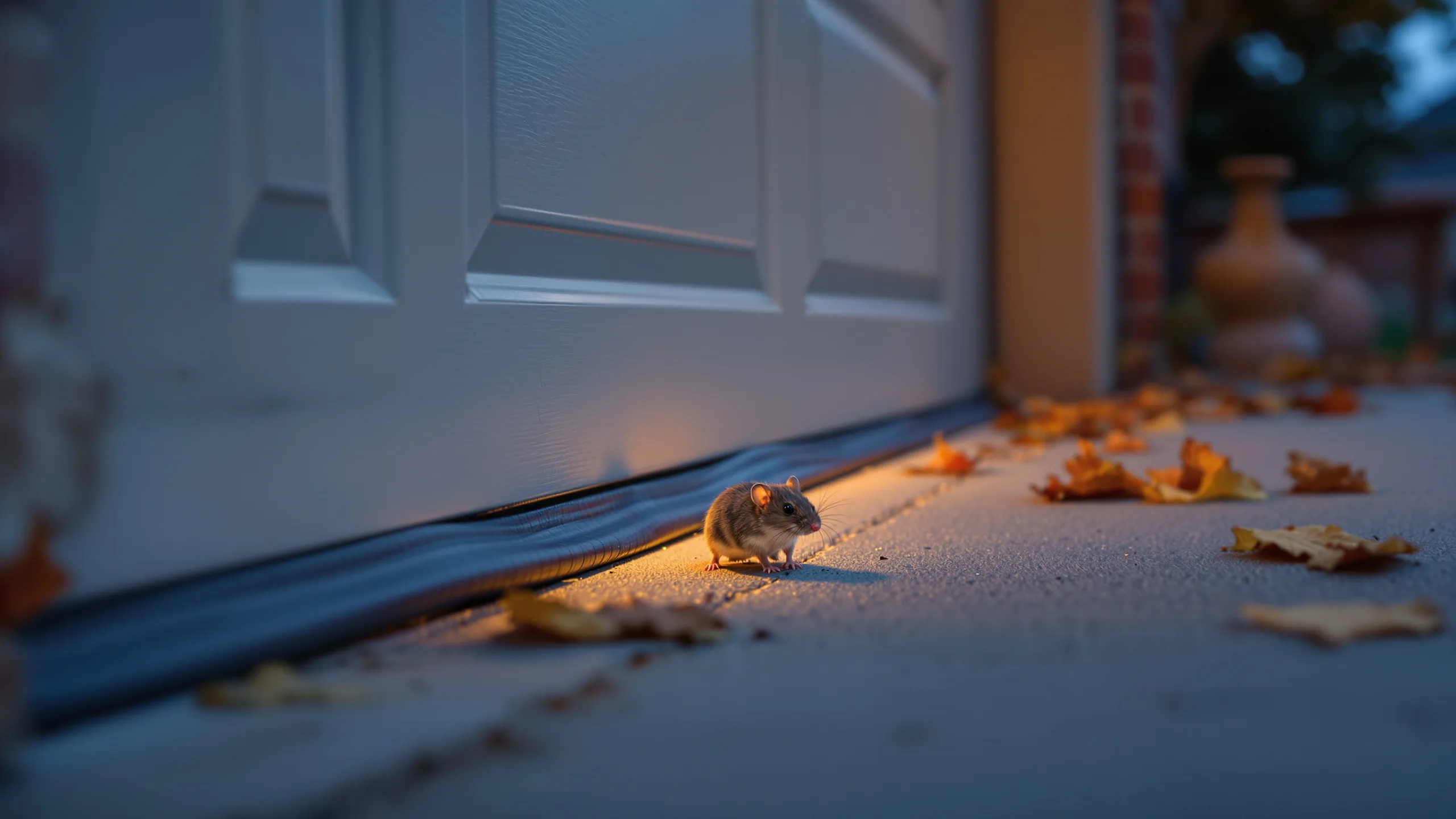
Roof rats and house mice are the headline overwintering invaders statewide, and both are attic specialists. Roof rats dominate in coastal and Central Texas, traveling along fences, power lines, and tree branches to reach the roofline, then slipping through gaps at soffit joints and lifted shingles. House mice work at ground level and need a gap the size of a dime.
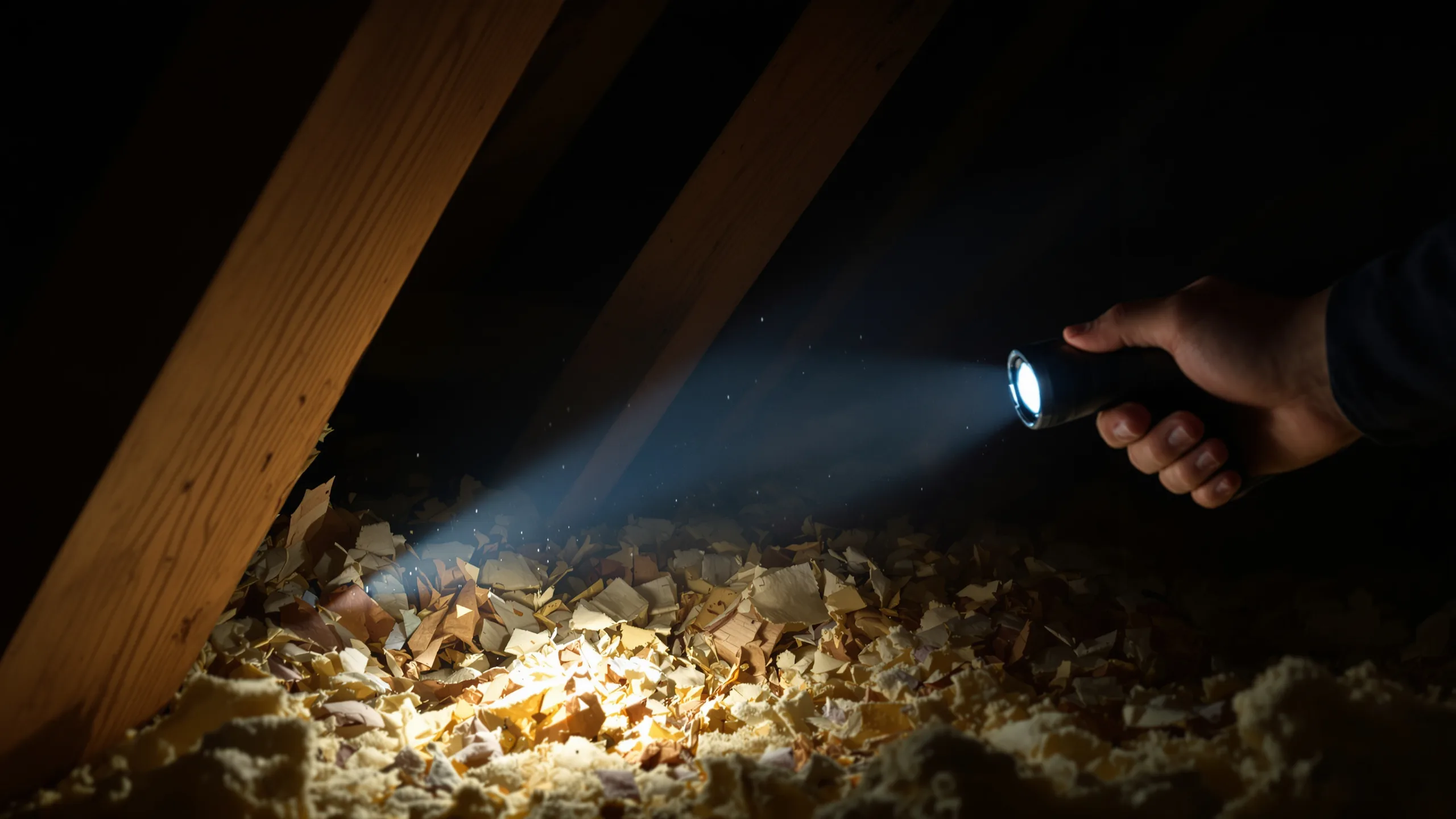
Once inside, they don't just overwinter — they breed. A pair of mice entering in October can be a dozen by January, which is why mouse-in-attic removal in mid-winter costs far more than an hour with hardware cloth in the fall. Listen for scratching after dark and check for droppings along attic insulation runs.
Striped bark scorpions
The striped bark scorpion — the most common scorpion in Texas — winters in wall voids, attics, and under bark across the Hill Country, Austin, San Antonio, and the Dallas–Fort Worth suburbs. They flatten to the thickness of a credit card and enter through weep holes and door thresholds, usually while hunting the crickets and roaches that moved in first.
Scorpions can gather in groups to overwinter, so one in the bathroom sink in November often means more in the walls. Shake out shoes, gloves, and bedding before use from October onward — standard practice anywhere west of I-35.
Brown recluse and other spiders
The brown recluse spends winter exactly where it spends summer: in undisturbed storage. Cardboard boxes in garages, attics, and closets are classic recluse habitat, and winter is when homeowners dig into those boxes for decorations and cold-weather gear — which is why bites cluster in the cooler months.
Most other Texas spiders simply follow their prey indoors and then slow down. Swap cardboard for sealed plastic bins and you remove most of the problem.
American and smokybrown cockroaches
The big outdoor roaches Texans call palmetto bugs live in sewers, mulch beds, and tree hollows until cold nights push them inside. They enter through weep holes, garage door gaps, and plumbing penetrations, then settle in kitchens, bathrooms, and utility rooms where water is available.
A smokybrown in the kitchen in December did not wander in that day — it came in during the October push and has been living behind your dishwasher since. Moisture control and door sweeps beat spray every time.
German cockroaches
German cockroaches don't overwinter because they never live outside — they are a year-round indoor species that breeds in kitchens regardless of season. Winter matters because a small summer population becomes a severe one when windows close and cooking moves indoors.
If you're seeing small tan roaches during the day in winter, the infestation is already established and exclusion won't fix it. That is a bait-and-sanitation job, and often a professional one.
Squirrels, raccoons, and opossums
Squirrels, raccoons, and opossums treat attics as winter den sites, with movement starting in early fall. Unlike insects, wildlife only needs one existing weakness — a rotted fascia board, an uncapped chimney, a lifted shingle — and will enlarge it themselves.
Winter attic wildlife is loud, destructive, and not a DIY eviction: raccoons and squirrels must be removed and excluded correctly, and a wrong move in December can leave babies sealed inside in January. Compare squirrel removal and raccoon removal costs before attempting anything yourself.
Paper wasp queens
Fertilized paper wasp queens leave their dying fall colonies and overwinter alone in sheltered spots — under eaves, behind shutters, in attic corners, and inside wall voids. They are dormant and harmless all winter, but every queen that survives in your soffits is a new nest on your porch in March.
A fall walk-around to check eaves and attic vents is worth ten minutes. Finding queens now beats wasp nest removal in the spring.
Fire ants
Fire ants are the exception to the indoor rule: they overwinter in the ground, not in your house. As soil cools, colonies dig their mounds deeper — sometimes four feet or more — and cluster around the queen below the frost line, which is why mounds seem to vanish in January and explode back in March.
Winter is actually a smart time for broadcast bait treatment on warm afternoons, when foragers are active but the colony is concentrated and vulnerable.
Mosquitoes
Mosquitoes overwinter two ways in Texas, and both are in your yard. Culex females — the West Nile carriers — hibernate as adults in sheds, culverts, garages, and crawl spaces. Aedes species overwinter as eggs glued above the waterline in anything that holds rainwater: tires, planters, clogged gutters.
Dumping standing water in fall is a winter mosquito treatment, not a spring one. Every container you empty in October is a brood that never hatches in February's first warm spell.
Where They Hide in Your House: Room-by-Room
Use this as a winter inspection route, flashlight in hand:
- Attic: droppings along insulation runs, gnawed wiring, nesting material, wasp queens in corners, daylight through the roofline
- Garage: cardboard boxes (recluse habitat), gaps at the door seal, hibernating mosquitoes in dark corners, roaches near the water heater
- Kitchen: roach droppings behind the stove and refrigerator, mice under the sink, pantry food in unsealed packaging
- Bathroom: scorpions in sinks and tubs (they fall in chasing water), roaches at plumbing penetrations, gaps around pipes under the vanity
- Closets and storage: spiders in stored shoes and boxes, silverfish in cardboard, evidence of mice in baseboard corners
What Actually Works — and What's a Myth
Works: physical exclusion. Silicone caulk for gaps under a quarter inch, copper mesh plus foam around pipes, 1/4-inch hardware cloth on every vent, door sweeps that show no daylight, weep-hole inserts, sealed plastic storage bins, and snap traps as attic monitors. This is unglamorous and it is 90 percent of the job.
Works, with limits: perimeter insecticide and glue-board monitoring. Useful as a supplement around entry points, useless as a substitute for sealing them.
Myth — mothballs: They don't repel rodents, raccoons, or snakes at any dose you can safely use indoors, and scattering them in an attic is a pesticide-label violation that puts naphthalene fumes into your living space. Skip them entirely.
Myth — ultrasonic repellers: Independent testing has repeatedly shown no meaningful effect on rodents or insects. Pests acclimate within days if they react at all. Save the money for a door sweep.
Myth — "the freeze will take care of it": A single hard freeze kills some exposed insects and drives the rest deeper into shelter — often your shelter. The 2021 freeze knocked populations back for weeks, not seasons, and rebounded by spring.
Regional Notes for Texas
Gulf Coast and Houston. Mild winters mean almost no off-season. Smokybrown roaches, roof rats, and mosquitoes stay active through most Decembers, and a 70°F January afternoon wakes everything. Exclusion and moisture control here are a twelve-month program, not a fall project. Houston-area homeowners should treat the calendar above as shifted two to four weeks later.
Central Texas and the Hill Country. Scorpion country. Weep-hole inserts, door sweeps, and cricket control around exterior lights deliver the biggest winter payoff from Austin to San Antonio. Expect scorpions in sinks and laundry rooms on the first cold nights.
North Texas and Dallas–Fort Worth. The strongest rodent push in the state follows the first nights below 50°F. Roofline inspection and attic monitoring matter most here, and the Dallas and Fort Worth suburbs see heavy roof-rat pressure along tree-lined streets.
South and West Texas. The mildest season of all — overwintering is brief and shallow, and fire ants and roaches barely pause. Border counties see pest movement tied to rain more than temperature, so post-storm inspections matter as much as the calendar.
The Bottom Line
Texas pests don't die in winter — they change address. The move happens on a schedule you can set your watch by: queens and squirrels in September, rodents and scorpions in October, wildlife and roaches in November, and everything settled into your walls by the holidays.
The companion piece to this guide is our fall pest-proofing checklist — the full exterior, yard, and interior task list that closes the entry points before the calendar flips. If rodents are your main worry, the fall rodent invasion guide goes deep on roof rats, mice, and attic defense. And if you find something in the house this winter and don't know what it is, start with our pest identification tool before you treat for the wrong thing.
Seal in September, monitor through December, and spend the winter listening to the wind instead of the walls.
Sources
Texas Bug Slayers Editorial Team
Editorial Board
The Texas Bug Slayers editorial team brings together licensed pest control professionals, entomologists, and writers dedicated to helping Texans protect their homes and families from pests.
Related Articles

Texas Fall Pest-Proofing Guide: The Complete Homeowner Checklist for 2026
Rodents, roaches, scorpions, and spiders move indoors as Texas cools down. Use this fall pest-proofing checklist to seal your home before they settle in.
Fall Cricket Invasion in Texas: Why They're Swarming and How to Keep Them Out
Field crickets swarm Texas storefronts and homes every September-October. Why it happens, when it ends, and how to stop crickets — and the scorpions that follow them.
Fall Rodent Invasion in Texas: How to Rat-Proof Your Home Before the First Cold Snap
Roof rats and house mice push indoors every Texas fall. Identify which rodent you have, find every entry point, and seal it — the complete homeowner guide.