
Mice Control in Texas — Complete Guide
House mice invade Texas homes, contaminate food, gnaw wiring, and breed fast
Not sure it's a Mice?
Snap a photo — our free AI tool identifies Texas pests in seconds.
About House Mice in Texas
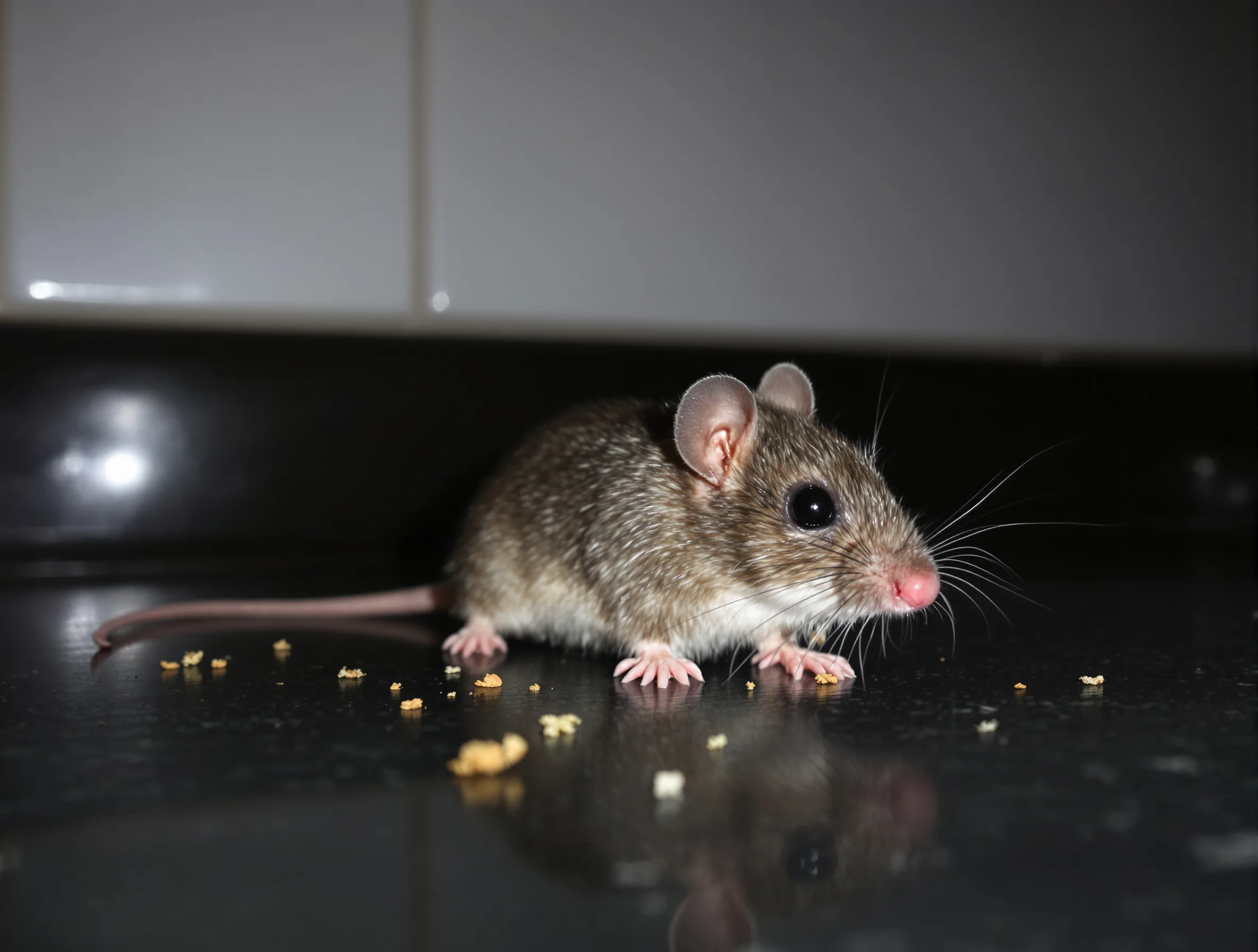
The house mouse (Mus musculus) is the most common rodent to invade Texas homes. Small, adaptable, and astonishingly prolific, house mice live alongside humans in every region of the state — from downtown Houston apartments to Panhandle farmhouses. A mouse infestation starts quietly: one or two mice find their way inside in fall, and within months a hidden population is living behind your walls.
House mice are 2.5 to 3.5 inches long (not counting the tail), gray-brown with a lighter belly, with large rounded ears, small black eyes, and a thin tail roughly as long as the body. They weigh less than an ounce — yet a single pair can produce 5 to 10 litters per year with 5 to 6 pups each, and those pups start breeding at just 6 weeks of age. This is why a small mouse problem becomes a large one so quickly.
Signs of a Mouse Infestation
- Droppings: Small (1/8 to 1/4 inch), dark, rice-shaped pellets, typically found in kitchen cabinets, drawers, pantries, under sinks, and along baseboards. A single mouse produces 50 to 75 droppings per day, so droppings accumulate fast.
- Gnaw marks: Mice must gnaw constantly to wear down their ever-growing incisors. Look for chew marks on food packaging, cereal boxes, wooden baseboards, door corners, and electrical wiring.
- Sounds: Light scratching, scurrying, and squeaking in walls, ceilings, and behind appliances — almost always at night.
- Nests: Small balls of shredded paper, fabric, insulation, or dryer lint tucked behind appliances, inside drawers, in storage boxes, or in wall voids.
- Grease marks and tracks: Oily smudges along walls and baseboards where mice travel the same routes nightly. A light dusting of flour or talc near suspected runways will reveal tiny footprints overnight.
- Odor: A persistent musty, ammonia-like smell from mouse urine indicates an established, growing population.
Health Risks from Mice
Mice contaminate roughly 10 times more food than they eat, spreading Salmonella bacteria across counters, dishes, and stored food through their droppings and urine. Mouse allergens — proteins in their dander, droppings, and urine — are a documented asthma trigger, particularly in children. In rural Texas, deer mice can carry hantavirus, which becomes a serious respiratory risk when dried droppings are swept or vacuumed and the particles are inhaled. Mouse gnawing on electrical wiring inside walls is also a genuine fire hazard.
How Mice Get Into Texas Homes
A house mouse needs a gap of only 1/4 inch — about the diameter of a pencil — to squeeze inside. The most common entry points in Texas homes are gaps around AC line penetrations and utility pipes, worn or missing garage door bottom seals (especially at the corners), cracks in the foundation, unscreened dryer and bathroom vents, and gaps where the roof meets the soffit. Mouse invasions spike in October through December as outdoor temperatures drop, and again during drought or heavy rain when food and shelter outdoors disappear.
Mouse Control Methods
Exclusion (Mouse-Proofing)
Sealing entry points is the only permanent solution. Every gap 1/4 inch and larger around the foundation, utility penetrations, doors, and vents must be sealed with mouse-proof materials — steel wool packed into gaps and sealed with caulk for small openings, galvanized hardware cloth or metal flashing for larger ones. Foam alone is not enough; mice chew through it.
Trapping
Snap traps remain the most effective way to remove mice already inside. Place traps perpendicular to walls with the trigger end against the baseboard — along runways in kitchens, garages, attics, and behind appliances. Mice are curious and investigate new objects, so traps usually work within a night or two. Use enough traps: for an established infestation, professionals set a dozen or more. Avoid glue traps where pets can reach them, and skip indoor poison bait — mice that die in wall voids create serious odor problems.
Sanitation
Store all food — including pet food, bird seed, and pantry staples — in sealed glass or heavy plastic containers. Clean up crumbs nightly, don't leave pet food out overnight, and keep garbage in lidded cans. Sanitation alone won't eliminate an infestation, but it slows population growth and makes traps more attractive.
Mice vs Rats
Not sure whether you're dealing with mice or rats? Size and droppings are the giveaway: mouse droppings are rice-sized and scattered everywhere, while rat droppings are olive-sized and found in clusters. Rats are also far more cautious of traps than curious mice. See our rat control guide for roof rat and Norway rat identification, or the general rodent control guide for a side-by-side comparison.
Mouse Prevention Tips
- Seal every gap 1/4 inch and larger around the foundation, utility lines, and AC penetrations with steel wool and caulk.
- Install door sweeps on all exterior doors and replace worn garage door bottom seals.
- Screen dryer, bathroom, and kitchen vents with rodent-proof covers.
- Store all food — including pet food and bird seed — in sealed containers, not bags or boxes.
- Keep firewood, compost, and dense vegetation at least 20 feet from the house.
- Declutter garages, attics, and storage rooms — stacked cardboard boxes are prime mouse nesting habitat.
- Fix dripping faucets and irrigation leaks; mice need a water source to thrive indoors.
Licensed Texas Companies
537 companies offering wildlife removal
537 companies

Adams Exterminating
Integrity Pest and Termite

Justice Pest Services

Pest Control Conroe - Full Scope
Georgetown Pest Control
EvoFoam Pest Control
The Bug Master

Urban Texas Pest Control
ChemTec Pest Control
Golden Rule Pest Termite & Weed Control

Covenant Pest Control

Big M Pest Control

Hunter Pest Control
Yellow City Pest Control
Phillips Pest Solutions

Zappit Weed and Pest Control llc
Critter Call Pest Control

Ross Pest and Lawn
Frequently Asked Questions
Best Professional Treatment
Humane removal of raccoons, opossums, bats, squirrels, skunks, and other wildlife
Mice Removal Cost Guides
Find Local Exterminators for Mice Near You
Find mouse and rat exterminators with wildlife removal licenses near you in Texas.
Find Licensed Companies by Texas City
Licensed mice control companies in major Texas cities
Mice by city: Austin