
Rat Control in Texas — Complete Guide
Roof rats and Norway rats infest Texas attics, garages, and foundations
Not sure it's a Rats?
Snap a photo — our free AI tool identifies Texas pests in seconds.
About Rats in Texas
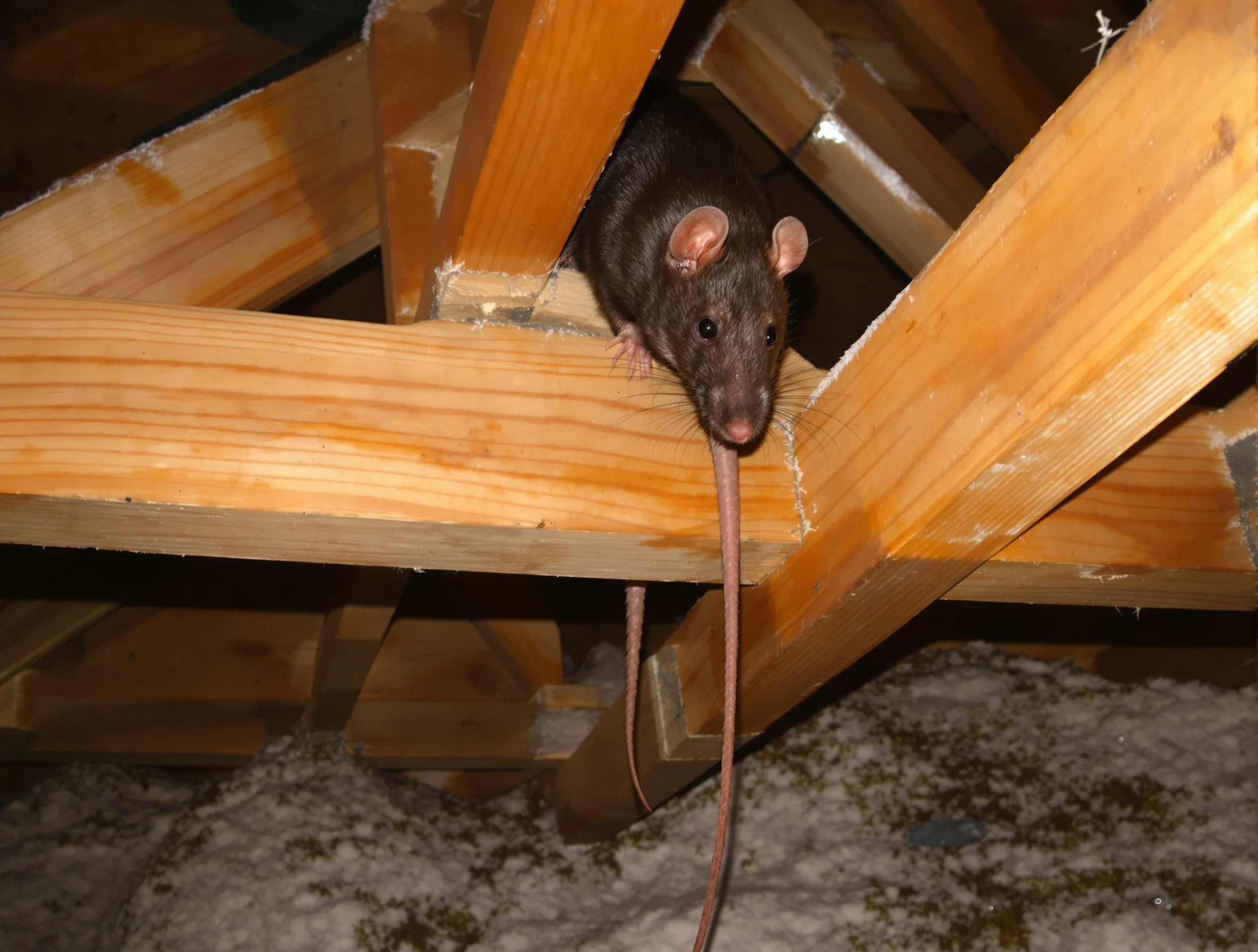
Two rat species cause nearly all rat problems in Texas: the roof rat (Rattus rattus) and the Norway rat (Rattus norvegicus). Of the two, the roof rat is by far the most common in Texas — it thrives in the state's warm climate, lush suburban landscaping, and fruit trees, and it is the species behind the classic "rat in the attic" complaint from Houston to Dallas to Austin.
- Roof rats (also called black rats or ship rats) are sleek, dark brown to black, 6 to 8 inches long with a tail longer than the body. They are superb climbers that nest in attics, roof spaces, trees, and dense vegetation. Roof rats are heavily concentrated along the Gulf Coast and in every major Texas metro, especially neighborhoods with mature trees, citrus, and palm trees.
- Norway rats (also called brown rats or sewer rats) are larger and stockier — up to 10 inches of body with a shorter tail — with brownish-gray fur. They live in ground burrows along foundations, under concrete slabs, in sewers, and around commercial buildings. In Texas they are mostly found in older urban cores and industrial areas.
Signs of a Rat Infestation
- Droppings: Large (1/2 to 3/4 inch), dark, capsule-shaped pellets found in the attic, garage, along fence lines, and near pet food or fruit trees. Roof rat droppings have pointed ends; Norway rat droppings are blunt.
- Sounds: Heavy scurrying, scratching, thumping, or gnawing in the attic, ceiling, or walls at night — noticeably louder than mice.
- Gnaw marks: Rats gnaw wood, electrical wiring, PVC pipes, and even lead pipe. Fresh gnaw marks show pale wood; old marks darken over time.
- Grease marks: Dark, oily smudges along rafters, walls, and pipes where rats repeatedly travel. Established runways develop visible smears.
- Burrows: Norway rat burrows appear as 2 to 4 inch holes along foundations, under sheds, in flower beds, and beneath concrete slabs, often with freshly dug soil.
- Yard evidence: Partially eaten citrus or fruit on the ground, hollowed-out oranges still hanging on the tree, and disturbed bird feeders are classic roof rat signs in Texas.
- Pet behavior: Dogs barking or fixating at walls, ceilings, or the attic hatch at night.
Health and Property Risks
Rats are a serious health hazard. They spread leptospirosis through urine contaminating soil and water (a risk to both people and dogs), salmonellosis through food contamination, and rat-bite fever through bites, scratches, or handling dead rats. Rats also bring fleas, ticks, and mites into the home — historically, rat fleas were the vector of plague, which still occurs occasionally in the American Southwest.
Property damage is equally significant. Rat gnawing on electrical wiring is a leading cause of house fires of undetermined origin. Rats in attics destroy insulation by trampling and soiling it, chew HVAC ductwork and refrigerant line insulation, and gnaw PVC water lines — a hidden cause of attic leaks and water damage across Texas.
How Rats Get Into Texas Homes
Rats need only a 1/2 inch gap — about the diameter of a quarter — to enter. Roof rats access upper-level openings by climbing trees, utility lines, brick walls, stucco, and downspouts; they can jump up to 4 feet horizontally and travel along fence tops and power lines like highways. The most common roof rat entry points are gaps where the roofline meets the soffit, uncapped chimneys, damaged vent screens, and construction gaps around gable vents. Norway rats enter at ground level through foundation cracks, gaps around plumbing, and broken garage door seals.
Rat Control Methods
Exclusion (Rat-Proofing)
Exclusion is the foundation of permanent rat control. Every gap 1/2 inch and larger must be sealed with rat-proof materials — galvanized hardware cloth, metal flashing, and concrete patch. Roof work matters most for roof rats: sealing roofline gaps, screening vents, and capping chimneys. Because rats can chew through wood, foam, plastic, and even aluminum, material choice is critical. Professional exclusion typically costs $500 to $2,000.
Trapping
Rat-sized snap traps and electronic traps are the standard for removing rats already inside. Critical difference from mice: rats are neophobic — they avoid new objects for days. Professionals pre-bait unset traps along established runways (in attics, along walls, near droppings) until rats feed confidently, then set them. Indoor poison bait is avoided — a poisoned rat dying in a wall void creates weeks of odor and secondary pest problems.
Exterior Bait Stations
Tamper-resistant bait stations placed around the property perimeter reduce outdoor rat populations before they reach the structure. Stations must be anchored, locked, and checked monthly. This is an ongoing service, not a one-time fix, and typically runs $30 to $60 per month.
Attic Restoration
After a heavy attic infestation, contaminated insulation should be removed and replaced, and the attic sanitized. Rat urine and droppings in insulation create lingering odors that attract new rodents and degrade indoor air quality. Attic restoration adds $500 to $2,500 depending on attic size and contamination level.
Rats vs Mice
If you're seeing small rice-sized droppings scattered through kitchen cabinets rather than large droppings in the attic or garage, you may be dealing with house mice instead — see our mice control guide. For a full side-by-side comparison of all three species that invade Texas homes, see the general rodent control guide.
Rat Prevention Tips
- Trim tree branches at least 4 feet away from the roof — this is the single most effective roof rat prevention step.
- Pick up fallen citrus and fruit daily; harvest ripe fruit promptly.
- Seal all roofline gaps, screen vents, cap the chimney, and repair damaged soffits.
- Remove ivy and dense ground cover from the foundation — it shelters both rats and their runways.
- Store pet food and bird seed in sealed metal containers; bring pet bowls in at night.
- Use lidded, tight-fitting garbage cans and clean up spilled bird seed below feeders.
- Eliminate water sources: fix dripping hose bibs, AC condensate lines, and irrigation leaks.
Licensed Texas Companies
537 companies offering wildlife removal
537 companies
Adams Exterminating
Integrity Pest and Termite
Justice Pest Services

Pest Control Conroe - Full Scope
Georgetown Pest Control
EvoFoam Pest Control
The Bug Master

Urban Texas Pest Control
ChemTec Pest Control
Golden Rule Pest Termite & Weed Control

Covenant Pest Control
Big M Pest Control
Hunter Pest Control
Yellow City Pest Control
Phillips Pest Solutions

Zappit Weed and Pest Control llc
Critter Call Pest Control

Ross Pest and Lawn
Frequently Asked Questions
Best Professional Treatment
Humane removal of raccoons, opossums, bats, squirrels, skunks, and other wildlife
Rats Removal Cost Guides
Find Local Exterminators for Rats Near You
Find mouse and rat exterminators with wildlife removal licenses near you in Texas.
Find Licensed Companies by Texas City
Licensed rats control companies in major Texas cities
Rats by city: San Antonio