
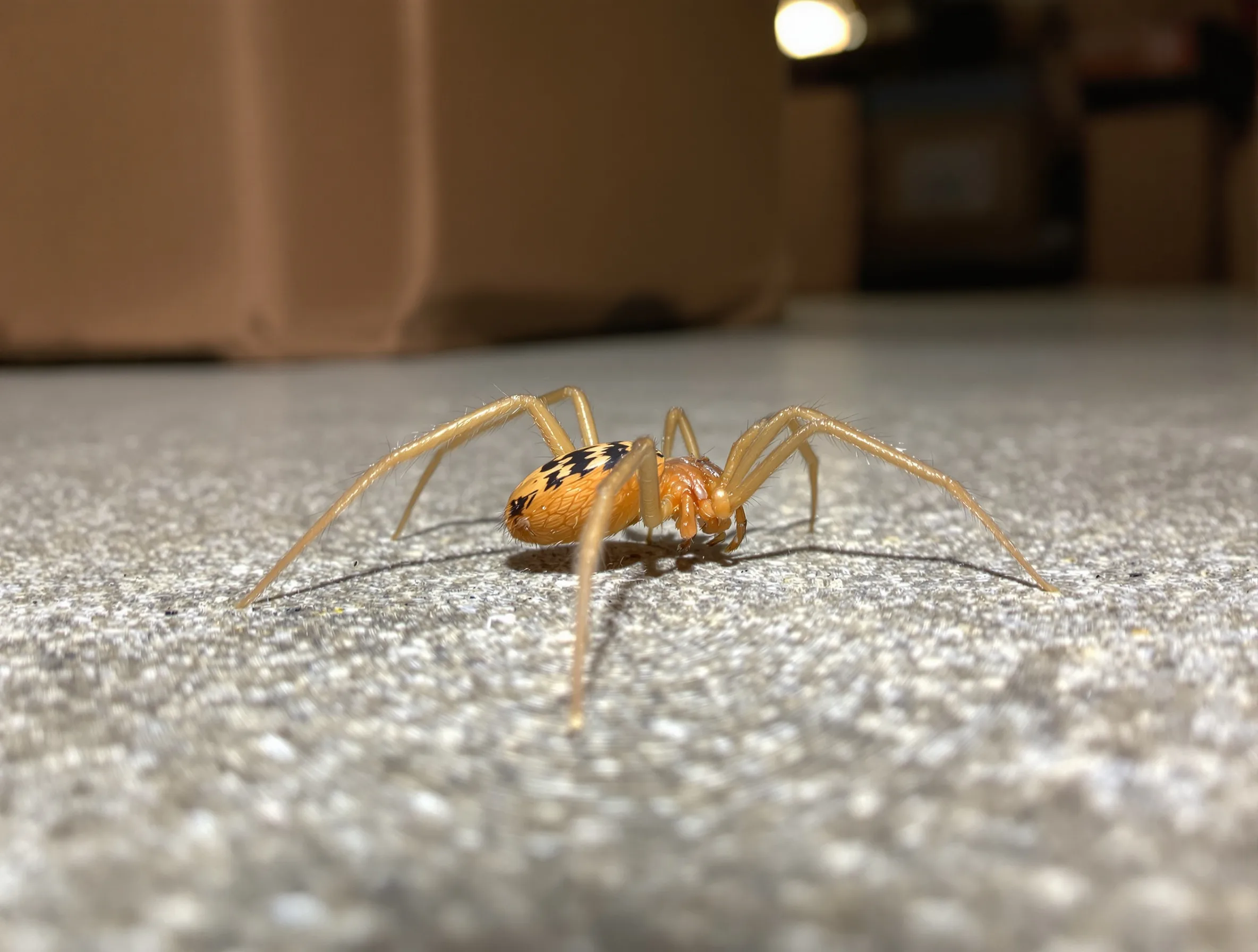
Brown Recluse Spider in Texas — Complete Guide
Venomous spider found across Texas, bites cause necrotic wounds
Not sure it's a Brown Recluse Spider?
Snap a photo — our free AI tool identifies Texas pests in seconds.
Quick facts — brown recluse in Texas
- Species: brown recluse (Loxosceles reclusa) — one of only two medically significant spiders in Texas
- Range: established across Central, North, and East Texas; much less common in the far west and the Rio Grande Valley
- Key marks: dark violin shape on the cephalothorax, six eyes in three pairs, plain unbanded legs
- Bite risk: bites only when pressed against skin; most bites heal without serious complications, but some develop slow-healing necrotic lesions
- Emergency: Texas Poison Center Network 1-800-222-1222 (24/7, free)
- Peak activity: March – October; males wander most in late summer
About the Brown Recluse in Texas
The brown recluse (Loxosceles reclusa) is one of the most feared spiders in Texas — and one of the most misidentified. It is genuinely established across the central and eastern two-thirds of the state, from DFW and Austin through Houston and East Texas, and it does live successfully inside Texas homes. But it is also shy, non-aggressive, and far less common than the volume of "brown recluse sightings" suggests. Texas A&M AgriLife entomologists note that the large majority of spiders submitted as recluse suspects turn out to be harmless species such as wolf spiders or southern house spiders.
That said, the brown recluse is a real hazard worth taking seriously. It is one of only two spiders in Texas (along with the black widow) whose bite is considered medically significant, and established indoor populations — especially in older homes with attics, storage rooms, and cardboard box clutter — can persist for years without being noticed.
Identifying a Brown Recluse
A confident identification rests on three features working together. No single one is enough on its own:
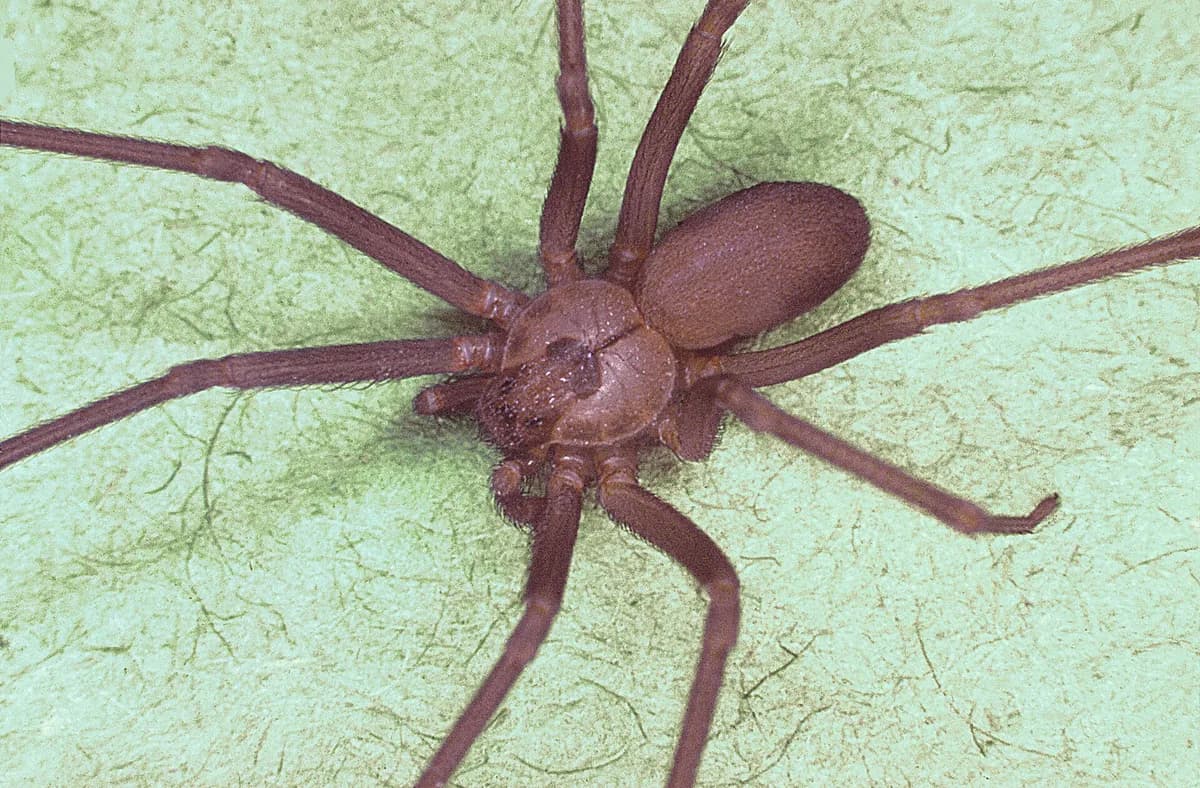
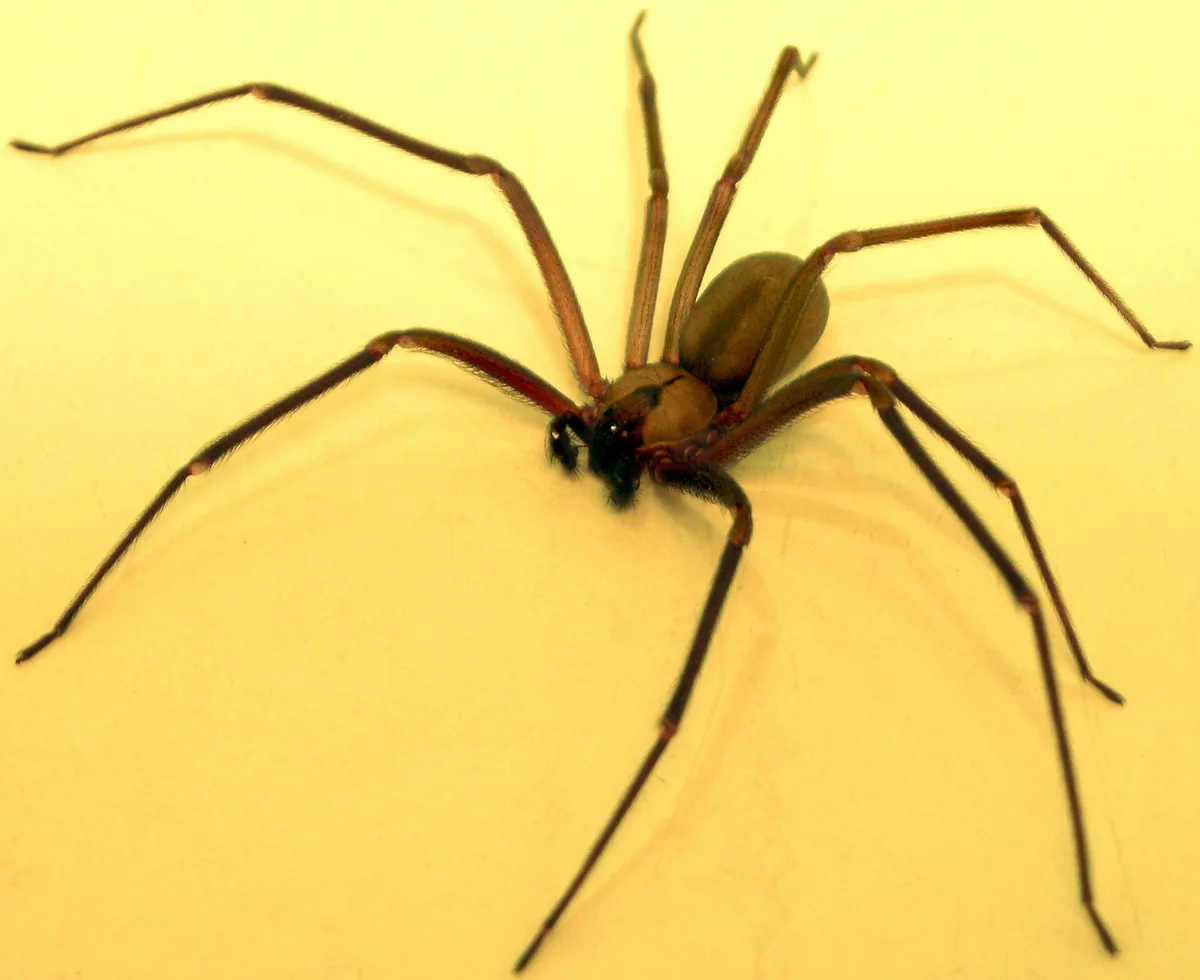
- The violin marking: a dark brown violin- or fiddle-shaped mark on the cephalothorax (the front body section), with the neck of the violin pointing back toward the abdomen. The marking is clearest on adults and can be faint on young spiders. Several other spiders have vague dark patterns here, so the violin alone is not proof.
- Six eyes in three pairs: the most reliable field mark. Most spiders have eight eyes; recluse spiders have six, arranged in three pairs (dyads) in a semicircle. You need magnification to see this, but on a good phone photo it is often countable.
- Uniform color, no patterns: tan to medium brown overall, with plain legs — no stripes, bands, or spines, covered only in fine short hairs — and an abdomen with no spots or markings. If the spider has striped or spiny legs or a patterned abdomen, it is not a brown recluse.
Adults have a body length of about 1/4 to 1/2 inch, and roughly the diameter of a quarter with legs extended. They are smaller and more delicate than most people expect.
Common Texas Lookalikes
Before assuming a recluse, rule out these frequent impostors:
- Wolf spiders: bigger, hairier, and more robust, with striped or mottled legs and a very different eye pattern (two large forward-facing eyes visible without magnification). Harmless.
- Southern house spiders: males are brown and leggy and are the single most commonly mistaken species in Texas. They have eight eyes, noticeably longer pedipalps (little "boxing glove" arms near the mouth), and no violin.
- Huntsman spiders: much larger, flattened, crab-like, and often found on walls. Intimidating but harmless.
- Cellar spiders and orb weavers: web-dwellers with patterned abdomens. Brown recluses are almost never found in open, organized webs.
Where Brown Recluses Live in Texas Homes
True to their name, brown recluses avoid open spaces and activity. Outdoors they shelter under rocks, bark, and debris. Indoors they concentrate in dark, dry, undisturbed storage areas: attics, closets, garages, and sheds; cardboard boxes and stored papers; clothing, shoes, gloves, and bedding that has not been moved for weeks; behind furniture, baseboards, and wall-mounted pictures; and inside wall voids and crawl spaces. Cardboard is a particular favorite — a long-undisturbed stack of moving boxes is prime recluse habitat.
They are active at night, hunting small insects rather than catching them in webs. Seasonally, activity in Texas rises from March through October, and adult males wander farthest in late summer while searching for females — which is when most unexpected encounters happen.
Brown Recluse Bites — Symptoms and What to Do
Brown recluses are not aggressive. Bites almost always happen when the spider is trapped against skin — when someone puts on clothing, shoes, or gloves where a spider is hiding, rolls over on one in bed, or reaches into a stored box. The bite itself is usually painless or a mild sting, which is why many bites are not noticed at first.
Over the following 2 to 8 hours, a genuine recluse bite may develop:
- Redness, swelling, and a small blister at the site, sometimes with a pale center and red ring (a "bull's-eye" lesion)
- In a minority of cases, an enlarging necrotic lesion — skin and tissue at the center of the bite die, forming an open sore that can take weeks to months to heal and may leave a scar
- Rarely, systemic symptoms (systemic loxoscelism): fever, chills, nausea, joint pain, or — in severe cases, mostly in children — destruction of red blood cells requiring hospitalization
Important context: most suspected recluse bites turn out to be something else — infected wounds, MRSA skin infections, and other conditions are routinely misdiagnosed as spider bites. And the majority of confirmed recluse bites heal on their own without necrosis.
What to do: wash the area with soap and water, apply a cold compress, and elevate the limb. Catch or photograph the spider if you safely can — identification matters for treatment. See a doctor promptly if the lesion keeps expanding over 24 to 48 hours, develops a dark or open center, or if you develop fever, chills, or body aches. For advice at any hour, call the Texas Poison Center Network at 1-800-222-1222.
Brown Recluse Prevention Tips
- Replace cardboard storage boxes with sealed plastic bins, especially in attics, garages, and closets.
- Shake out shoes, boots, gloves, and clothing that has been stored or left on the floor before putting them on.
- Wear gloves when moving firewood, lumber, stored boxes, or items from long-undisturbed areas.
- Keep beds a few inches from walls, remove bed skirts that touch the floor, and avoid storing items under beds.
- Seal cracks around baseboards, windows, doors, and utility penetrations; install door sweeps on exterior doors.
- Reduce the insects they hunt: address general pest pressure and switch porch lights to yellow bug bulbs.
- Place sticky traps along baseboards, in closets, and behind furniture — they catch recluses and tell you whether you have an active population.
Brown Recluse Control in Texas
Effective recluse control combines sanitation, exclusion, and targeted treatment. Decluttering and sealing remove the habitat; sticky traps monitor where the population is concentrated. Licensed pest control professionals add the tools that matter most for established infestations: residual dust insecticides applied into wall voids and attic spaces, crack-and-crevice treatments along baseboards and storage areas, and perimeter treatments that reduce the insects recluses feed on.
Because recluses hide deep in undisturbed areas, one-time spraying rarely solves an established indoor population — plan on a program rather than a single visit. For a broader look at treatment methods, see our Texas spider control guide, or browse licensed spider control companies in your area below.
Licensed Texas Companies
2014 companies offering pest control
2,014 companies

Romex Pest & Termite Control

Urbanex Pest Control
A-Action Home Inspection Houston
Forterra Pest Control
EnviroCon Pest Control

X Out Pest Services

Adams Exterminating

Innovative Pest Control

Cerv Property Solutions San Antonio
Ace Pest Control

Integrity Pest and Termite

The CanMan

Bill Clark Pest Control, Inc.

Bug Blasters Pest Control

Pest Solutions of North Texas

Pinnacle Pest Defense
BugMan Pest Control & Termite Control

Justice Pest Services
Frequently Asked Questions
Best Professional Treatment
General pest management for common household pests including roaches, ants, spiders, and more
Find Local Exterminators for Brown Recluse Spider Near You
Find crack & crevice treatment specialists for spider control in Texas.
Find Licensed Companies by Texas City
Licensed brown recluse spider control companies in major Texas cities