
Squirrels in Texas — Types, Damage & Removal — Complete Guide
Attic invaders that chew wiring and insulation across Texas homes
Not sure it's a Squirrels?
Snap a photo — our free AI tool identifies Texas pests in seconds.
About Squirrels in Texas
Texas is home to several squirrel species, but the fox squirrel and eastern gray squirrel are the two most commonly encountered by homeowners. While squirrels are entertaining to watch in the yard, they become serious pests when they move into attics, soffits, and wall voids. Squirrels cause significant property damage by chewing through electrical wiring (a documented fire hazard), shredding insulation, gnawing on structural wood, and contaminating attic spaces with urine and droppings. Professional squirrel removal and exclusion is the most effective long-term solution.
Types of Squirrels in Texas
Fox Squirrel
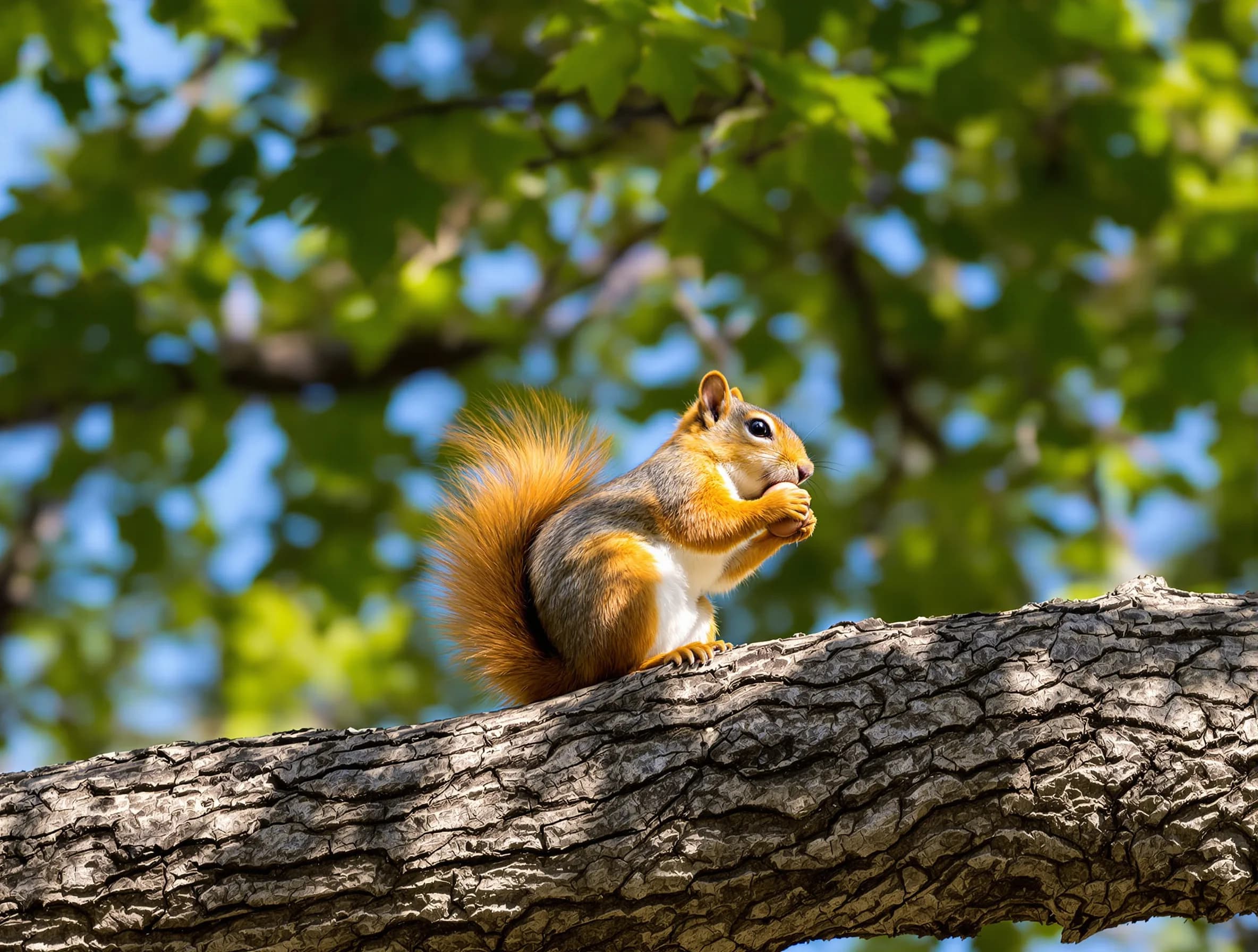
The fox squirrel is the largest tree squirrel in Texas, measuring 19 to 29 inches including the tail, with a weight of 1 to 3 pounds. They have rusty reddish-brown fur with a yellowish-orange belly and a large, bushy tail. Fox squirrels are the most common species in urban and suburban areas across Texas and are the squirrel most likely to be found in attics.
Eastern Gray Squirrel
Smaller than fox squirrels, eastern gray squirrels are 16 to 20 inches long and weigh about 1 pound. They have gray fur with white undersides and a gray, bushy tail. Found primarily in East Texas woodlands and urban areas with mature hardwood trees, they are agile climbers and prolific chewers.
Rock Squirrel
Rock squirrels are ground-dwelling squirrels found in the Hill Country, Central Texas, and West Texas. They live in burrows among rocky outcrops and are often mistaken for ground squirrels. They rarely enter homes but can damage landscaping and gardens.
Flying Squirrels
Southern flying squirrels are small, nocturnal squirrels found in East Texas forests. They do not actually fly but glide using a membrane between their front and back legs. Flying squirrels occasionally nest in attics and are distinguished from rats by their flat, gliding membrane and large dark eyes.
Squirrel Damage to Homes
Squirrels in attics cause extensive property damage that can be costly to repair:
- Electrical wiring: Squirrels chew on electrical wires, stripping insulation and creating exposed conductors. This is a documented fire hazard — the National Fire Protection Association links rodent and squirrel gnawing to thousands of structure fires annually.
- Insulation: Squirrels shred fiberglass and cellulose insulation for nesting material, reducing your home's energy efficiency and creating costly replacement needs.
- Structural wood: Gnawing on rafters, joists, fascia boards, and soffits weakens structural components and creates new entry points.
- PVC pipes: Squirrels chew through plastic plumbing lines, potentially causing water damage.
- Contamination: Accumulated urine and droppings in attic insulation create odor problems and potential health hazards.
Signs of Squirrels in Your Attic
Squirrels are diurnal (active during the day), which distinguishes them from rats and mice (nocturnal). Key signs include:
- Scratching, scurrying, and chewing sounds in the attic during early morning (6 to 9 AM) and late afternoon (4 to 6 PM)
- Gnaw marks on exterior fascia boards, soffits, and roof edges — entry holes are typically 1.5 to 3 inches in diameter
- Visible holes in the roofline where squirrels have chewed through wood or plastic
- Droppings in the attic, barrel-shaped and slightly larger than rat droppings
- Shredded insulation, leaves, and other nesting material gathered in attic corners
- Chewed or stripped electrical wiring visible in the attic
Squirrel Removal Methods
One-Way Exclusion Doors
The preferred professional method. A one-way exclusion device is installed over the primary entry point, allowing squirrels to exit but preventing re-entry. All secondary entry points are sealed simultaneously with steel mesh or metal flashing. Once all squirrels have exited (typically within 48 to 72 hours), the exclusion device is removed and the final entry point is sealed permanently.
Live Trapping
Cage traps baited with peanut butter, nuts, or seeds are placed near entry points or inside the attic. Trapped squirrels are relocated according to Texas Parks & Wildlife regulations. Trapping is used when exclusion alone is not feasible or when squirrels refuse to exit through one-way doors.
Entry Point Sealing (Exclusion)
All entry points must be sealed with materials squirrels cannot chew through — heavy-gauge galvanized steel mesh, steel flashing, or aluminum sheeting. Wood, plastic, and lightweight screening are ineffective because squirrels will chew through them within hours. Common entry points include soffit-to-fascia gaps, gable vent openings, plumbing and electrical penetrations, and construction gaps at roof intersections.
Squirrel Prevention Tips
- Trim tree branches at least 6 to 8 feet from the roofline — squirrels can jump up to 10 feet horizontally between branches and roofs.
- Install metal squirrel guards on utility lines, downspouts, and poles near the roof.
- Cap chimneys with steel mesh chimney caps rated for wildlife exclusion.
- Inspect the roofline, soffits, and fascia boards seasonally for new gnaw marks or holes.
- Seal all openings larger than 1.5 inches with steel mesh or metal flashing.
- Remove bird feeders that attract squirrels or use squirrel-proof feeder designs.
- Keep attic vents screened with heavy-gauge hardware cloth.
Licensed Texas Companies
537 companies offering wildlife removal
537 companies
Adams Exterminating
Integrity Pest and Termite
Justice Pest Services

Pest Control Conroe - Full Scope
Georgetown Pest Control
EvoFoam Pest Control
The Bug Master

Urban Texas Pest Control
ChemTec Pest Control
Golden Rule Pest Termite & Weed Control
Covenant Pest Control
Big M Pest Control
Hunter Pest Control
Yellow City Pest Control
Phillips Pest Solutions

Zappit Weed and Pest Control llc
Critter Call Pest Control
Ross Pest and Lawn
Frequently Asked Questions
Best Professional Treatment
Humane removal of raccoons, opossums, bats, squirrels, skunks, and other wildlife
Squirrels Removal Cost Guides
Find Local Exterminators for Squirrels Near You
Locate humane wildlife removal and animal control specialists licensed in Texas.
Find Licensed Companies by Texas City
Licensed squirrels control companies in major Texas cities