

Roof Rats in Texas — Complete Guide
The attic rat of Texas — sleek climber of trees, power lines, and rooflines
Not sure it's a Roof Rat?
Snap a photo — our free AI tool identifies Texas pests in seconds.
Quick facts — roof rats in Texas
- Species: roof rat (Rattus rattus) — also called black rat or ship rat; the most common rat in Texas homes
- Build: sleek, 6–8 in body with a tail longer than the body
- Where they live: attics, rooflines, trees — superb climbers, not burrowers
- Texas hotspots: every major metro — Houston, DFW, Austin, San Antonio — especially older tree-covered neighborhoods
- Risks: gnawed wiring (fire hazard), ruined insulation, leptospirosis, salmonella
- Entry gap needed: just 1/2 inch at the roofline
About Roof Rats in Texas
The roof rat (Rattus rattus) is the Texas rat — the species behind nearly every "scratching in the attic" call from Houston to Dallas to Austin. It thrives in the state's warm climate, mature landscaping, and fruit trees, and it is a far more common home invader than its ground-dwelling cousin, the Norway rat. Roof rats are agile climbers that treat fence lines, utility wires, and tree branches as highways straight to your roofline. For the full control strategy, see our Texas rat control guide.
Identifying a Roof Rat
Roof rats are built like athletes: sleek and slender, 6 to 8 inches of body with a scaly tail noticeably longer than head and body combined. The snout is pointed, the ears are large (folded forward, they reach past the eyes), and the fur is dark brown to black, sometimes grayish, lighter on the belly. Droppings are about 1/2 inch with pointed ends. Any rat seen on a roof, fence top, power line, or in a tree is a roof rat — Norway rats stay on the ground.
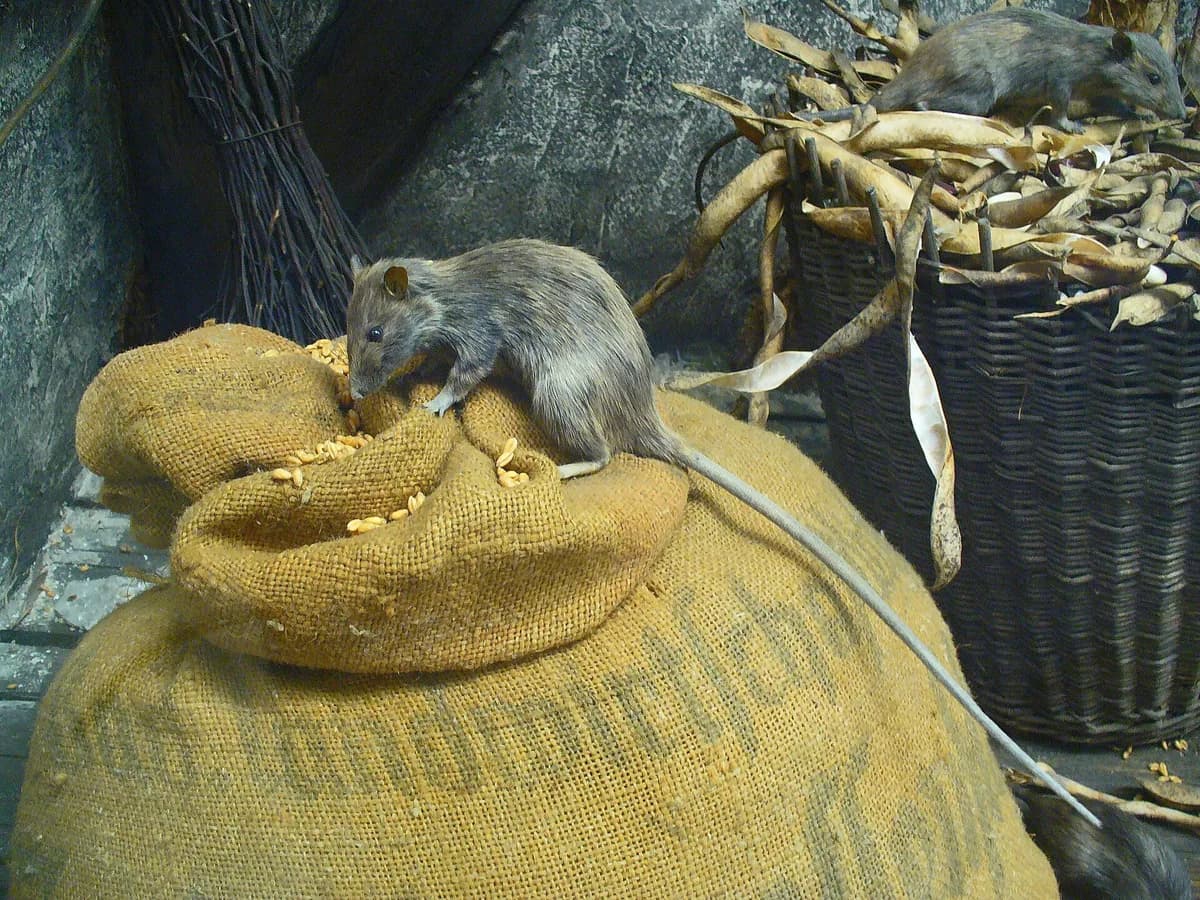
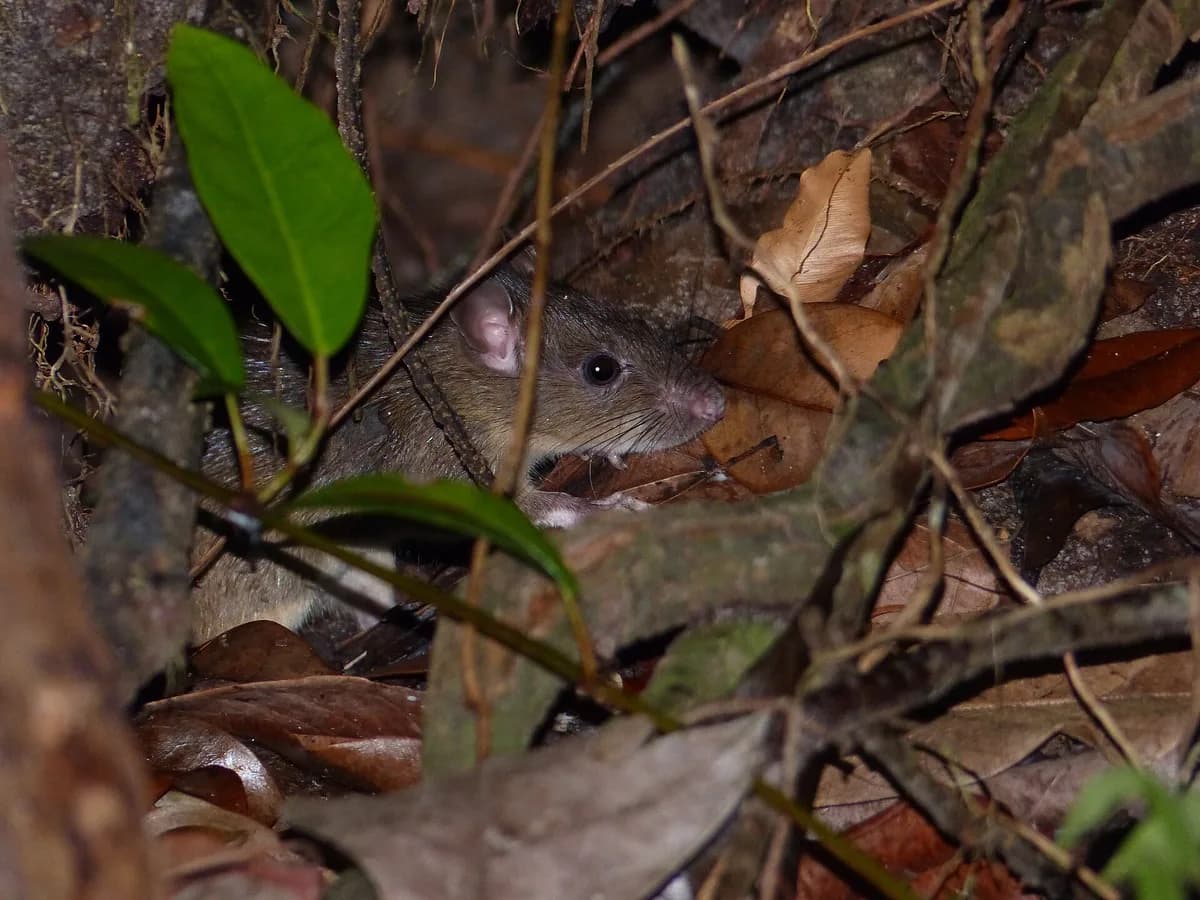
Roof Rat vs Norway Rat
The short version (full table on our Norway rat page): roof rats are sleek with pointed snouts, large ears, tails longer than the body, and pointed droppings — and they live up high. Norway rats are stocky with blunt snouts, small ears, tails shorter than the body, and blunt droppings — and they live in ground burrows. In Texas, the roof rat dominates the suburbs; the Norway rat holds older urban cores and industrial areas. Attic activity almost always means roof rats.
Why Texas Suburbs Are Roof Rat Paradise
Everything a roof rat needs is standard Texas landscaping: mature oaks and pecans touching rooflines, citrus and fruit trees dropping food, bird feeders, dense jasmine and ivy for cover, and warm attics full of undisturbed insulation. The heaviest pressure sits in established neighborhoods of Houston (especially near the bayous and the Heights), the older DFW suburbs, central Austin, and San Antonio — anywhere the tree canopy is older than the houses. New developments on cleared land see far fewer.
Damage and Disease
Roof rats gnaw constantly to keep their incisors worn down: electrical wiring (a leading cause of house fires of undetermined origin), HVAC ductwork, refrigerant line insulation, and PVC water lines — a hidden cause of attic leaks across Texas. They trample and soil insulation with urine and droppings, ruining its R-value and creating odor and health hazards that persist after the rats are gone. Health risks include leptospirosis, salmonellosis, rat-bite fever, and the fleas and mites they carry indoors.
Roof Rat Prevention Tips
- Trim tree branches at least 4 feet from the roof — the single most effective prevention step.
- Pick up fallen citrus and fruit daily; harvest ripe fruit promptly.
- Seal roofline gaps, screen vents with hardware cloth, cap the chimney, and repair damaged soffits — anything 1/2 inch or larger.
- Remove ivy and dense ground cover from walls and fences.
- Store pet food and bird seed in sealed metal containers; bring pet bowls in at night.
- Use tight-lidded garbage cans and clean up spilled seed under feeders.
- Eliminate water sources: dripping hose bibs, AC condensate lines, irrigation leaks.
Roof Rat Control in Texas
Permanent roof rat control is exclusion first, trapping second. A professional inspects the full roofline and seals every 1/2-inch gap with rat-proof materials (hardware cloth, metal flashing) — typically $500 to $2,000 — while snap traps placed along attic runways remove the rats already inside ($200 to $400 initial). Pre-baiting unset traps matters: rats avoid new objects for days. Indoor poison is avoided — dead rats in wall voids mean weeks of odor. Heavy infestations add attic cleanup and insulation replacement ($500 to $2,500), and exterior bait station monitoring runs $30 to $60 per month.
See our rat control guide and the rodent control guide for the complete strategy, or browse licensed rat control companies in your area below.
Licensed Texas Companies
2027 companies offering pest control
2,027 companies
Romex Pest & Termite Control
Urbanex Pest Control
A-Action Home Inspection Houston
Forterra Pest Control
EnviroCon Pest Control
X Out Pest Services

Adams Exterminating

Innovative Pest Control
Cerv Property Solutions San Antonio
Ace Pest Control
Integrity Pest and Termite

The CanMan
Bill Clark Pest Control, Inc.

Bug Blasters Pest Control

Pest Solutions of North Texas

Pinnacle Pest Defense
BugMan Pest Control & Termite Control
Justice Pest Services
Frequently Asked Questions
Best Professional Treatment
General pest management for common household pests including roaches, ants, spiders, and more
Find Local Exterminators for Roof Rat Near You
Use our interactive map to find licensed roof rat control companies near your Texas location.
Find Licensed Companies by Texas City
Licensed roof rat control companies in major Texas cities