

Striped Bark Scorpion in Texas — Complete Guide
The most common scorpion in Texas — climber, home invader, painful sting
Not sure it's a Striped Bark Scorpion?
Snap a photo — our free AI tool identifies Texas pests in seconds.
Quick facts — striped bark scorpion in Texas
- Species: striped bark scorpion (Centruroides vittatus) — ~99% of residential scorpion encounters in Texas
- Size: 2 to 3 inches including the tail, pale yellow-tan with two dark back stripes
- Sting: painful like a wasp sting, rarely dangerous for healthy adults; higher risk for kids under 5 and seniors
- Emergency: Texas Poison Center Network 1-800-222-1222 (24/7, free)
- Unique habit: climbs — walls, ceilings, trees; enters homes at ground level and through rooflines
- Detection: glows bright blue-green under a UV blacklight at night
About the Striped Bark Scorpion in Texas
The striped bark scorpion (Centruroides vittatus) is the Texas scorpion. Of the roughly 18 scorpion species in the state, this one accounts for the vast majority of encounters and essentially all residential stings. It is a small, slender, climbing scorpion that lives under bark and rocks by day and hunts insects by night — and it has adapted beautifully to suburban Texas, thriving in the rocky landscaping, cedar fences, and limestone terrain of new development.
For the full statewide picture — species comparison table, treatment methods, and cost data — see our Texas scorpion control guide. This page focuses on the striped bark scorpion itself.
Identifying a Striped Bark Scorpion
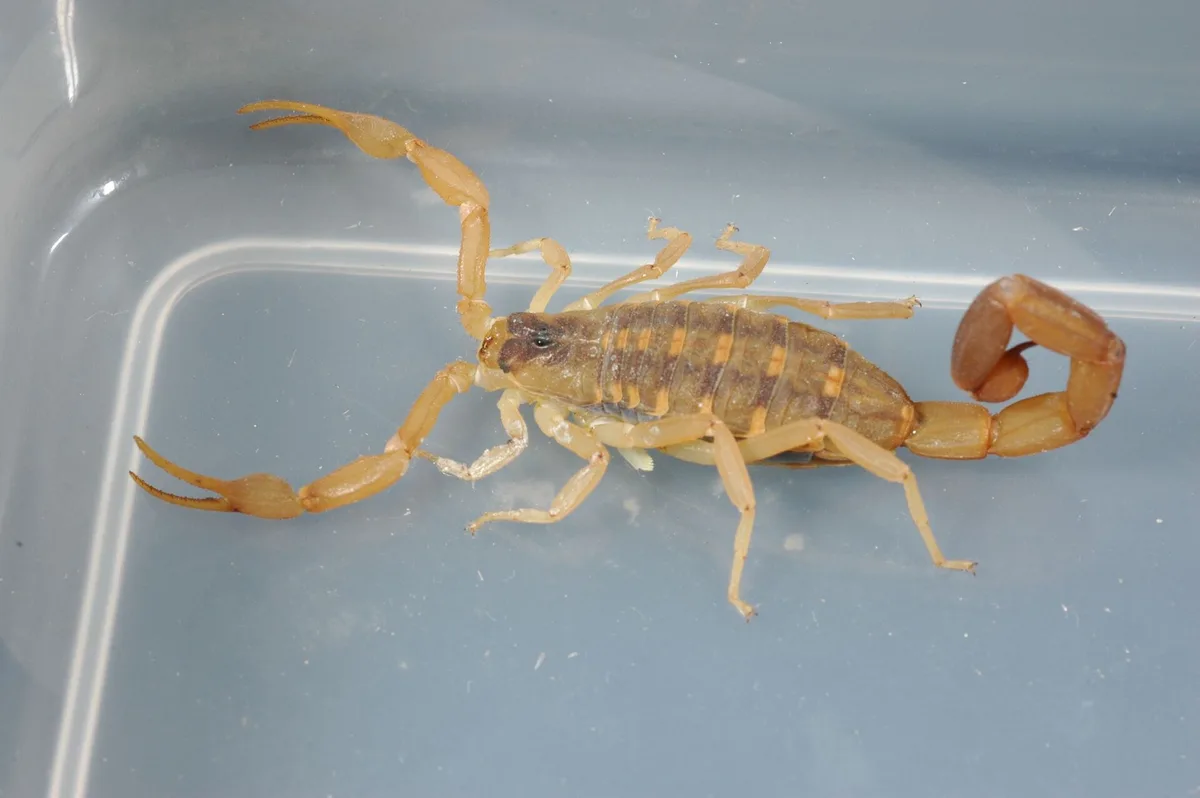
The striped bark scorpion is pale yellowish-tan with two dark longitudinal stripes running down the center of its back and a dark triangular marking on the head. Adults are slender, 2 to 3 inches long including the tail, with relatively thin pincers — thick, heavy pincers would suggest one of the harmless West Texas desert species instead. The tail (metasoma) is noticeably slimmer than the body and carries the stinger at its tip.
Two field marks clinch the ID in Texas: it climbs — the only common Texas scorpion that scales stucco, brick, trees, and interior walls and ceilings — and it fluoresces a vivid blue-green under ultraviolet light. Juveniles are paler and smaller but show the same two stripes.
Behavior: The Scorpion on Your Ceiling
Striped bark scorpions are nocturnal hunters that feed on crickets, roaches, spiders, and other small invertebrates. By day they shelter under bark, rocks, landscape timbers, and debris — anywhere with a tight, dark crevice. Their climbing ability is the trait homeowners notice most: striped bark scorpions scale rough surfaces with ease, which is why they turn up on interior walls and ceilings, inside folded towels and clothing, and in beds — and why sealing the ground floor alone doesn't stop them; they also enter through rooflines, eaves, and weep holes above ground level.
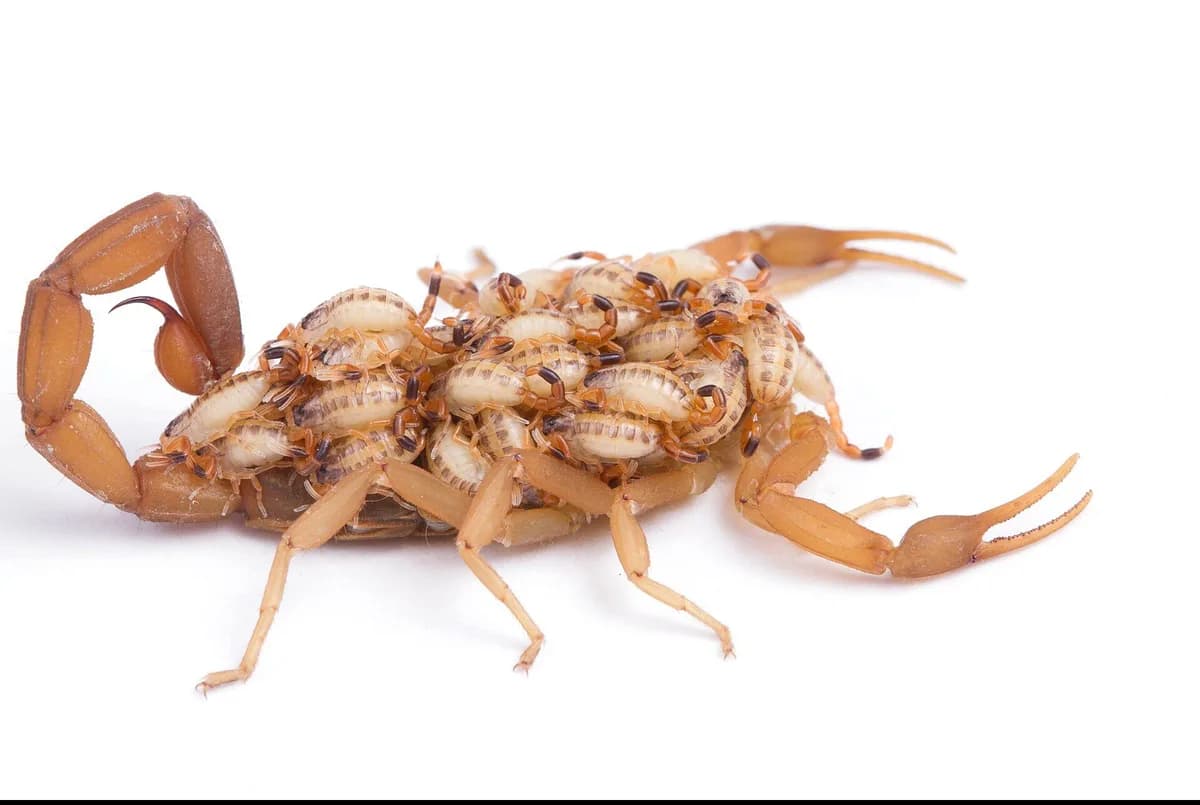
One reproductive quirk worth knowing: females bear live young — 25 to 50 at a time — and carry them on their backs until their first molt. A mother found indoors can mean a sudden cluster of tiny scorpions a week later.
Where Striped Bark Scorpions Live in Texas
The species is found statewide, but residential encounters concentrate in the Hill Country and rocky suburbs — Austin, Round Rock, Cedar Park, Georgetown, New Braunfels, Boerne, Kerrville, and Fredericksburg — along with the San Antonio metro, West Texas cities, and the DFW fringe where construction pushes onto limestone terrain. Homes built on rocky ground with desert-style landscaping see the most pressure. Activity runs April through October, peaking in hot, dry midsummer stretches and after heavy rains that flood their shelter sites.
Sting — Symptoms and Treatment
Stings happen when the scorpion is pressed against skin — stepping on one barefoot, reaching into a shoe or glove, or rolling onto one in bed. For healthy adults, a striped bark scorpion sting is comparable to a wasp sting: immediate sharp pain, followed by localized burning, tingling, or numbness that can radiate from the site, fading over several hours to a day. Serious reactions are uncommon, but children under 5, seniors, and people with compromised immune systems can develop severe symptoms: muscle twitching, excessive drooling, difficulty swallowing, roving eye movements, or breathing problems.
What to do: wash the sting with soap and water, apply a cold compress 10 minutes at a time, and take acetaminophen or ibuprofen for pain. Call the Texas Poison Center Network at 1-800-222-1222 (free, 24/7) for guidance — they manage Texas scorpion stings daily. Call 911 for breathing difficulty, muscle twitching, or any sting to a small child. Note that the medically dangerous Arizona bark scorpion is not established in Texas — the striped bark scorpion's sting is painful, not life-threatening for most people.
UV Blacklight Detection
All scorpions fluoresce under ultraviolet light, and it is the single most effective detection tool: after dark, walk the property with an inexpensive UV flashlight and striped bark scorpions glow bright blue-green from yards away. Scan the foundation, rock walls, mulch beds, woodpiles, and cedar fences outside; baseboards, closets, bathrooms, and garage walls inside. A UV survey between dusk and midnight is the first thing a pest control professional does on a scorpion call — and a useful monthly habit for Hill Country homeowners from April through October.
Striped Bark Scorpion Prevention Tips
- Shake out shoes, boots, gloves, and clothing left on the floor or in the garage before putting them on.
- Seal entry points — door sweeps, weatherstripping, caulked plumbing penetrations, and screened weep holes; scorpions squeeze through gaps of 1/16 inch. Remember the roofline and eaves, not just the ground floor.
- Clear harborage: rock piles, landscape timbers, firewood stacks, and debris away from the foundation; keep mulch beds thin.
- Pull beds a few inches from walls and keep bedding off the floor; consider glass jars under bed legs in scorpion-prone areas.
- Reduce prey insects — crickets and roaches around the home are scorpion food. Yellow bug bulbs outside attract fewer of them.
- Manage moisture: fix drips and condensation lines, since scorpions enter seeking water as well as prey.
- Do a monthly UV flashlight walk during the warm months to catch activity early.
Striped Bark Scorpion Control in Texas
Professional scorpion control combines exclusion, habitat reduction, and targeted chemistry: perimeter barrier sprays, dust insecticides applied into wall voids and weep holes, and treatment of harborage areas like rock walls and fence lines. General pest service that suppresses crickets and roaches removes the food supply — a core part of any scorpion program. Initial treatment typically runs $200 to $400 with $75 to $150 follow-up visits; entry-point sealing adds $300 to $1,000.
For method details and the statewide species comparison, see our scorpion control guide, or browse licensed scorpion control companies in your area below.
Licensed Texas Companies
2027 companies offering pest control
2,027 companies

Romex Pest & Termite Control
Urbanex Pest Control
A-Action Home Inspection Houston
Forterra Pest Control
EnviroCon Pest Control

X Out Pest Services

Adams Exterminating

Innovative Pest Control

Cerv Property Solutions San Antonio
Ace Pest Control

Integrity Pest and Termite

The CanMan

Bill Clark Pest Control, Inc.

Bug Blasters Pest Control

Pest Solutions of North Texas

Pinnacle Pest Defense
BugMan Pest Control & Termite Control

Justice Pest Services
Frequently Asked Questions
Best Professional Treatment
General pest management for common household pests including roaches, ants, spiders, and more
Find Local Exterminators for Striped Bark Scorpion Near You
Use our interactive map to find licensed striped bark scorpion control companies near your Texas location.
Find Licensed Companies by Texas City
Licensed striped bark scorpion control companies in major Texas cities