
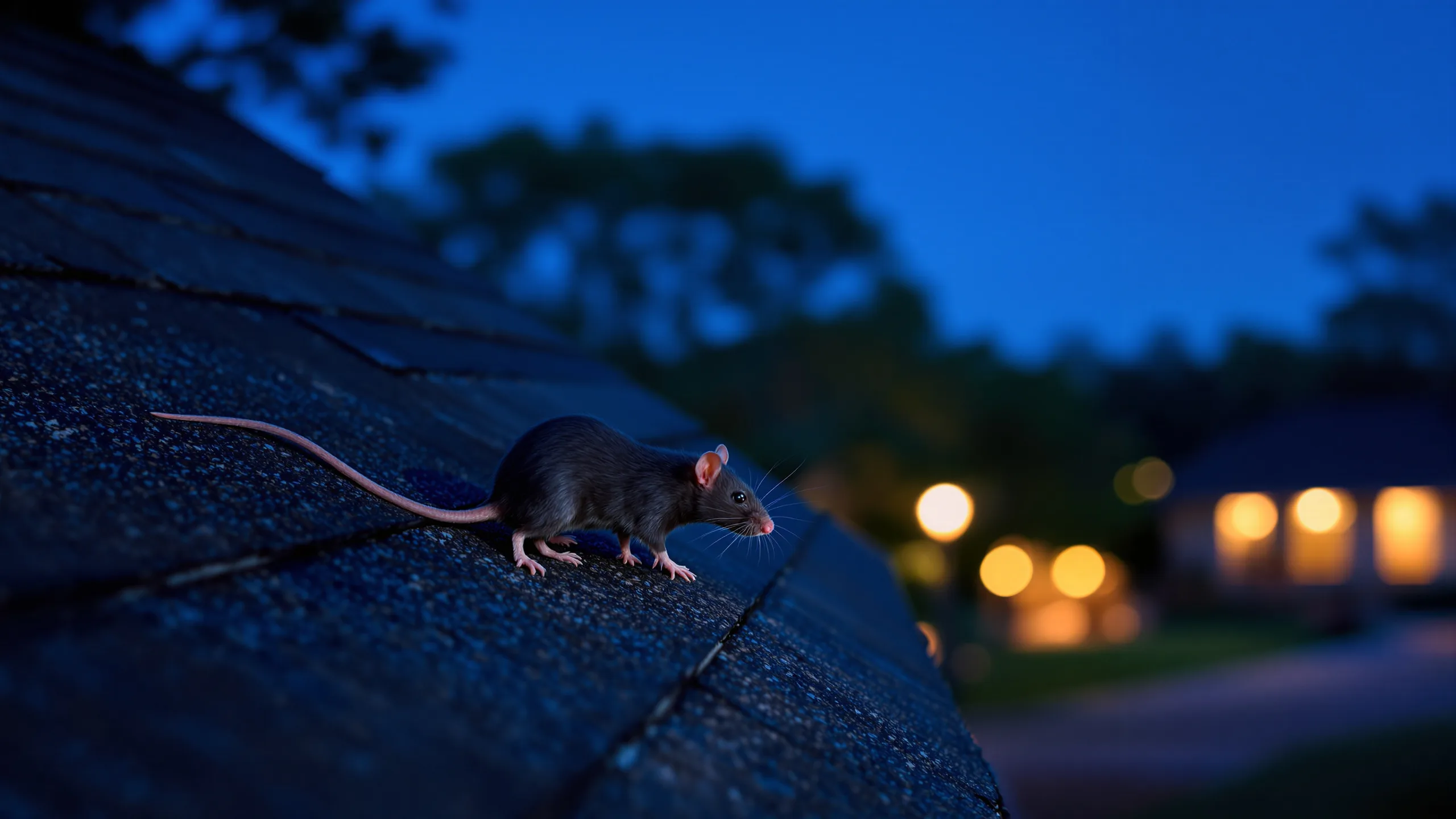
Fall Rodent Invasion in Texas: How to Rat-Proof Your Home Before the First Cold Snap
The first nights below 50°F are the trigger. Across Texas, the rodents that have lived outdoors all summer — in trees, fences, fields, and creek banks — start looking for heated shelter, and your attic is the best option within climbing distance. The push begins with the first real cold front and peaks after the first hard snap, usually late October in North Texas and well into November along the coast.
This year the pressure is worse than usual. The July floods displaced rodent populations across Central and East Texas, drowning burrows and pushing rats and mice into residential areas — so the cold-snap migration has a shorter distance to travel.
The window to act is right now. A mouse needs a gap the size of a dime; a rat needs one the size of a quarter. This guide covers identification, the ten entry points behind nearly every Texas infestation, the right material for each gap, and the honest line between a DIY weekend and a professional job.
Know Your Invader: Roof Rat vs. Norway Rat vs. House Mouse
Three rodents cause nearly all Texas home infestations, and they enter differently, live differently, and leave different evidence. Identification comes first, because the fix for a roof rat in the attic is not the fix for a Norway rat under the slab.
| Roof Rat | Norway Rat | House Mouse | |
|---|---|---|---|
| Size | 13–18 in. including tail; slender | 15–20 in. including tail; heavy, stocky | 5–8 in. including tail |
| Tail | Longer than head and body | Shorter than head and body | Long, thin, slightly hairy |
| Where it lives | Attics, rooflines, trees, upper cabinets | Ground level: burrows, crawl spaces, garages, under slabs | Wall voids, cabinets, behind appliances — anywhere |
| How it enters | Climbs: tree branches, power lines, roofline gaps | Ground level: foundation gaps, door thresholds, garage | Squeezes through gaps as small as 1/4 inch |
| Droppings | ~1/2 in., spindle-shaped with pointed ends | ~3/4 in., capsule-shaped with blunt ends | ~1/8–1/4 in., rod-shaped, pointed ends |
| Sounds | Scratching and scurrying overhead, usually 10 p.m.–4 a.m. | Heavy thumping in walls or under floors | Light scratching in walls, often near the kitchen |
| Texas strongholds | Houston, Gulf Coast, Austin, San Antonio | DFW, older urban neighborhoods, commercial corridors | Statewide, everywhere |
Two signs apply to all three. Rub marks — dark, greasy smears left by oily fur — appear along baseboards, rafters, and around entry holes they use repeatedly. Gnaw marks show up on wood, wiring, plastic pipes, and food packaging; rodents must gnaw constantly to keep their incisors from overgrowing.
Not sure what you are hearing or finding? Our rat identification guide and mouse profile walk through droppings photos and behavior, and the pest ID tool can narrow it down from the signs alone.
The Entry-Point Audit: 10 Places Texas Rodents Get In
Walk the full perimeter in daylight, then again at dusk with a flashlight — light leaking from inside marks the gaps. A house mouse collapses its ribcage and fits through 1/4 inch, so treat every gap larger than a pencil as a door.
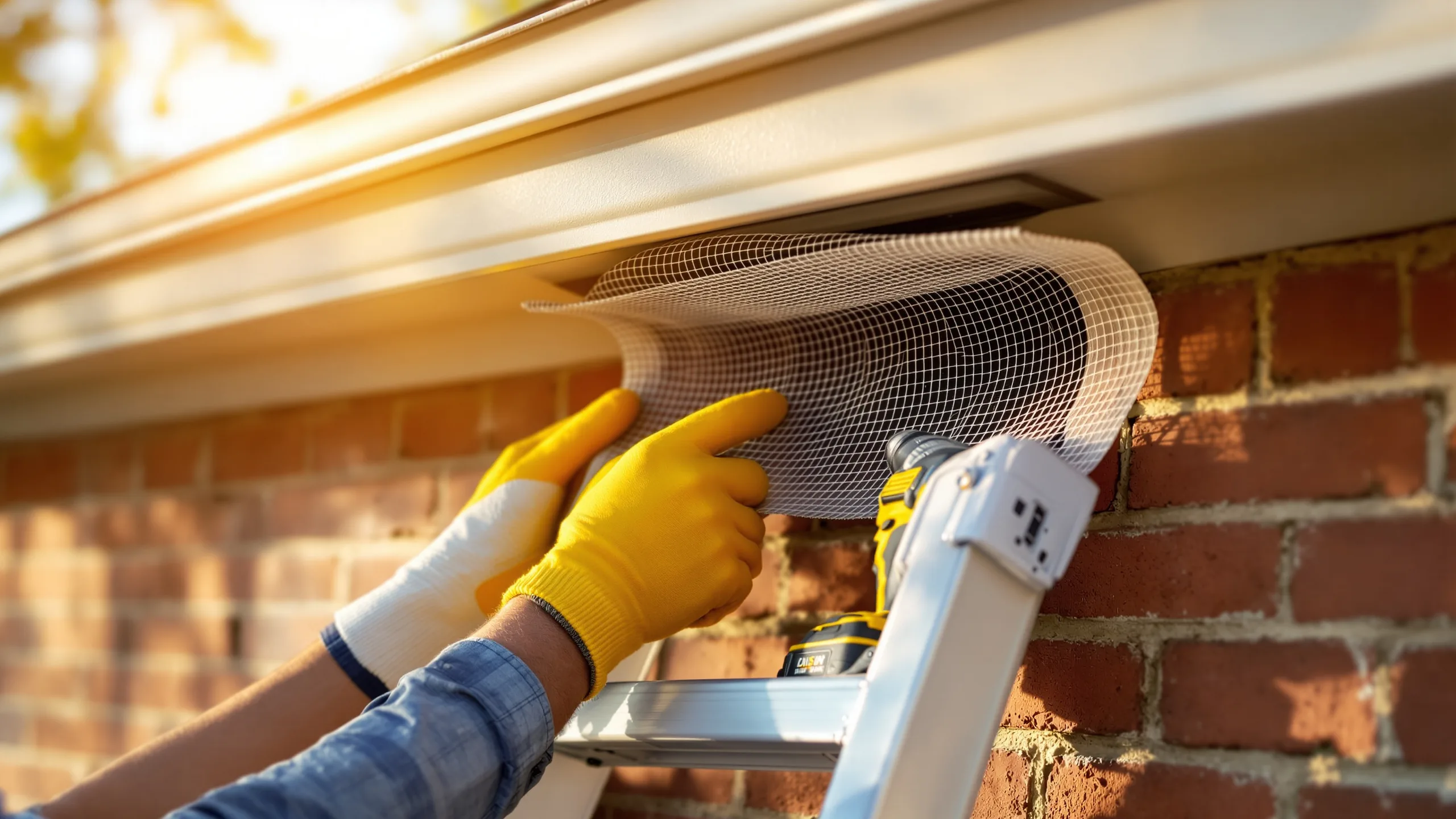
- Roofline and soffits — the number-one entry point statewide: soffit joints, fascia gaps, lifted shingles, where roof planes meet. Roof rats enter here and never touch the ground.
- Weep holes — the drainage gaps in brick veneer are exactly mouse-sized. Every brick Texas home has dozens.
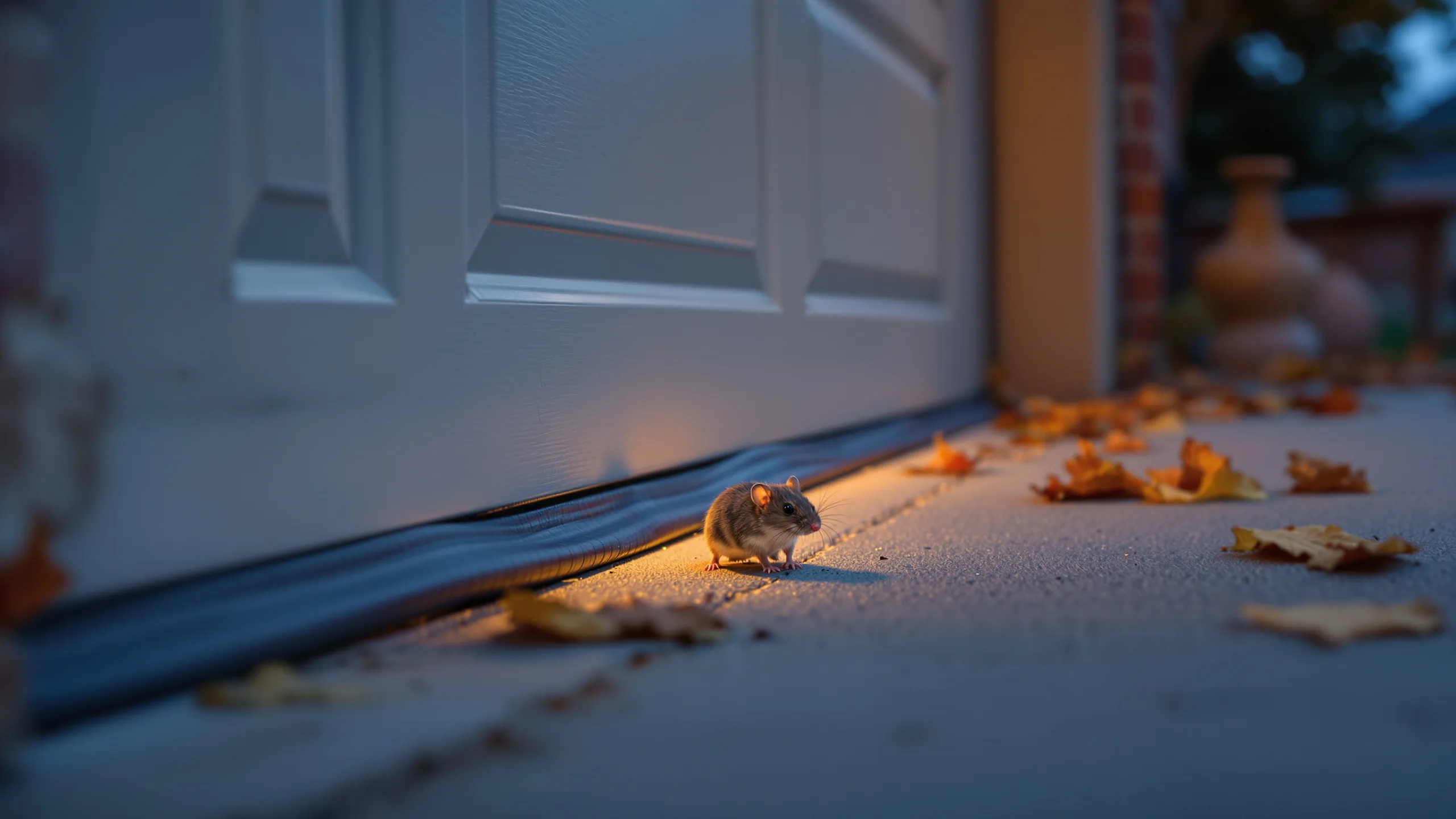
- Garage door seals — the bottom rubber seal and side seals crack in Texas heat; a worn bottom seal is a ground-level highway for mice and Norway rats.
- Utility penetrations — where AC lines, gas, cable, and plumbing enter the wall. Builders leave gaps; mice find them.
- Dryer vents — the flapper warps or sticks open. A warm vent in October is an open invitation.
- AC chase and condensate lines — the line-set opening for the outdoor condenser is rarely sealed at the wall.
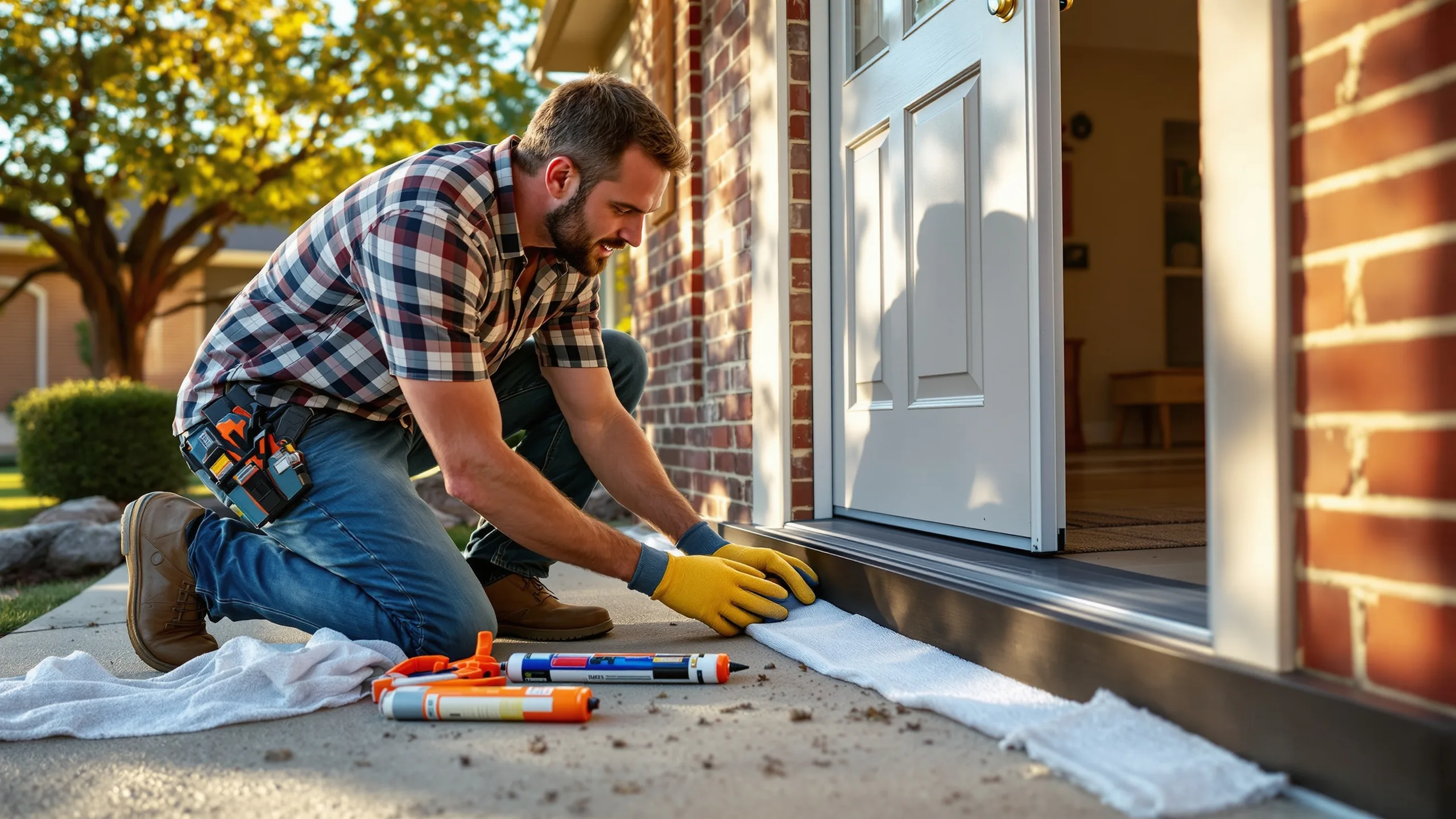
- Door thresholds and weatherstripping — if you can see daylight under an exterior door, a mouse can walk in.
- Crawl space vents — torn or missing screens let Norway rats straight into the space under the house.
- Chimney — an uncapped flue is a vertical tunnel into the living space.
- Tree branches — the 6-to-8-foot rule: trim every branch back at least 6–8 feet from the roofline. Rats jump; overhanging limbs bypass all your ground-level work.
Seal It Right: Match the Material to the Gap
Expanding foam alone is not a seal — rodents chew through it overnight. Every material below either can't be gnawed or is backed by something that can't be.
| Gap / opening | Correct material | Notes |
|---|---|---|
| Cracks under 1/4 in. | Silicone caulk | Paintable, flexible; fine for hairline foundation and trim gaps |
| Gaps 1/4–1 in. (pipes, line sets) | Copper mesh packed in, then expanding foam over it | The mesh does the stopping; foam is weather seal, not rodent seal |
| Holes over 1 in., vents, crawl space | 1/4-inch galvanized hardware cloth, screwed in place | Hardware cloth, not window screen — rats chew through screen |
| Under exterior doors | Aluminum or brush door sweep | No visible daylight when closed; test with a dollar bill |
| Garage door bottom | Replacement rubber bottom seal + side seals | Buy by door width; seals harden after 2–3 Texas summers |
| Weep holes | Purpose-made weep-hole inserts | Keeps mice out while the wall still drains — never caulk weep holes shut |
| Chimney | Code-approved chimney cap with spark arrestor | Also blocks squirrels, raccoons, and birds |
| Roofline / soffit gaps | Hardware cloth, flashing, or fascia repair | If wood is rotted, replace it — caulk over rot holds nothing |
A full perimeter seal on a typical Texas home runs under a hundred dollars in materials and one weekend of labor. The most common mistake is sealing the ground level carefully and ignoring the roofline — exactly where coastal and Central Texas roof rats enter.
Trapping vs. Baiting: An Honest Assessment
If rodents are already inside, exclusion alone locks them in with you — remove the population while you seal.
Snap traps are the right first tool. Use more than you think you need — six to twelve for a mouse problem — placed perpendicular to walls with the trigger end against the baseboard, along runways where you found droppings or rub marks. Peanut butter or a nut-and-seed mix works; check daily. For attic roof rats, set traps along rafters and near the entry point. Skip glue boards — inhumane, and ineffective against an established population.
Think twice about rodenticide indoors. First failure mode: a poisoned rat often dies in a wall void or attic insulation, and a decomposing rat in a Texas wall smells for two to four weeks — with no removal short of cutting drywall. Second: secondary poisoning. A hawk, owl, or pet that eats a poisoned rodent can be poisoned in turn. Bait stations belong outdoors, in tamper-resistant stations, as perimeter population control — or in the hands of a professional.
Where DIY ends. Handle it yourself if you caught the problem early: a few droppings, one or two sightings, no established nest. Call a licensed Texas professional when you have an established attic population (heavy droppings, shredded insulation, multiple runways), gnawed electrical wiring (a genuine fire risk that needs repair, not just trapping), or activity that recurs every fall despite your exclusion work — recurring infestations mean there is an entry point you have not found.
For budgeting, see our breakdowns of rat infestation removal costs and mice in attic removal costs in Texas, including what exclusion work adds to the bill.
Cleanup and Safety
Rodent cleanup is not ordinary cleaning. Droppings and nesting material can carry hantavirus, salmonella, and leptospirosis. The Texas Department of State Health Services guidance is straightforward:
- Ventilate the space for 30 minutes before cleaning — open windows and doors
- Wear gloves and an N95 mask for any attic or enclosed cleanup
- Never dry-sweep or vacuum droppings — it aerosolizes the virus; spray droppings and nests with disinfectant or a 1:10 bleach solution, soak five minutes, then wipe up with paper towels
- Bag everything and double-bag nesting material; wash hands thoroughly after glove removal
- Disinfect traps before reuse, or dispose of them with the catch
Heavy attic contamination — soaked insulation, widespread droppings — is a professional cleanup job, not a weekend one.
City Notes Across Texas
Houston and the Gulf Coast. Roof rat country. Mild, humid winters mean no die-off and no off-season, and the tree canopy gives roof rats an elevated highway straight to your roofline. Prioritize soffit and roofline sealing, the 6–8-foot branch rule, and hardware cloth on every vent. Local providers: Houston.
Dallas–Fort Worth. The strongest mouse pushes follow the first hard cold snaps, which can arrive in October. Norway rats hold ground level in older neighborhoods and along creek corridors. Door sweeps, garage seals, and foundation work pay off here. Local providers: Dallas.
Austin and San Antonio. Hill Country homes fight roof rats plus post-flood displacement this year — rodents pushed out of flooded creek corridors in July have spent two months re-establishing in greenbelts and yards. Stone and limestone construction has more gaps than brick veneer. Local providers: Austin.
The Bottom Line
Every rodent in a Texas attic this winter walks through a gap that exists today. One weekend with a ladder, hardware cloth, copper mesh, and door sweeps closes nearly all of them — and sealing in September costs a fraction of evicting an established colony in January. Audit the roofline first, match the material to the gap, trap anything already inside, and leave established infestations to a licensed pro.
For the bigger seasonal picture, see our complete fall pest-proofing checklist covering roaches, scorpions, and spiders, and the Texas overwintering pests winter guide for what settles in after the cold arrives.
Sources
Texas Bug Slayers Editorial Team
Editorial Board
The Texas Bug Slayers editorial team brings together licensed pest control professionals, entomologists, and writers dedicated to helping Texans protect their homes and families from pests.
Related Articles
Where Texas Pests Go in Winter: The Complete Overwintering Guide
Texas winters don't kill pests — they relocate them into your walls. Where each pest overwinters, the month-by-month timeline, and how to shut your home down.
Texas Fall Pest-Proofing Guide: The Complete Homeowner Checklist for 2026
Rodents, roaches, scorpions, and spiders move indoors as Texas cools down. Use this fall pest-proofing checklist to seal your home before they settle in.

CDC Issues Hantavirus Health Advisory as Texas Identified as Geographic Hotspot
CDC Health Alert Network warns of multi-country hantavirus outbreak linked to cruise ship. Texas named as geographic hotspot for rodent-borne virus.