
Drywood Termite Swarm Season in Texas: What Those Winged Bugs Mean and What to Do in the First 24 Hours
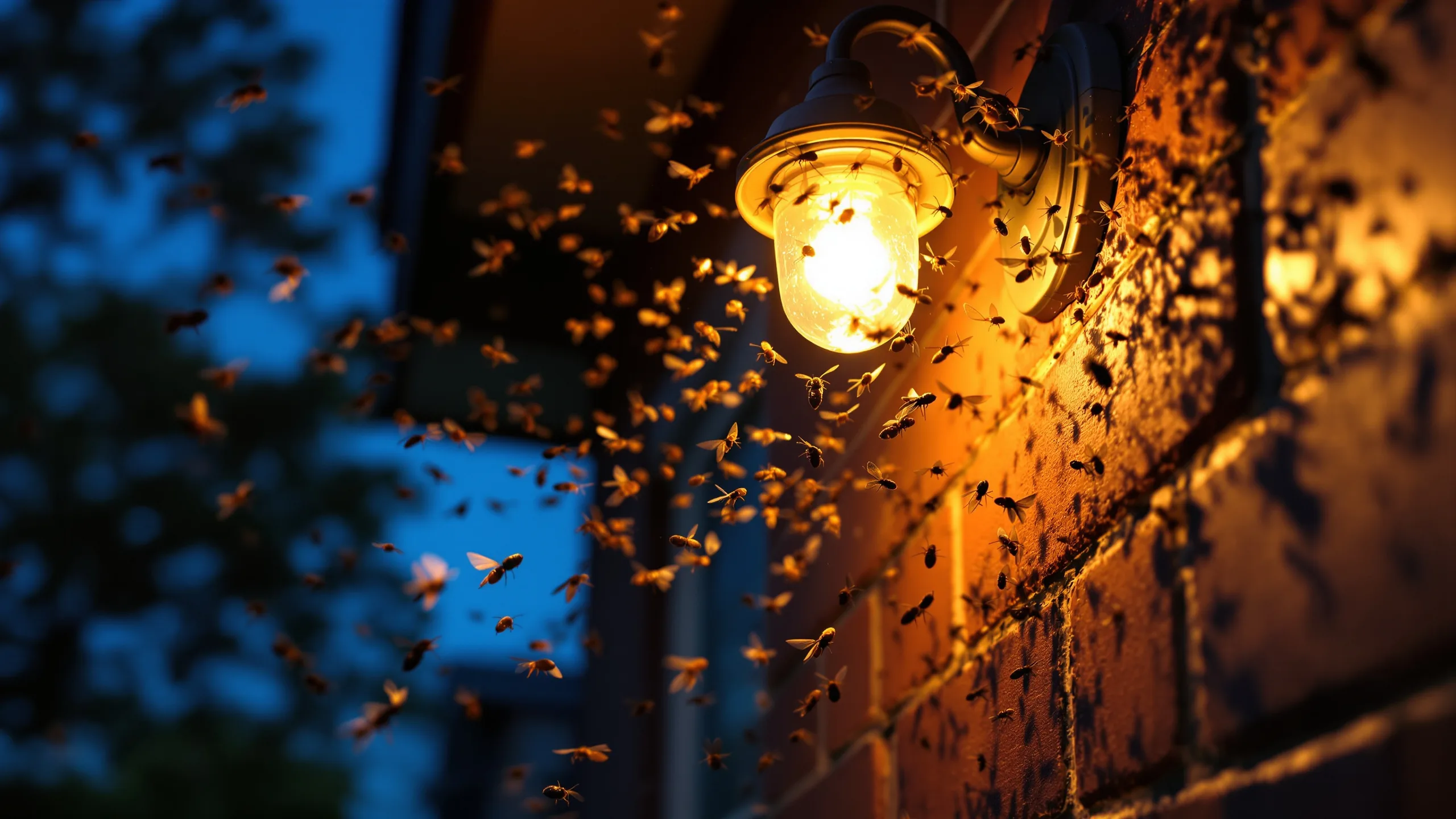
It starts the same way every late summer in Texas: a cloud of small winged insects bouncing off the porch light after dinner. Or worse — dozens of them crawling across the living-room windowsill, with a dusting of papery wings on the floor below.
August through October is drywood termite swarm season in Texas, peaking on warm, humid evenings after sundown. Unlike subterranean termites, which swarm in spring, drywoods swarm at dusk and after dark — exactly when porch lights and lit windows draw them in.
A swarm is not a random event. A colony only produces swarmers once it is mature — typically four or more years old and thousands strong. Swarmers emerging inside means an established colony in your walls, attic, or furniture that has been feeding for years. Swarmers at the porch light mean a mature colony is nearby — possibly your structure, possibly a dead tree or a neighbor's fence.
Either way, the swarm is the one visible moment in an otherwise invisible problem. What you do in the next 24 hours determines whether it gets handled cheaply or expensively.
Swarmer or Flying Ant?
Confirm what you are looking at first. Flying ants — including carpenter ant reproductives and other swarming ants — swarm in the same season, at the same dusk hours, around the same lights. A flying ant swarm is usually a nuisance; a termite swarm is a structural warning.
| Feature | Drywood termite swarmer | Flying ant |
|---|---|---|
| Waist | Straight, broad — no pinch between thorax and abdomen | Narrow, pinched "wasp waist" |
| Antennae | Straight, bead-like | Elbowed (bent at an angle) |
| Wings | Two pairs, equal length, about twice the body length, milky and translucent | Two pairs, front wings noticeably longer than rear |
| Color | Dark brown to tan body | Black, reddish, or brown depending on species |
| After swarming | Sheds wings quickly — piles of identical wings on sills and floors | Keeps wings longer; loose wings less common |
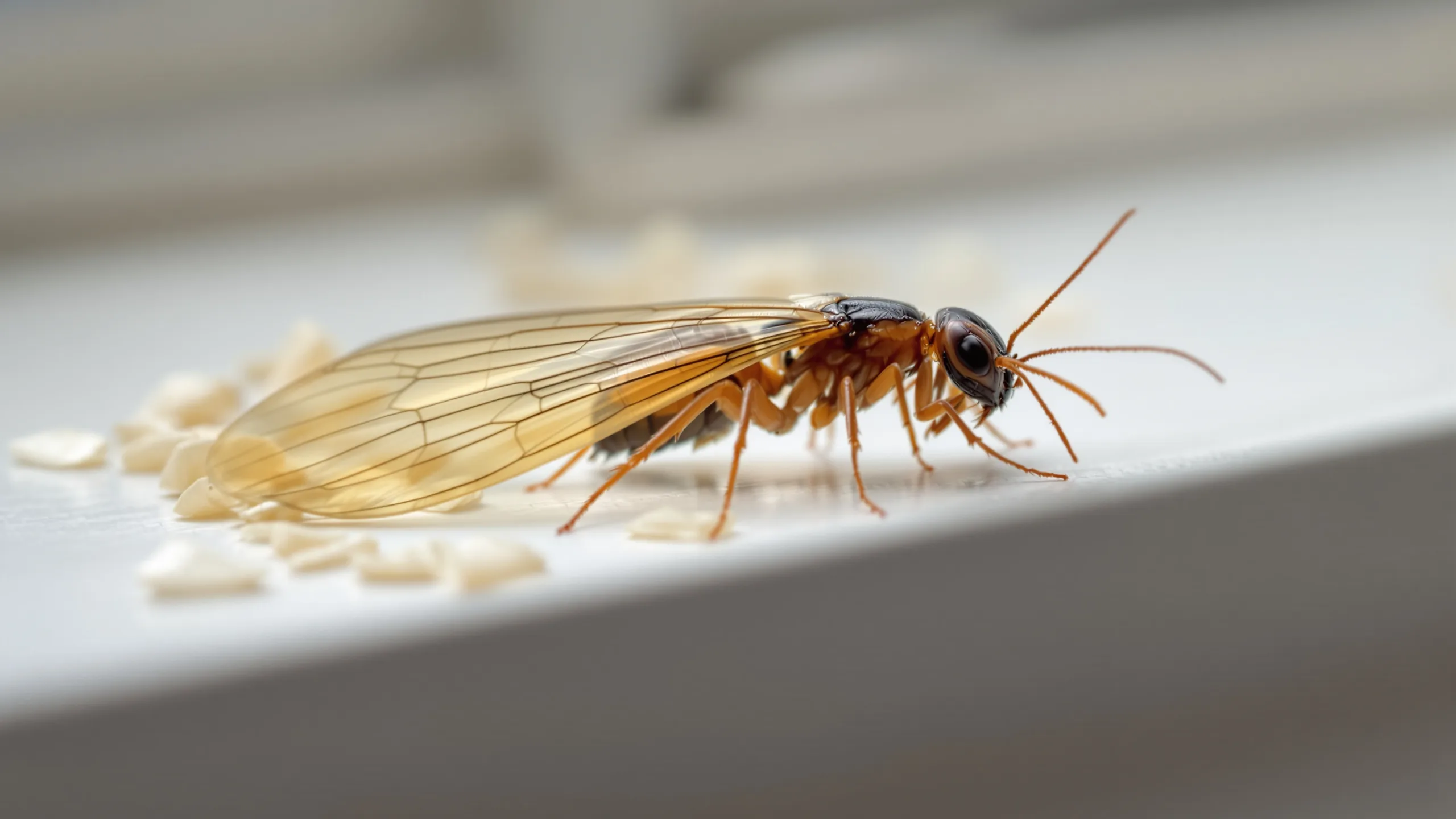
The most reliable sign is one most people miss: discarded wings. Termite swarmers land, snap off their wings, and crawl away to start a colony. A pile of small, identical, translucent wings on a windowsill or under a light fixture is proof of a termite swarm even after every live insect is gone.
Still unsure? Collect one insect in a jar and use our pest identification tool or send a photo to a licensed professional. Do not guess — the response is completely different.
Drywood vs. Subterranean vs. Formosan
Texas has all three major termite types, and telling them apart changes the treatment, the urgency, and the price. Our termite overview covers all species in detail; here is the working comparison.
| Drywood | Subterranean | Formosan | |
|---|---|---|---|
| Where it nests | Entirely inside dry wood — framing, furniture, fascia; no soil contact needed | Underground; needs soil contact and mud tubes to reach wood | Soil or aerial nests in wall voids; builds carton nests |
| Texas swarm timing | Late summer–fall (Aug–Oct), dusk and night, attracted to lights | Spring (Feb–May), daytime, often after rain | Late spring–summer evenings, strongly attracted to lights |
| Swarmer look | Dark brown body, milky wings | Dark to black body, grayish wings | Yellowish-brown body, hairy wings |
| Damage pattern | Slow; galleries across the grain; fecal pellets (frass) pushed out of tiny kick-out holes | Fast; follows wood grain; mud tubes on foundation and walls | Fastest and most aggressive; huge colonies, severe damage in years not decades |
| Typical Texas range | Statewide, heaviest along the Gulf Coast | Statewide | Gulf Coast, Houston, and spreading inland |
The drywood termite's defining trait is independence from soil: no ground contact, no mud tubes, which is why it infests attic framing and upper-story wood that subterraneans rarely reach — and why the swarm and the frass are often the only clues. More on our drywood termite guide.
The First 24 Hours: Your Action Plan
A swarm is alarming, but termites work slowly — you have time to do this right. Do these steps in order.
- Do not panic-spray. Aerosol kills the insects you see and does nothing to the colony — and repellent sprays near the emergence site can scatter the colony deeper into the structure, making professional treatment harder and more expensive.
- Collect a specimen. Scoop two or three swarmers — or a pinch of the discarded wings — into a zip-top bag or small jar. This is what a professional needs to confirm species, and species determines treatment.
- Photograph everything. Get close-ups of the insects and wings, then wide shots of the room. Date-stamped photos help the inspector even after cleanup.
- Note exactly where they emerged. This is the most valuable information you can gather. Baseboard, window frame, attic vent, light fixture? "Inside near the kitchen window" versus "at the porch light outside" are two different diagnoses. Mark the spots with painter's tape.
- Vacuum up the swarmers. Once you have your specimens and photos, vacuum the rest and empty the canister outside. This is purely cosmetic — the colony is untouched either way.
- Check for frass. Look along baseboards, windowsills, and under wooden furniture for tiny piles of hard, hexagonal pellets like coarse sand or pepper. A fresh pile means an active gallery directly above it.
- Call a licensed professional for identification and inspection. Texas requires structural pest control companies to hold a TDA license — verify before booking. For a fast first pass, our pest ID tool can confirm swarmer versus ant from a photo in minutes.
Where Drywoods Hide in Texas Homes
Because they need no soil contact, drywood termites infest places other termites cannot. After a swarm, check these spots with a flashlight:
- Attic framing — rafters, joists, and roof decking near vents; the number-one infestation site in Texas homes
- Fascia and soffit boards — especially weathered or sun-damaged wood on the south and west faces
- Window and door frames — swarms often emerge here because frames are thin, warm, and near light
- Hardwood furniture — antiques, picture frames, and wooden instruments can carry colonies into a house
- Garage framing and shelving — exposed studs and stored lumber are easy targets
- Wood flooring and baseboards — look for blistered or papery-thin surface wood
- Wooden porch posts and railings — common outdoor reservoirs near lights
At each spot, look for the three signs: tiny round kick-out holes (pinhead-sized), piles of frass pellets below them, and wood that sounds hollow or crumbles when probed with a screwdriver.
Treatment Options: An Honest Comparison
Drywood termite treatment falls into two camps, and the right one depends on how many infestation sites an inspection finds.
| Localized treatment | Whole-structure fumigation | |
|---|---|---|
| What it is | Injection or surface treatment of confirmed galleries: foams, dusts, or borate products applied into the wood | Tenting the entire structure and filling it with gas fumigant for 24–72 hours |
| Best when | One or two accessible, confirmed infestation sites | Multiple infestation sites, inaccessible areas, or recurring swarms |
| Limitations | Misses hidden colonies; no residual protection against new swarmers | Kills everything inside but leaves no residual — reinfestation is possible |
| Disruption | Minimal; usually done in hours | You vacate the home for two to three days; food and medications must be bagged or removed |
| Cost framing | Typically the lower-cost option, priced per site | The premium option — often several times the cost of spot treatment, priced by structure size |
The decision hinges on inspection quality. A swarm from one window frame might be a single treatable colony; swarms in two rooms almost always justify fumigation. Get the species confirmed and the infestation mapped before comparing quotes — and get at least two written estimates.
Gulf Coast and Houston: Higher Stakes
Drywood termite pressure is statewide, but it concentrates along the Gulf Coast. The warm, humid climate from Corpus Christi through Houston to the Louisiana line is ideal drywood habitat: long swarm season, mild winters, and housing stock full of the attic and fascia wood they prefer.
Houston-area homeowners should treat any indoor swarm as a same-week inspection priority and inspect attic framing annually, swarm or no swarm. Coastal humidity also accelerates the wood decay that invites infestation, so fascia repair and ventilation do double duty.
The Bottom Line
A drywood swarm is a diagnosis delivered to your windowsill: there is a mature colony in or near your home, and it has been feeding for years. The swarm itself is harmless and over in an hour — the colony is neither. Confirm the insect, bag a specimen, mark the emergence points, skip the spray can, and get a licensed inspection on the calendar.
Drywoods are far from the only pest using late summer to move into Texas homes. For the full picture of what is settling in as the season turns — rodents, roaches, spiders, and overwintering invaders — see our Texas overwintering pests and winter guide.
Sources
Texas Bug Slayers Editorial Team
Editorial Board
The Texas Bug Slayers editorial team brings together licensed pest control professionals, entomologists, and writers dedicated to helping Texans protect their homes and families from pests.
Related Articles

Texas Termite Swarm Season: What Homeowners Need to Know in 2026
Spring termite swarms are peaking across Texas. Learn how to identify winged termites, protect your property, and when to call a professional.

Termite Swarm Season Arrives in Southeast Texas: What Homeowners Need to Know
Southeast Texas enters peak termite swarm season. Pest control experts share prevention tips and warning signs for homeowners.
Central Texas Braces for Spring Fire Ant and Termite Surge
Texas A&M entomologist warns homeowners about increased fire ant and termite activity as spring temperatures trigger peak pest season across Central Texas.