
Central Texas Braces for Spring Fire Ant and Termite Surge
Central Texas homeowners are entering peak season for two of the region's most destructive pests: fire ants and termites. According to entomologist Wizzie Brown from the Texas A&M Department of Entomology, these two species consistently dominate homeowner concerns each spring as warming temperatures trigger increased activity.
The combination of mild winter temperatures and early spring rainfall has created ideal conditions for both pests to establish new colonies and expand existing populations across the region.
Fire Ant Activity Peaks
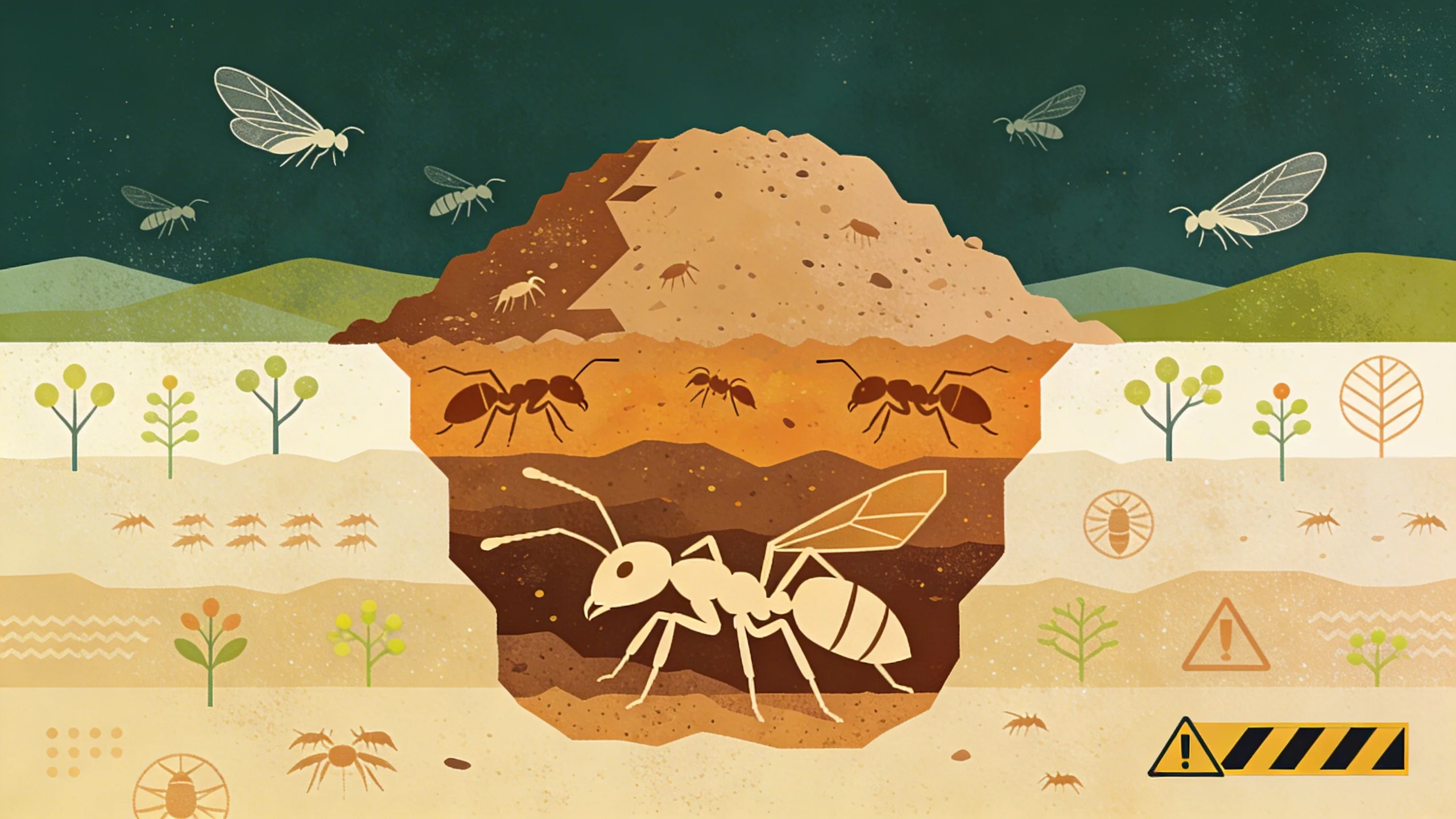
Red imported fire ants (Solenopsis invicta) become highly active as soil temperatures warm above 70°F. Spring marks the beginning of their reproductive cycle, with colonies producing winged reproductive ants that swarm to establish new mounds.
Central Texas provides optimal habitat for fire ants year-round, but spring activity intensifies for several reasons:
Mound building: Colonies construct larger, more visible mounds as worker populations expand. A single mature colony can contain 200,000 to 500,000 workers.
Foraging intensity: Workers range farther from mounds seeking food sources, increasing human contact and sting incidents.
New colony formation: Mated queens establish new colonies throughout residential areas, rapidly multiplying infestation sites.
Termite Swarming Season
Subterranean termites begin their annual swarming season in Central Texas, typically peaking from March through May. Swarmers—winged reproductive termites—emerge from mature colonies to mate and establish new infestations.
Homeowners often discover termite activity through:
Discarded wings: Piles of translucent wings near windows, doors, or foundation walls indicate recent swarming activity.
Mud tubes: Pencil-width tubes on foundation walls, basement walls, or floor joists provide termites protected passage from soil to wood.
Wood damage: Hollow-sounding wood, blistering paint, or visible tunnels in damaged lumber signal active infestation.
Why Spring Triggers Activity
Both fire ants and termites respond to specific environmental cues that align with Central Texas spring conditions:
Temperature thresholds: Sustained warmth signals ideal conditions for reproduction and colony expansion.
Moisture availability: Spring rains soften soil, making it easier for both species to tunnel and construct nests.
Food abundance: New plant growth and increased insect activity provide fire ants with abundant food sources.
Prevention Strategies for Homeowners
Texas A&M Extension specialists recommend proactive measures before populations peak:
Fire Ant Control
Two-step method: Combine broadcast bait application across the entire yard with individual mound treatments for visible colonies.
Timing matters: Apply baits when worker ants are actively foraging—typically early morning or late evening when temperatures are between 70-90°F.
Fresh bait: Use products manufactured within the current year, as older baits lose effectiveness.
Avoid mound disturbance: Pouring gasoline, boiling water, or other home remedies often just relocate colonies rather than eliminating them.
Termite Prevention
Eliminate wood-to-soil contact: Remove firewood, lumber, and mulch from direct contact with home foundations.
Fix moisture problems: Repair leaking pipes, improve drainage, and ensure proper ventilation in crawl spaces.
Annual inspections: Schedule professional termite inspections, especially for homes showing previous termite activity.
Maintain barriers: Keep foundation perimeters clear of vegetation and debris that can hide termite tubes.
When to Call Professionals
While homeowners can manage minor fire ant populations with over-the-counter baits, widespread infestations or termite activity typically require professional intervention.
Licensed Texas pest control operators have access to:
- Professional-grade insecticides not available to homeowners
- Specialized equipment for treating large areas or hard-to-reach locations
- Termite detection technology including thermal imaging and moisture meters
- Expertise in identifying species and selecting appropriate treatment strategies
For termites specifically, Texas law requires licensed applicators for many termiticide products, and some treatment methods (like fumigation or drilling treatments) must be performed by professionals.
Regional Considerations
Central Texas encompasses diverse ecosystems from the Hill Country to the Blackland Prairie, each presenting unique pest management challenges:
Urban areas: Higher density development concentrates both pest populations and human contact incidents.
Rural properties: Larger land areas require broader treatment strategies and ongoing monitoring.
New construction: Disturbed soil and fresh landscaping materials can introduce or attract both fire ants and termites.
Looking Ahead
Fire ant and termite activity will remain elevated through May and June before summer heat temporarily reduces surface activity. However, both species remain active year-round in Central Texas, with fall providing a second, smaller activity peak.
Homeowners who implement prevention strategies now—before populations reach their seasonal peak—will have better control outcomes and lower treatment costs than those who wait until infestations become severe.
Resources
The Texas A&M AgriLife Extension Service provides free educational resources on both fire ant and termite management through county extension offices. Online resources include identification guides, treatment recommendations, and information on licensed pest control providers.
For homeowners uncertain about pest identification or appropriate treatment methods, local extension agents can provide site-specific guidance based on Central Texas conditions and pest pressures.
Sources
Texas Bug Slayers Editorial Team
Editorial Board
The Texas Bug Slayers editorial team brings together licensed pest control professionals, entomologists, and writers dedicated to helping Texans protect their homes and families from pests.
Related Articles

Texas Termite Swarm Season: What Homeowners Need to Know in 2026
Spring termite swarms are peaking across Texas. Learn how to identify winged termites, protect your property, and when to call a professional.

Drywood Termite Swarm Season in Texas: What Those Winged Bugs Mean and What to Do in the First 24 Hours
Late summer through fall is drywood termite swarm season in Texas. How to tell swarmers from flying ants, what a swarm indoors really means, and your first-24-hours action plan.

Termite Swarm Season Arrives in Southeast Texas: What Homeowners Need to Know
Southeast Texas enters peak termite swarm season. Pest control experts share prevention tips and warning signs for homeowners.