
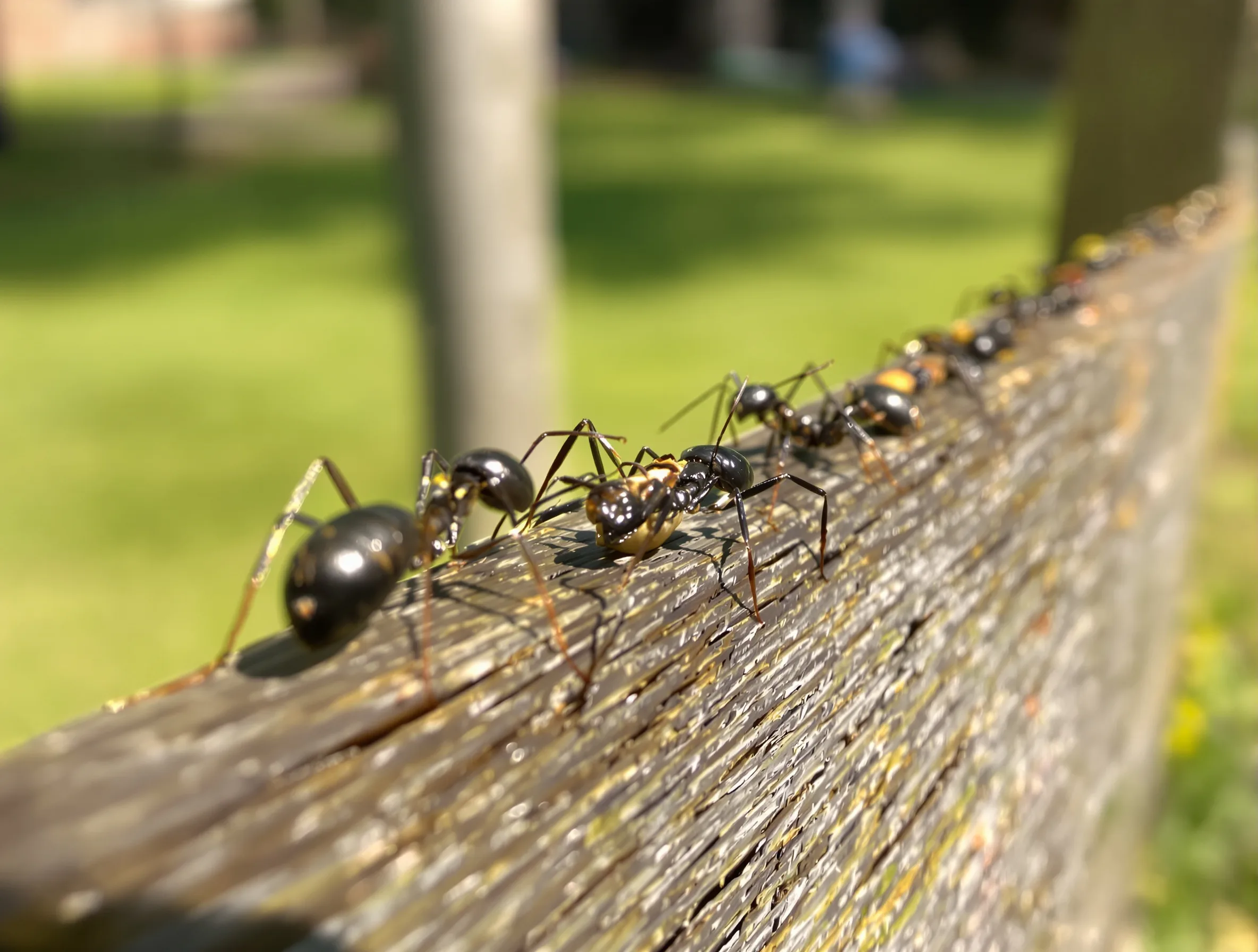
Ant Control in Texas — Complete Guide
Found in every Texas county, aggressive stingers
Not sure it's a Ants?
Snap a photo — our free AI tool identifies Texas pests in seconds.
About Ants in Texas
Texas is home to more than 250 ant species, but four types cause the overwhelming majority of problems for homeowners and businesses:
- Red Imported Fire Ants (RIFA) are the number one ant pest in Texas, found in every county. Originally from South America, they are aggressive, deliver painful stings, and build large dome-shaped mounds in yards, parks, and agricultural land. See our dedicated fire ants guide for detailed sting treatment, the Two-Step Method, and yard control strategies.
- Carpenter ants are large black ants (1/4 to 1/2 inch) that excavate wood for nesting. While they do not eat wood like termites, they hollow out structural timbers, causing significant damage over time. They prefer moist or damaged wood.
- Tawny crazy ants (formerly called Rasberry crazy ants) are an invasive species rapidly spreading across East and Southeast Texas. Named for their erratic, jerky movements, they form enormous supercolonies and are notorious for invading electronics, shorting out electrical equipment, and displacing native fire ants.
- Sugar ants and odorous house ants are small, dark brown to black ants commonly found trailing along kitchen counters, windowsills, and baseboards. They emit a rotten coconut odor when crushed and nest in wall voids and beneath floors.
Fire Ant Biology and Behavior
Red Imported Fire Ants build dome-shaped mounds that can reach 18 inches in height and extend several feet below the soil surface. Unlike most ant mounds, fire ant mounds have no visible entry hole on top — ants enter and exit through underground tunnels radiating outward. A mature colony contains 200,000 to 500,000 workers, and the queen can produce 1,500 or more eggs per day. Some colonies have multiple queens, making them harder to eliminate.
Fire ants are extremely aggressive when their mound is disturbed. Workers swarm up vertical surfaces, anchor with their mandibles, and sting repeatedly. Each sting injects alkaloid venom that creates a characteristic white pustule within 24 hours.
Signs of Ant Infestation
- Mounds in the yard: Dome-shaped dirt mounds without a center entry hole indicate fire ants. Mounds appear most frequently after rainfall in spring and fall.
- Ant trails indoors: Lines of ants moving between a food source and their nest, commonly along baseboards, countertop edges, and window frames.
- Sawdust piles: Accumulations of fine wood shavings below holes in wood indicate carpenter ant activity — they eject excavated wood debris from their galleries.
- Swarming: Winged ants appearing indoors, especially in spring, indicate a mature colony nearby. Winged ants are often confused with termite swarmers.
- Electrical problems: Tawny crazy ants are attracted to electrical fields and commonly short-circuit outlets, HVAC units, and breaker boxes.
Ant Health Risks
Fire ant stings are the primary health concern. Each sting produces a burning sensation followed by a red, swollen welt that develops into a white pustule over 24 to 48 hours. Most people experience localized pain and itching that resolves within a week. However, approximately 1 to 2 percent of the population is hypersensitive to fire ant venom and can experience anaphylaxis — a life-threatening allergic reaction requiring immediate epinephrine and emergency medical treatment.
Children, the elderly, and people with limited mobility are at increased risk because they may be unable to quickly move away from a disturbed mound. Pets — particularly dogs, outdoor cats, and caged animals — are also vulnerable. Fire ants can kill newborn livestock, ground-nesting birds, and small pets.
Ant Seasonality in Texas
Fire ants are active year-round in Texas, though their surface activity varies with temperature and moisture. Mound-building peaks in spring (March through May) and fall (September through November) when soil temperatures are between 70 and 85 degrees Fahrenheit. During summer heat, colonies dig deeper to escape surface temperatures, and mounds may be less visible. After heavy rains, fire ants rapidly build new mounds and colonies can temporarily raft on floodwaters, spreading to new locations. Indoor ant species like odorous house ants are most active from March through October.
Ant Treatment Methods
The Two-Step Method
Recommended by the Texas A&M AgriLife Extension Service, this is the most effective and cost-efficient fire ant control strategy. Step one: broadcast a fire ant bait (Amdro, Extinguish Plus, or Award) across the entire yard in spring or fall when ants are actively foraging. Step two: 7 to 10 days later, individually treat any remaining active mounds with a contact insecticide drench, dust, or granule.
Broadcast Bait
Bait products contain a slow-acting insecticide or growth regulator mixed with a soybean oil attractant. Worker ants carry the bait back to the colony and feed it to the queen. Results take 2 to 6 weeks but are more thorough and cost-effective than treating individual mounds.
Mound Drench Treatment
Liquid insecticide mixed with several gallons of water is poured directly over and around a fire ant mound. This provides quick knockdown of the treated mound but does not affect neighboring colonies. It is best used as the second step after broadcast bait.
Indoor Ant Treatment
For carpenter ants, odorous house ants, and crazy ants indoors, professionals use gel baits placed along trailing routes, non-repellent liquid sprays applied to entry points and nesting sites, and dust formulations injected into wall voids where colonies harbor.
Ant Prevention Tips
- Inspect your yard regularly for new fire ant mounds, especially after rainfall.
- Treat new mounds quickly before colonies mature — young colonies are easier to eliminate.
- Seal cracks and gaps around doors, windows, utility penetrations, and foundation to prevent ants from entering the home.
- Keep tree branches and shrubs trimmed back at least 12 inches from the house — ants use vegetation as bridges to enter structures.
- Store food in sealed containers and clean up spills and crumbs promptly.
- Fix moisture problems — leaky pipes and poor drainage attract carpenter ants and other moisture-loving species.
- Remove dead wood, tree stumps, and landscape timbers near the home that could harbor carpenter ant colonies.
Licensed Texas Companies
2014 companies offering pest control
2,014 companies
Romex Pest & Termite Control

Urbanex Pest Control
A-Action Home Inspection Houston

Forterra Pest Control
EnviroCon Pest Control
X Out Pest Services

Adams Exterminating

Innovative Pest Control

Cerv Property Solutions San Antonio
Ace Pest Control
Integrity Pest and Termite

The CanMan
Bill Clark Pest Control, Inc.

Bug Blasters Pest Control

Pest Solutions of North Texas

Pinnacle Pest Defense
BugMan Pest Control & Termite Control

Justice Pest Services
Frequently Asked Questions
Best Professional Treatment
General pest management for common household pests including roaches, ants, spiders, and more
Find Local Exterminators for Ants & Fire Ants Near You
Find pest control companies with lawn treatment capabilities for fire ants and other ant species.
Find Licensed Companies by Texas City
Licensed ants & fire ants control companies in major Texas cities