

Termite Swarm Season Arrives in Southeast Texas: What Homeowners Need to Know
The annual termite swarm season has commenced across Southeast Texas, with pest control professionals reporting increased activity as subterranean termites begin their reproductive flights. The phenomenon, which typically begins around Mother's Day and extends through June, marks the period when mature termite colonies release winged reproductives to establish new settlements.
Recent viral footage captured by a Louisiana deputy—showing termites swarming a vehicle in dense clouds—illustrates the dramatic scale these events can reach. While the spectacle draws attention, experts emphasize that understanding swarm behavior and implementing preventive measures matters more than documenting the phenomenon.
Why Swarms Happen Now
Termite swarming represents a colony's reproductive strategy. After several years of growth, established colonies produce alates—winged males and females—that emerge en masse when temperature and humidity conditions align. In the Gulf South, this window typically opens in mid-May and continues through early summer, though specific timing varies with local weather patterns.
The synchronized emergence serves an evolutionary purpose. By releasing thousands of reproductives simultaneously, colonies maximize the probability that some individuals will survive predation, find mates, and locate suitable sites for new colony establishment. Most alates perish within hours, but the few that succeed can initiate colonies capable of persisting for decades.
Identifying Swarmers vs. Ants
Homeowners encountering winged insects during spring evenings often struggle to distinguish termite alates from flying ants. Several characteristics aid identification:
Termite alates display straight, bead-like antennae and two pairs of wings of equal length that extend well past the abdomen. Their bodies lack the narrow waist that defines ant anatomy. After landing, termites shed their wings, leaving behind small piles of translucent membrane that often provide the first visible evidence of indoor activity.
Flying ants, by contrast, possess elbowed antennae and a distinctly constricted waist between thorax and abdomen. Their forewings are noticeably larger than hindwings, creating an asymmetrical appearance absent in termites.
What Swarms Indicate
A termite swarm emerging indoors almost certainly signals an established colony within the structure or immediately adjacent to it. Subterranean termites require soil contact for moisture and typically build mud tubes to bridge the gap between ground and wooden structural elements. Swarmers exiting through wall voids, expansion joints, or foundation cracks suggest the colony has reached maturity—often meaning years of undetected presence.
Outdoor swarms near foundations, porches, or landscaping timbers warrant inspection but don't necessarily indicate structural infestation. However, proximity to buildings increases risk, as successful reproductives may initiate new colonies in favorable locations nearby.
Prevention Strategies
Pest control professionals recommend several measures to reduce termite pressure around residential properties:
Moisture management ranks highest in importance. Subterranean termites require consistent water sources. Eliminating standing water, repairing leaks, and ensuring proper drainage around foundations removes conditions that support colony establishment. Air conditioning condensate lines, gutter downspouts, and irrigation systems deserve particular attention.
Wood-to-soil contact provides direct pathways for termite foraging. Deck posts, fence posts, and landscaping timbers should either be pressure-treated with termite-resistant compounds or installed on concrete barriers that prevent direct ground contact. Firewood stacks should rest on elevated racks well away from structures.
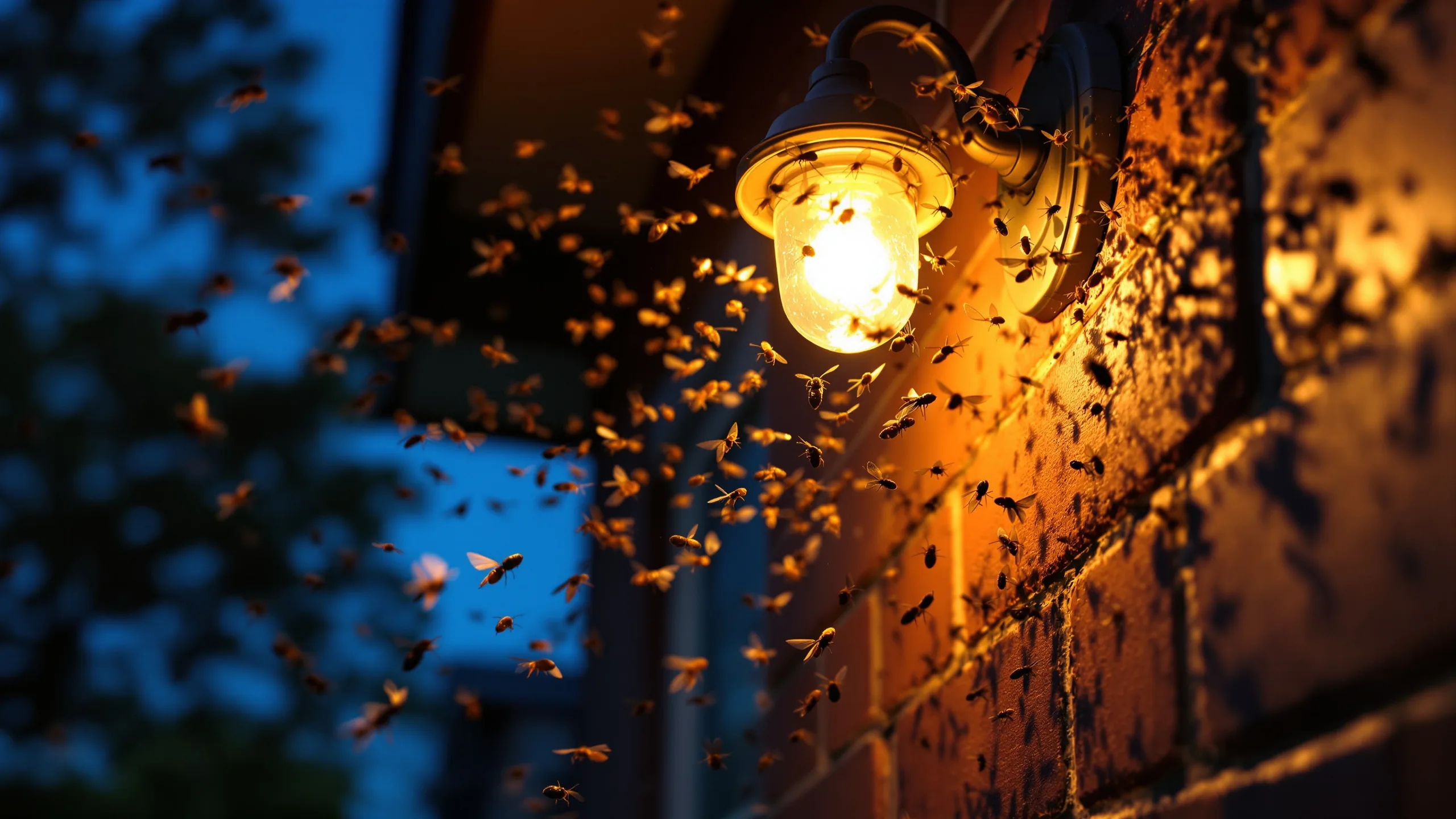
Exterior lighting attracts alates during evening swarming activity. Turning off outdoor lights or switching to yellow "bug lights" that emit wavelengths less attractive to insects can reduce the number of swarmers congregating near entry points. This simple measure won't prevent infestation but may limit the spectacle and reduce the small risk of indoor colony establishment.
Vegetation management around foundations eliminates bridge materials that termites exploit. Shrubs, mulch beds, and ground cover should maintain clearance from exterior walls to allow inspection access and reduce moisture retention against foundations.
Professional Inspection Protocols
Annual termite inspections by licensed pest control operators remain the most reliable method for early detection. Trained technicians examine foundation perimeters for mud tubes, probe accessible wood for hollow sections indicating internal damage, and identify conditions conducive to infestation.
Modern termite management employs multiple strategies depending on construction type, infestation severity, and homeowner preferences. Liquid soil treatments create chemical barriers that prevent termite access, while baiting systems exploit termite foraging behavior to deliver colony-eliminating active ingredients. Many properties benefit from combination approaches that address both immediate threats and long-term prevention.
The Southeast Texas Context
The region's climate—characterized by mild winters, abundant rainfall, and high humidity—creates ideal conditions for subterranean termite proliferation. Formosan termites, an invasive species established in parts of Texas, compound concerns with their aggressive foraging behavior and capacity to establish aerial colonies that don't require ground contact.
For Southeast Texas homeowners, swarm season serves as an annual reminder that termite management requires ongoing vigilance rather than one-time treatment. The investment in preventive inspection and maintenance typically costs far less than repairing structural damage caused by established, mature colonies.
As the 2026 swarm season progresses, pest control companies across the region report increased call volume from homeowners witnessing their first alate emergence. For those encountering termite swarms, documentation through photographs can aid professional identification, but prompt inspection—not social media posting—should remain the priority response.
Sources
Texas Bug Slayers Editorial Team
Editorial Board
The Texas Bug Slayers editorial team brings together licensed pest control professionals, entomologists, and writers dedicated to helping Texans protect their homes and families from pests.
Related Articles

Texas Termite Swarm Season: What Homeowners Need to Know in 2026
Spring termite swarms are peaking across Texas. Learn how to identify winged termites, protect your property, and when to call a professional.
Drywood Termite Swarm Season in Texas: What Those Winged Bugs Mean and What to Do in the First 24 Hours
Late summer through fall is drywood termite swarm season in Texas. How to tell swarmers from flying ants, what a swarm indoors really means, and your first-24-hours action plan.
Central Texas Braces for Spring Fire Ant and Termite Surge
Texas A&M entomologist warns homeowners about increased fire ant and termite activity as spring temperatures trigger peak pest season across Central Texas.