

Formosan Termites in Texas — Complete Guide
The "super termite" — huge colonies and carton nests along the Gulf Coast and Houston
Not sure it's a Formosan Termites?
Snap a photo — our free AI tool identifies Texas pests in seconds.
Quick facts — Formosan termites in Texas
- Species: Formosan subterranean termite (Coptotermes formosanus) — the "super termite"
- Colony size: up to several million workers — roughly ten times a native subterranean colony
- Texas range: Gulf Coast (Houston is the epicenter), Dallas-Fort Worth, and scattered metros
- Signature: carton nests inside walls and trees — colonies can live above ground without soil contact
- Swarms: late May – June at dusk, hundreds of yellowish-brown swarmers drawn to lights
- Damage: a mature colony eats up to 13 ounces of wood per day; repairs can exceed $25,000
About Formosan Termites in Texas
The Formosan subterranean termite (Coptotermes formosanus) is an invasive species from East Asia that arrived in US ports after World War II and earned the nickname "super termite" through sheer numbers. In Texas it is established along the Gulf Coast — greater Houston is the state's hot zone — and in the Dallas-Fort Worth metroplex, with satellite infestations in other urban areas. It spreads through infested railroad ties, landscape timbers, mulch, and wooden packing materials, which is why infestations track transportation corridors.
Formosans are cousins of the native subterranean termites and share their basic biology — soil colonies, mud tubes, moisture dependence. Two things set them apart: colony size (millions of workers instead of hundreds of thousands) and the ability to build above-ground carton nests. For general termite identification and inspection guidance, see our Texas termite guide.
Identifying Formosan Termites
Swarmers
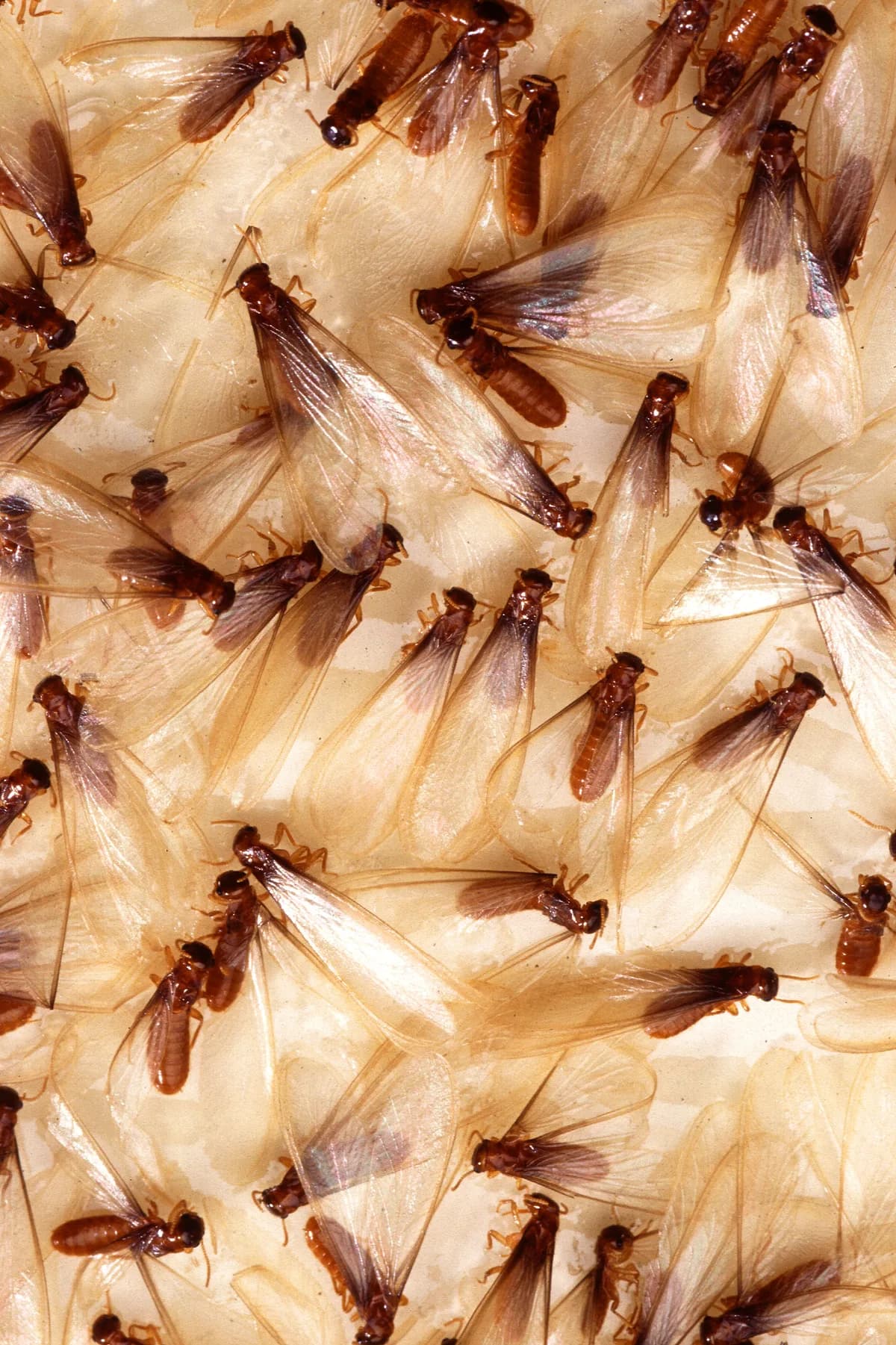
The Formosan swarmer is the caste most Texas homeowners encounter. It is yellowish-brown, about 1/2 inch long including wings, and — unlike the darker native subterranean swarmer — has wings densely covered in tiny hairs (visible with a magnifying glass). Swarmers pour out at dusk on warm, humid evenings from late May through June and fly straight to lights: porch lights, streetlights, and lit windows can accumulate hundreds in a single evening.
Workers and Soldiers
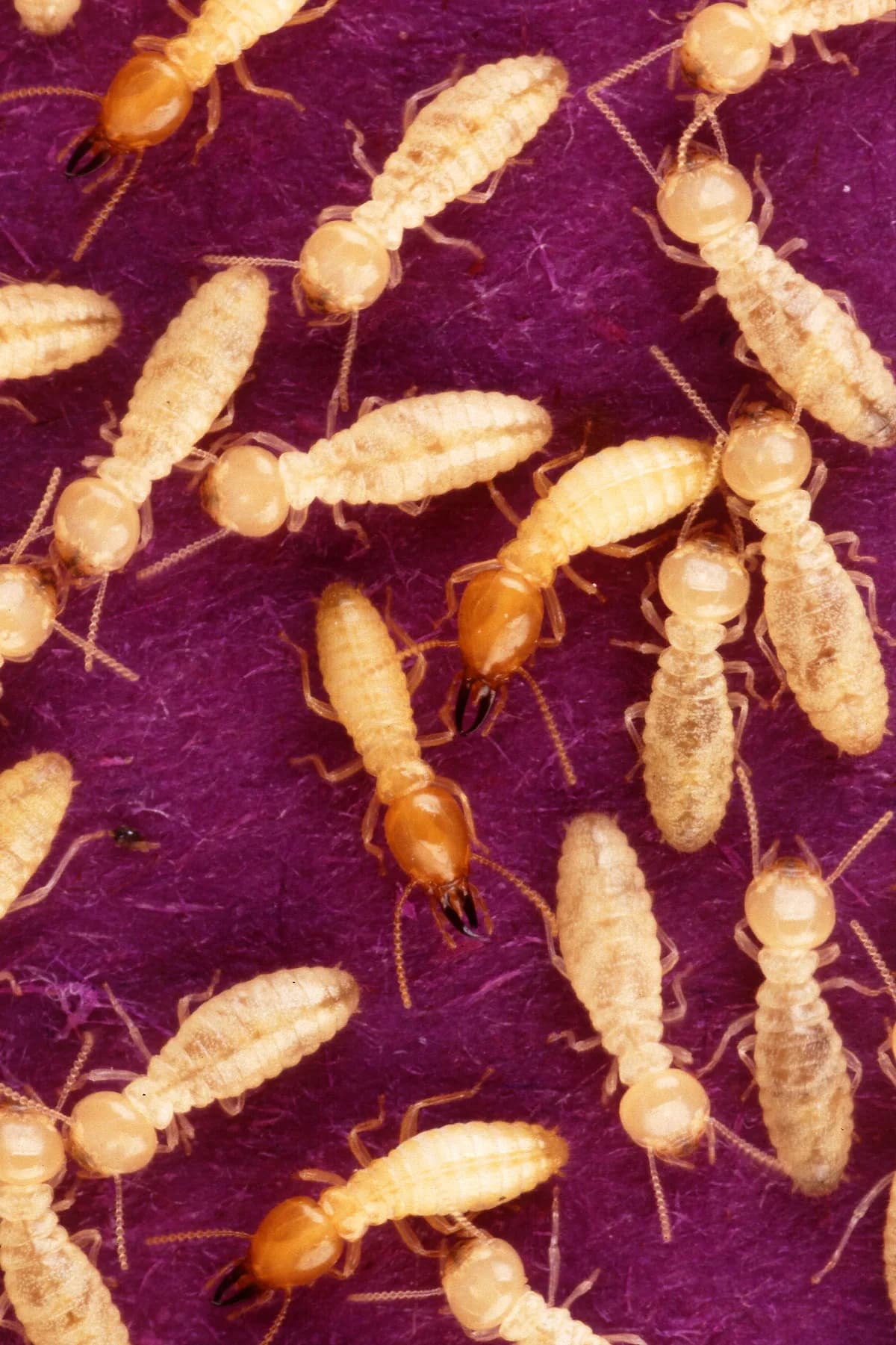
Formosan workers look nearly identical to native subterranean workers — cream-colored, 1/8 inch, soft-bodied. The reliable field distinction is the soldier: Formosan soldiers have a rounded, oval head (native subterranean soldiers have a more rectangular head) and exude a drop of white defensive fluid from a pore on the forehead when disturbed. In established infestations, soldiers make up a noticeably larger share of the population — 10 to 20 percent versus 1 to 2 percent in native colonies.
Carton Nests — Why Formosans Are Different
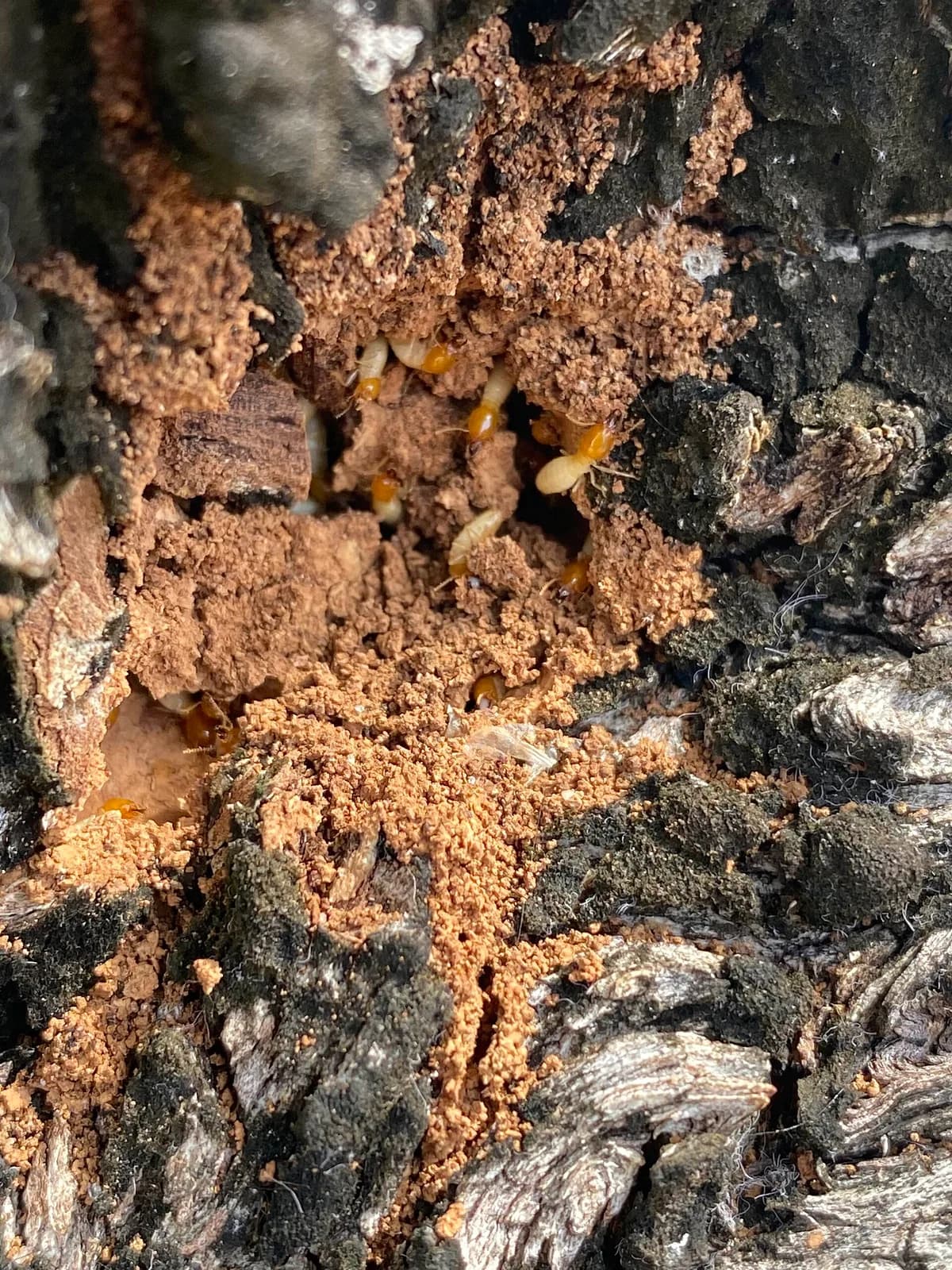
Native subterranean termites must stay connected to the soil. Formosans can cheat: they build carton nests — a spongy mass of chewed wood, soil, saliva, and fecal material — inside wall voids, attics, tree cavities, and between floors. The carton retains moisture, letting the colony live entirely above ground as long as it has a water source like a roof leak or condensation line. This is why Formosan infestations sometimes persist in structures even after the soil is treated, and why treatment must include locating and treating the carton nest itself.
Damage — The Super Termite Reputation
A single Formosan worker eats about as much as a native subterranean worker. The destruction comes from arithmetic: with up to several million workers, a mature colony consumes up to 13 ounces of wood per day. Where a native infestation might take years to structurally compromise a home, Formosans can do it in months. They attack structural lumber, flooring, cabinets, trees (they hollow living oaks and pines along the Gulf Coast), and even non-cellulose materials — chewing through soft metals, plastics, asphalt, and plaster to reach wood or moisture.
Severe Formosan repairs in Texas frequently exceed $25,000 when structural members are involved, and no standard homeowner's policy covers it. Houston-area homes should be treated as high-risk: annual inspections, and immediate identification of any evening swarm around exterior lights in late spring.
Formosan Termite Treatment in Texas
Formosan treatment uses the same tools as native subterranean control — liquid soil barriers (fipronil-based) and bait systems — but applied more aggressively and always combined with a carton-nest search. Technicians inspect wall voids, attic spaces, and trees on the property; confirmed carton nests are treated directly with foam or dust termiticides, and infested trees may need treatment or removal. Because colonies are huge, bait systems take longer to collapse them, and follow-up monitoring is essential.
Expect $1,000 to $3,000 for initial treatment on an average home plus annual monitoring, more when nests inside walls need direct treatment. Verify the company holds a TPCL termite license, and browse licensed termite treatment companies in your area below.
Formosan Termite Prevention Tips
- Schedule annual WDI inspections if you live in the Houston metro, along the Gulf Coast, or in DFW — early detection is everything with this species.
- Fix roof leaks, plumbing drips, and AC condensate issues immediately — above-ground moisture enables carton nests.
- Never bury or reuse old railroad ties or landscape timbers against the house — a classic Formosan highway.
- Eliminate wood-to-soil contact and keep mulch pulled back from the foundation.
- Inspect infested-looking trees (hollow sections, carton material in cavities) near the house and have them treated or removed.
- During May–June swarm season, watch porch lights and windows at dusk and save any swarmers you find for professional identification.
Licensed Texas Companies
1860 companies offering termite control
1,860 companies
Romex Pest & Termite Control

Inspect It Austin
Urbanex Pest Control
A-Action Home Inspection Houston
Forterra Pest Control
EnviroCon Pest Control
X Out Pest Services
Adams Exterminating

Innovative Pest Control
Cerv Property Solutions San Antonio
Ace Pest Control
Integrity Pest and Termite
A Plus Inspections of Texas

The CanMan
Bill Clark Pest Control, Inc.

Bug Blasters Pest Control

Pest Solutions of North Texas

Pinnacle Pest Defense
Frequently Asked Questions
Best Professional Treatment
Inspection, treatment, and prevention of subterranean, drywood, and Formosan termites
Find Local Exterminators for Formosan Termites Near You
Use our interactive map to find licensed formosan termites control companies near your Texas location.
Find Licensed Companies by Texas City
Licensed formosan termites control companies in major Texas cities