
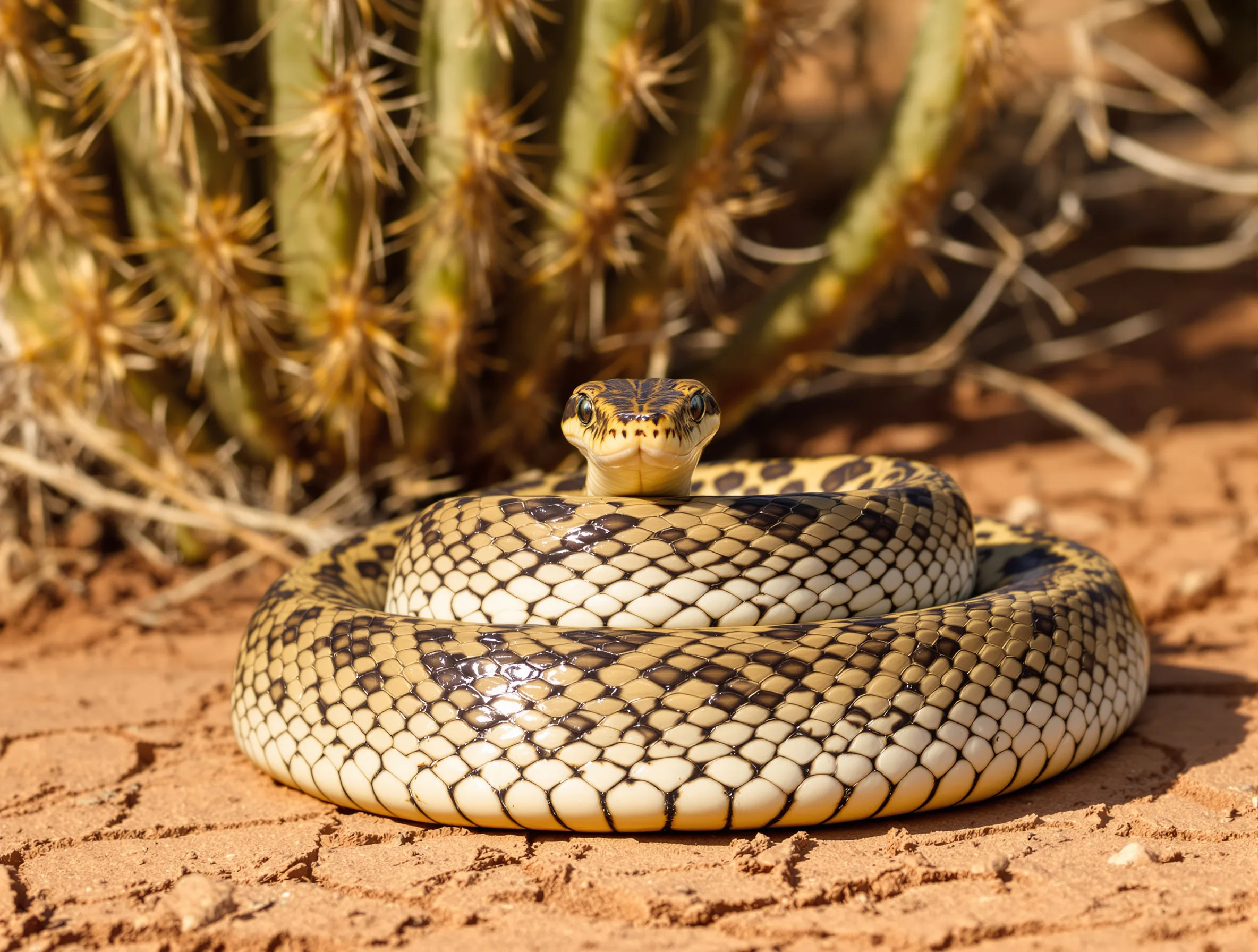
Snake Removal in Texas — Complete Guide
Four venomous species in Texas including rattlesnakes and copperheads
Not sure it's a Snakes?
Snap a photo — our free AI tool identifies Texas pests in seconds.
About Snakes in Texas
Texas is home to more than 115 snake species and subspecies — more than any other state in the U.S. Of these, only four groups are venomous: rattlesnakes, copperheads, cottonmouths (water moccasins), and coral snakes. The remaining 100-plus species are non-venomous and many are highly beneficial, feeding on rodents, insects, and even other snakes including venomous species. Understanding how to identify, avoid, and coexist with Texas snakes is important for every homeowner, particularly those in rural and suburban areas.
Venomous Snakes in Texas
Western Diamondback Rattlesnake
The western diamondback is the most commonly encountered venomous snake in Texas and is responsible for more snakebites than any other species in the state. Found statewide except in the far eastern Piney Woods, adults average 3.5 to 4.5 feet long and are identified by diamond-shaped dorsal blotches, a black-and-white banded tail, and a distinctive rattle. They inhabit rocky hillsides, brushlands, grasslands, and increasingly suburban developments. Western diamondbacks are defensive rather than aggressive but will coil, rattle, and strike if threatened or surprised.
Copperhead
Copperheads are found in the eastern two-thirds of Texas, from East Texas woodlands through Central Texas and the Hill Country. They are 2 to 3 feet long with a distinctive pattern of hourglass-shaped copper or reddish-brown crossbands on a lighter tan or pinkish body. Copperheads are masters of camouflage and are often stepped on before they are seen. They inhabit wooded creek bottoms, leaf litter, rock ledges, and suburban yards with natural cover. Copperhead bites are the most common venomous snakebite in Texas but are rarely fatal due to relatively mild venom.
Cottonmouth (Water Moccasin)
Cottonmouths are found in the eastern two-thirds of Texas, associated with rivers, creeks, lakes, ponds, marshes, and drainage ditches. Heavy-bodied and dark-colored (olive, brown, or nearly black), they average 2 to 4 feet long. When threatened, they open their mouth wide, displaying the white cotton-like interior — the source of their common name. Cottonmouths are often confused with non-venomous water snakes, which are far more common. True cottonmouths have a thick body, triangular head, and swim with their body riding high on the water surface.
Coral Snake
The Texas coral snake is found in East and South Texas, from the Houston area south to the Rio Grande Valley and west to San Antonio. It is a slender, brightly banded snake (red, yellow, and black rings) averaging 2 to 2.5 feet long. The identifying pattern is that red bands touch yellow bands — remembered by the rhyme "red touches yellow, kill a fellow; red touches black, friend of Jack." Unlike pit vipers, coral snakes have small, fixed front fangs and must chew to deliver venom. Bites are rare due to their reclusive nature and small mouth, but coral snake venom is highly neurotoxic and requires immediate medical treatment.
Beneficial Non-Venomous Snakes
Many non-venomous Texas snakes provide significant pest control benefits and should be left undisturbed when encountered away from living areas:
- Texas rat snakes are large (4 to 6 feet), excellent climbers found statewide. They are one of the most effective natural rodent predators and frequently inhabit barns, sheds, and attics where mice and rats are present.
- King snakes are immune to pit viper venom and actively prey on rattlesnakes, copperheads, and cottonmouths, making them exceptionally valuable. They also eat rodents, lizards, and bird eggs.
- Coach whip snakes are fast, slender snakes that prey on rodents, lizards, and other snakes. Despite myths, they do not chase or whip people.
- Rough green snakes are small, bright green, insect-eating snakes commonly found in vegetation near water. They are completely harmless and beneficial.
Identifying Venomous vs. Non-Venomous Snakes
Texas pit vipers (rattlesnakes, copperheads, cottonmouths) share several identifying features that distinguish them from non-venomous species:
- Head shape: Pit vipers have broad, triangular heads distinctly wider than the neck. Most non-venomous snakes have narrow, rounded heads roughly the same width as the neck. (Note: some non-venomous snakes flatten their heads when threatened to mimic vipers.)
- Pupils: Pit vipers have vertical, elliptical (cat-like) pupils. Non-venomous snakes have round pupils. This is reliable but requires being dangerously close — never approach a snake to check pupil shape.
- Heat-sensing pits: Pit vipers have a visible pit (heat-sensing organ) between the eye and nostril on each side of the head.
- Body shape: Venomous snakes tend to have thick, heavy bodies relative to their length. Non-venomous snakes are generally more slender.
Coral snakes are the exception to all of these rules — they have round heads, round pupils, no heat pits, and slender bodies. They are identified solely by their color pattern: red bands touching yellow bands.
Snakebite First Aid
If bitten by a snake you believe to be venomous, take the following steps:
- Call 911 or get to the nearest hospital emergency department immediately. Time is critical.
- Stay calm and limit physical activity to slow the spread of venom through the lymphatic system.
- Remove rings, watches, bracelets, and tight clothing near the bite before swelling begins.
- Keep the bitten limb at or slightly below heart level.
- Take a photo of the snake from a safe distance if possible — this helps medical staff identify the species and select the appropriate antivenom.
Do NOT apply a tourniquet, cut the wound, attempt to suck out venom, apply ice or a cold pack, or give the victim alcohol or aspirin. These outdated first-aid measures can cause additional harm. Texas hospitals and emergency departments carry CroFab antivenom for pit viper bites and Coralmyn antivenom for coral snake bites.
Snake Exclusion and Control
Habitat Modification
The most effective long-term snake control strategy is removing what attracts them to your property. Eliminate rodent populations (snakes follow their food source), remove ground-level hiding spots including rock piles, woodpiles, brush piles, and dense ground cover, keep grass mowed short, and store lumber and building materials off the ground and away from the home.
Exclusion (Snake-Proofing)
Seal all gaps in the foundation, around doors, and at utility penetrations — snakes can enter through openings as small as 1/4 inch. Install door sweeps on all exterior doors. Screen foundation vents, crawl space openings, and weep holes with 1/4-inch hardware cloth. For high-risk properties, snake-proof fencing made of 1/4-inch hardware cloth or solid aluminum sheeting can be installed around yards or critical areas. Effective snake fencing should be at least 36 inches tall, buried 6 inches deep, and angled outward at the top.
Professional Snake Removal
Licensed wildlife control operators can safely capture and relocate snakes found in or around homes. Many pest control companies in Texas offer snake removal services, typically costing $100 to $300 per visit. For ongoing snake problems, trapping programs using specialized snake traps placed along fence lines and near known entry points can reduce snake encounters.
Texas Law and Snakes
Texas does not have a general statewide law protecting non-venomous snakes, and there is no bag limit or closed season on most species including rattlesnakes. However, the Texas indigo snake is federally protected under the Endangered Species Act, and the timber rattlesnake has harvest restrictions in some East Texas counties. Many wildlife biologists and conservation organizations encourage leaving non-venomous snakes alone due to their beneficial role in controlling rodent populations. Killing a non-venomous snake that is providing free pest control on your property is counterproductive.
Snake Prevention Tips
- Eliminate rodent populations — rodents are the primary food source that draws snakes to residential properties.
- Keep grass mowed to 4 inches or less and clear brush, leaf litter, and ground cover near the home.
- Remove rock piles, woodpiles, lumber stacks, and debris piles from near the foundation.
- Seal all gaps in the foundation, around doors, at utility penetrations, and in crawl space vents with 1/4-inch hardware cloth or caulk.
- Install tight-fitting door sweeps on all exterior doors including the garage.
- Store firewood at least 20 feet from the house and elevated off the ground.
- Watch where you step and reach when walking in tall grass, rocky areas, or near woodpiles — most snakebites occur when people accidentally step on or reach near a hidden snake.
- Wear boots and long pants when hiking or working in snake-prone areas.
Licensed Texas Companies
537 companies offering wildlife removal
537 companies
Adams Exterminating
Integrity Pest and Termite
Justice Pest Services

Pest Control Conroe - Full Scope
Georgetown Pest Control
EvoFoam Pest Control
The Bug Master
Urban Texas Pest Control
ChemTec Pest Control
Golden Rule Pest Termite & Weed Control

Covenant Pest Control
Big M Pest Control
Hunter Pest Control
Yellow City Pest Control
Phillips Pest Solutions

Zappit Weed and Pest Control llc
Critter Call Pest Control

Ross Pest and Lawn
Frequently Asked Questions
Best Professional Treatment
Humane removal of raccoons, opossums, bats, squirrels, skunks, and other wildlife
Snakes Removal Cost Guides
Find Local Exterminators for Snakes Near You
Locate humane wildlife removal and animal control specialists licensed in Texas.
Find Licensed Companies by Texas City
Licensed snakes control companies in major Texas cities
Snakes by city: Dallas