

Wolf Spiders in Texas — Complete Guide
Large, hairy hunting spider — often confused with the brown recluse but harmless
Not sure it's a Wolf Spider?
Snap a photo — our free AI tool identifies Texas pests in seconds.
Quick facts — wolf spiders in Texas
- Family: Lycosidae — dozens of species statewide, up to 1.5 inches of body
- Hunters, not web-builders: they chase prey on the ground — the big spider sprinting across your floor is usually a wolf spider
- Danger: bite is like a bee sting at worst; not medically significant
- Top lookalike: constantly mistaken for the brown recluse — comparison below
- Signature behavior: females carry the egg sac, then ride the spiderlings on their back
- Indoor season: wander inside in fall as nights cool — they don't nest indoors
About Wolf Spiders in Texas
Wolf spiders are the big, hairy, fast-moving spiders that startle Texas homeowners more than any other species — and they are almost entirely harmless. Dozens of species live statewide, from the large Carolina wolf spider (Hogna carolinensis, the biggest in North America) down to small grass-dwelling species. They are athletic ground hunters that chase down crickets, roaches, and other insects instead of trapping them in webs, which is why they turn up in garages, along baseboards, and in yards everywhere from El Paso to Beaumont. For the full spider picture, see our Texas spider control guide.
Identifying a Wolf Spider
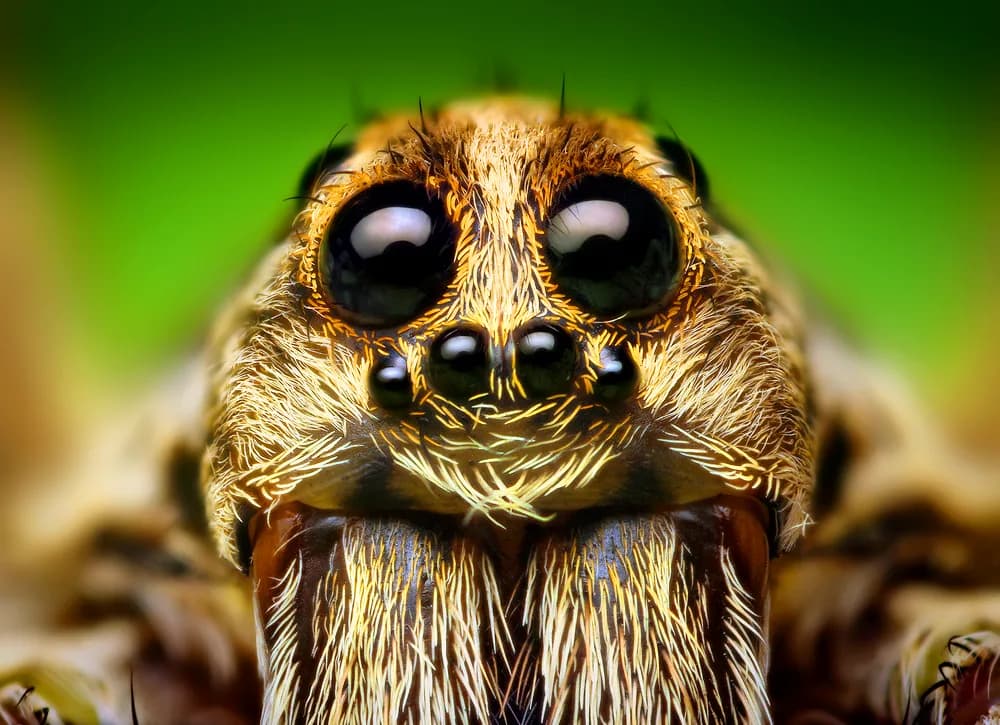
Wolf spiders are robust and athletic-looking: stocky legs, a long body, and dense hair giving them a fuzzy, grizzled brown-gray appearance, often with darker stripes or mottling. Large species reach 1 to 1.5 inches of body length — quarter- to silver-dollar-sized with legs. The single most reliable feature is the eye arrangement: eight eyes in three rows — four small eyes across the bottom, two very large forward-facing eyes in the middle, and two medium eyes on top of the head. Those two big eyes reflect light, so a flashlight sweep of the yard at night returns dozens of tiny green-white eyeshine glints — wolf spiders, not something sinister.
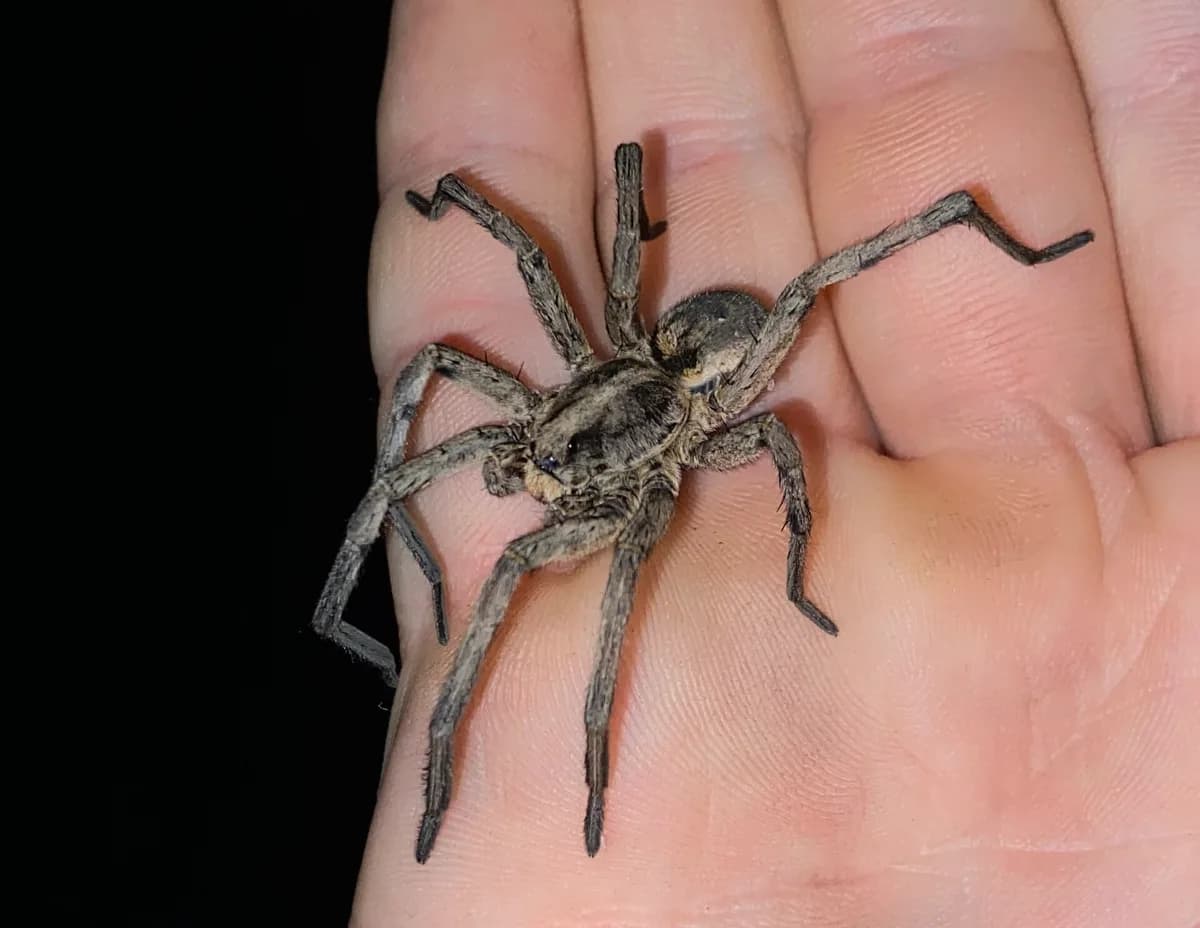
Wolf Spider vs Brown Recluse
This is the most consequential spider ID question in Texas, because one species is harmless and the other is medically significant. Texas A&M AgriLife entomologists report that most "brown recluse" photos submitted by homeowners are actually wolf spiders. The differences:
| Feature | Wolf spider | Brown recluse |
|---|---|---|
| Eyes | 8 eyes in 3 rows — two huge, forward-facing | 6 eyes in 3 pairs (dyads) |
| Size | Up to 1.5 in body — big | 1/4–1/2 in body — small, quarter-sized with legs |
| Hair | Dense, obviously hairy/fuzzy | Nearly hairless, fine short hairs only |
| Markings | Striped or mottled legs and body | Plain unbanded legs; dark violin on cephalothorax |
| Behavior | Runs down prey in the open; often seen moving | Hides motionless in undisturbed storage areas |
| Danger | Bee-sting-level bite; harmless | Medically significant; some bites turn necrotic |
The 60-second field test: if the spider is big, fuzzy, and running, it is a wolf spider. If it is small, smooth, and hiding in a box in your attic, get a closer look — and see our brown recluse guide for that side of the comparison.
Behavior — Hunters, Egg Sacs, and Spiderling Backpacks
Wolf spiders do not build prey-catching webs. Most hunt on foot at night; some dig burrows and ambush prey at the entrance. Females carry their spherical egg sac attached to the spinnerets at the rear — a distinctive white or tan ball — and when 30 to 100 spiderlings hatch, they climb onto the mother's back and ride for a week or two. A startled mother can shed a living cloud of babies, which is alarming to witness and completely harmless.
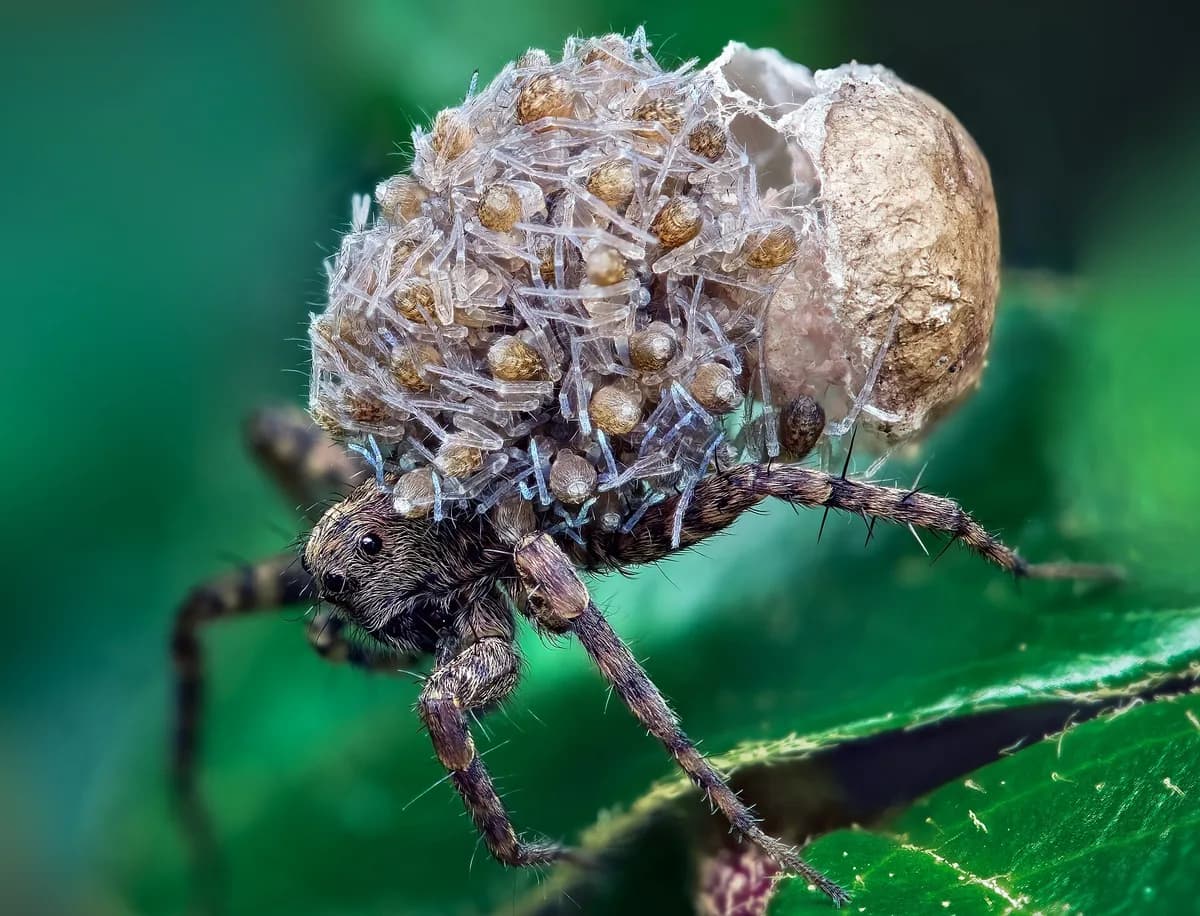
Indoor encounters peak in fall and early winter: as nights cool and insect prey moves toward structures, hunting wolf spiders wander through door gaps, garage doors, and foundation cracks. They do not establish indoor populations — a wolf spider in the house is a lost hunter, not an infestation.
Wolf Spider Bites
Wolf spiders are shy and flee; bites happen only when one is trapped against skin or grabbed. The bite is a painful pinprick with localized redness and swelling — comparable to a bee sting, resolving in a day or two. It causes no necrosis, no systemic illness, and no lasting effects. Clean with soap and water and use a cold compress. Medical care is unnecessary unless an unusual reaction develops.
Wolf Spider Prevention Tips
- Install door sweeps and seal ground-level gaps — the main entry route for wandering hunters.
- Reduce outdoor lighting or switch to yellow bug bulbs; lights attract the insects wolf spiders hunt.
- Pull mulch, leaf litter, and ground cover back from the foundation — prime wolf spider habitat.
- Keep firewood, lumber, and stored items off the ground and away from the house.
- Reduce indoor prey: a general pest program that suppresses crickets and roaches removes the reason they enter.
- Relocate rather than squash: trap under a cup, slide in cardboard, release outside — they are free pest control.
Wolf Spider Control in Texas
Honest answer: wolf spiders rarely need control. They are solitary hunters, not colony pests, and they eat the insects you actually want gone. If sightings are frequent, the fix is exclusion plus prey reduction — door sweeps, sealed thresholds, and a perimeter program that suppresses crickets and roaches. One-time spider treatments run $150 to $300; quarterly service is $100 to $175 per visit. See our spider control guide for methods, or browse licensed spider control companies below.
Licensed Texas Companies
2027 companies offering pest control
2,027 companies

Romex Pest & Termite Control

Urbanex Pest Control
A-Action Home Inspection Houston

Forterra Pest Control

EnviroCon Pest Control

X Out Pest Services

Adams Exterminating

Innovative Pest Control

Cerv Property Solutions San Antonio
Ace Pest Control

Integrity Pest and Termite

The CanMan

Bill Clark Pest Control, Inc.

Bug Blasters Pest Control

Pest Solutions of North Texas

Pinnacle Pest Defense

BugMan Pest Control & Termite Control

Justice Pest Services
Frequently Asked Questions
Best Professional Treatment
General pest management for common household pests including roaches, ants, spiders, and more
Find Local Exterminators for Wolf Spider Near You
Use our interactive map to find licensed wolf spider control companies near your Texas location.
Find Licensed Companies by Texas City
Licensed wolf spider control companies in major Texas cities