
Spider Control in Texas — Complete Guide
Brown recluse and black widow found across Texas
Not sure it's a Spiders?
Snap a photo — our free AI tool identifies Texas pests in seconds.
About Spiders in Texas
Texas is home to more than 900 spider species, but only two pose a significant medical threat to humans: the brown recluse and the black widow. The vast majority of Texas spiders are harmless and actually beneficial, feeding on mosquitoes, flies, and other pest insects. Understanding which species are dangerous and which are helpful is key to effective spider management.
- Brown recluse spiders (Loxosceles reclusa) are found throughout Central, North, and East Texas. They are light to medium brown, about the size of a quarter including legs, and identified by a distinctive dark violin-shaped marking on the cephalothorax (head region). They have six eyes arranged in three pairs, unlike most spiders which have eight eyes. Brown recluses prefer undisturbed indoor areas — closets, attics, storage boxes, behind furniture, and inside rarely worn shoes. See our brown recluse spider guide for detailed bite symptoms and treatment.
- Black widow spiders (Latrodectus mactans) are found statewide in Texas. Females are shiny black, about 1.5 inches with legs extended, with a red or orange hourglass marking on the underside of the globular abdomen. Males are smaller and harmless. Black widows build messy, irregular webs near ground level in garages, meter boxes, under outdoor furniture, woodpiles, and rock walls. Our black widow spider guide covers identification, bite first aid, and male vs female differences.
- Wolf spiders are large, hairy, brown or gray spiders commonly found in Texas yards and homes. They can reach 1 to 1.5 inches in body length and look intimidating, but their bite is no worse than a bee sting. Wolf spiders are ground hunters that do not build webs — they chase down prey. They often enter homes in fall seeking warmth.
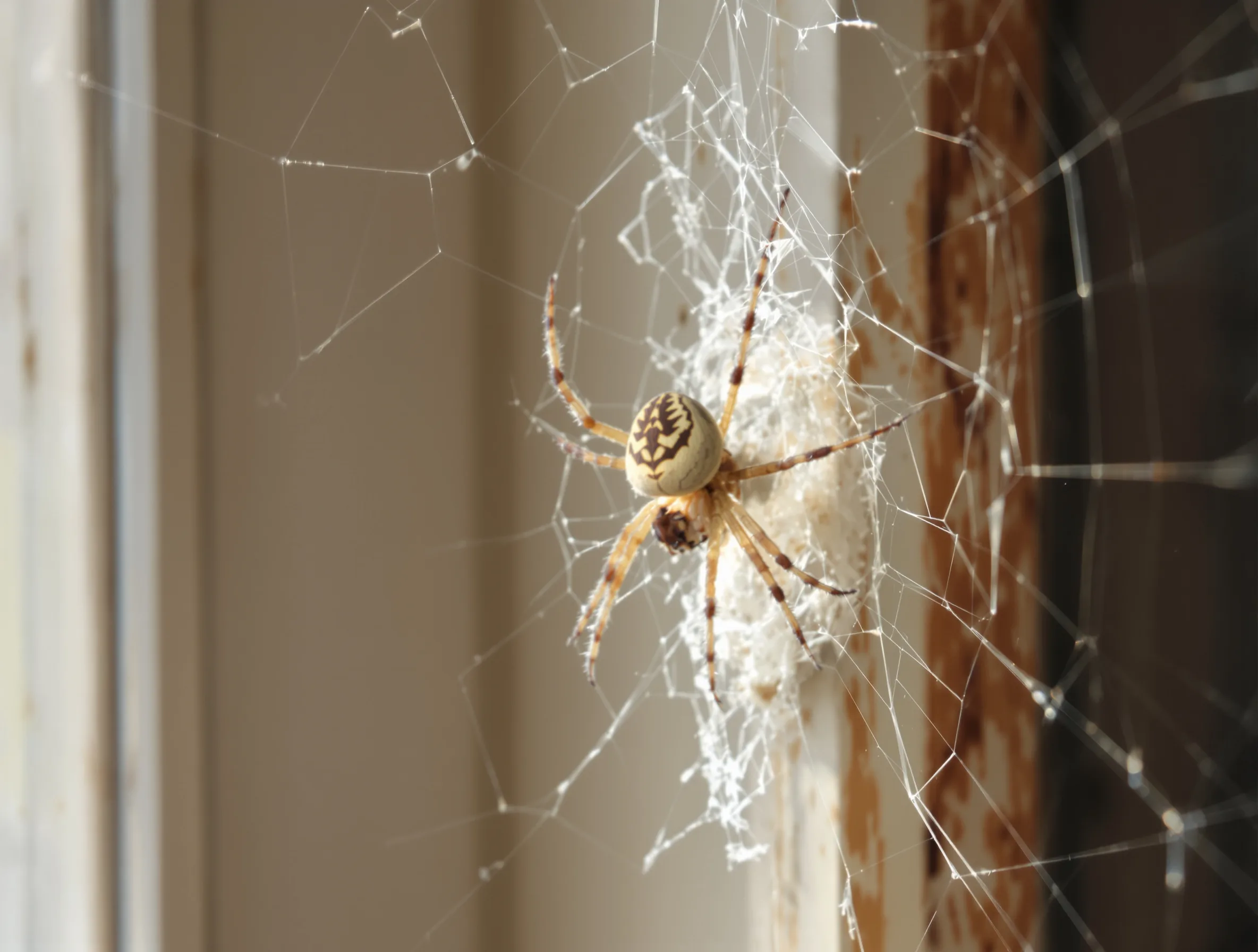
- Common house spiders and orb weavers build the classic webs you see on porches, eaves, and fences. They are harmless to humans and provide natural pest control by trapping flying insects.
Identifying Dangerous Spiders
Brown Recluse Identification
The brown recluse is often misidentified. Key features to confirm identification: a dark violin-shaped marking on the cephalothorax with the neck of the violin pointing toward the abdomen, six eyes in three pairs (not the typical eight), uniformly colored legs with no stripes or bands, and a body length of about 1/4 to 1/2 inch. Brown recluses are not aggressive and bite only when pressed against skin, typically when a person reaches into a storage box or puts on clothing where a spider is hiding.
Black Widow Identification
Female black widows are unmistakable: a shiny, jet-black body with a bright red or orange hourglass marking on the underside of the round abdomen. Immature black widows may have red and white markings on the top of the abdomen. Their webs are irregular and extremely strong, with a thick, tangled structure unlike the organized webs of orb weavers. Black widows are shy and non-aggressive but will bite if their web is disturbed or if they feel trapped.
Spider Bite First Aid
For any suspected spider bite, clean the area with soap and water and apply ice to reduce swelling. Most spider bites cause only minor irritation. However, seek medical attention immediately if you experience:
- Brown recluse bite symptoms: A growing red or purple lesion that develops a blister or open sore within 2 to 8 hours, expanding tissue death (necrosis) around the bite site, fever, chills, nausea, or joint pain. Necrotic wounds can take weeks or months to heal and may require medical debridement.
- Black widow bite symptoms: Severe muscle pain and cramping (especially in the abdomen, back, and shoulders) within 1 to 3 hours, excessive sweating, nausea, elevated blood pressure, and difficulty breathing. Black widow venom is neurotoxic and affects the nervous system. Antivenom is available for severe cases.
If possible, capture or photograph the spider for identification. Do not apply a tourniquet or attempt to cut or suction the bite.
Where Spiders Live in Texas Homes
Brown recluses prefer dark, undisturbed spaces: cardboard boxes in storage, closets and clothing that has not been worn recently, behind wall-mounted pictures and mirrors, inside shoes in closets, attics, and crawl spaces. Black widows prefer ground-level protected spaces: garages, meter boxes, beneath outdoor furniture, inside cinder blocks, woodpiles, and around foundation plantings. Wolf spiders and house spiders are found throughout the home — along baseboards, in corners, near exterior doors, and in garages.
Spider Treatment Methods
Perimeter Spray Treatment
Professional-grade residual insecticides are applied around the foundation, door frames, window frames, eaves, and other entry points. This creates a lethal barrier that kills spiders as they attempt to enter. Perimeter treatments are reapplied every 60 to 90 days for ongoing protection.
Web Removal (De-Webbing)
Physical removal of spider webs from eaves, porches, garages, and exterior walls disrupts spider habitat and removes egg sacs before they hatch. De-webbing is most effective when combined with perimeter spray treatment. Regular de-webbing every 4 to 6 weeks significantly reduces spider populations over time.
Crack and Crevice Treatment
Dust formulations such as delta dust or diatomaceous earth are applied inside wall voids, attic spaces, and cracks where brown recluses and black widows harbor. These products provide long-lasting residual control in areas where spiders hide.
Glue Traps
Sticky traps placed along baseboards, in closets, and behind furniture are an effective monitoring and control tool for brown recluses. They also help identify the severity and location of infestations without chemicals.
Spider Prevention Tips
- Seal cracks and gaps around doors, windows, utility penetrations, and the foundation with caulk or weatherstripping.
- Install tight-fitting door sweeps on all exterior doors, including the garage.
- Switch exterior lighting to yellow or sodium vapor bulbs, which attract fewer flying insects and therefore fewer spiders.
- Remove clutter — especially cardboard boxes — from storage areas, closets, and garages. Use sealed plastic bins instead.
- Shake out shoes, gloves, and clothing that has been stored or left on the floor before wearing.
- Keep beds pulled away from walls and avoid bed skirts that touch the floor.
- Clear woodpiles, rock piles, and debris away from the foundation.
- Trim vegetation and branches away from the house to reduce spider access points.
Licensed Texas Companies
2014 companies offering pest control
2,014 companies

Romex Pest & Termite Control

Urbanex Pest Control
A-Action Home Inspection Houston

Forterra Pest Control

EnviroCon Pest Control

X Out Pest Services

Adams Exterminating

Innovative Pest Control

Cerv Property Solutions San Antonio
Ace Pest Control

Integrity Pest and Termite

The CanMan

Bill Clark Pest Control, Inc.

Bug Blasters Pest Control

Pest Solutions of North Texas

Pinnacle Pest Defense
BugMan Pest Control & Termite Control

Justice Pest Services
Frequently Asked Questions
Best Professional Treatment
General pest management for common household pests including roaches, ants, spiders, and more
Find Local Exterminators for Spiders Near You
Find crack & crevice treatment specialists for spider control in Texas.
Find Licensed Companies by Texas City
Licensed spiders control companies in major Texas cities