
Black Widow Spider in Texas — Complete Guide
Venomous spider with neurotoxic venom, common across Texas
Not sure it's a Black Widow Spider?
Snap a photo — our free AI tool identifies Texas pests in seconds.
Quick facts — black widow in Texas
- Species: southern black widow (Latrodectus mactans) statewide; western black widow (L. hesperus) in far West Texas
- Who is dangerous: only the female — shiny black with a red hourglass underneath. Males are small, brown, and harmless
- Where: messy ground-level webs in garages, meter boxes, woodpiles, and under outdoor furniture
- Bite risk: neurotoxic venom causing severe muscle cramps; rarely fatal with medical care, but children and seniors need prompt attention
- Emergency: Texas Poison Center Network 1-800-222-1222 (24/7, free)
- Behavior: shy and nocturnal — bites happen when the web is disturbed or the spider is trapped against skin
About Black Widows in Texas
The black widow is the most venomous spider in Texas — and also one of the most avoidable. The southern black widow (Latrodectus mactans) is found statewide, while the western black widow (Latrodectus hesperus) takes over in far West Texas; they look and behave almost identically. Together with the brown recluse, they are the only two spiders in the state whose bites are considered medically significant.
Widows are not wanderers and not aggressive. A female spends nearly her entire life in or beside one tangled web, emerging at night to feed. Bites occur almost exclusively when someone reaches into her web space without looking — into a meter box, a pile of firewood, a stored flowerpot, or a boot left in the garage.
Identifying a Black Widow
The adult female is unmistakable once you know what to look for:
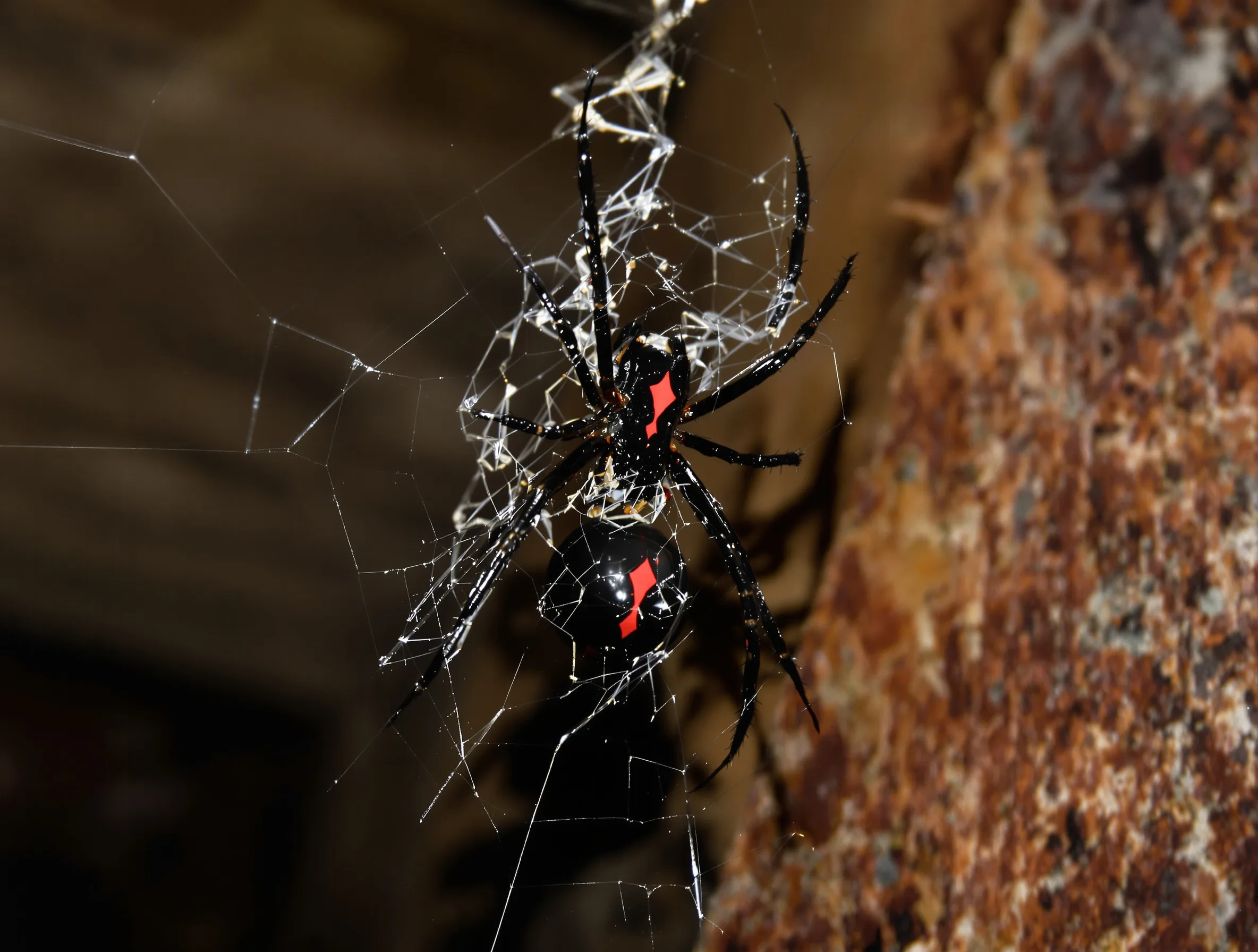
- Body: glossy, jet-black, with a rounded, globular abdomen about the size of a pea. Body length around 1/2 inch; roughly 1.5 inches with legs extended.
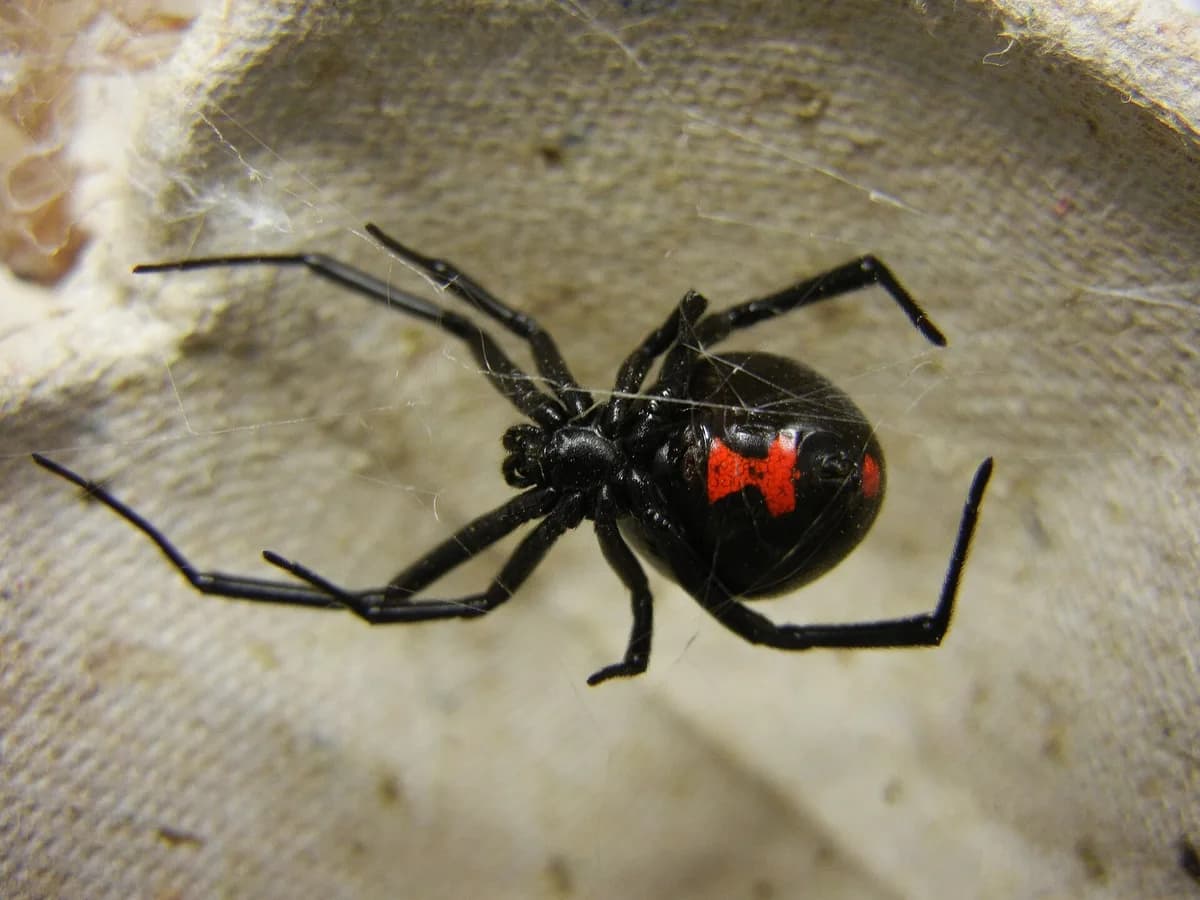
- The hourglass: a bright red or orange hourglass-shaped marking on the underside of the abdomen. Because she hangs upside down in her web, the marking is usually visible from outside the web. On some individuals the hourglass is broken into two separate triangles or dots.
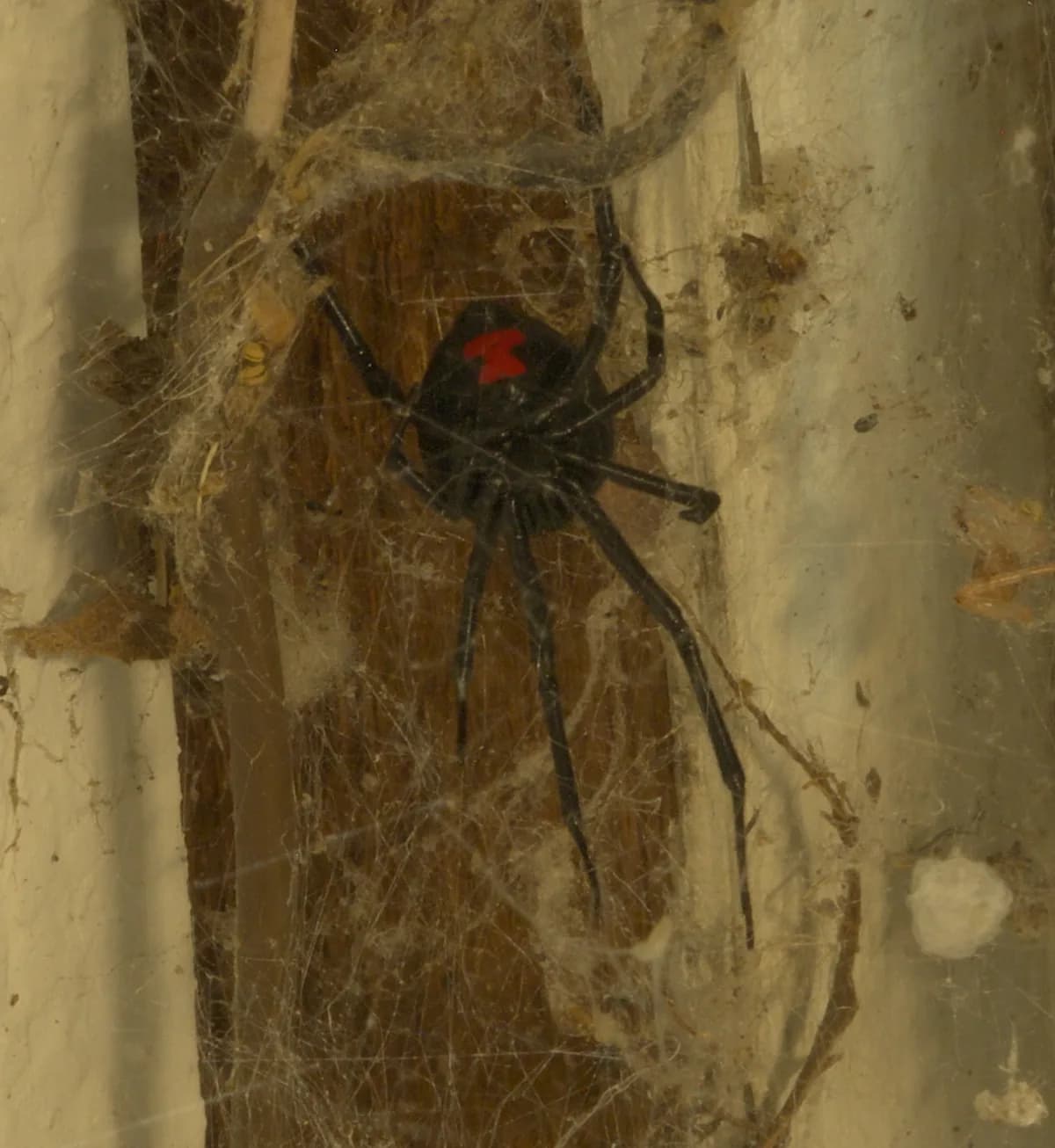
- The web: an irregular, chaotic tangle of unusually strong, sticky silk, built close to the ground in a sheltered corner — nothing like the organized spirals of orb weavers.
- Egg sacs: smooth, tan, papery spheres about the size of a pea, hanging in the web. A female guarding sacs is at her most defensive.
Male vs Female Black Widow
Only the female is dangerous. Male black widows are less than half her size, light brown or gray with pale stripes or spots, and have small, narrow abdomens — they look so different that they are rarely recognized as widows at all. Males do not bite people in any meaningful sense and their venom dose is negligible. Juvenile females are brownish with white, orange, or red banding on the top of the abdomen and darken to glossy black as they mature; they can already bite, but deliver far less venom than adults.
Where Black Widows Live in Texas
Black widows favor dark, dry, sheltered spots at or near ground level where they will not be disturbed. Around Texas homes, the classic locations are: water meter and irrigation valve boxes, garages and sheds (especially cluttered corners), woodpiles and stacked lumber, underneath patio furniture and BBQ grills, inside cinder block voids, under flowerpots and planters, along foundation edges behind shrubs, and in rarely used outdoor storage. A good rule of thumb: any sheltered void you reach into without looking is widow habitat.
They are active year-round in Texas but reproduce most heavily from late spring through fall, when egg sacs appear and encounters peak. Widows rarely wander into living spaces — indoor finds usually mean a garage, laundry room, or storage area adjoining the house.
Black Widow Bites — Symptoms and What to Do
Black widow venom is neurotoxic. The bite itself feels like a pinprick or goes unnoticed entirely. Symptoms typically begin within 30 minutes to 3 hours and reflect the venom's effect on the nervous system (a syndrome called latrodectism):
- Severe muscle pain and cramping, starting near the bite and spreading to the abdomen, back, chest, or thighs — abdominal muscles may become board-rigid
- Profuse sweating, sometimes only near the bite site
- Nausea, tremor, restlessness, headache, and elevated blood pressure
- In severe cases: difficulty breathing and intense, wave-like cramping
Symptoms usually peak within 12 to 24 hours and improve over several days. Deaths are extremely rare in the United States with modern medical care, and antivenom exists for severe cases. However, children, seniors, and people with heart conditions or high blood pressure should seek medical care immediately after any suspected widow bite, as should anyone with severe or worsening symptoms.
What to do: wash the bite with soap and water and apply a cold compress. Do not apply a tourniquet, cut, or attempt to suck out venom. Capture or photograph the spider if safe to do so. Call the Texas Poison Center Network at 1-800-222-1222 for guidance — they manage spider bites daily and can tell you whether a hospital visit is needed.
Black Widow Prevention Tips
- Wear gloves when handling firewood, lumber, stored pots, or anything from undisturbed outdoor areas.
- Shake out boots, shoes, and gardening gloves left in the garage or outside before putting them on.
- Reduce clutter in garages, sheds, and along foundations — widows need undisturbed corners.
- Move woodpiles away from the house and stack them off the ground.
- Seal gaps around doors, windows, and utility penetrations; fit door sweeps on garage entry doors.
- Knock down webs around the perimeter with a broom regularly — a destroyed web usually means a relocated widow.
- Switch exterior lights to yellow bug bulbs to reduce the insect prey that attracts widows.
Black Widow Control in Texas
For a single widow in an accessible web, physical removal works: vacuum the spider and web with a hose attachment, or spray the spider directly with a labeled contact aerosol. For recurring problems — especially around garages, playscapes, and meter boxes — professional treatment is the practical route. Licensed pest control companies apply residual insecticides to web sites and harborage areas, de-web the structure to remove spiders and egg sacs, and treat the perimeter to suppress the insects widows feed on.
See our Texas spider control guide for treatment methods in detail, or browse licensed spider exterminators in your area below.
Licensed Texas Companies
2014 companies offering pest control
2,014 companies

Romex Pest & Termite Control
Urbanex Pest Control
A-Action Home Inspection Houston
Forterra Pest Control
EnviroCon Pest Control

X Out Pest Services

Adams Exterminating

Innovative Pest Control

Cerv Property Solutions San Antonio
Ace Pest Control

Integrity Pest and Termite

The CanMan
Bill Clark Pest Control, Inc.

Bug Blasters Pest Control

Pest Solutions of North Texas

Pinnacle Pest Defense
BugMan Pest Control & Termite Control

Justice Pest Services
Frequently Asked Questions
Best Professional Treatment
General pest management for common household pests including roaches, ants, spiders, and more
Find Local Exterminators for Black Widow Spider Near You
Find crack & crevice treatment specialists for spider control in Texas.
Find Licensed Companies by Texas City
Licensed black widow spider control companies in major Texas cities