

Fall Hands the Grass Back to Texas' Lone Star Tick, and a Meat Allergy Rides Along
Texas Public Radio opened October with a seasonal advisory that reads more like a shift change than a warning. On the Oct. 3 episode of Petrie Dish, host Bonnie Petrie reported that cooler fall temperatures bring an increase in daytime lone star tick activity in the areas where the summer's heat had kept the tick at bay — and reminded listeners that this species is more aggressive than most of the ticks around it.
The timing explains the attention. The Sunday Los Angeles Times devoted a feature on Oct. 4 to the same insect and the strange condition it leaves behind: an allergy to red meat, sometimes arriving months after a bite the person never noticed.
The culprit is a sugar. Alpha-gal, or galactose-α-1,3-galactose, is a molecule produced in the bodies of most mammals, cattle and pigs included, but not in people, according to the CDC's alpha-gal syndrome page. It also shows up in the saliva of certain ticks. When one of those ticks bites, it can move alpha-gal into a person's bloodstream, and the immune system can learn to treat the molecule as a threat. From then on, the reaction comes after eating red meat or after exposure to other products made from mammals. CDC calls alpha-gal syndrome a serious, potentially life-threatening allergy and notes that in the United States it is most often associated with the lone star tick.
The agency's numbers are deliberately hedged and still large. More than 110,000 suspected cases were identified between 2010 and 2022, though alpha-gal syndrome is not nationally notifiable, so no one knows the true count; as many as 450,000 people may be affected. Most reported cases cluster in the South, East and Central states, which is where the lone star tick is most common. Hunters, CDC notes, sit at elevated risk because they spend more time low to the ground in thick grass and wooded cover.
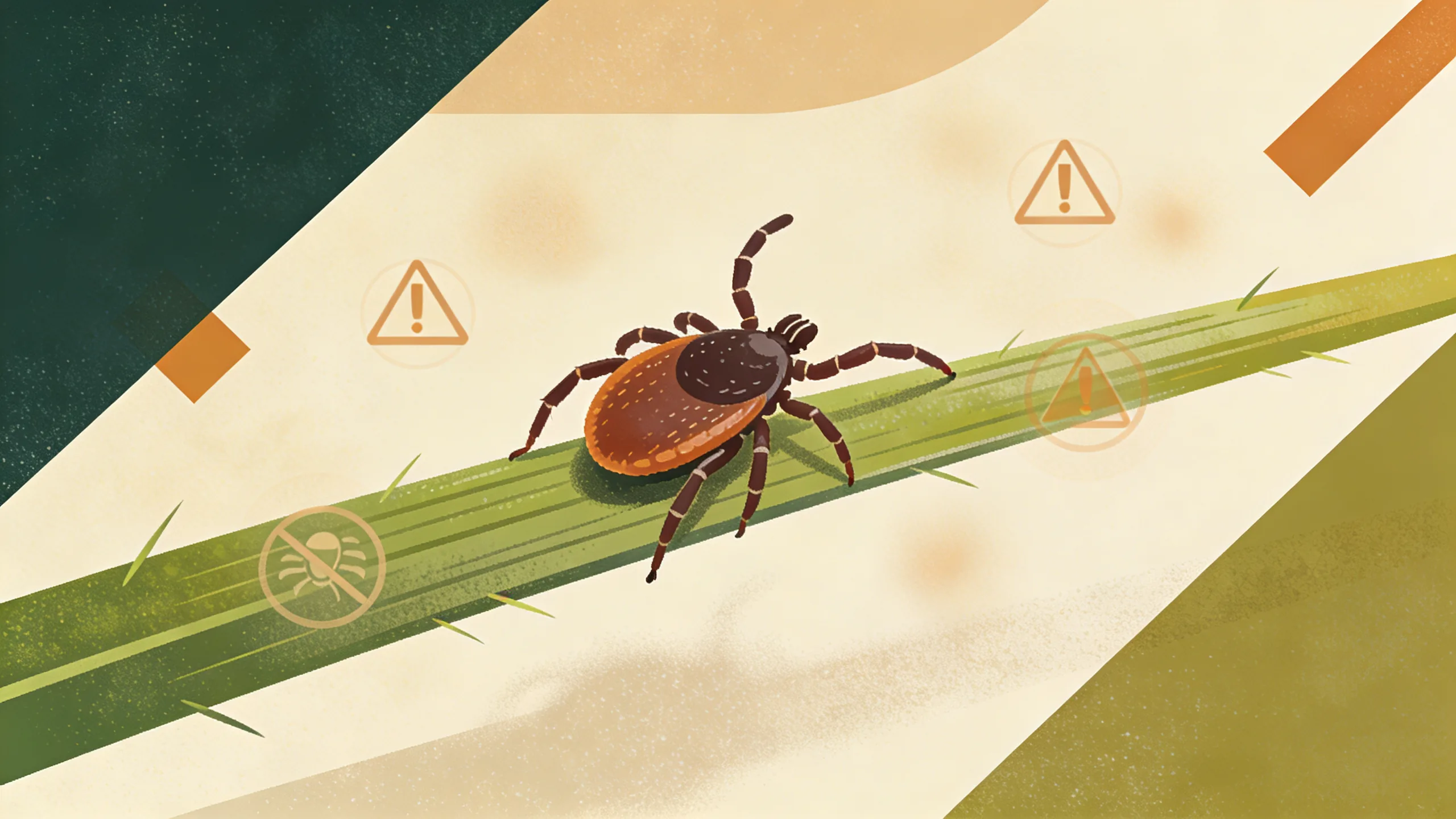
Texas is squarely inside that range. The Lone Star Tick earns its own entry in Texas A&M AgriLife's Field Guide to Common Texas Insects as Amblyomma americanum, a brown-to-tan three-host tick that runs about a third of an inch unfed and half an inch after a full meal, with the female carrying the single silvery-white spot that gave the species its name. AgriLife's guide notes that every life stage will feed on humans, that the tick prefers wooded areas with underbrush and creek or river bottoms used by animals, and that adults and nymphs surge in spring and again in midsummer, with a life cycle that can stretch to three years. What changes in the fall is the clock the tick keeps, not the population.
That makes the next few weeks a practical problem for anyone with a yard, a deer lease or a habit of walking the dog without looking down. CDC's tick prevention guidance is unglamorous and effective: treat boots, clothing and gear with 0.5 percent permethrin, use an EPA-registered repellent containing DEET, picaridin, IR3535, oil of lemon eucalyptus, para-menthane-diol or 2-undecanone, stay out of brushy areas with tall grass and leaf litter, and walk the center of trails rather than the edges. The agency notes that tick exposure can happen year-round even though activity peaks in the warmer months.
The fall wave also lands in the middle of Texas' outdoor calendar. Archery deer season opened Oct. 3, and the state's screwworm surveillance program has spent the past month asking hunters to inspect carcasses and report wounds that look wrong — which means more people crouching over more animals in more tall grass than at any other point in the year.
If a tick does attach, CDC's guidance is blunt about the priority: remove it, then keep an eye out for symptoms, which can range from mild to severe. Anyone who reacts after a meal of red meat — or after handling mammal products — should see a physician and mention the tick bite, because alpha-gal syndrome is diagnosed with an antibody test rather than a guess. There is no treatment that reverses the allergy, only management under an allergist and a menu that gives up beef, pork, lamb, venison and sometimes dairy. In a state where beef is on nearly every table, that is worth a can of permethrin.
Sources
- Texas Public Radio, Petrie Dish — Lone star ticks will be out in force this fall
- CDC — About Alpha-gal Syndrome
- CDC — Preventing Tick Bites
- Texas A&M AgriLife — Field Guide to Common Texas Insects: Lone Star Tick
- Los Angeles Times — How the aggressive lone star tick unleashed a hidden meat allergy on millions of Americans
Texas Bug Slayers Editorial Team
Editorial Board
The Texas Bug Slayers editorial team brings together licensed pest control professionals, entomologists, and writers dedicated to helping Texans protect their homes and families from pests.
Related Articles

Infected Tick Found Inside Austin Apartment Points to Rare Relapsing Fever Case
Baylor College of Medicine and Texas DSHS researchers traced a likely case of soft tick-borne relapsing fever to an infected tick discovered inside an Austin-area apartment.
CDC Warns 2026 Tick Season Could Be Worst in a Decade as ER Visits Surge
Federal health officials report tick-bite emergency room visits are hitting historic highs across most U.S. regions, with Texas residents facing heightened exposure risks.
CDC Warns of Early Tick Season as ER Visits Spike Nationwide
CDC issues early advisory as tick-borne disease ER visits reach highest levels since 2017. What Texas residents need to know about Lyme disease, prevention, and the emerging threat of alpha-gal syndrome.