

CDC Warns of Early Tick Season as ER Visits Spike Nationwide
The Centers for Disease Control and Prevention issued an uncharacteristically early advisory this week, warning Americans that tick season has arrived weeks ahead of schedule. For Texas residents who associate vector-borne threats primarily with mosquitoes and West Nile virus, the announcement serves as a reminder that another parasite—smaller, harder to detect, and equally capable of transmitting serious disease—is already active across the state.
According to CDC surveillance data, emergency room visits for tick bites are currently running at their highest levels for this time of year since 2017. The trend holds across every region of the country except the south-central United States, though epidemiologists caution that reporting lags and regional variations in healthcare-seeking behavior may mask the true picture in states like Texas.
"Tick season is here and these tiny biters can make you seriously sick," said Alison Hinckley, PhD, a Lyme disease expert with the CDC's Division of Vector-Borne Diseases. "The data are telling us now is the time to take action."
The Texas Context
While Lyme disease receives the most media attention, Texas presents a more complex tick-borne disease landscape. The blacklegged tick (Ixodes scapularis), primary vector for Lyme disease, maintains established populations in eastern and central Texas counties. However, the lone star tick (Amblyomma americanum), abundant throughout the state and recognizable by the distinctive white spot on adult females, carries its own suite of health risks—including one that has puzzled allergists for over a decade.
Alpha-gal syndrome, a red meat allergy triggered by lone star tick bites, has emerged as a significant public health concern in Texas and other southeastern states. Unlike Lyme disease, which typically presents with fever and the characteristic bullseye rash within days, alpha-gal reactions occur hours after consuming mammalian meat products, making diagnosis challenging. The CDC estimates that tens of thousands of Americans may be living with undiagnosed alpha-gal syndrome.
Rocky Mountain spotted fever, transmitted by the American dog tick (Dermacentor variabilis), also maintains a persistent presence in Texas. Though treatable with antibiotics if caught early, the disease can become life-threatening when diagnosis is delayed.
Why This Year May Be Different
Multiple factors are converging to create what entomologists fear could be an exceptional tick season. Climate patterns play a significant role—ticks thrive in warm, humid conditions, and mild winters allow populations to persist at higher levels into spring. The past two years have seen unusually high rodent populations in many regions, providing abundant blood meals for immature tick stages.
In Connecticut, a historical hotspot for Lyme disease, the state's Agricultural Experiment Station reported residents submitting an average of 30 ticks per day for testing earlier this month. An alarming 40 percent tested positive for Borrelia burgdorferi, the bacterium that causes Lyme disease—significantly higher than typical baseline rates.
So far this year, most ticks collected in the Northeast have been large adults. But the real concern lies in the weeks ahead, when juvenile nymphs—no larger than a poppy seed—become prevalent. Nymphs are responsible for the majority of Lyme disease transmissions, not because they carry higher infection rates, but because their tiny size allows them to remain attached and feeding for days before detection.
Prevention Strategies That Work
The CDC emphasizes that personal protection measures remain the most effective defense against tick-borne diseases. For Texans planning outdoor activities—whether hiking in the Hill Country, working in agricultural settings, or simply maintaining suburban lawns—several evidence-based strategies significantly reduce risk.
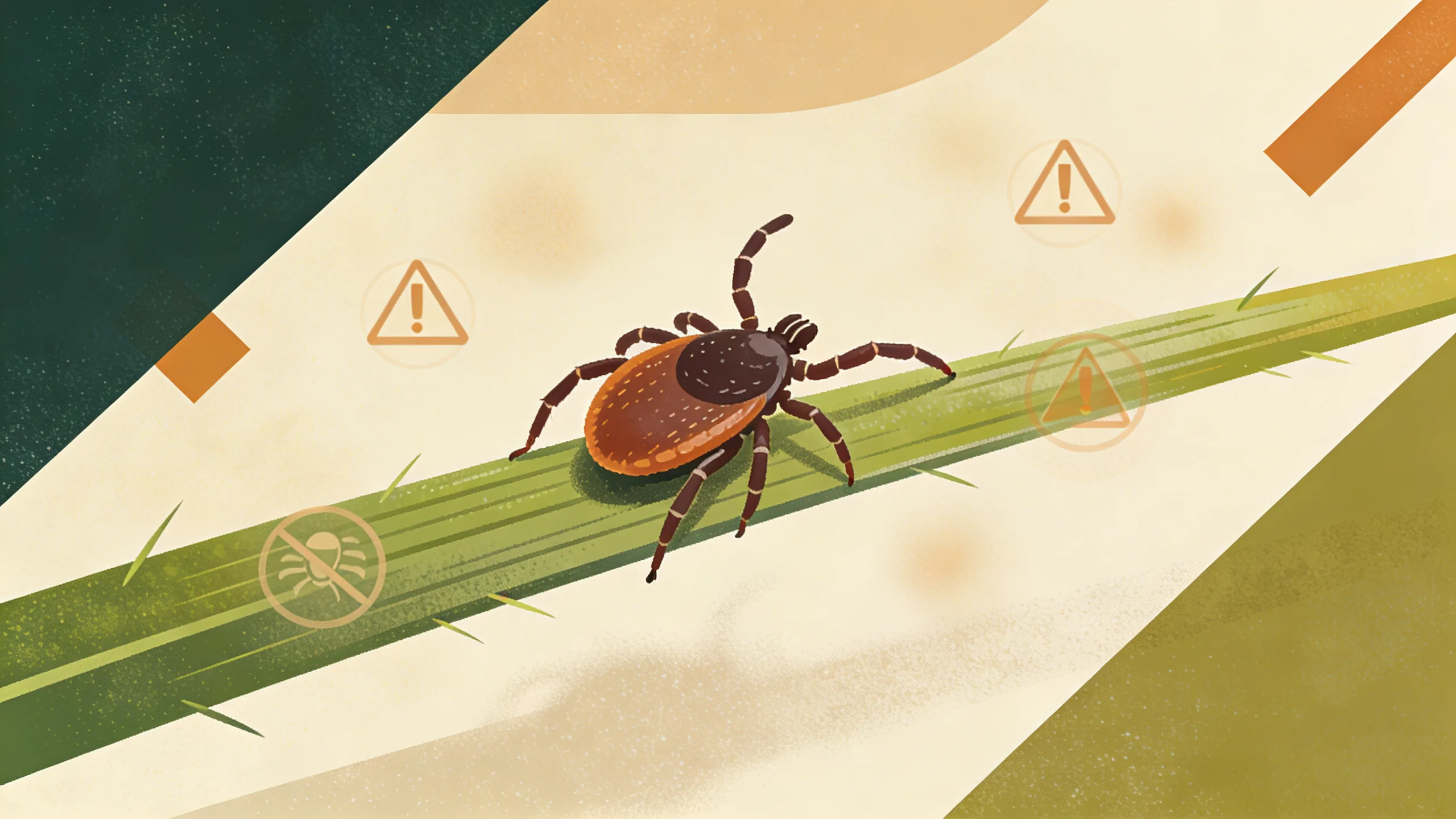
Walking in the center of trails minimizes contact with the ankle-level vegetation where ticks wait in "questing" posture, forelegs extended to latch onto passing hosts. Light-colored clothing makes ticks easier to spot, while garments treated with permethrin—an insecticide that remains effective through multiple washings—provide an additional barrier.
EPA-registered repellents containing DEET, picaridin, or oil of lemon eucalyptus applied to exposed skin offer meaningful protection, though reapplication according to product instructions is essential during extended outdoor exposure.
The "tick check" remains perhaps the most critical intervention. Showering within two hours of outdoor activity can wash away unattached ticks and provides an opportunity for thorough inspection. Particular attention should be paid to underarms, behind knees, around the waist, inside the belly button, and in hair—areas where ticks prefer to attach.
For pet owners, veterinary-approved tick prevention products are essential. Dogs are particularly vulnerable to tick bites and tick-borne diseases, and no vaccines currently exist to protect them. Cats and dogs that roam outdoors can also transport ticks into homes, creating exposure risk for human residents.
When to Seek Medical Care
Not every tick bite requires medical attention. However, certain circumstances warrant prompt evaluation: ticks attached for more than 36 hours, the development of a rash—particularly an expanding bullseye pattern—or flu-like symptoms including fever, chills, and muscle aches in the weeks following a known bite.
Proper tick removal technique matters. Using fine-tipped tweezers, grasp the tick as close to the skin surface as possible and pull upward with steady, even pressure. Twisting or jerking can cause mouthparts to break off and remain embedded. Folk remedies involving matches, petroleum jelly, or nail polish are ineffective and potentially harmful.
Looking Ahead
The full scope of the 2026 tick season will not become apparent for months. Systematic tick sampling by researchers takes time, and disease surveillance data necessarily lags behind actual transmission events. What is clear now is that the conditions exist for elevated risk—and that individual protective behaviors adopted in April and May may prevent infections that would otherwise occur during peak summer exposure months.
For Texas pest control professionals, the CDC's early warning reinforces the importance of integrated tick management strategies. While structural pest control focuses primarily on insects, the expanding tick threat creates opportunities for education and prevention services that protect both human health and companion animals.
The message from public health officials is straightforward: ticks are already active, the risk is real, and prevention—through awareness, protective measures, and prompt removal—remains the best medicine.
Sources
Texas Bug Slayers Editorial Team
Editorial Board
The Texas Bug Slayers editorial team brings together licensed pest control professionals, entomologists, and writers dedicated to helping Texans protect their homes and families from pests.
Related Articles

Fall Hands the Grass Back to Texas' Lone Star Tick, and a Meat Allergy Rides Along
Cooler weather revives daytime lone star tick activity across Texas, renewing attention on alpha-gal syndrome, the red-meat allergy a single bite can set off.

Infected Tick Found Inside Austin Apartment Points to Rare Relapsing Fever Case
Baylor College of Medicine and Texas DSHS researchers traced a likely case of soft tick-borne relapsing fever to an infected tick discovered inside an Austin-area apartment.
CDC Warns 2026 Tick Season Could Be Worst in a Decade as ER Visits Surge
Federal health officials report tick-bite emergency room visits are hitting historic highs across most U.S. regions, with Texas residents facing heightened exposure risks.