
Lone Star Ticks in Fall: Protecting Your Texas Family From More Than a Bite
Fall is the stretch of year when Texas finally gets its yard back — the heat breaks and the outdoor calendar fills up. Archery deer season opened Oct. 3, and the dog wants a longer walk than he has wanted since April.
The lone star tick keeps a similar schedule. As the worst of the heat eases, the tick that dominates the eastern half of Texas shifts more of its activity into daylight hours — right onto the schedule of people who are finally outside. That timing put the species back in the news this week: Texas Public Radio's Petrie Dish ran a fall advisory on Oct. 3, and the Los Angeles Times followed with the detail that matters most here. The lone star tick is the species most often linked to alpha-gal syndrome, a delayed allergy to red meat.
None of that puts the yard off limits — it just means the next few weeks reward a little planning.
What actually changes in the fall
The lone star tick (Amblyomma americanum) takes a blood meal from a different host at each of its three life stages, and every stage will feed on a person. Texas A&M AgriLife's field guide places it across the state, heaviest in wooded areas, underbrush, and the creek and river bottoms wildlife uses as highways. Adults and nymphs surge in spring and again in midsummer, so no season leaves a wooded Texas property clear of them.
Fall does not add ticks. It changes their working hours. Nymphs and adults avoid the driest part of the day, and as temperatures settle into the seventies and eighties they stay out longer, including while you catch up on everything you deferred all summer. A morning at the deer lease or twenty minutes edging the tree line is the exposure window now. The nymphs deserve their own warning. About the size of a poppy seed, they are the life stage most likely to bite people, and easy to mistake for a speck of dirt in the crease of a knee. Most people who end up with a tick-borne diagnosis never saw the tick that did it.
The part that shows up at dinner
Alpha-gal is a sugar — galactose-α-1,3-galactose — that most mammals, cattle and pigs included, produce in their bodies. People do not. It also turns up in the saliva of certain ticks, and when one of those ticks feeds it can move the sugar into a person's bloodstream. The immune system can then learn to treat alpha-gal as a threat, and the reaction starts showing up after a meal rather than at the moment of the bite.
That delay is what makes it easy to miss. A typical food allergy announces itself within minutes; an alpha-gal reaction often arrives two to six hours after eating red meat, with hives, stomach upset, or in serious cases anaphylaxis — frequently waking someone in the middle of the night. CDC classifies it as a serious, potentially life-threatening allergy and notes that in the United States it is most often tied to the lone star tick. The agency identified more than 110,000 suspected cases between 2010 and 2022 and estimates the real number could be as high as 450,000, concentrated across the South, East and Central states. Texas sits inside that range.
Most lone star bites do not lead to alpha-gal syndrome, and researchers are still working out why some people develop it. The tick also carries the bacteria that cause ehrlichiosis — reason enough to take any bite seriously.
Where the pressure lives in a Texas yard
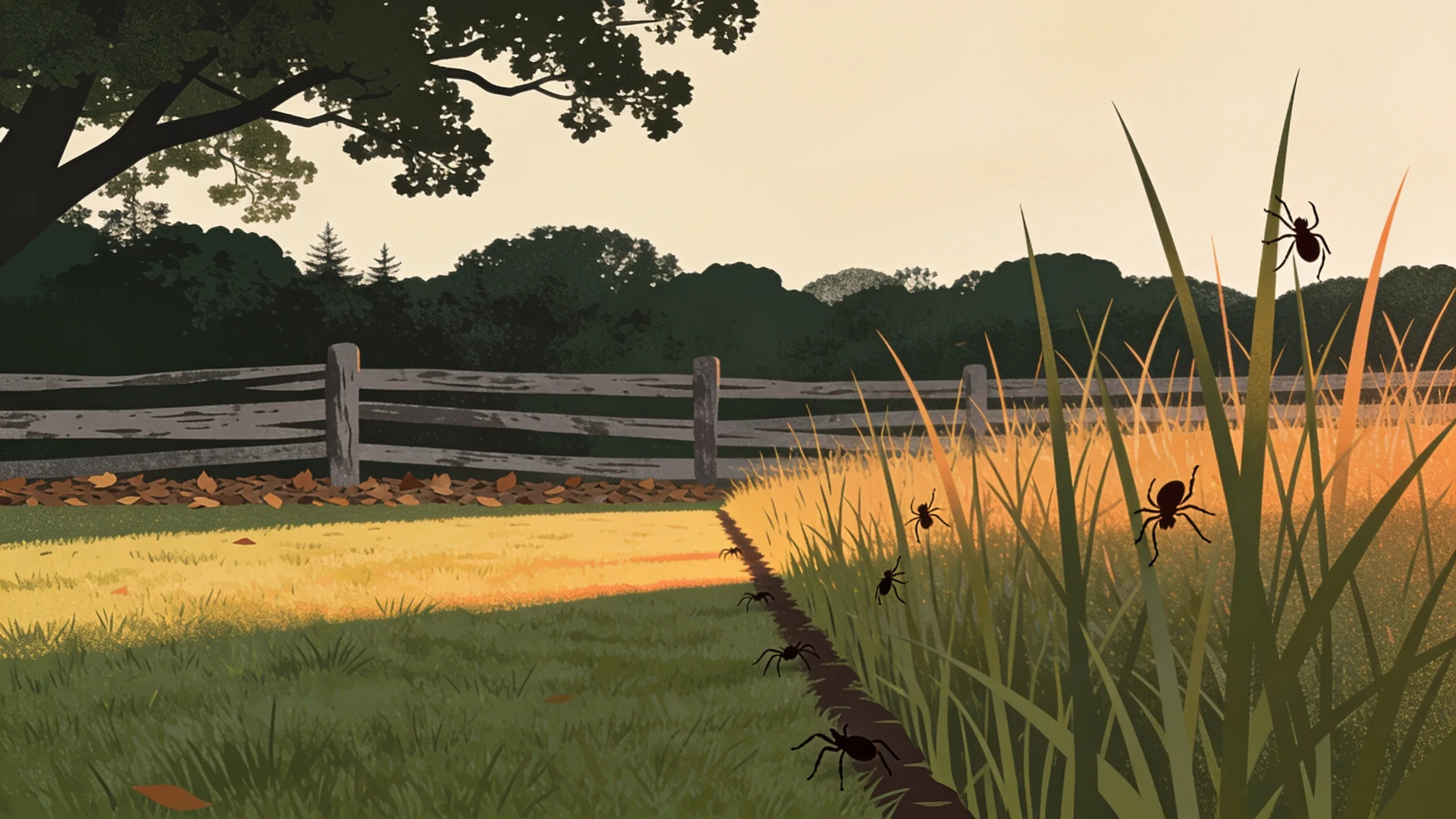
Think about your property the way a tick does. It needs shade, humidity and a host, and in most Texas subdivisions those converge in predictable places: the unmowed strip along a back fence, the leaf litter under a live oak, the brush pile nobody hauled off in spring, the creek bottom at the end of the street.
Deer are the headline host, and a neighborhood herd keeps the population fed. Spilled birdseed draws rodents, and rodents are efficient tick taxis. So is the dog, which can carry an attached tick inside and drop it on the carpet. On a lease in East Texas, the Hill Country or the Cross Timbers, the calculus changes — hunters, CDC notes, spend hours low to the ground in thick cover.
A routine that fits a real weekend
No one can make a Texas yard tick-free, and any company promising that is selling something. What works is stacking a few cheap habits.
Dress for the job, and treat the clothing. Permethrin on boots, socks, pants and gear at 0.5 percent is the highest-value step, because it keeps ticks off skin entirely. On exposed skin, use an EPA-registered repellent — DEET, picaridin, IR3535, oil of lemon eucalyptus, para-menthane-diol or 2-undecanone all qualify.
Mow and edge the transition zone. Ticks dislike a hot, dry, short lawn; most stage their ambush in the shaded edge between grass and brush. Keeping that boundary trimmed and the leaf litter cleared shrinks the habitat you have to worry about. If the property backs into real acreage, lawn care is not cosmetic — it is part of the perimeter.
Take the middle of the path. Walking the center of a trail instead of brushing the edges is the oldest advice in tick prevention, and it still holds.
Do a ten-minute check when you come in. Scalp and hairline, behind the ears, the waistband, the belly button, behind the knees, the armpits, the groin. Then the kids, then the dog. Shower, and tumble the day's clothes through a hot dryer.
If one is attached, use fine-tipped tweezers. Grip close to the skin and pull straight up with steady pressure. No twisting, no petroleum jelly, no lit match — folk remedies irritate the tick and raise the odds it regurgitates. Photograph it with the date, then watch for symptoms over the next two weeks.
Manage the reservoir, not just the yard. Rodent control around the foundation is tick prevention: every rodent you remove is a meal a nymph does not get. Our pages on the lone star tick and on fleas and ticks cover the life cycle in more detail.
When a bite is more than a bite
Call a doctor if anyone develops fever, headache, muscle aches or a rash within a week or two of a bite. Ehrlichiosis responds to treatment, but a clinician will only consider it if you mention the tick.
The alpha-gal timeline is different, and worth writing down. If hives, cramping, nausea or swelling show up hours after a steak or a burger, tell the doctor when and what you ate, and mention that you spend time outdoors in tick country. Ask about alpha-gal testing; a symptom diary — meal, time, reaction — makes that conversation short.
When to bring in a professional
DIY coverage breaks down when the pressure is heavy: pets picking up ticks weekly, a child with repeated bites, or a rodent population you cannot knock down. A licensed pest control company can treat the shaded perimeter and the harborage areas where ticks concentrate, and an honest provider will say plainly that nobody can treat the deer herd or the greenbelt — habitat work on your side of the fence still carries most of the weight.
Our directory lists licensed pest control companies across Texas; look for one that walks the property and explains its tick perimeter plan before quoting. Providers in heavily wooded parts of the state, like Tyler and the piney woods around it, or Austin where lots run into limestone canyons and greenbelt, deal with this pressure constantly. General perimeter service is filed under pest control, and homeowners who caught this month's fall advisory can read the background in our report on why fall hands the grass back to the lone star tick.
Frequently Asked Questions
How long does a tick have to be attached to cause a problem? For tick-borne disease, risk climbs the longer a tick stays attached, which is why same-day checks matter. For alpha-gal syndrome the science is less settled — many people who develop it never recall a bite.
Does every lone star tick bite cause a red-meat allergy? No. Most bites do not lead to alpha-gal syndrome, and researchers do not yet know which combination of tick exposure and immune response triggers it. Repeated bites are believed to raise the risk.
Can my dog get alpha-gal syndrome? Dogs are not affected the way people are — alpha-gal exists in their own tissues — but they carry ticks indoors and can develop tick-borne disease. Ask your vet about year-round tick prevention.
Do Texas winters kill ticks off? Mild winters mean ticks can be active almost year-round; activity peaks in the warm months, and a hard freeze knocks numbers down without clearing a property.
CDC's alpha-gal syndrome page covers symptoms and testing, and Texas A&M AgriLife's Field Guide to Common Texas Insects has the species profile and distribution map.
Texas Bug Slayers Editorial Team
Editorial Board
The Texas Bug Slayers editorial team brings together licensed pest control professionals, entomologists, and writers dedicated to helping Texans protect their homes and families from pests.