

West Nile Virus in Texas: The 2026 Peak Season Protection Guide
Texas is entering the two most dangerous months of the 2026 West Nile season. August and September historically account for the overwhelming majority of human cases in the state — and this year the season started weeks earlier than normal. The CDC has already called 2026 the most intense start since 2004, with national case counts running nearly five times the historical average by the end of June and Texas ranking second among all states. Neuroinvasive cases, the severe form of the disease, have been confirmed in North Texas since late July.
There is no vaccine and no specific treatment for West Nile virus. Prevention — avoiding bites and eliminating the mosquitoes that carry the virus — is the entire strategy. The good news: the mosquitoes responsible, primarily Culex species, have predictable habits, and a short list of weekly habits cuts risk dramatically. This guide covers what is actually happening this season, how to read symptoms, which repellents genuinely work, and the weekly checklist that keeps your yard from becoming a breeding site.
Why the 2026 Season Is Different
Three factors converged this year. First, a warm, wet spring gave Culex mosquitoes an early population head start across the South and Midwest — surveillance traps in several Texas counties turned positive weeks ahead of the usual schedule. Second, July's flooding across Central and East Texas left behind exactly the kind of stagnant, organic-rich water that Culex prefers: clogged ditches, flooded low spots, debris-filled containers. Third, hot August weather accelerates the virus inside the mosquito, shortening the time between a mosquito picking up the virus from an infected bird and being able to transmit it to a person.
The practical takeaway: risk is high right now and will stay high through at least late September, tapering only when nights cool and mosquito populations decline.
How West Nile Actually Spreads
West Nile virus cycles between birds and Culex mosquitoes. A mosquito becomes infected by feeding on an infected bird; roughly a week later it can pass the virus to people and animals it bites. Humans and horses are "dead-end" hosts — we can get sick, but we do not pass the virus back to mosquitoes or to each other through casual contact.
Two habits of Culex mosquitoes shape the entire defense strategy:
- They bite from dusk to dawn. The highest-risk hours are the two hours after sunset and the hours around sunrise — exactly when Texans use their patios, walk dogs, and water lawns in August heat.
- They breed in small, stagnant water near homes. A forgotten flowerpot saucer can produce hundreds of adults in a week. Most Culex fly less than a few hundred yards from where they hatched — the mosquitoes biting you on your porch were very likely born on your property or your neighbor's.
Symptoms: What to Watch For
Most infections are invisible. Roughly 80 percent of people infected with West Nile virus never develop symptoms. About 20 percent develop West Nile fever: sudden fever, headache, body aches, fatigue, sometimes a rash on the trunk, lasting days to weeks with full recovery.
The serious form — neuroinvasive disease, meaning meningitis or encephalitis — develops in roughly 1 in 150 infections. Warning signs include high fever, severe headache, neck stiffness, confusion, disorientation, muscle weakness, tremors, or paralysis. Anyone with these symptoms needs medical care immediately. Risk rises sharply with age: people over 60, and those with cancer, diabetes, hypertension, kidney disease, or organ transplants, face the highest odds of severe illness. If a family member in a higher-risk group develops a fever after mosquito bites this August, mention West Nile to the doctor explicitly — early supportive care matters, and testing is available through Texas providers.
Repellents That Actually Work
Only EPA-registered repellents have proven, reviewed efficacy data. For Texas evening exposure, four active ingredients deliver reliable protection:
- DEET, 20–30 percent — the benchmark; roughly 5–8 hours of protection at these concentrations
- Picaridin, 20 percent — comparable to DEET, odorless, does not damage plastics or synthetic fabrics
- IR3535, 20 percent — solid alternative, gentle on skin
- Oil of lemon eucalyptus (PMD), 30 percent — the only plant-based option with CDC-level evidence; not for children under 3
Permethrin belongs on clothing and gear, not skin. Treating shirts, pants, and socks adds a genuine second layer — permethrin kills mosquitoes on contact rather than just repelling them. Long sleeves and long pants in lightweight fabric remain the simplest bite protection that exists.
What does not work, despite persistent marketing: citronella candles and torches (no meaningful effect beyond a few feet), ultrasonic phone apps, wristbands, bug zappers (they kill mostly harmless insects and barely touch Culex), and oral vitamin B or garlic supplements. Spending money on these instead of a proven repellent trades real protection for a feeling of protection.
The Weekly Yard Checklist

Culex eggs become biting adults in as little as seven days in August heat. A ten-minute weekly walk — same day each week — breaks the cycle. Do it every week through the end of September.
- Dump birdbaths and refill with fresh water (or scrub weekly — eggs stick to the walls)
- Empty flowerpot saucers, plant trays, and watering cans
- Clear gutters and downspouts — a handful of wet leaves breeds mosquitoes for a month
- Turn over or store anything that holds water: buckets, toys, wheelbarrows, kiddie pools, grill covers, tarps
- Drill drainage holes in tire swings and check tires stored outdoors
- Pump or drain water off pool covers and keep pools treated and circulating
- Check French drains, meter boxes, and low spots still holding floodwater from July
- Treat water you cannot drain — ornamental ponds, rain barrels — with Bti larvicide dunks, safe for pets, birds, and fish
- Screen rain barrels with fine mesh and keep lids tight
- Change pet water bowls daily

The House and Porch Checklist
- Repair window and door screens — a dime-sized tear is an open door at dusk
- Add door sweeps and check weatherstripping on doors used in the evening
- Run a fan on the patio — mosquitoes are weak fliers, and a steady breeze over seating areas measurably reduces bites
- Move outdoor lighting away from doors, or switch to yellow bulbs, to avoid drawing insects toward entry points
- Keep grass mowed and shrubs trimmed — adult mosquitoes rest in dense, shady vegetation during the day
Protecting Higher-Risk Family Members and Animals
For family members over 60 or with chronic conditions, treat dusk-to-dawn outdoor time in August and September as a planned activity: repellent on exposed skin, long sleeves when tolerable, seating near a fan. These precautions matter most for the people least likely to tolerate a neuroinvasive infection.
Horses face genuine West Nile risk and are vaccinated against it — if you keep horses, confirm their annual vaccination with your veterinarian; unvaccinated horses that become infected die in a significant share of cases. Dogs and cats rarely get sick from West Nile, though their outdoor water bowls belong in the daily-dump routine anyway. Report clusters of dead birds — especially crows, jays, and hawks — to your local health department; dead bird surveillance is how DSHS maps virus activity before human cases appear.
What Cities Are Doing — and What a Pro Adds
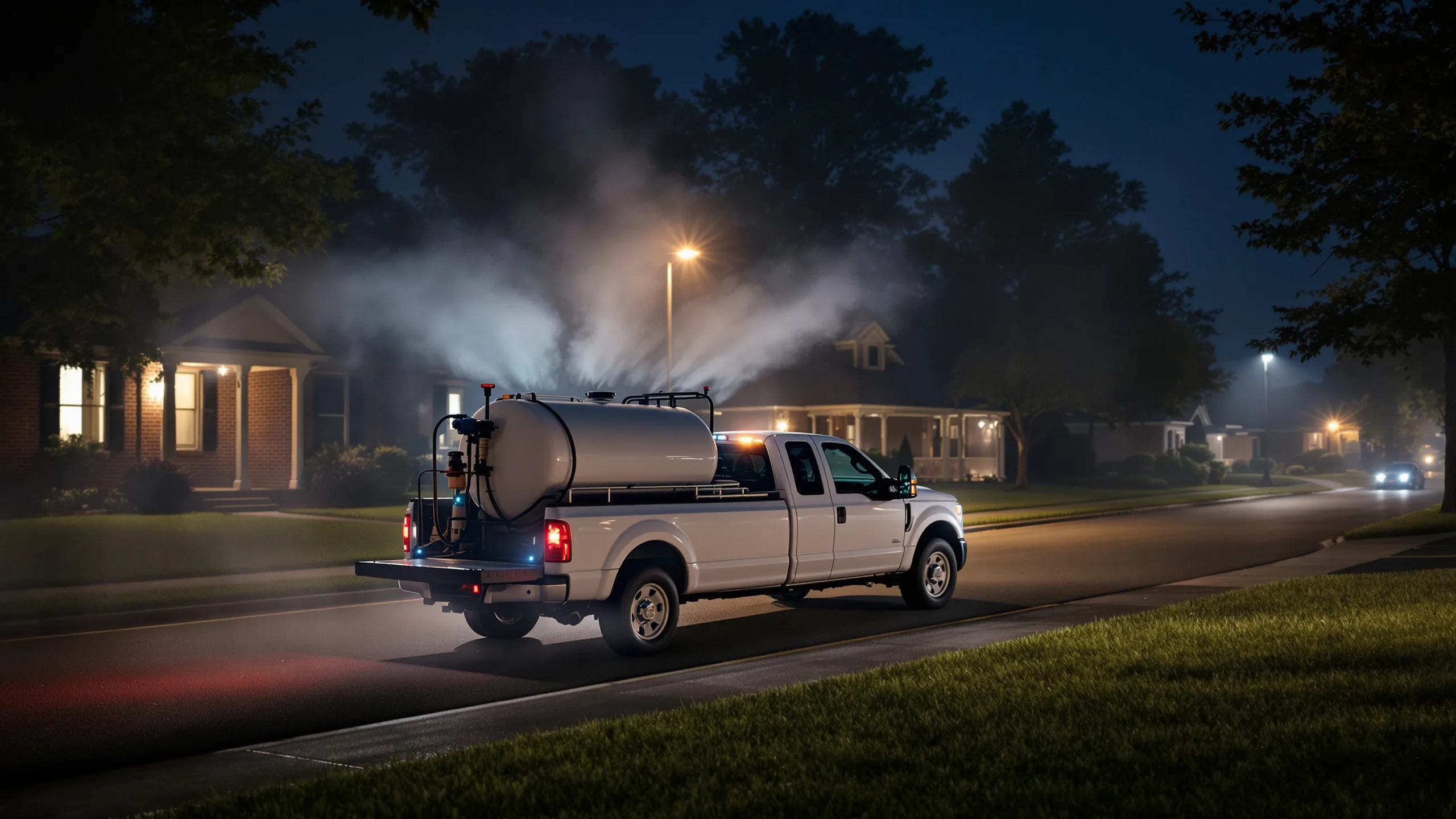
Texas cities run their own surveillance and spray programs: Dallas, Houston, Fort Worth, and many counties trap and test mosquito pools weekly and ground- or aerial-spray when samples turn positive. Spraying knocks down adult populations in a neighborhood for days, not weeks — it supplements your own prevention rather than replacing it.
Professional mosquito services for homeowners typically combine a larvicide treatment of standing water with a residual barrier spray applied to shrubs, fence lines, and shaded resting areas, repeated monthly through the season. Expect roughly $70–$120 per treatment for a typical suburban lot. It is a reasonable option for yards with heavy vegetation, properties near creeks or flood-prone land, or households with higher-risk members — verify the company holds a Texas Department of Agriculture pest control license before booking.
The Bottom Line
The 2026 season is already historic, and its peak is happening now. But West Nile is one of the most preventable serious illnesses in Texas: dump standing water weekly, treat what you cannot drain, wear a proven repellent at dusk, and fix the screens. Ten minutes a week in the yard plus a bottle of picaridin by the door is, genuinely, the difference between a normal Texas August and the season the CDC warned about.
More Seasonal Guides for Texas Homeowners
- Texas Fall Pest-Proofing Guide: The Complete Homeowner Checklist for 2026 — seal out rodents, roaches, and scorpions before the first cold front.
- Texas Termite Swarm Season: What Homeowners Need to Know in 2026 — identify swarmers, protect your property, and know when to call a professional.
Sources
Texas Bug Slayers Editorial Team
Editorial Board
The Texas Bug Slayers editorial team brings together licensed pest control professionals, entomologists, and writers dedicated to helping Texans protect their homes and families from pests.
Related Articles
Arlington Sprays Two Nights for West Nile as Texas Case Count Reaches 46 at Season's Peak
Arlington crews sprayed two nights near Caliente Drive after a mosquito trap tested positive for West Nile, as CDC's Sept. 1 update put Texas at 46 human cases.

St. Louis Encephalitis Surfaces in Coastal Bend Mosquitoes as Kingsville Sprays for Three Straight Nights
Kingsville and Robstown detected St. Louis encephalitis virus in mosquito pools, triggering targeted spraying across the Coastal Bend. No regional human cases confirmed.
Galveston County Reports First West Nile Case of 2026 as Neuroinvasive Virus Hospitalizes Resident
Galveston County confirms its first West Nile virus case of 2026, a severe neuroinvasive infection requiring hospitalization. Health officials urge immediate prevention measures.