

Dallas County Records Its First West Nile Death of 2026 With the Season Still Running
Dallas County announced its first West Nile virus death of 2026 this week — a man in his 60s, according to Dallas County Health and Human Services — and the number that came with the announcement is the one worth sitting with. The county has now logged 192 mosquito traps testing positive for the virus this year, and that count has kept climbing while the evenings cooled off.
That is not how a West Nile season is supposed to end. Mosquito activity usually falls away with the first genuinely cold nights, and North Texas has not had them yet. "Cooler weather has not ended the threat," the county's guidance reads in effect, and the surveillance data backs it: the state's arbovirus report for the week ending Oct. 3 credited Dallas County with 186 positive pools and five human cases, and there were fresh positives reported elsewhere in the state this week, in Lake Jackson and near Killeen.
Statewide, the Texas Department of State Health Services counted 1,376 West Nile-positive mosquito pools, 57 human cases and four deaths as of that Oct. 3 snapshot, a report the agency published Oct. 6. Harris County accounted for 408 of those pools, more than any other county. Montgomery County followed with 162, Tarrant with 159, Williamson with 48, Denton with 38, Brazoria with 33, Collin with 24 and Bell with 16. The 57 human cases include four cases of West Nile fever and 13 of neuroinvasive disease, the form that reaches the brain and spinal cord.
For scale, Dallas County recorded 10 human cases and a single death in 2025. Over the five years before this one, Texas logged 976 cases and 106 deaths, with 2024 the deadliest of that stretch at 57 deaths — a year that made the 2026 numbers look, for a while, like a quiet season. The county's own history is deeper still. During the national epidemic in 2012, Dallas County reported 398 human cases and 19 deaths, and officials resumed aerial insecticide spraying for the first time in 45 years.
There is no human vaccine for West Nile and no specific antiviral treatment. Roughly 80 percent of infections produce no symptoms at all, and fewer than 1 percent — about one in 150 — progress to neuroinvasive disease, which carries an estimated 10 percent mortality rate. Severe cases are managed in hospitals with supportive care.
Which leaves prevention as the whole of the defense, and the list from Dallas County Health and Human Services is short. Repellent with DEET or picaridin. Long sleeves and loose clothing. Draining or treating anything that holds standing water long enough to breed mosquitoes. Staying out of the yard between dusk and dawn, when Culex mosquitoes — the species that carries West Nile in North Texas — do most of their feeding.
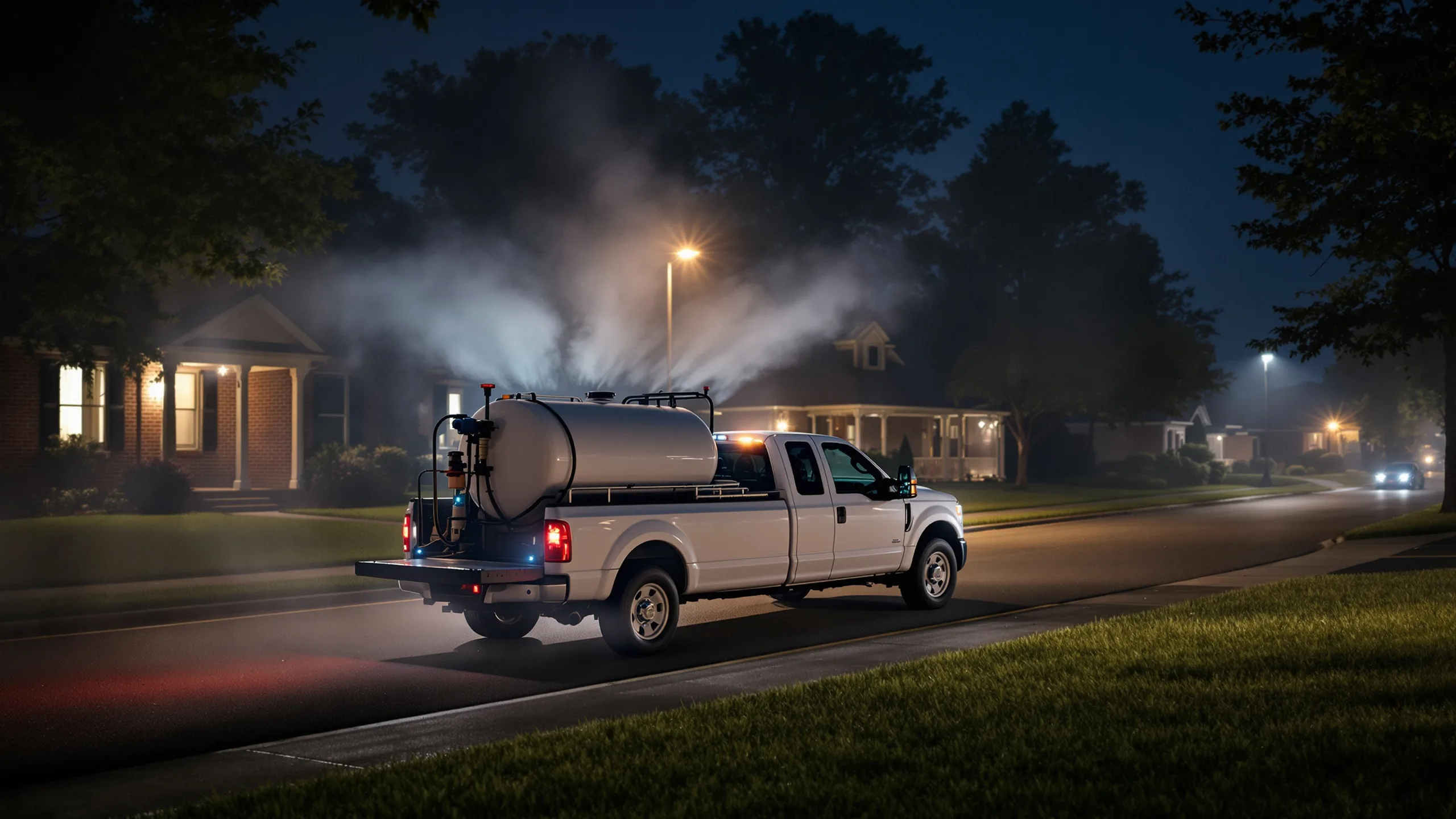
The county sprays in roughly one-mile zones around positive traps, part of a surveillance-larvicide-spray rotation rather than a blanket treatment, and its monitoring will continue through mid-November. Whether the season ends on schedule or runs long depends on the weather, not the calendar, and the first hard freeze is the only date that reliably closes it.
Sources
Texas Bug Slayers Editorial Team
Editorial Board
The Texas Bug Slayers editorial team brings together licensed pest control professionals, entomologists, and writers dedicated to helping Texans protect their homes and families from pests.
Related Articles

October Mosquito Pools Are Still Testing Positive, and Cameron County Wants Residents to Call It In
Cameron County launched a community vector-reporting line and Combes began larviciding ditches the same week new West Nile positives surfaced in Nueces, Bell and Rockwall counties.

Florida's Dengue Outbreak Is the Largest in Decades, and Texas Shares the Mosquito
Florida has logged more than 250 locally acquired dengue cases, the biggest continental U.S. outbreak in decades. Texas is one of the few states where local spread has happened before.
Arlington Sprays Two Nights for West Nile as Texas Case Count Reaches 46 at Season's Peak
Arlington crews sprayed two nights near Caliente Drive after a mosquito trap tested positive for West Nile, as CDC's Sept. 1 update put Texas at 46 human cases.