

October Mosquito Pools Are Still Testing Positive, and Cameron County Wants Residents to Call It In
Texas mosquito season does not follow a calendar. It follows the first hard freeze, and that is still weeks away in most of the state. The first week of October made the point bluntly, with fresh West Nile virus detections in mosquito samples from the Gulf Coast to North Texas while two Rio Grande Valley communities spent the same week reorganizing how they fight the insects.
Cameron County Public Health asked residents on Tuesday to report unusually heavy mosquito activity directly to its Environmental Health Program, either by phone at (956) 247-3599 or through the county's online vector activity reporting tool. The stated purpose is prioritization: reports from neighborhoods tell the county where mosquito populations are elevated so surveillance traps and treatment get aimed there first, rather than spread evenly across a county that runs from the Laguna Madre to the ranchlands north of the Rio Grande.
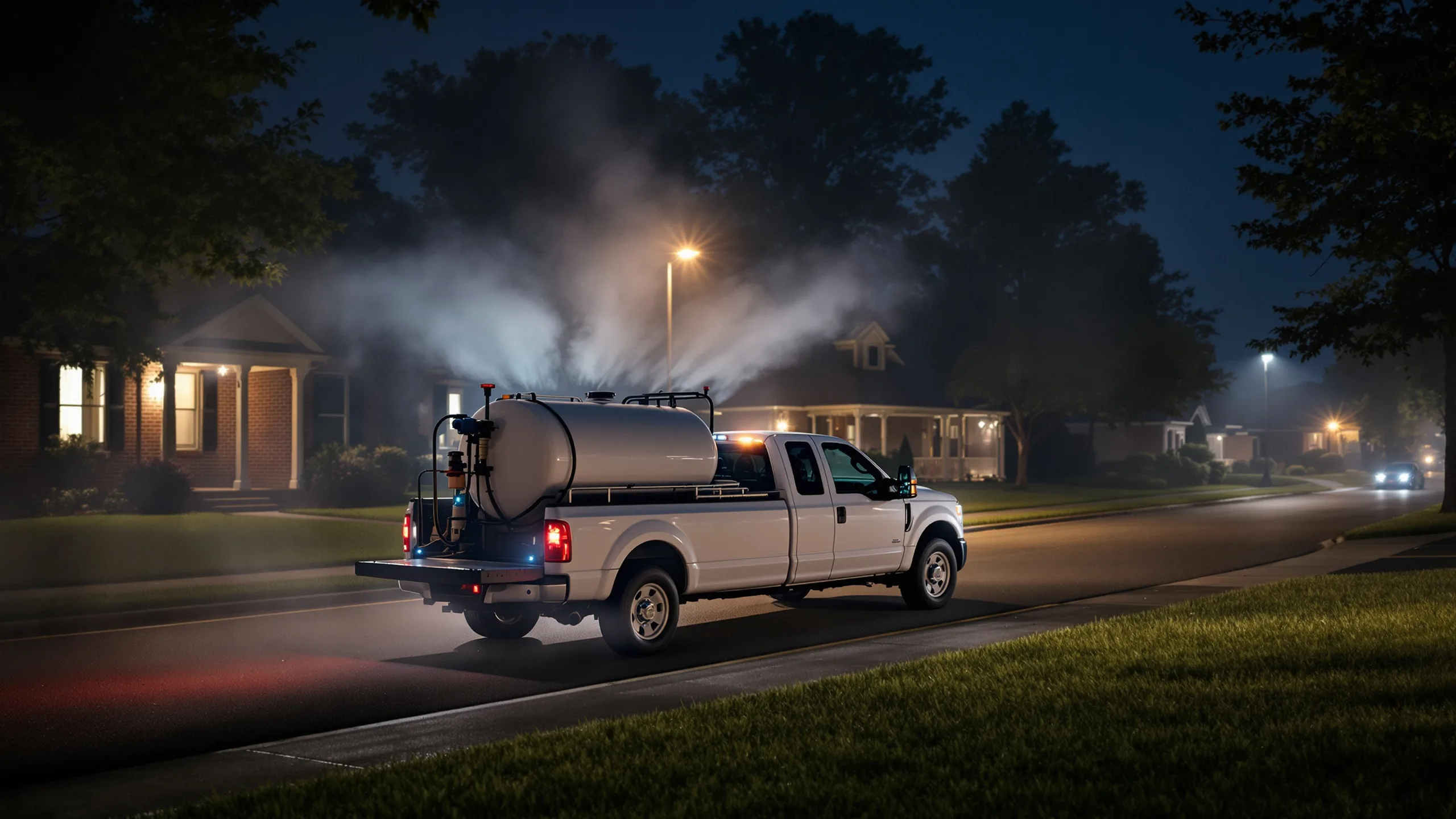
A day earlier, the City of Combes took the low-tech route. Public Works crews were sent out to drop mosquito dunks — larvicide briquettes that kill larvae before they ever take wing — into ditches holding standing water, with the work scheduled across two days. The city also readied its spray equipment and said it would begin truck spraying as conditions required.
That pairing is how vector control in Texas actually works in the fall. Larviciding handles the water nobody can see and the water nobody can drain. Adulticiding buys time when the trap counts jump. And community reporting, which costs a county almost nothing, tells them where to spend the expensive part.
New positives, familiar map
The same week, health officials in Nueces County confirmed West Nile virus in mosquito samples collected near Robstown and again near Chapman Ranch, both in the Corpus Christi area. In Bell County, officials reported the virus detected in Harker Heights mosquitoes and urged residents to take precautions. And in Rockwall County, the Herald-Banner reported a positive sample in the Ridgecrest area. None of those announcements described human illness — they were surveillance results, the kind that function as an early warning rather than a case count.
That distinction matters in Texas, where the state's own numbers show how uneven West Nile outcomes can be. DSHS reported that Texas logged 976 West Nile cases over the previous five years, with 106 deaths attributed to the virus during that span. The yearly pattern is not gentle: 2024 produced the most recorded deaths at 57, while 2025 had the fewest at nine. Most people who are infected — roughly 80 percent — never feel anything. About one in five develops West Nile fever with the headache, nausea and muscle aches that send people to a clinic. Fewer than one percent develop the neuroinvasive form that brings tremors, stiff neck, disorientation and, in some cases, death.
The mosquito responsible for West Nile in Texas is largely Culex, a genus that breeds happily in the stagnant water that collects in suburban gutters, drainage swales and abandoned containers. Which is why the state's prevention advice keeps circling back to the same unglamorous chore.
"By removing standing water around the home, people can eliminate mosquito breeding grounds and reduce insect populations in their area," DSHS Commissioner Jennifer A. Shuford said earlier this year.
The practical list is short: flowerpots, buckets, kiddie pools, dog bowls, toys, clogged rain gutters. Beyond that, DSHS recommends air conditioning and repaired window screens over open windows, long-sleeved loose clothing during peak mosquito hours, and repellents built on DEET or picaridin.
Why the Valley is watching closely
Biting pressure in South Texas carries more than West Nile. The region shares its two container-breeding Aedes species — Aedes aegypti and Aedes albopictus — with Florida, which is currently in the middle of the largest local dengue outbreak on the continental United States in decades. Cameron County sits on the same vector map, which is one reason its public health office is treating citizen reports as a surveillance asset rather than a nuisance call.
For homeowners, the October message is that a season is not over because the calendar says so. Standing water left from September rains is still producing adults, and larvicide dunks sold at hardware stores do the same work Combes crews were doing in ditches this week. Where a property has recurring standing water that cannot be drained — a low corner of a lot, a failing drainage swale, a neglected retention area — that is the point at which a licensed pest control operator becomes worth the call.
Sources
- Fox Rio Grande Valley — Cameron County Public Health Urges Residents to Report Increased Mosquito Activity (Oct. 7, 2026)
- Fox Rio Grande Valley — City of Combes Begins Mosquito Control Efforts (Oct. 6, 2026)
- Texas DSHS — DSHS confirms first West Nile case in Texas in 2026 (May 19, 2026)
- Texas DSHS — West Nile Virus
Texas Bug Slayers Editorial Team
Editorial Board
The Texas Bug Slayers editorial team brings together licensed pest control professionals, entomologists, and writers dedicated to helping Texans protect their homes and families from pests.
Related Articles

Dallas County Records Its First West Nile Death of 2026 With the Season Still Running
A man in his 60s is the county's first West Nile fatality this year. State data shows 1,376 positive mosquito pools and 57 human cases across Texas.

Florida's Dengue Outbreak Is the Largest in Decades, and Texas Shares the Mosquito
Florida has logged more than 250 locally acquired dengue cases, the biggest continental U.S. outbreak in decades. Texas is one of the few states where local spread has happened before.
Arlington Sprays Two Nights for West Nile as Texas Case Count Reaches 46 at Season's Peak
Arlington crews sprayed two nights near Caliente Drive after a mosquito trap tested positive for West Nile, as CDC's Sept. 1 update put Texas at 46 human cases.