
Wind Scorpions in Texas — Complete Guide
Solifuges common in Texas — terrifying looking but completely non-venomous
Not sure it's a Wind Scorpion (Camel Spider)?
Snap a photo — our free AI tool identifies Texas pests in seconds.
What Is a Wind Scorpion?
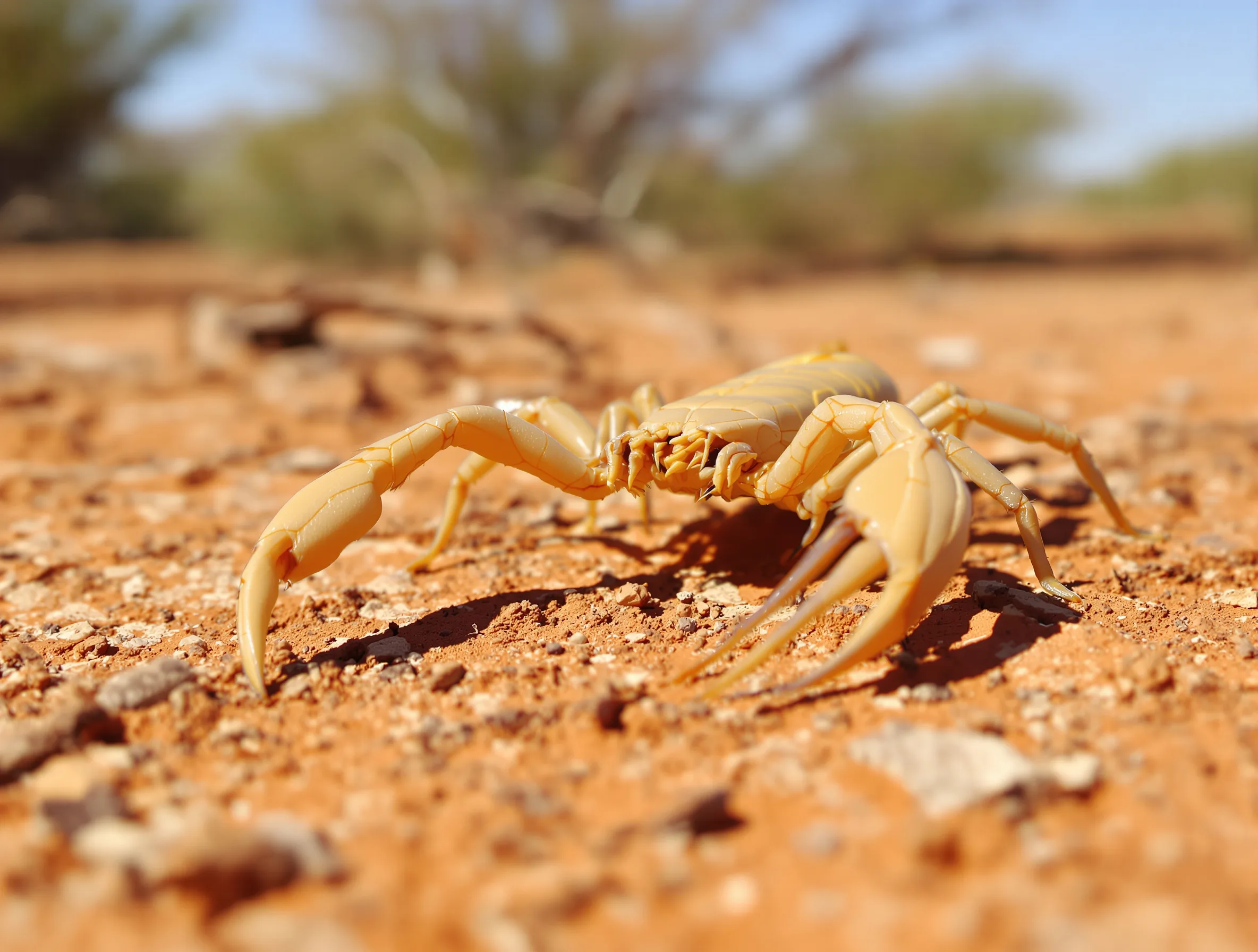
The wind scorpion — also known as a camel spider, sun spider, or solifuge — is one of the most feared and most misunderstood creatures in Texas. Despite its names, it is neither a true scorpion nor a spider. Wind scorpions belong to their own arachnid order, Solifugae, and are more closely related to a distant branch of arachnids than to either scorpions or spiders.
Wind scorpions are built to terrify: a large tan or sandy-colored body up to 2 inches long, an apparent span of 2 to 3 inches with legs, enormous pinching jaws (chelicerae) that can be a third of the body length, and legendary speed — they can sprint at up to 10 mph, making them one of the fastest land arthropods on earth relative to size. Everything about them looks like a threat. Almost none of it is.
Are Wind Scorpions Dangerous?
No. This is the single most important fact about wind scorpions: they are completely non-venomous. Unlike true scorpions, they have no tail and no stinger. Unlike spiders, they have no venom glands. Their only weapon is a pair of powerful jaws used to crush insect prey — and those jaws can deliver a painful mechanical pinch if the animal is handled or trapped against skin. A wind scorpion pinch may break the skin and should be washed with soap and water like any minor wound, but it requires no medical treatment and causes no envenomation.
The horror stories attached to camel spiders — that they chase people screaming, jump several feet, eat camel stomachs, or are lethally venomous — are myths that spread with military deployments to the Middle East. Texas solifuges are smaller than the famous Middle Eastern species and behave identically: they hunt insects at night and avoid humans.
Identifying a Wind Scorpion
Key features that distinguish a wind scorpion from a true scorpion or a large spider:
- No tail, no stinger: The abdomen is rounded and segmented but ends bluntly — there is no tail with a stinger curled over the back. This instantly separates it from a true scorpion.
- Massive jaws: Two large, forward-facing pincers (chelicerae) that open vertically like a pair of shears. On many species they are as long as the front half of the body.
- Ten apparent "legs": Wind scorpions appear to have five pairs of legs. The front pair are actually pedipalps — long, leg-like sensory feelers held out in front. Only the rear four pairs are true walking legs.
- Color: Uniformly tan, sandy, or pale brown — desert camouflage. No bright markings, no hourglass, no violin shape.
- Movement: Explosive, erratic sprinting. A wind scorpion does not walk — it darts.
Where Wind Scorpions Live in Texas
Wind scorpions are creatures of dry, open country. They are most common in West Texas and the Panhandle — El Paso, Midland, Odessa, Lubbock, Amarillo, and the Trans-Pecos — and throughout the arid brush country of South Texas. They turn up occasionally in Central Texas and the DFW area, especially on new construction sites where the soil has been freshly disturbed.
They spend the day buried in shallow burrows or sheltering under rocks and debris, emerging at night to hunt insects, spiders, scorpions, and even small lizards. They are strongly attracted to outdoor lights — not the light itself, but the concentration of insect prey around it — which is why most Texas encounters happen on porches, patios, and garage walls on warm nights from May through September.
Why Wind Scorpions "Chase" People
The most alarming wind scorpion behavior — running straight at a person and following them — has a simple explanation. Solifuges hate direct sunlight and heat, and they instinctively sprint toward any shadow. Your shadow qualifies. When you step back, the wind scorpion moves to stay in the shade you cast, creating the unmistakable impression that it is pursuing you. It is not attacking; it is trying to hide. Stand still in full sun and it will veer away toward the nearest real shade.
Wind Scorpions vs True Scorpions
Both animals live in the same Texas habitat and both show up on porches at night, so they are frequently confused. The differences that matter: a true scorpion has a segmented tail tipped with a venomous stinger held over its back, moves deliberately, and delivers a medically significant sting. A wind scorpion has no tail at all, moves in explosive sprints, and has no venom of any kind. If the creature you saw has a tail and stinger, see our scorpion control guide — that one is worth treating seriously.
What to Do About Wind Scorpions
In almost every case, nothing. A wind scorpion on your porch is a free pest control service — they are voracious predators of roaches, crickets, and spiders. If one gets inside, it can be trapped under a cup and carried outside like a spider.
If you are seeing them repeatedly around doors and patios, the real issue is usually the insect population attracting them. A general pest control service that reduces prey insects around the home, combined with basic exclusion — door sweeps, sealed thresholds, and switching porch lights to yellow bug bulbs — will reduce wind scorpion encounters along with everything else that hunts around your entryways.
Licensed Texas Companies
2014 companies offering pest control
2,014 companies

Romex Pest & Termite Control
Urbanex Pest Control
A-Action Home Inspection Houston
Forterra Pest Control
EnviroCon Pest Control

X Out Pest Services

Adams Exterminating

Innovative Pest Control

Cerv Property Solutions San Antonio
Ace Pest Control
Integrity Pest and Termite

The CanMan
Bill Clark Pest Control, Inc.

Bug Blasters Pest Control

Pest Solutions of North Texas

Pinnacle Pest Defense
BugMan Pest Control & Termite Control
Justice Pest Services
Frequently Asked Questions
Best Professional Treatment
General pest management for common household pests including roaches, ants, spiders, and more
Find Local Exterminators for Wind Scorpion (Camel Spider) Near You
Find crack & crevice treatment specialists for spider control in Texas.
Find Licensed Companies by Texas City
Licensed wind scorpion (camel spider) control companies in major Texas cities