

Finding Ticks on You or Your Pets?
Licensed tick control companies across Texas
Find a Tick Control ProLone Star Ticks in Texas — Complete Guide
The most common biting tick in Texas — linked to alpha-gal red meat allergy and ehrlichiosis
Not sure it's a Lone Star Tick?
Snap a photo — our free AI tool identifies Texas pests in seconds.
Quick facts — lone star tick in Texas
- Species: lone star tick (Amblyomma americanum) — the most common human-biting tick in Texas
- Key mark: single white dot on the female's back; males have pale streaks instead
- Season: March – October, peaking in late spring and summer; larvae ("seed ticks") in late summer
- Health risks: ehrlichiosis, tularemia, Heartland virus, STARI — and alpha-gal red meat allergy
- Not a Lyme vector: lone star ticks do not transmit Lyme disease
- Removal: fine-tipped tweezers, steady pull — no petroleum jelly, heat, or nail polish
About the Lone Star Tick in Texas
The lone star tick (Amblyomma americanum) is the tick most Texans actually meet. It is aggressive — unlike the wait-and-see blacklegged tick, lone stars actively pursue hosts by following carbon dioxide and movement — and it is abundant across the eastern two-thirds of the state, from the Piney Woods through the Hill Country, with heavy populations in every wooded suburb, park, and pasture edge. All three active stages (larva, nymph, adult) bite humans, which is unusual and is why encounters run from early spring into fall.
For a broader look at ticks and flea control, see our flea & tick treatment guide. This page is about the lone star specifically — including its most unusual claim to fame, the red meat allergy.
Identifying a Lone Star Tick
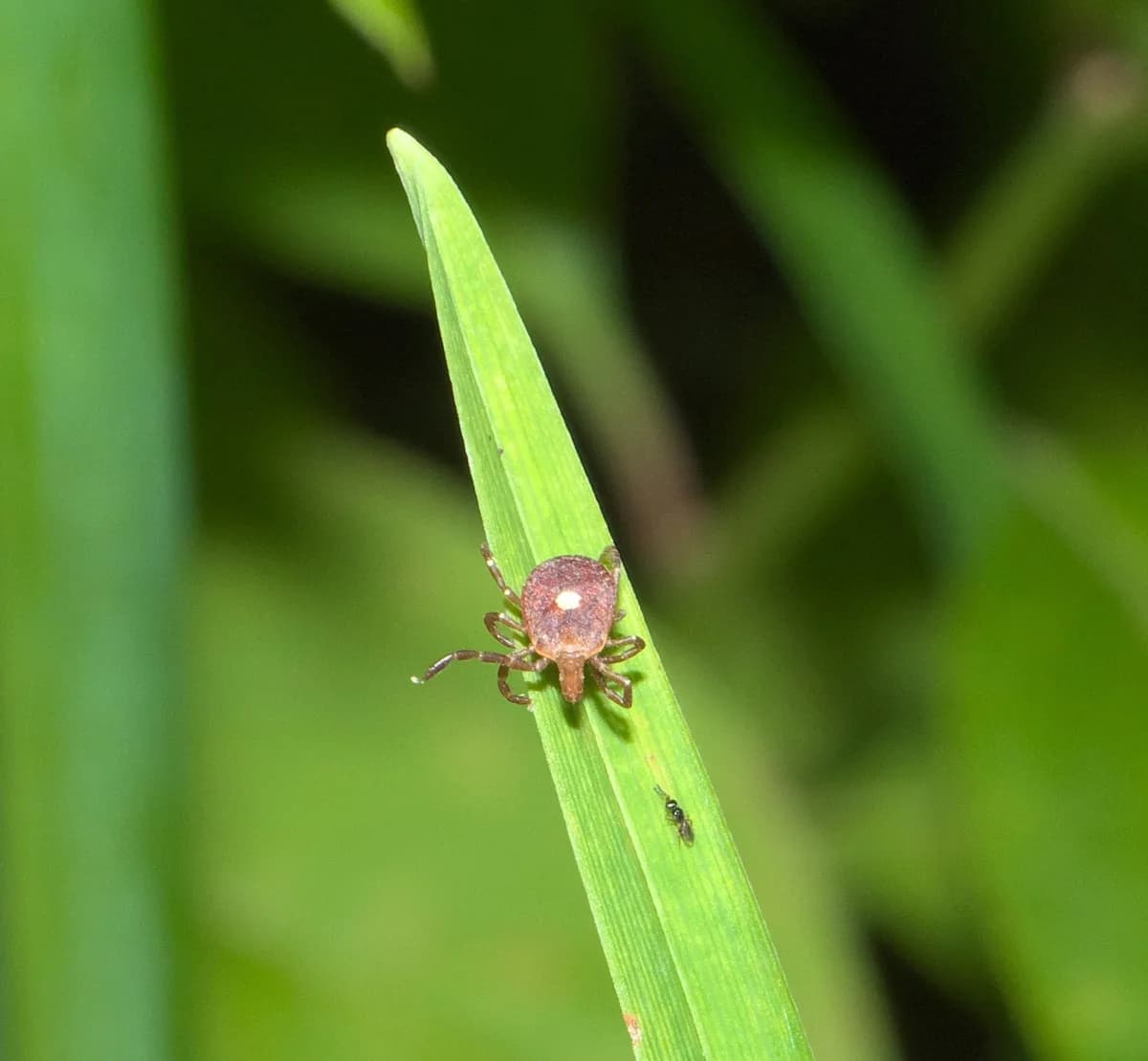
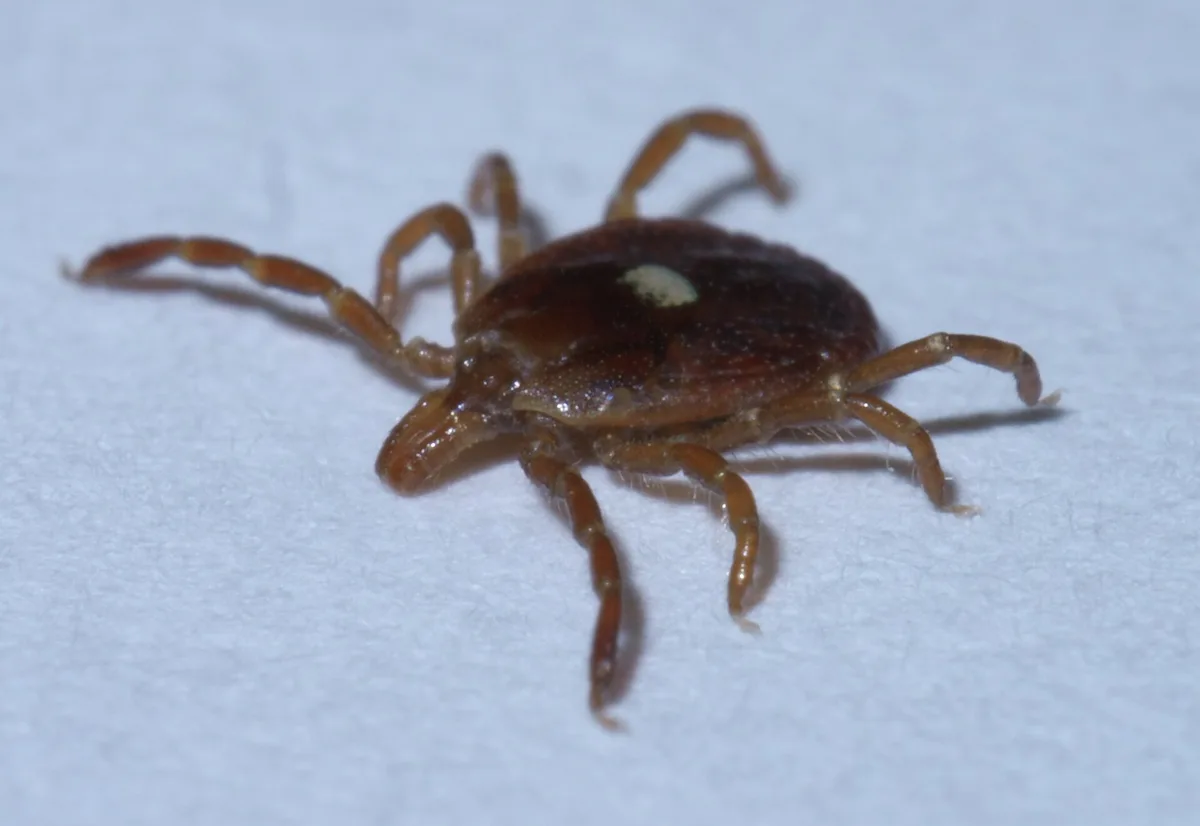
Adult females are reddish-brown, round-bodied, about 1/8 inch unfed (1/4 inch or more engorged), with a single conspicuous white-to-cream dot in the center of the back — the "lone star." Males are slightly smaller and lack the dot, carrying instead pale streaks and horseshoe-like markings around the rear edge of the body. Both sexes have long, prominent mouthparts — noticeably longer than those of the American dog tick, the other common large Texas tick.
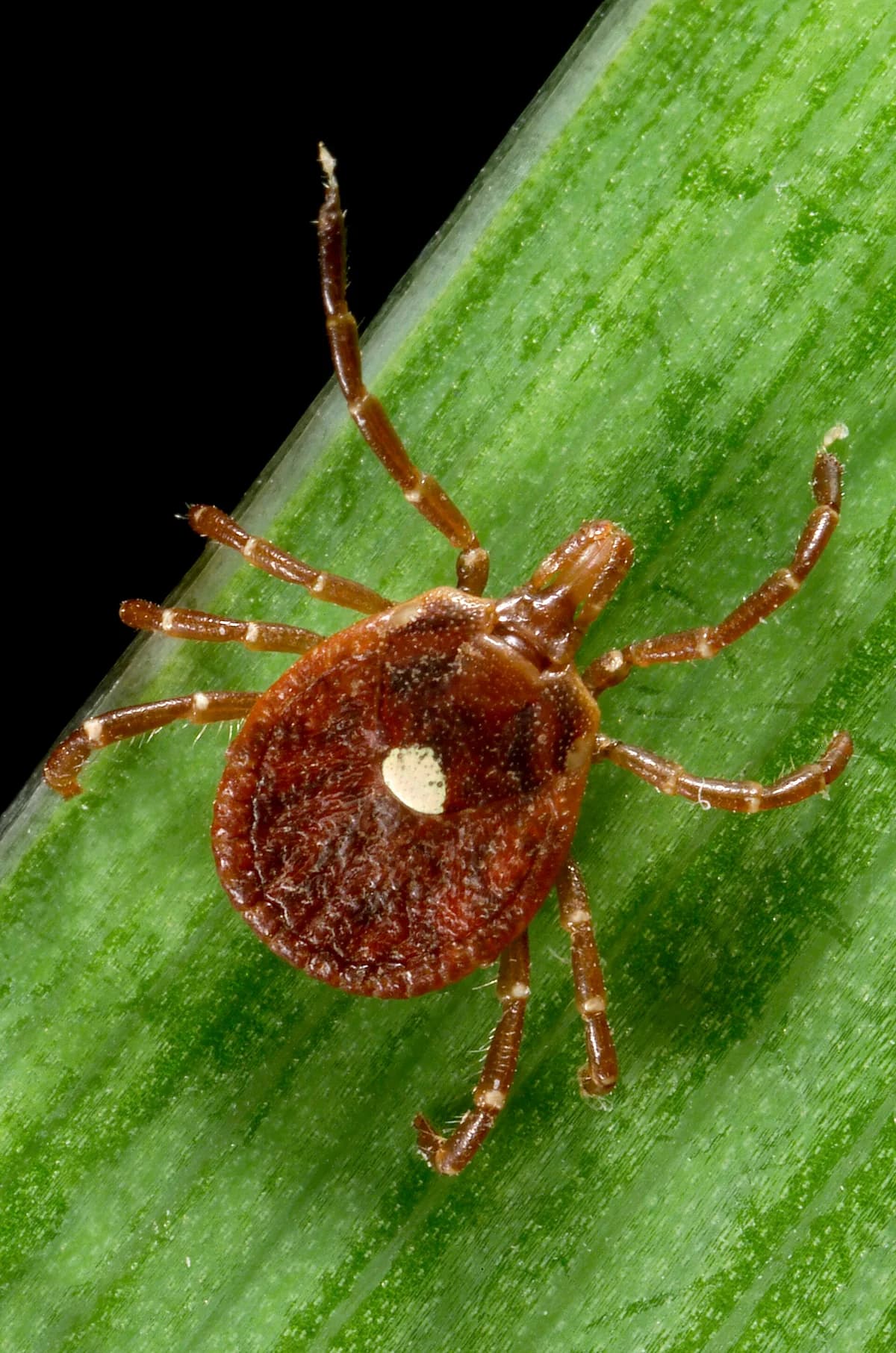
Nymphs are poppy-seed sized, and larvae — called "seed ticks" — are pin-head sized and attack in clusters of dozens to hundreds, a classic late-summer Texas experience after walking through infested brush.
Health Risks — Including the Red Meat Allergy
Lone star ticks transmit ehrlichiosis (fever, headache, muscle aches, sometimes a rash — responds to doxycycline), tularemia, and Heartland virus. They are also linked to STARI (southern tick-associated rash illness), which produces an expanding Lyme-like bull's-eye rash but is not Lyme disease — lone star ticks do not transmit Lyme.
Alpha-Gal Syndrome — The Red Meat Allergy
The lone star tick is the primary cause of alpha-gal syndrome in the United States. The bite can sensitize a person to alpha-gal, a sugar molecule found in beef, pork, lamb, venison, and other mammal products. Weeks later, eating red meat can trigger delayed allergic reactions — hives, swelling, severe GI distress, or anaphylaxis — typically 3 to 6 hours after the meal, which makes the connection easy to miss. Some people also react to dairy or gelatin. If you develop unexplained delayed reactions to red meat after tick bites, ask an allergist for the alpha-gal IgE blood test. The CDC tracks alpha-gal as an emerging tick-borne condition, and Texas is squarely in lone star country.
See a doctor if you develop fever, rash, or flu-like illness within two weeks of any tick bite — and always mention the bite. For bites and envenomation questions, the Texas Poison Center Network (1-800-222-1222) is available 24/7.
Where and When They Strike in Texas
Lone star ticks live in wooded areas, brushy field edges, and the transition zone between lawn and forest — exactly the habitat of most Texas subdivisions. They quest from vegetation rather than grass tips alone, and they are most active March through October, with adults and nymphs peaking in late spring and seed tick (larva) clusters peaking in late summer. Turkey and deer hunters, hikers, gardeners, and dogs running brush lines are the most frequent victims.
Bite Prevention That Actually Works
- Use an EPA-registered repellent: 20–30% DEET on skin, or picaridin. Treat clothing, boots, and gear with 0.5% permethrin (lasts through several washes) — the CDC's top recommendation for tick country.
- Wear long pants tucked into socks and light-colored clothing in brush and tall grass — ticks are easier to spot.
- Walk in the center of trails; avoid brushy field edges and leaf litter in spring and summer.
- Do a full-body tick check within two hours of coming inside — scalp, ears, armpits, waistband, behind knees. Shower promptly.
- Tumble dry clothes on high heat for 10 minutes to kill hitchhiking ticks.
- Keep dogs on veterinarian-approved tick prevention year-round — dogs are the number one way lone stars enter Texas homes.
Proper Tick Removal
Grasp the tick with fine-tipped tweezers as close to the skin as possible and pull upward with slow, steady, even pressure. Do not twist, jerk, crush the body, or use petroleum jelly, nail polish, heat, or essential oils — folklore methods can make the tick regurgitate gut contents into the wound, raising infection risk. Clean the bite with soap and water or rubbing alcohol, wash your hands, and save the tick in a sealed bag (or photograph it) in case symptoms develop. Watch the site and your health for two weeks.
Lone Star Tick Yard Control in Texas
Yard management does more than any spray alone: keep grass mowed, create a 3-foot gravel or mulch barrier between lawn and woods, remove leaf litter and brush piles, and trim low branches to let sunlight in — ticks need shade and humidity. Discourage deer (the main host that carries ticks into yards) with fencing and plant selection. Professional tick treatments target shaded borders, brush lines, and leaf litter with residual acaricides, typically $100 to $300 per application or $50 to $100 per visit in a seasonal program.
See our flea & tick treatment guide for treatment methods in detail, or browse licensed tick control companies in your area below.
Licensed Texas Companies
2027 companies offering pest control
2,027 companies

Romex Pest & Termite Control

Urbanex Pest Control
A-Action Home Inspection Houston

Forterra Pest Control

EnviroCon Pest Control

X Out Pest Services

Adams Exterminating

Innovative Pest Control

Cerv Property Solutions San Antonio
Ace Pest Control

Integrity Pest and Termite

The CanMan

Bill Clark Pest Control, Inc.

Bug Blasters Pest Control

Pest Solutions of North Texas

Pinnacle Pest Defense

BugMan Pest Control & Termite Control

Justice Pest Services
Frequently Asked Questions
Best Professional Treatment
General pest management for common household pests including roaches, ants, spiders, and more
Find Local Exterminators for Lone Star Tick Near You
Use our interactive map to find licensed lone star tick control companies near your Texas location.
Find Licensed Companies by Texas City
Licensed lone star tick control companies in major Texas cities