

Found a Kissing Bug?
Capture it in a container for testing first — then talk to a licensed pest control pro
Find a Pest Control ProKissing Bugs in Texas — Complete Guide
Triatomine bugs that can carry Chagas disease — capture and report, don't touch
Not sure it's a Kissing Bug?
Snap a photo — our free AI tool identifies Texas pests in seconds.
Quick facts — kissing bugs in Texas
- What they are: triatomine bugs (family Reduviidae) — about 11 species in Texas; the most common is Triatoma gerstaeckeri
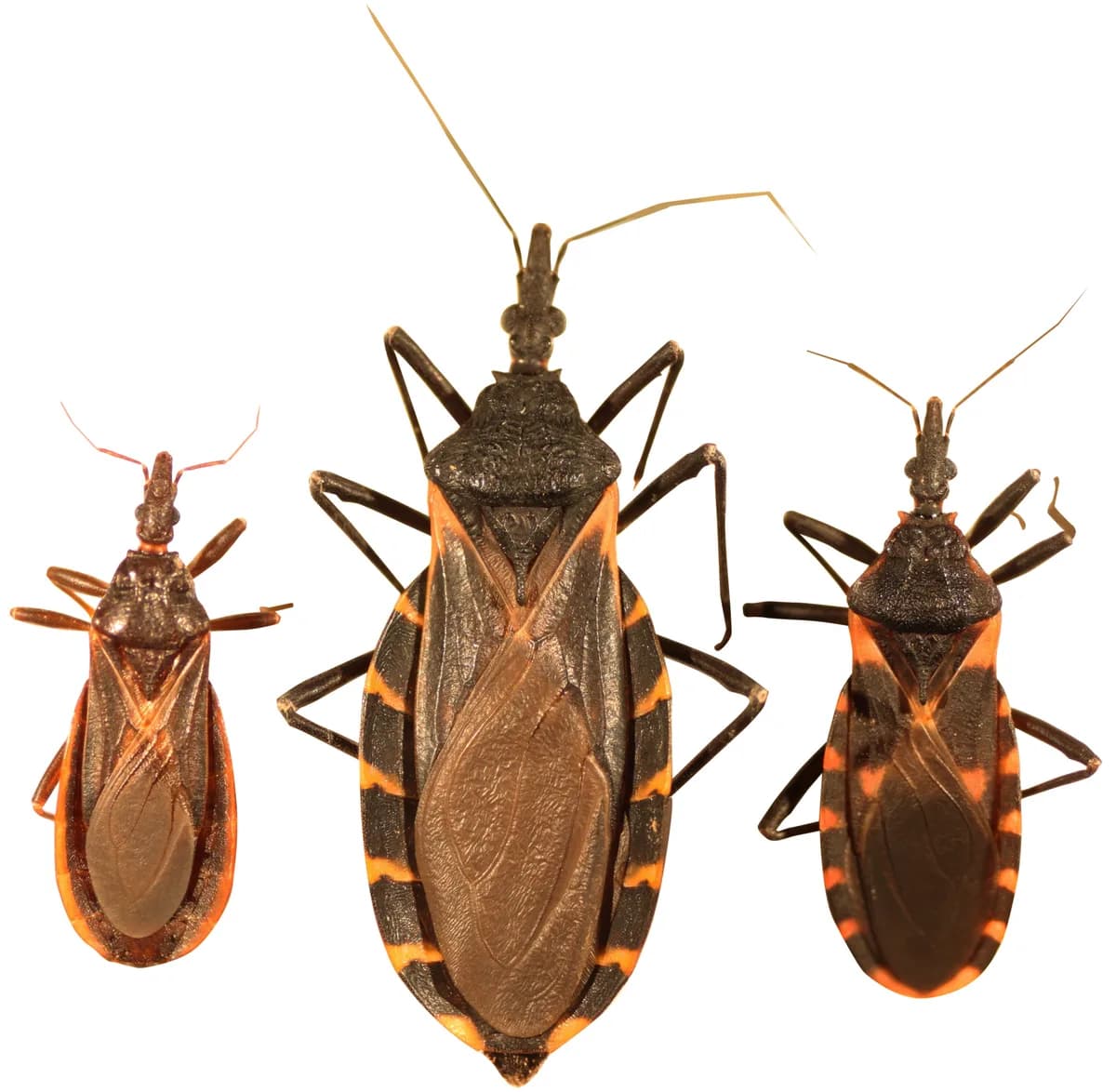
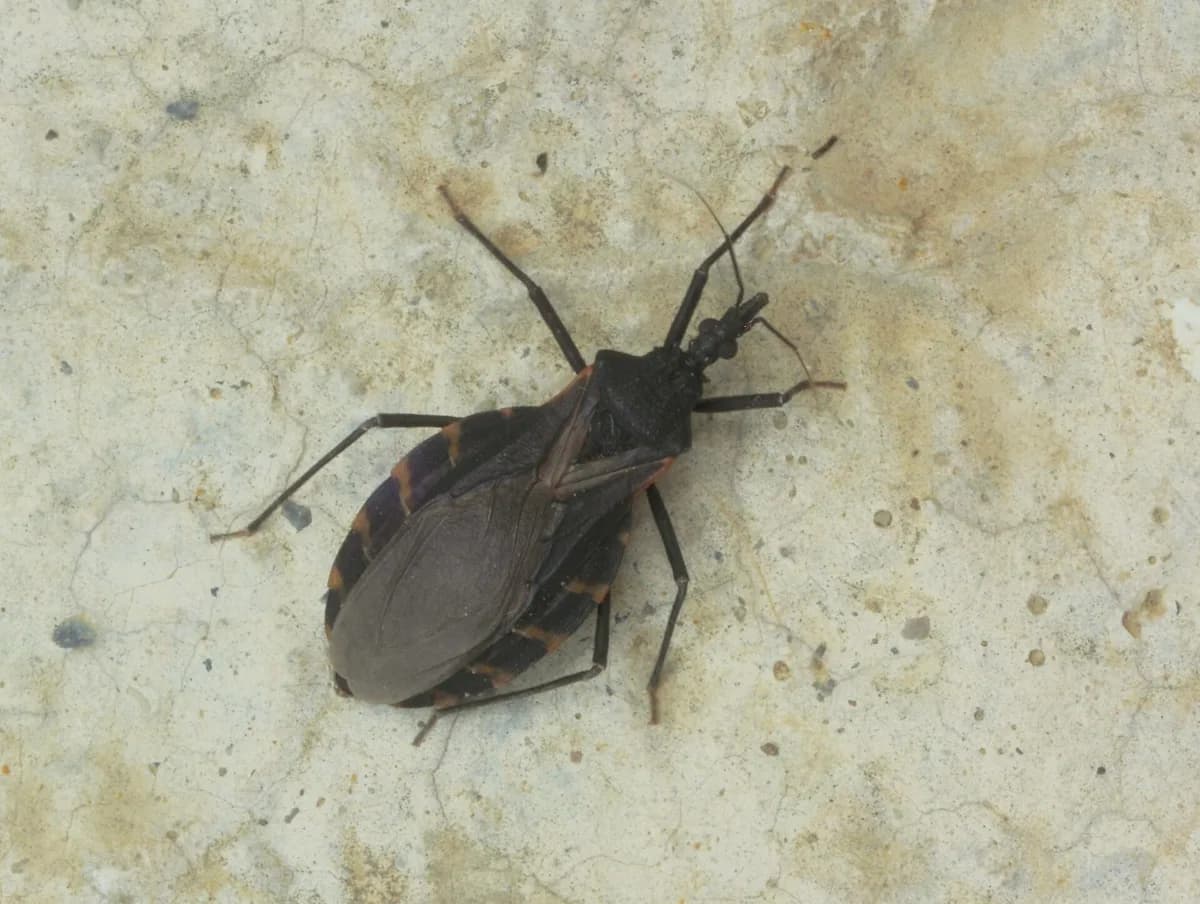
- Size: ~1 inch, dark body with orange/red banding along the abdomen edge, cone-shaped head
- Behavior: nocturnal, fly to lights, feed on blood (pets, wildlife, occasionally people)
- Risk: ~50% of Texas kissing bugs tested by Texas A&M carry the Chagas parasite — but transmission to humans is rare
- Rule #1: never touch one bare-handed — capture in a container
- Free testing: Texas A&M's Kissing Bug Citizen Science program accepts specimens
About Kissing Bugs in Texas
Kissing bugs are blood-feeding insects named for their habit of biting near the face. Texas is the kissing bug capital of the United States — about 11 species live here, more than in any other state, and Texas A&M University runs a dedicated research program on them. The main species Texans encounter is Triatoma gerstaeckeri, a large bug about an inch long that turns up on porches, in dog kennels, and occasionally indoors from spring through fall.
They matter because they can carry Trypanosoma cruzi, the parasite that causes Chagas disease. The honest risk framing: kissing bugs are common in Texas, the parasite is common in the bugs, yet documented human infections acquired in Texas remain rare — and the people who should pay closest attention are dog owners, since dogs are infected far more often than people.
Identifying a Kissing Bug
Kissing bugs have a distinctive look once you know it: a dark, flattened oval body about 3/4 to 1 1/4 inches long; a narrow, cone-shaped head with a thin straight beak folded underneath (used for blood feeding); long, thin antennae and legs; and — the most recognizable feature — a band of orange, red, or yellow markings along the outer edge of the abdomen, visible even when the wings are closed. They fly, and they are strongly attracted to lights at night.
Chagas Disease — The Real Risk, in Perspective
Texas A&M's kissing bug research program, which has tested thousands of bugs submitted by the public, has found that roughly 50 percent of Texas kissing bugs carry T. cruzi. But the bite alone does not transmit Chagas — the parasite lives in the bug's feces, and infection requires contaminated feces to be rubbed into the bite wound, an eye, or a mucous membrane. That awkward transmission route is why human cases acquired in the U.S. are rare despite the bugs being common. Chronic Chagas can cause serious heart and digestive disease decades later, so the risk deserves respect, not panic.
Dogs are the more vulnerable family members: they eat bugs, sleep outdoors near bug habitat, and Texas veterinarians diagnose canine Chagas regularly. For the research angle, see our news coverage of Texas A&M's Chagas research collaboration.
Where Kissing Bugs Live and Why They Come to Your House
By day, kissing bugs shelter in wood piles, rock piles, brush, rodent nests (especially woodrat nests), dog kennels, chicken coops, and under porches. At night they fly to lights — which is how most Texans meet them on the porch. They feed on whatever warm blood is available: raccoons, opossums, armadillos, woodrats, outdoor dogs, and occasionally sleeping people. Homes near brush, greenbelts, or rural land see the most encounters, typically from April through October.
What to Do If You Find One
- Do not touch it bare-handed. If the bug is infected, contamination risk comes from crushing it or contacting its feces.
- Capture it: wearing gloves, place a container over the bug, slide stiff paper or cardboard underneath, and seal the container. Do not squash it.
- Submit it for testing: Texas A&M's Kissing Bug Citizen Science program accepts specimens for free identification and Chagas testing — submission instructions are on the Texas A&M Department of Entomology website. The CDC also accepts submissions routed through the Texas Department of State Health Services.
- Clean up: wash your hands and wipe down the area where the bug was found.
- Then consider pest control: recurring finds mean the habitat and entry points need attention.
Kissing Bug Prevention Tips
- Seal entry points: door sweeps, weatherstripping, screened vents, caulked gaps around windows and utility lines.
- Reduce attraction: switch porch lights to yellow bug bulbs or turn them off when not needed.
- Move wood piles and rock piles away from the house; clear brush and debris near the foundation.
- Bring pets indoors at night, or treat and seal outdoor kennels; inspect kennel bedding regularly.
- Manage rodent nests (especially woodrats) around outbuildings — they are the bugs' home base.
- Keep chicken coops and animal areas away from the house and cleaned regularly.
Kissing Bug Control in Texas
There is no spray-and-done kissing bug treatment — effective control is exclusion, habitat management, and perimeter treatment folded into a quarterly general pest program ($100 to $175 per visit). A licensed professional can also identify the rodent activity sustaining bugs near the structure. Capture and report first, pest control second — browse licensed pest control companies in your area below.
Licensed Texas Companies
2027 companies offering pest control
2,027 companies

Romex Pest & Termite Control
Urbanex Pest Control
A-Action Home Inspection Houston
Forterra Pest Control
EnviroCon Pest Control

X Out Pest Services

Adams Exterminating

Innovative Pest Control

Cerv Property Solutions San Antonio
Ace Pest Control
Integrity Pest and Termite

The CanMan

Bill Clark Pest Control, Inc.

Bug Blasters Pest Control

Pest Solutions of North Texas

Pinnacle Pest Defense
BugMan Pest Control & Termite Control
Justice Pest Services
Frequently Asked Questions
Best Professional Treatment
General pest management for common household pests including roaches, ants, spiders, and more
Find Local Exterminators for Kissing Bug Near You
Use our interactive map to find licensed kissing bug control companies near your Texas location.
Find Licensed Companies by Texas City
Licensed kissing bug control companies in major Texas cities