
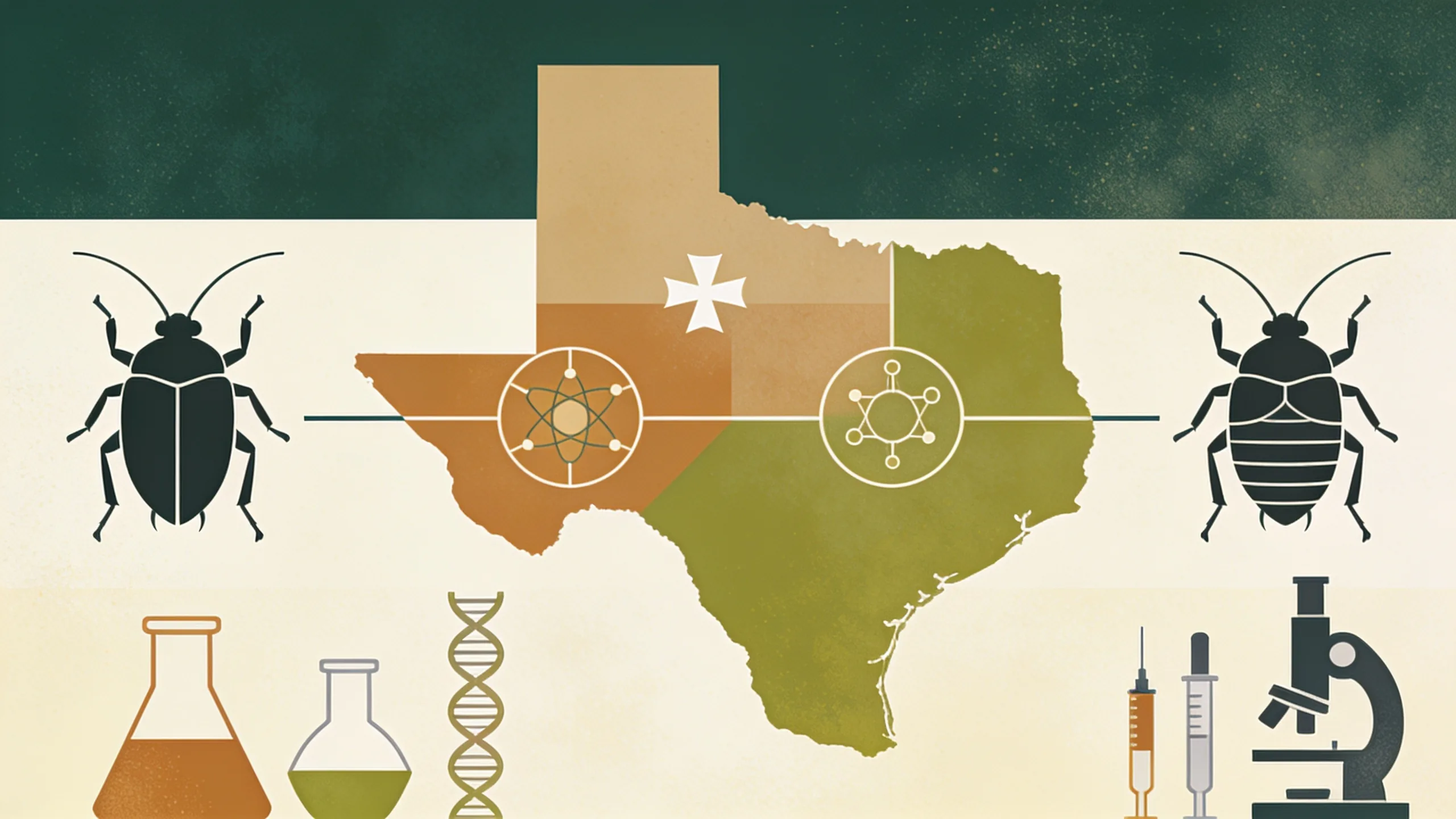
Texas A&M Fulbright Scholar Advances Chagas Disease Research in Argentina
A three-month Fulbright U.S. Scholar expedition to Argentina has yielded promising developments in the fight against Chagas disease, with Texas A&M AgriLife Research entomologist Gabriel Hamer, Ph.D., validating a novel trap technology that could reshape vector surveillance across the Americas.
Hamer, a professor in the Department of Entomology at the Texas A&M College of Agriculture and Life Sciences, spent spring 2026 embedded with the Eco-Epidemiology Laboratory at the University of Buenos Aires. The collaboration focused on triatomine insects—commonly called "kissing bugs" in the United States and "vinchucas" in Argentina—the blood-feeding vectors that transmit the parasite Trypanosoma cruzi to humans and animals.
Unlike mosquitoes or ticks, triatomines have historically resisted effective trapping methods, making population surveillance and disease risk assessment notoriously difficult. Hamer's solar-powered trap, developed over six years of research at Texas A&M, underwent its most rigorous field test yet in Argentina's Chaco province, where Chagas disease remains endemic.
The results exceeded expectations. The traps successfully captured Triatoma infestans—the South American species responsible for the majority of human Chagas cases—along with several additional triatomine species rarely documented near human dwellings. One species in particular, rarely caught by traditional collection methods, could represent a previously underestimated transmission risk.
"This tool shows broad applicability to pretty much all triatomine species in the Americas," Hamer noted. "But it also demonstrated capability for capturing specimens that previous methods missed entirely. That is invaluable to research and understanding how these insects move across landscapes and spread the parasite."
The specimens collected are already generating molecular data. Hamer's team is analyzing blood meals to identify host animals, testing for T. cruzi infection rates, and tracing genetic origins to understand dispersal patterns. The ultimate goal: answering a fundamental question in vector biology about how these insects transition from natural habitats to domestic settings where they feed on humans and pets.
Chagas disease poses an underrecognized threat in Texas. While historically considered primarily a Latin American concern, research by Hamer and colleagues has established that the disease is endemic in the southern United States, with kissing bug populations confirmed across the state. Dogs are particularly vulnerable, with infection potentially leading to heart disease or death—a concern that prompted Sarah Hamer, Gabriel's wife and a professor in the Texas A&M College of Veterinary Medicine, to join the expedition and sample dogs for exposure in the Chaco region.
The bilateral research exchange extends beyond specimen collection. Argentine colleague Victoria Cardinal, Ph.D., is now under review to join Texas A&M's graduate faculty, enabling her to serve on doctoral committees and strengthening institutional ties. Timara Vereen, Hamer's doctoral student, spent a month in Argentina gaining hands-on field experience alongside Argentine researchers.
The trap technology may eventually evolve from surveillance tool to control mechanism. Hamer and collaborators are exploring whether strategic trap placement around homes and dog kennels could intercept dispersing adult triatomines before they reach hosts—similar to mass-trapping strategies already deployed against mosquito populations.
For Texas, the research carries immediate relevance. Some triatomine populations have developed resistance to pyrethroid insecticides commonly used for control, making alternative management strategies increasingly urgent. The solar-powered traps offer a chemical-free monitoring option that could help Texas homeowners and public health officials identify at-risk areas before transmission occurs.
The Fulbright expedition represents what Hamer describes as "bilateral learning"—the exchange of expertise between U.S. and Argentine scientists that accelerates discovery for both nations. As Chagas disease continues to emerge as a veterinary and public health concern in Texas, those collaborative relationships may prove as valuable as the traps themselves.
Sources
Texas Bug Slayers Editorial Team
Editorial Board
The Texas Bug Slayers editorial team brings together licensed pest control professionals, entomologists, and writers dedicated to helping Texans protect their homes and families from pests.
Related Articles
Texas A&M TVMDL Deploys Mobile Lab to Frontline of Screwworm Response
Texas A&M Veterinary Medical Diagnostic Laboratory establishes mobile diagnostic capability to support rapid screwworm detection and response efforts in South Texas.
Texas A&M AgriLife Launches Statewide Alert System for Agricultural Threats
Texas A&M AgriLife Extension debuts AgriLife Alert, a new digital notification system for invasive pests, wildlife diseases, and quarantine updates across Texas counties.
USDA Commits $105 Million to 40 Breakthrough Projects Combating New World Screwworm Threat
USDA announces $105 million in funding through the NWS Grand Challenge, including Texas A&M's electron beam sterilization research, to bolster defenses against the parasitic pest.