

The Third Cattle Port Reopens Oct. 26, and New Mexico's Infested Zones Will Be Eleven Days Old
The port of entry at Columbus, New Mexico, reopens to Mexican cattle on Oct. 26. The U.S. Department of Agriculture announced the date Monday, which makes Columbus the third crossing restored since live cattle imports from Mexico were halted in May 2025.
Agriculture Secretary Brooke Rollins is scheduled to be at the Columbus Stockyards on Tuesday for a roundtable with local agricultural representatives, Meatingplace reported. Dudley Hoskins, the under secretary for marketing and regulatory programs, and Rear Admiral Michael Schmoyer, who heads APHIS's New World screwworm directorate, are expected alongside her.
The calendar is the story here, because the map has been moving in the other direction. Four days before the announcement, state and federal animal health officials confirmed two new screwworm infestations in Grant County, New Mexico — a calf and a horse, both dated Oct. 15 — in the same corner of the state as the crossing itself. The horse was found near the Columbus port of entry.
New Mexico has now recorded four confirmed animal infestations since the parasite returned to the United States, the first of them a Grant County horse on Sept. 17. Nationally the count stands at 56 since June, 52 of them in Texas. Five remain active, three in Texas and two in New Mexico, according to Beef Central's reading of the USDA situation map.
The New Mexico response has been drawn in geography. The state Department of Agriculture and the New Mexico Livestock Board established two infested zones in Grant County: one wrapping Silver City, the other centered near Coyote Hills and taking in the Lordsburg, Playas and Hachita valleys. Both reach into neighboring Luna County, and a broader surveillance zone runs east to just outside Columbus. Animals inside those lines face mandatory inspection and may need treatment before they move, in either direction.
"We are working closely with our state and federal partners to investigate these cases, increase surveillance and monitor for additional infestations," State Veterinarian Dr. Samantha Holeck said. Agriculture Secretary Jeff Witte asked producers, veterinarians and animal owners to inspect stock closely and report suspicious wounds. "Early detection and prompt reporting are critical to limiting the spread of this pest," he said.
Fly trapping has been stepped up around the new detections, and so far every confirmed U.S. infestation has involved a domestic animal. The single wild fly caught in a Brewster County, Texas, surveillance trap on Sept. 25 is logged separately from animal cases, a distinction that matters when reading the federal dashboard.
For Texas, the port schedule is an economic question as much as a veterinary one. Mexican stocker and feeder cattle have averaged about 1.1 million head a year, roughly five percent of annual U.S. fed slaughter, and the shutdown has squeezed the feedlots and stocker operators who buy them. Santa Teresa, the busiest crossing on the border, had been running 3,000 to 3,500 head a day before it closed; it reopened Sept. 24, a month after Douglas, Arizona, came back online on Aug. 24.
Columbus had been named next in line with no date attached. Traders had been guessing at roughly 30 days after Santa Teresa, which put late October in view. USDA has now formalized the estimate rather than revised it.
What the department has not said is how quickly volume will ramp at Columbus, or whether the new Grant County zones will change inspection and certification requirements for animals moving north out of that corner of New Mexico. Its own case list read 55 confirmed infestations and five active before the New Mexico calf was added.
Texas runs a separate paperwork layer on its side of the line. A Texas Animal Health Commission executive director order effective Oct. 1 sets entry requirements for livestock, exotic livestock and fowl arriving from states with infestations, and requires documentation for Texas-origin animals coming home.
Behind the calendar sits the sterile fly program, the only tool that has ever pushed this pest back. More than 1.4 billion sterile flies have been released since the first Texas case in June, The Texan reported, with a new Texas production facility under construction and the Metapa, Mexico, plant — now the subject of a relocation fight over its smell — doubling capacity.
None of that changes the arithmetic on Oct. 26. A gate opens, cattle move south to north, and the infested zones around Grant County will be eleven days old.
Sources
- Meatingplace — Third Border Crossing To Open Next Week Despite Screwworm (Oct. 19, 2026)
- AGDAILY — N.M. screwworm cases threaten cattle border reopening (Oct. 19, 2026)
- Beef Central — Screwworm outbreak expands in US with new cases found in New Mexico (Oct. 20, 2026)
- Texas Animal Health Commission — Executive director order on New World screwworm entry requirements (Oct. 1, 2026)
Texas Bug Slayers Editorial Team
Editorial Board
The Texas Bug Slayers editorial team brings together licensed pest control professionals, entomologists, and writers dedicated to helping Texans protect their homes and families from pests.
Related Articles
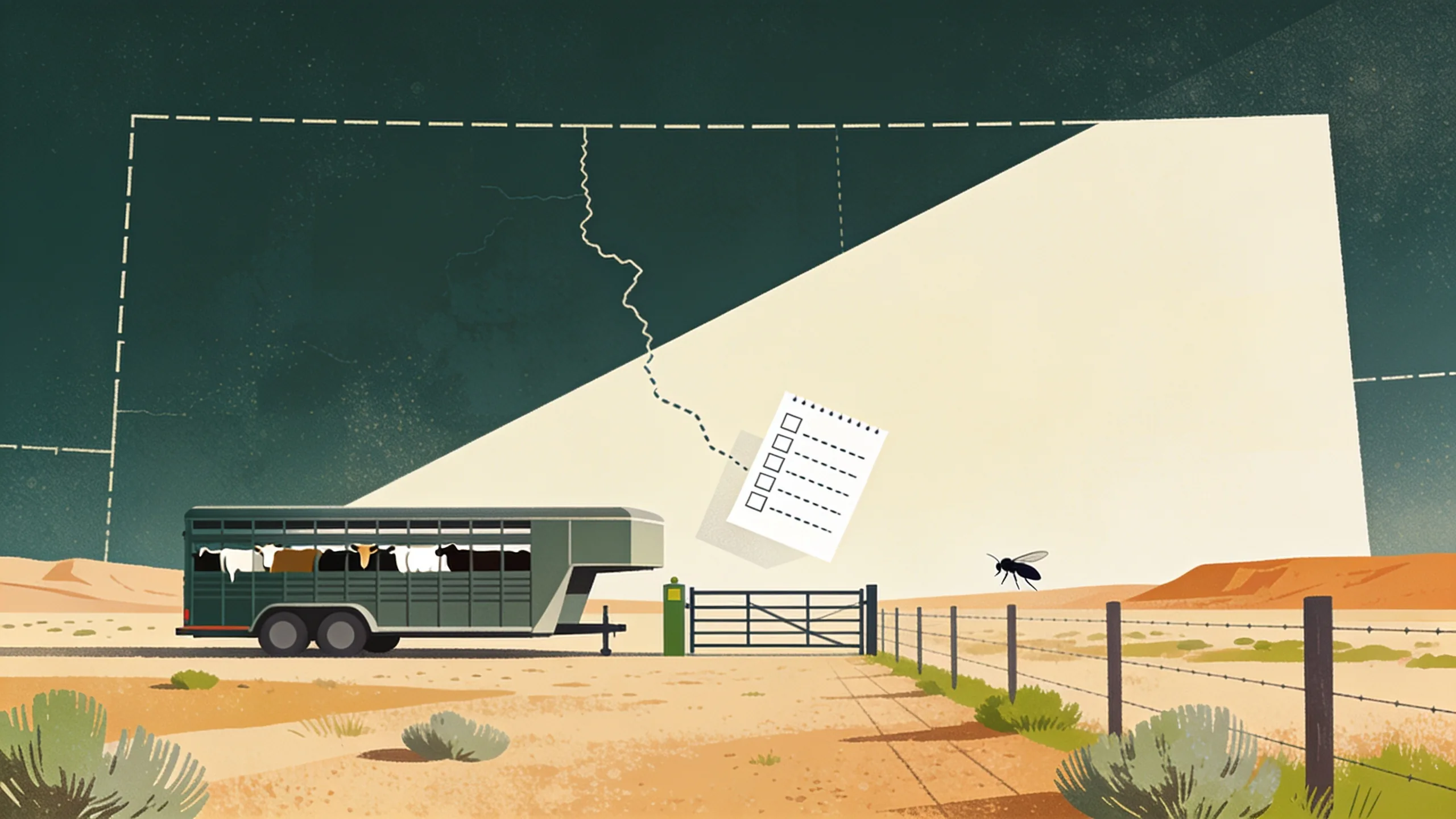
Colorado Now Wants Five-Day-Old Paperwork From Livestock Coming Out of Texas
Colorado's updated screwworm emergency rule adds pre-movement inspections, permits and treatments for animals arriving from Texas and New Mexico infested zones.
Del Rio's Horse Lane Is Open Again, and the First Week Arrived as a Backlog
Horse exports from Texas to Mexico resumed at the Del Rio crossing after a months-long screwworm halt. One San Antonio hauler moved 130 head in week one.
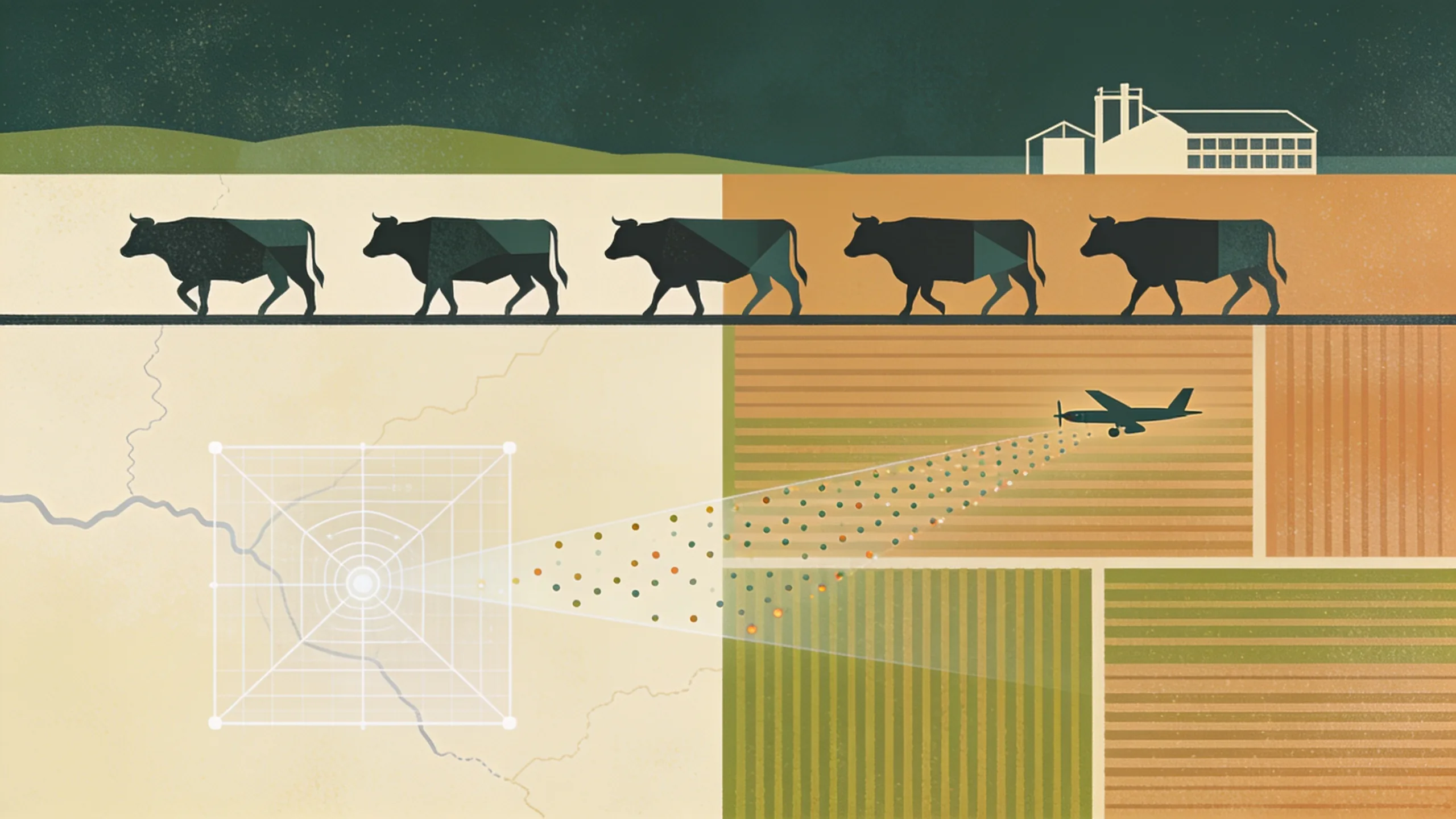
USDA Says the Data, Not the Calendar, Decides When the Next Cattle Port Reopens
Fifty-two U.S. screwworm cases and two still active: USDA's Dudley Hoskins explains the inspection regime behind port reopenings and a fly-supply plan aimed at 300 million sterile insects a week.