
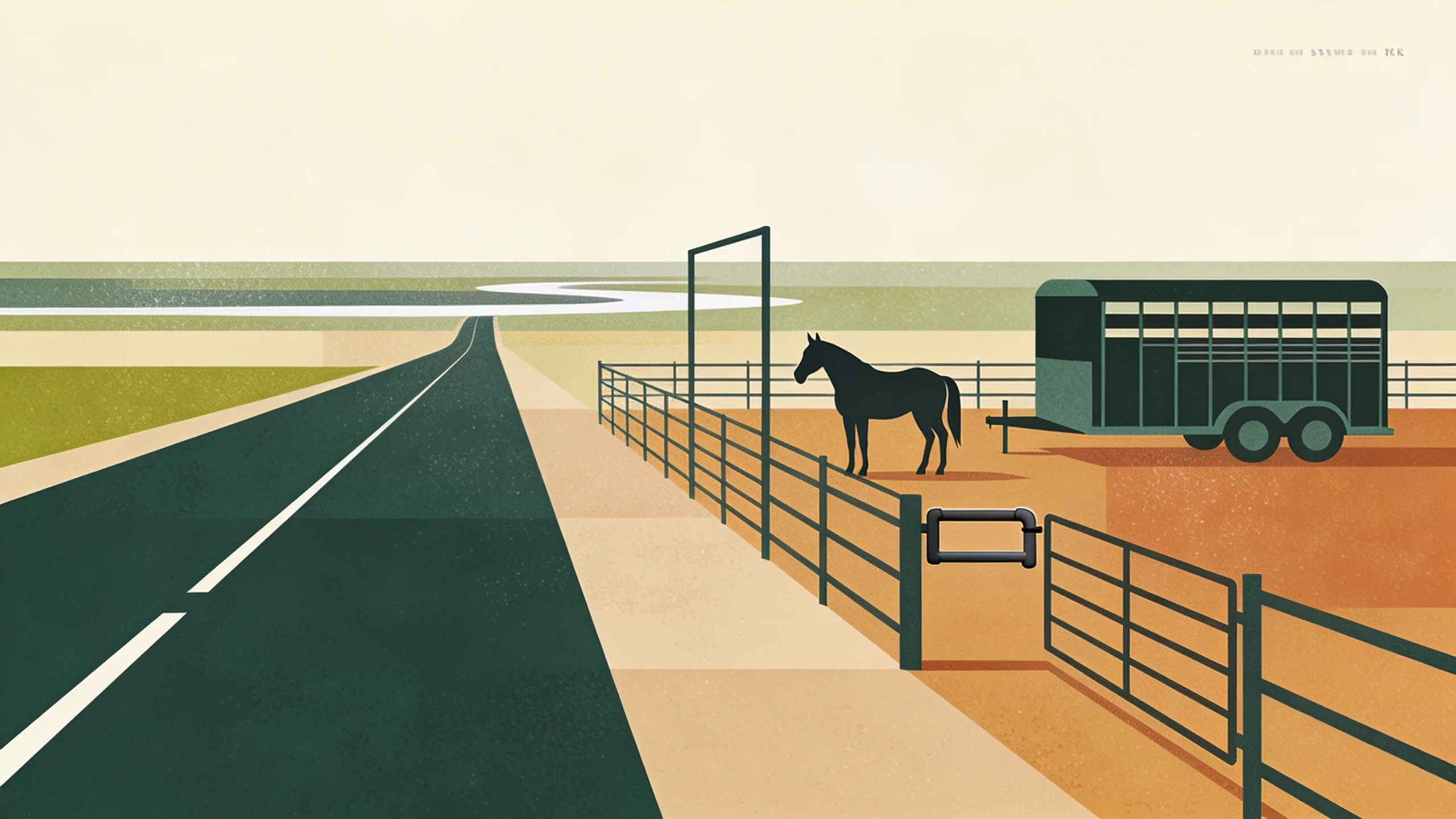
Del Rio's Horse Lane Is Open Again, and the First Week Arrived as a Backlog
For a hauler who measures his year in trailer loads, the screwworm shutdown was a long, quiet summer. Kerim Talamas runs Cavaletti Equine Logistics out of San Antonio and typically moves dozens of horses a week, most of them for rodeo sports. The June suspension of live animal imports into Mexico stopped all of it. What started back up at the Del Rio international crossing in the past two weeks started back up in a hurry.
Talamas took 130 horses across in the first week. A normal week is around 50, by his own count.
"I'm excited, but at the same time nervous," he told Spectrum News 1. "We were not prepared for this amount of horses. So we're struggling with equipment. We're struggling with manpower."
The reopening itself was announced Sept. 22 by Texas Agriculture Commissioner Sid Miller, who said the Texas Department of Agriculture's Del Rio Livestock Export Facility would resume horse exports effective immediately after negotiations between USDA's Animal and Plant Health Inspection Service and Mexico's SENASICA. Horses intended for reproduction, sport, exhibition, work or transit are eligible again.
The facility exists for exactly this bottleneck. TDA operates livestock export pens along the Texas-Mexico border where animals clear required veterinary and documentation checks before they cross, and the pens had been idle for horse traffic through the worst of the New World screwworm response. Miller framed the reopening as a deliberate middle path.
"Biosecurity and commerce have to work hand in hand," he said. "We can protect Texas livestock from New World screwworm without unnecessarily shutting down legitimate agricultural trade."
That trade is not small, and it is disproportionately Texan. Spectrum reported that Texas is the state that trades horses with Mexico most heavily, and that just over 10,000 horses have crossed from Texas into Mexico so far this year — against the more than 15,000 that would normally have gone by early October. The gap is roughly the size of the shutdown.
It reopened with strings attached rather than unconditionally. Under current USDA requirements, livestock exported to Mexico for reproduction, sport, exhibition, work or transit may move, but horses originating in or traveling through screwworm-infested zones face added inspection, documentation and, where applicable, treatment. APHIS has published the export guidance and the NWS inspection and treatment requirements through its international regulations resources, and TDA is directing exporters to clear federal paperwork before a trailer reaches the pen.
The southern lane is not the whole border picture. Traffic is coming back unevenly, port by port, and in one direction at a time: Santa Teresa in New Mexico took cattle again in late September, Douglas in Arizona remains under assessment, and to the north the Canadian Food Inspection Agency is still turning back Texas and New Mexico cattle on a 21-day rule. Mexico's reopening of the Del Rio horse lane is one of the few recent moves that adds flow rather than subtracting it.
For Talamas, the constraint has simply changed shape — from an empty border to a full yard. He has a backlog, a market that wants the horses, and not quite enough trailers to serve it.
Sources
Texas Bug Slayers Editorial Team
Editorial Board
The Texas Bug Slayers editorial team brings together licensed pest control professionals, entomologists, and writers dedicated to helping Texans protect their homes and families from pests.
Related Articles
USDA Says the Data, Not the Calendar, Decides When the Next Cattle Port Reopens
Fifty-two U.S. screwworm cases and two still active: USDA's Dudley Hoskins explains the inspection regime behind port reopenings and a fly-supply plan aimed at 300 million sterile insects a week.

US and Mexico Open Massive Sterile Fly Facility in Chiapas to Combat Screwworm Threatening Texas
A new $50+ million sterile fly production plant in Metapa, Mexico will produce 100 million flies weekly to suppress New World screwworm populations threatening Texas livestock.
Free Screwworm Inspector Course in Texas: How to Get Certified (AgriLife Online)
Texas' free 4-hour online screwworm inspector course on AgriLife Learn: who is eligible, what the training covers, and how certification lets you issue movement certificates.