
EPA's Atrazine Cleanup Plan Would Leave 99% of the Worst Watersheds Untouched, Study Finds
The Environmental Protection Agency's plan for getting atrazine out of the nation's rivers and streams was already a compromise when it was released in December 2024. A study published Tuesday in the Journal of Environmental Quality argues it is barely even that.
Researchers at the Center for Biological Diversity ran EPA's own numbers against its own mitigation menu and found that only about 120 of more than 11,000 watersheds would see atrazine fall below 9.7 parts per billion — the level EPA itself has identified as harmful to aquatic plants, fish and other species. That is roughly one percent.
"It's terrible to see how utterly worthless this plan is," Nathan Donley, the group's environmental health science director, told The New Lede.
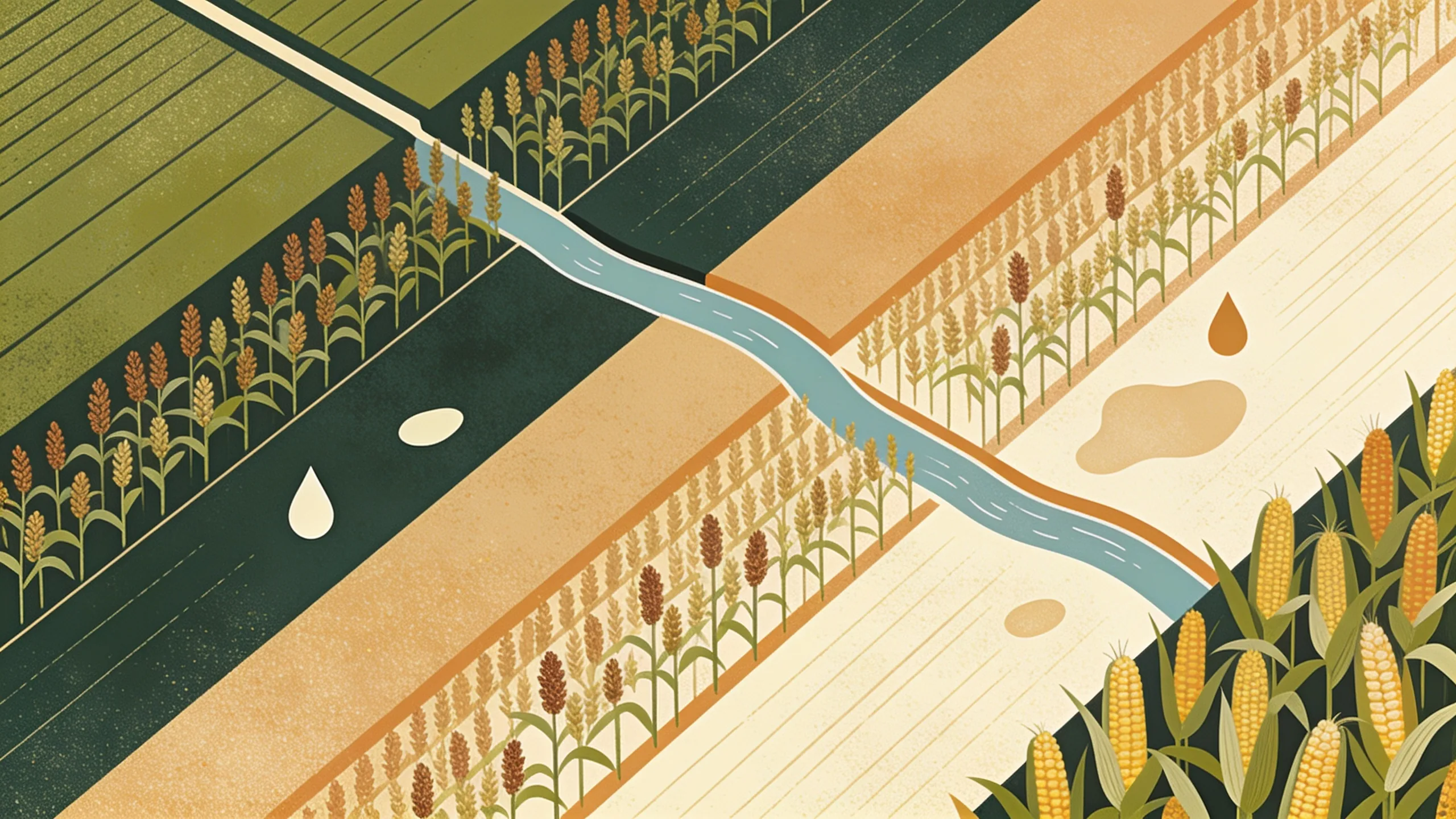
The plan operates on two levers. It cuts the maximum annual application rate for field corn, sweet corn, sorghum and sugarcane by 20 percent, and it establishes a points-based "mitigation menu" that lets farmers keep applying atrazine in polluted watersheds by accumulating credits for sandy soils, flat fields, reduced tillage, cover crops and buffer strips. The idea was flexibility, and in its December announcement EPA described the approach as "targeted to provide maximum flexibility (recognizing atrazine's high benefits) while addressing the need for mitigation."
The study's finding is that both levers move less than they appear to. Very few farms actually apply atrazine at the maximum rate, so trimming the ceiling changes little in practice. And the points, Donley and his co-authors found, are largely awarded for practices farmers already have in place.
"If a watershed already has problematic atrazine contamination, a successful mitigation program needs to cause farmers to do something differently," Jason Rohr, a professor at the University of Notre Dame, said of the findings. "More than 90% of the relevant agricultural acreage can either be exempted or satisfy the requirements based largely on existing conditions and practices. So you can have regulatory compliance without much additional mitigation."
The chemistry in question is the second-most widely used herbicide in the United States after glyphosate, with EPA estimating roughly 70 million pounds applied annually. It is banned in more than 60 countries. Human exposure has been linked to birth defects, low birth weights, some cancers and immune system problems, and it is classed as an endocrine disruptor. In water it disrupts photosynthesis in aquatic plants and interferes with the growth, reproduction and behavior of fish and amphibians. Tyrone Hayes, a professor at the University of California, Berkeley, whose 2002 work showed low atrazine concentrations altered the sex organs of male frogs, pointed out that clearing the current threshold is not the same as clearing the bar for biology: even 5 ppb, he noted, is roughly 50 times the level known to be biologically active in aquatic organisms.
The study follows a September Center for Biological Diversity report that estimated atrazine contaminates about 25 percent of river and stream miles in the lower 48 states, including waterways used as drinking water sources.
For Texas, the practical weight sits on sorghum. The state grows more grain sorghum than any other, and atrazine is the herbicide that carries weed control in the crop — which is why the 20 percent rate reduction and the mitigation menu apply to sorghum acres directly, alongside the corn grown through the Panhandle and the Coastal Bend. Atrazine's registration is back under review in Washington, and EPA has separately extended the comment period on draft biological evaluations covering atrazine, propazine and simazine under docket EPA-HQ-OPP-2020-0514.
EPA declined to comment on the study. Whether the mitigation menu survives the re-evaluation in its current form, and whether any version of it asks sorghum growers to change anything they are not already doing, is the question the next round of comments will test.
Sources
Texas Bug Slayers Editorial Team
Editorial Board
The Texas Bug Slayers editorial team brings together licensed pest control professionals, entomologists, and writers dedicated to helping Texans protect their homes and families from pests.
Related Articles

Petition Asks EPA to Crack Down on the Herbicide Spray That Dries Grain Before Harvest
The Center for Biological Diversity wants the EPA and HHS to review pre-harvest desiccation and tighten glyphosate residue limits, reopening a fight Texas grain growers are already watching.
Texas Orders New Screwworm Protocols for Animals Arriving From Neighboring States
A TAHC executive director order signed Oct. 1 sets entry requirements for all livestock, exotic livestock and fowl coming into Texas from any state with an active New World screwworm zone.

EPA Adds 60 Days to Glyphosate Comment Window, Pushing the Review Into 2027
A Federal Register notice published Sept. 28 extends public comment on EPA's glyphosate literature search to Nov. 23, stretching a review Texas growers watch closely.