
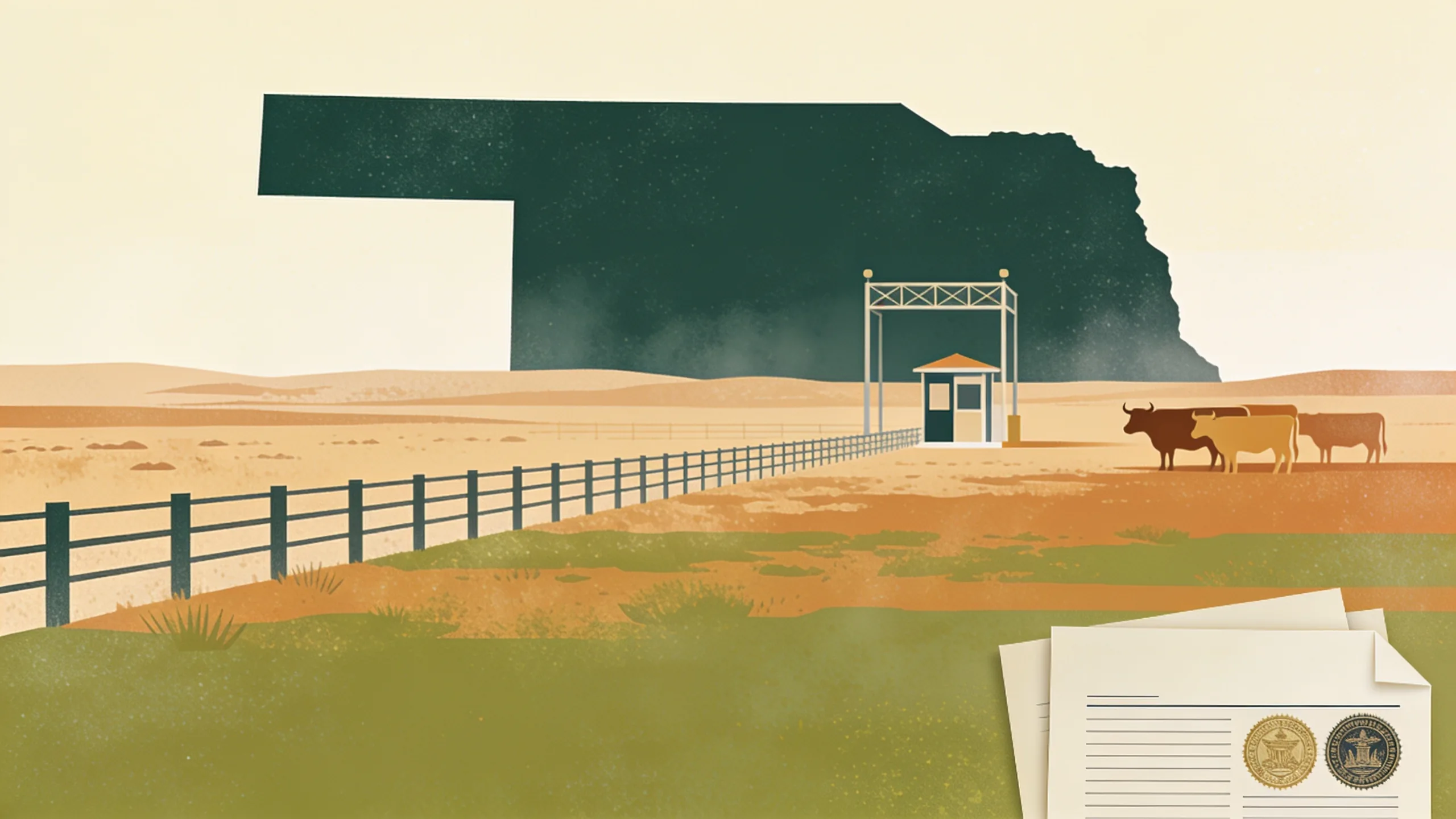
Texas Orders New Screwworm Protocols for Animals Arriving From Neighboring States
Texas spent the summer pushing New World screwworm back from its southern and western ranges. On Thursday, the state began policing the other direction.
An entry order issued October 1 by the Texas Animal Health Commission's executive director puts movement requirements on all livestock, exotic livestock, fowl and exotic fowl arriving from any state where the parasite has been detected and a screwworm infested zone, quarantine area or control area is still in force. It is effective immediately and remains in effect until modified.
Follow the running case count and county map on our Texas screwworm tracker.
The order is a departure from how Texas has handled the outbreak so far. Earlier directives named a single route — an August 24 order, for instance, covered cattle entering from Mexico, and the release orders issued at the end of August cleared specific infested zones county by county. This one is keyed to conditions rather than a state name. It activates automatically for any jurisdiction that still has an active containment area, and it stays active for as long as that area does.
As of this week, the practical target is New Mexico, which recorded the only confirmed U.S. cases outside Texas: a dog in Lea County in early June and a horse in Grant County in September, the outbreak's second equine case. New Mexico officials set up infested and surveillance zones around the Grant County premise on the same containment model the Texas commission has applied across its own affected counties.
Six routes, six protocols
The order lays out the scenarios that require specific handling before animals cross into Texas. Animals originating inside a screwworm infested zone require one set of protocols; animals originating outside an infested zone but in an affected state require another. Movement to a Texas slaughter establishment from an infested zone is treated as its own case, whether the animals travel directly from their out-of-state premises of origin or indirectly through a livestock market. The last scenario on the list is the one that would be easiest to overlook: Texas-origin animals returning home after a stay inside an out-of-state infested zone.
The commission said the requirements pair with existing safeguards to protect Texas animal agriculture. The order rests on the Texas Agriculture Code, Chapters 161 through 168, and on rules found in Title 4, Part 2, Chapters 31 through 60 of the Texas Administrative Code.
The scope — livestock, exotic livestock, fowl and exotic fowl — is broader than cattle alone, a reminder that the parasite has already been confirmed in cattle, sheep, goats, horses and dogs since it was detected in a Zavala County calf on June 3. USDA's case dashboard has logged 50 confirmed U.S. detections, 48 of them in Texas, with only a couple still listed as active under mitigation.
That shrinking active count is what makes the new order notable. Texas has been loosening its own map: Infested Zones 02.A and 03 came off the books August 31, releasing designated areas of Gillespie, Kerr, Kimble, La Salle and Webb counties. New Mexico reopened the Santa Teresa cattle crossing in late September with added inspection safeguards.
"While we are certainly celebrating this milestone, we can't take our eye off the ball and must remain vigilant in monitoring animals and reporting any suspicions in these newly released areas and beyond," executive director and state veterinarian Dr. Bud Dinges said when the first Texas zones were released.
The October 1 order applies that same logic at the state line. Movement out of Texas is New Mexico's and USDA's problem to regulate. Movement in is now explicitly Texas'.
Media inquiries about the order go to TAHC Communications at public_info@tahc.texas.gov or 512-719-0750.
Sources
Texas Bug Slayers Editorial Team
Editorial Board
The Texas Bug Slayers editorial team brings together licensed pest control professionals, entomologists, and writers dedicated to helping Texans protect their homes and families from pests.
Related Articles

First Wild Screwworm Fly Trapped in Texas as USDA Logs Brewster County Detection
USDA's case dashboard logged a wild screwworm fly from a Brewster County surveillance trap on Sept. 25 — the outbreak's first detection with no animal involved.
USDA Unveils Quarterly Review Roadmap for Screwworm Response Playbook
USDA APHIS shares comprehensive roadmap for quarterly reviews of New World Screwworm Response Playbook as parasite cases reach 45 infestations across Texas and New Mexico.
FDA Grants Emergency Use of Wound Spray as Texas Screwworm Fight Gains a Second Drug
FDA issues Emergency Use Authorization for Elanco's CLiK Extra dicyclanil wound spray to prevent New World screwworm in cattle, horses, sheep, goats, swine and wildlife.