
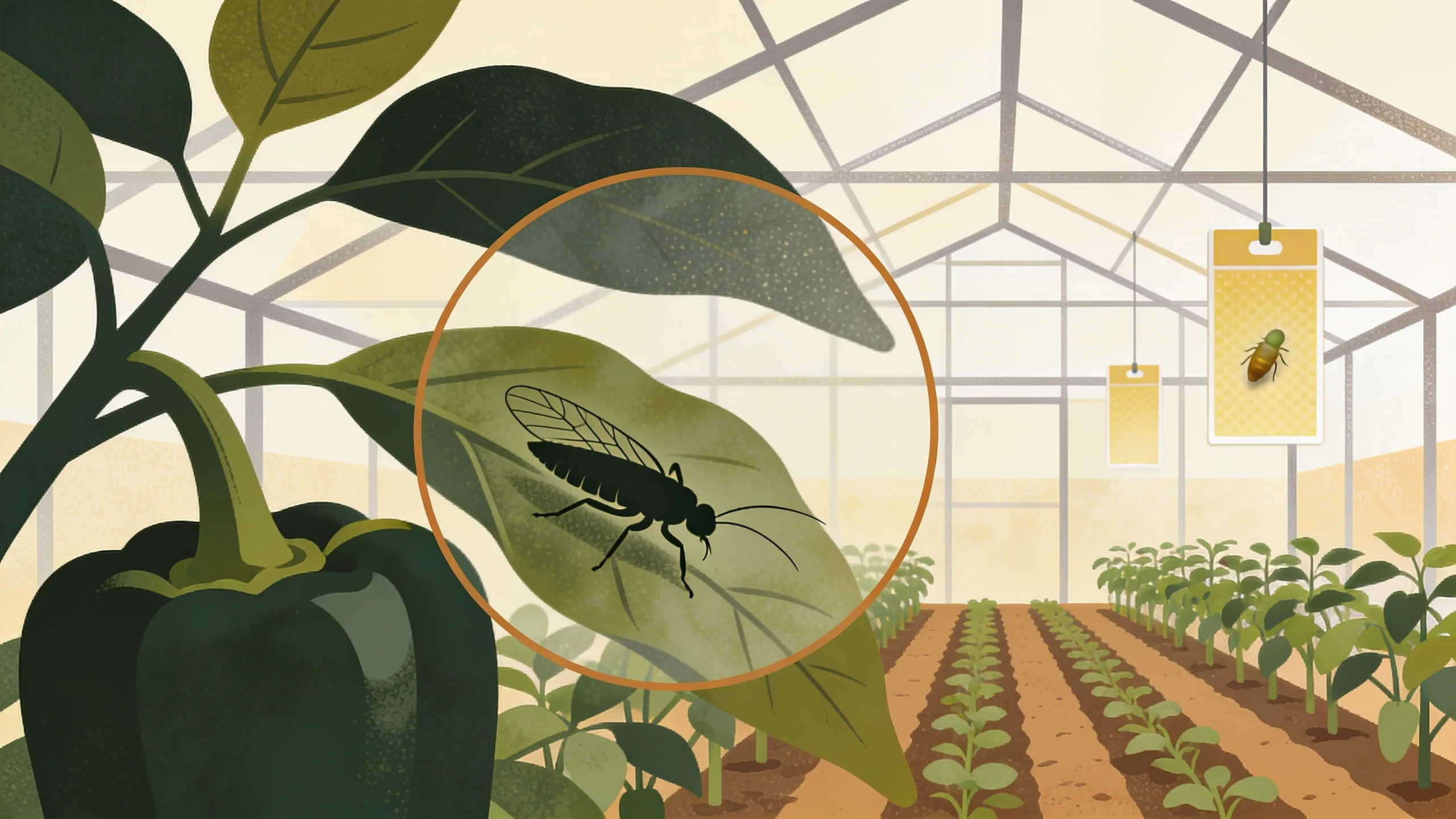
A Pest the Size of a Hyphen: AgriLife Releases New Guidance on Short-Spined Thrips
Texas A&M AgriLife Extension published a new fact sheet this week on a pest most Texans have never seen and many have already brushed against: the short-spined thrip, Thrips parvispinus, a Southeast Asian insect about the size and shape of a printed hyphen.
It was confirmed in Texas only late last year, identified from plant samples collected in the Dallas area. Since then, entomologists have been assembling the identification and management advice that growers, nurseries and home gardeners now need in a single document. The urgency is not that the insect has spread everywhere — it is that conditions here suit it, and early detection is the only cheap tool available.
"We want growers and the public to be aware of this pest and have practical tools to recognize and respond to it early," said Arash Kheirodin, a controlled environment entomologist with Texas A&M AgriLife Research and an assistant professor in the Department of Entomology in Dallas. "Early detection is critical to limiting damage and slowing its spread across Texas."
The damage starts small and compounds. Short-spined thrips pierce leaves, buds and flowers and suck out the contents, leaving scarring, curling and stunted growth. Researchers count more than 40 host plant species across several families: cotton, sorghum, peppers, tomatoes, melons and squash on the commodity and specialty side, plus a long list of nursery and landscape ornamentals, hibiscus among them. Under favorable conditions the insect can go from egg to adult in roughly two weeks, which is why greenhouse and nursery operations carry the most risk — a contained population with a short generation time can build quickly.
"High populations can significantly reduce plant quality and marketability, which is especially important for nursery crops and fresh-market producers," Kheirodin said.
Spread is mostly human-assisted. Adults fly short distances and ride air currents, but the practical pathway is infested plant material — a single new plant can carry the pest into a greenhouse, a field or a backyard bed. That detail matters because it puts the first line of defense at the loading dock and the garden center rather than in the field. The fact sheet leans on the standard integrated pest management sequence: use clean plant material, scout regularly, and remove infested plants before populations build.
For monitoring, the guidance recommends sticky traps and close inspection of flowers, where adults tend to gather. Identification is a magnifier job — the insects are roughly one millimeter long, and females carry a distinctive two-toned appearance while males are smaller and lighter.
Kheirodin's team is also working the longer-term problem. Preliminary research, he said, points to several generalist predators, particularly Geocoris punctipes and Orius insidiosus, along with the entomopathogenic fungus Metarhizium anisopliae, as promising suppressants. "We emphasize an integrated approach," he said. "Monitoring with traps and early intervention will be key to limiting plant damage and yield losses."
Warm Texas conditions could let the insect establish and persist if it goes unchecked, which is why AgriLife is asking producers and gardeners to report suspected infestations and submit samples. The fact sheet explains how to collect and send material to Kheirodin's lab at the Texas A&M AgriLife Research and Extension Center at Dallas. The short-spined thrip is not yet a statewide problem. The point of this week's release is to keep it that way.
Sources
Texas Bug Slayers Editorial Team
Editorial Board
The Texas Bug Slayers editorial team brings together licensed pest control professionals, entomologists, and writers dedicated to helping Texans protect their homes and families from pests.
Related Articles
Emerald Ash Borer Pushes Into Five New Texas Counties as Invasive Beetle Expands Range
Texas A&M Forest Service confirms emerald ash borer in Delta, Erath, Hardin, Walker and Wood counties, bringing 2026 detections to eight new counties.

Central Texas IPM Meeting Set for Aug. 26 in Temple
Texas A&M AgriLife Extension hosts free Integrated Pest Management meeting addressing pasture mealybug, fall armyworm, and New World screwworm in Central Texas.

East Texas Forage Conference Puts Screwworms, Mealybugs and Ticks on the Aug. 14 Agenda
Texas A&M AgriLife Extension and Legacy Ag Credit host the East Texas Forage Conference Aug. 14 in Hallsville, with sessions on screwworm, mealybugs and ticks.