
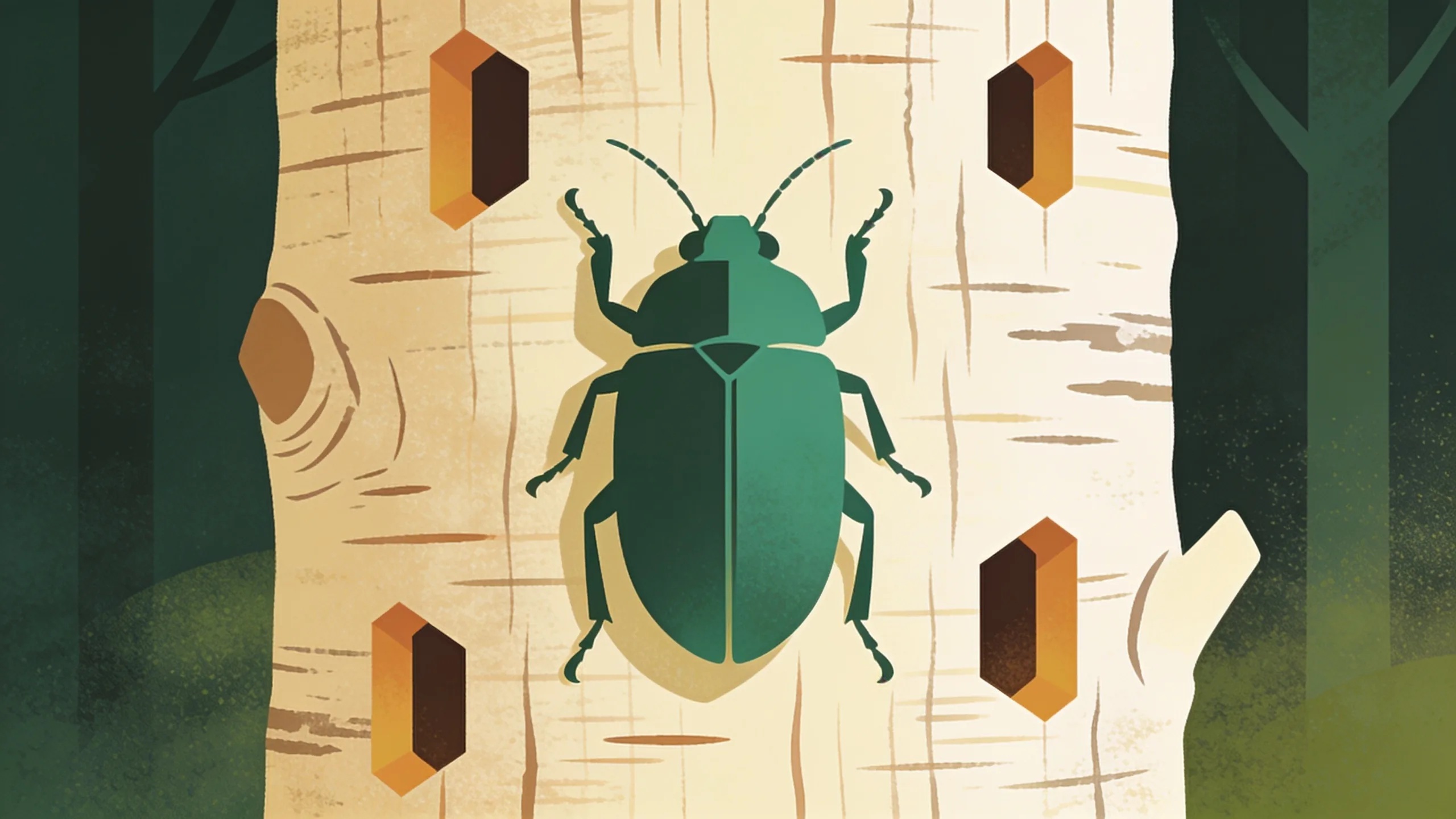
Emerald Ash Borer Pushes Into Five New Texas Counties as Invasive Beetle Expands Range
The emerald ash borer has claimed new territory. Texas A&M Forest Service confirmed this week that the invasive wood-boring beetle has been detected in five additional counties—Delta, Erath, Hardin, Walker, and Wood—marking the latest advance of a pest that has already killed hundreds of millions of ash trees across North America.
The confirmations, announced August 20, bring the total number of new counties affected in 2026 to eight. Since its first Texas detection in 2016, the emerald ash borer has steadily expanded its footprint, threatening all 16 native ash species in the state.
"As the current southernmost boundary for this insect in the U.S., Hardin County signals a clear message: where ash trees extend south, this pest has been able to follow," said Demian Gomez, Texas A&M Forest Service regional forest health coordinator.
How the detections work
The discoveries came through the agency's statewide emerald ash borer monitoring program, which deploys purple traps during the adult beetle flight season. Traps typically go up in February or early March and remain through July or August. While the 2026 trapping season has concluded, monitoring for infestation signs continues year-round.
Adult emerald ash borers present a distinctive profile: metallic green bodies approximately half an inch long. But visual identification of the insects themselves often proves difficult, particularly in early infestation stages when ash trees may show few external symptoms.
Property owners and forest managers should watch for canopy thinning, bark splitting, increased woodpecker activity, and the telltale D-shaped exit holes left by emerging adults. Beneath the bark, larvae create winding S-shaped galleries that disrupt the tree's vascular system, ultimately cutting off water and nutrient transport.
The human factor
Natural spread of the emerald ash borer occurs slowly. Human activity dramatically accelerates it. Movement of infested firewood, logs, and untreated ash wood products remains the primary vector for long-distance expansion.
Texas A&M Forest Service continues emphasizing the "buy it where you burn it" message—urging Texans to purchase firewood locally and avoid transporting untreated wood across distances. The agency coordinates with the Texas Department of Agriculture regarding quarantine areas designed to limit movement of potentially infested wood products.
What comes next
For now, the monitoring continues. The EAB Hotline at 866-322-4512 accepts reports of suspected infestations. Texas A&M Forest Service works with communities, landowners, and industry partners to identify affected areas and provide management guidance.
The emerald ash borer's relentless expansion serves as a reminder that invasive species respect no boundaries—and that early detection remains the best defense for preserving Texas's urban and rural forest canopy.
Sources
Texas Bug Slayers Editorial Team
Editorial Board
The Texas Bug Slayers editorial team brings together licensed pest control professionals, entomologists, and writers dedicated to helping Texans protect their homes and families from pests.
Related Articles

A Wasp Smaller Than a Grain of Rice Is Being Tested Against Screwworm
USDA researchers in Gainesville and Kerrville tested a tiny encyrtid wasp against screwworm larvae, killing up to half a test population. Field trials are next.

A Mated Fruit Fly in a Backyard Mango Tree Puts 19 Square Miles of Port Isabel Under Quarantine
A single mated West Indian fruit fly in a Port Isabel mango tree was enough for a 19.19-square-mile quarantine. Texas acted Aug. 21, APHIS on Oct. 7.

Three Texas Counties Met the Cotton Jassid for the First Time This August
Grimes, Burleson and Willacy counties logged their first cotton jassid finds in August, as the invasive leafhopper reached a tenth state.