
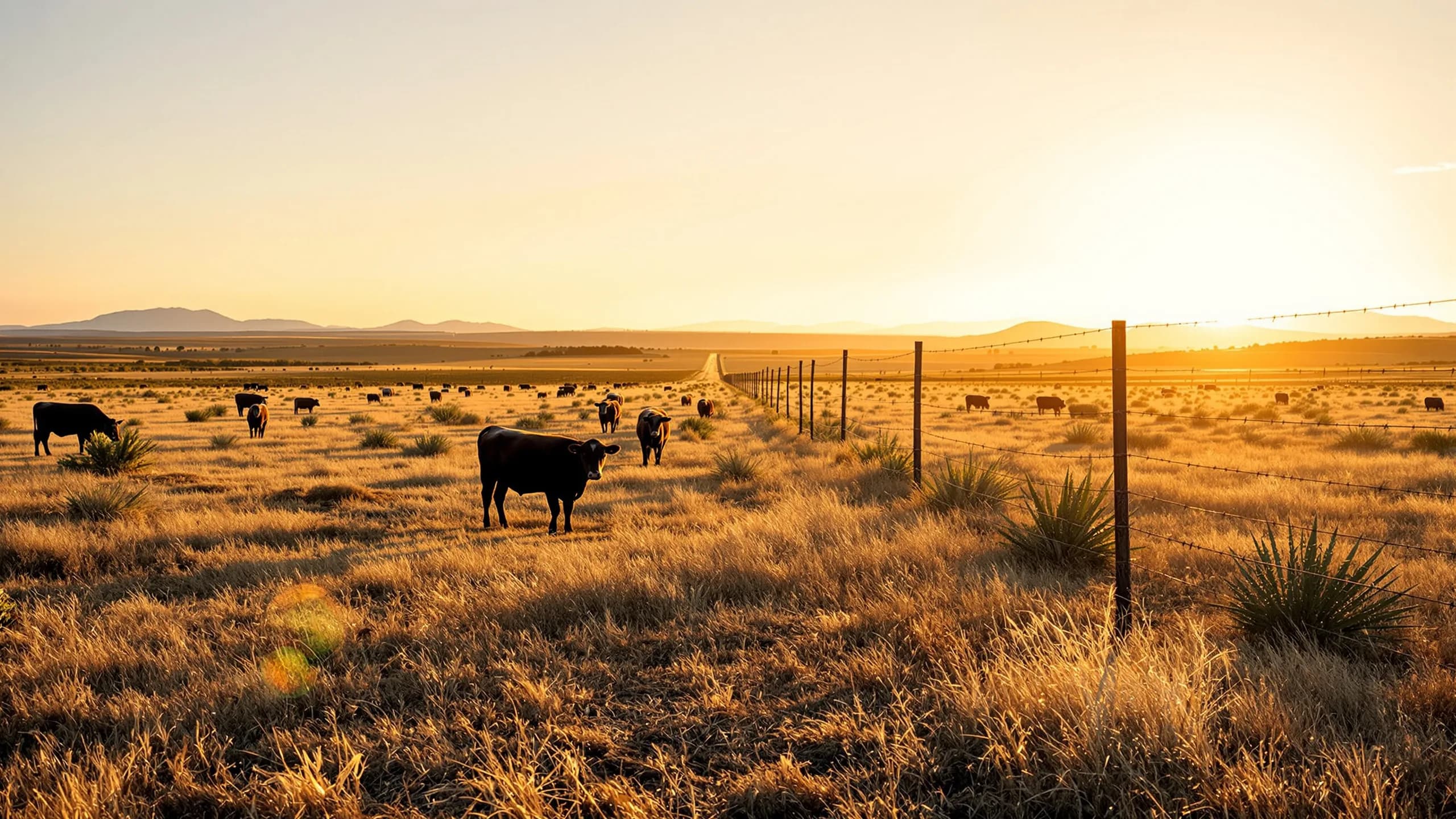
Texas Screwworm 2026: How the Season Unfolded — 50 Cases, a Billion Sterile Flies, and What Winter Brings
The first U.S. New World screwworm case in roughly 60 years was confirmed in Texas on June 3 — a three-week-old calf near La Pryor. Sixteen weeks later, the national count stands at 50 confirmed cases, 48 of them in Texas, spread across 17 Texas counties from the Rio Grande Valley to the Big Bend. In between came a statewide disaster declaration, a quarantine map that swelled to parts of 23 counties and then shrank again, and the largest sterile-fly campaign on American soil since the original eradication. Track every confirmed case, county, and zone change on our live Texas screwworm tracker, updated with each USDA confirmation.
This is the full recap of how the 2026 season unfolded — and why the coming winter may be the response's best chance to end it.
The Season in Numbers
| Metric | Figure |
|---|---|
| First U.S. case | June 3 — calf near La Pryor, Zavala County |
| Total confirmed U.S. cases | 50 (as of September 17) |
| Texas cases | 48 |
| New Mexico cases | 2 (a dog in Lea County, a horse in Grant County) |
| Texas counties with cases | 17 |
| Epicenter | Crockett County — 12 cases, a quarter of all U.S. infections |
| Species hit | Cattle, sheep, goats, dogs, horses |
| Sterile flies released in Texas | 1 billion+ since February |
| Production target | 500 million flies per week by next summer |
| Quarantine map | Parts of 19 counties → 14 after September zone releases |
| Cases currently active | 2 |
How It Unfolded
Spring: the approach
The season's opening act happened south of the border. Through April and May, detections marched north through Nuevo León and Coahuila — 90 miles from Texas in mid-April, 60 miles two weeks later, just 31 by the end of May. Texas spent those weeks preparing: USDA updated its response playbook, the FDA issued emergency drug authorizations, sterile-fly releases expanded to Eagle Pass, and a new federal livestock-insects lab opened in Kerrville.
June: the breach and the surge
June 3 reset the clock. The calf in Zavala County was the first confirmed U.S. infestation since the parasite was eradicated in the 1960s, and detections came fast after it — La Salle, Gillespie, and Edwards counties within days, then a bovine case near Grape Creek that pushed San Angelo and Tom Green County into disaster declarations. Governor Abbott activated the State Emergency Operations Center, and by June 21 the disaster declaration covered all 254 counties.
The month closed with 25 cases and spread of roughly 200 miles from the first site. June alone produced 31 cases — the outbreak's peak velocity.
July and August: the epicenter forms, then slows
July belonged to Crockett County, about 75 miles southeast of Midland. Sheep, goats, cattle, and eventually a dog pushed the county to 12 confirmed cases — a quarter of all U.S. infections — making it the clear epicenter. Cases also reached Pecos County, site of the first Texas dog case, and Terrell County, which logged its fifth case — a sheep — in early August.
But the pace was already bending. July produced 14 new cases, half of June's rate, and August just a handful. Mid-August brought Val Verde County's first case, a sheep; a goat ten days later became the county's second — and as of late September, those two Val Verde cases are the only active infestations in the country.
September: horses, zone releases, and a milestone
September opened with a dog case that reactivated the Crockett County epicenter, then delivered the season's most unsettling turn: the outbreak's first equine case, a working ranch horse in Presidio County confirmed September 9. Eight days later, a horse in Grant County, New Mexico, became the 50th U.S. case — two horse cases in two states within about 200 miles of each other along the border.
At the same time, Texas went quiet: no new Texas case since September 9, the longest lull since July. And USDA confirmed it has released more than one billion sterile flies in Texas since February.
The Response That Bent the Curve
The slowdown was not luck. Three things did the work.
Sterile flies at scale. The sterile insect technique — releasing factory-reared male flies sterilized by radiation, so wild females mate and produce no offspring — is the same method that eradicated screwworm from the U.S. six decades ago. Releases began at 100 million flies a week in late May, added ground-vehicle drops in June, and crossed one billion flies released in Texas this month. USDA is targeting 500 million flies per week by next summer, backed by the new Metapa plant in Chiapas and the $750 million Moore Air Base facility in Edinburg.
TAHC's quarantine map. The Texas Animal Health Commission drew infested zones around every detection, restricting livestock movement out of affected areas. At its widest, the map covered parts of 23 counties. September brought the payoff: release orders cleared Coke, Tom Green, Bandera, Medina, and parts of several others, cutting the restricted map from parts of 19 counties to 14. Gillespie and La Salle — June case counties — were among the first cleared, proof the zones work as intended.
Surveillance and manpower. More than 8,000 traps and 59,000 samples screened by late June, 15 new federally funded TAHC inspectors, and a free certification course that turned ranchers and vets into trained eyes across the zone.
What Winter Changes
New World screwworm is a warm-weather parasite. Sustained cold slows fly activity sharply and kills it outright in much of Texas — which is why the parasite never established north of the border during the decades it was endemic in Mexico. Every hard freeze between now and spring shrinks the front the response has to hold.
That makes winter the eradication window. Sterile-fly releases work best when wild populations are small, and they will be smallest after the first sustained cold nights. A billion flies already released becomes decisive when the wild fly population is crashing on its own. If the barrier holds through the cold months, 2027 starts with the pest pushed back toward the border rather than entrenched across West Texas.
Winter is not a reason to relax, though — South Texas and the Rio Grande Valley rarely freeze hard enough to stop activity entirely, and horses and wildlife move year-round. Ranchers should keep doing what got the count to bend:
- Inspect every animal weekly — check navels on newborns, ear tags, branding and castration sites, and any open wound for larvae
- Treat wounds promptly with an approved product; FDA emergency authorizations cover topical options
- Report suspected cases immediately to TAHC or your local vet — every confirmed case this season started with a sharp-eyed producer
- Follow movement rules if you are inside a restricted zone, and check the current map before hauling animals
Homeowners seeing more wildlife and stray animals near barns this fall should take the same inspection mindset indoors — our Texas overwintering pests guide covers what the first cold fronts push toward structures.
The Bottom Line
Fifty cases in sixteen weeks sounds alarming until you look at the shape of the curve: 31 in June, 14 in July, a handful in August, two in September — one across the state line. The quarantine map is shrinking, only two cases remain active, and a border port is preparing to reopen to Mexican livestock for the first time since June.
The season is not over, and September's horse cases are a reminder that the parasite exploits any warm body with an open wound. But the response has done what it was built to do, and winter is about to multiply its effect. We update the Texas screwworm tracker with every confirmed case and zone change — bookmark it for the winter push.
Sources
Texas Bug Slayers Editorial Team
Editorial Board
The Texas Bug Slayers editorial team brings together licensed pest control professionals, entomologists, and writers dedicated to helping Texans protect their homes and families from pests.
Related Articles
USDA Unveils Quarterly Review Roadmap for Screwworm Response Playbook
USDA APHIS shares comprehensive roadmap for quarterly reviews of New World Screwworm Response Playbook as parasite cases reach 45 infestations across Texas and New Mexico.
Screwworm Count Reaches 44 as Brewster County Adds Two More Cases and the Infested Zone Extends Into Presidio
USDA's dashboard now lists 44 confirmed New World screwworm cases — 43 in Texas — after two cattle cases in Brewster County and a sheep in Pecos County closed out July. TAHC has extended the infested zone into Presidio County, bringing movement restrictions to parts of 23 counties.
Screwworm Count Reaches 42 as Three More Texas Counties Join the Case Map and Pet Transport Rules Tighten
USDA's dashboard now lists 42 confirmed New World screwworm cases — 41 in Texas — after goats tested positive in Sutton County on July 21. Jim Hogg, Pecos and Uvalde counties also carry confirmed cases, and interstate pet transport rules are squeezing Texas shelters.