
Screwworm Count Reaches 42 as Three More Texas Counties Join the Case Map and Pet Transport Rules Tighten
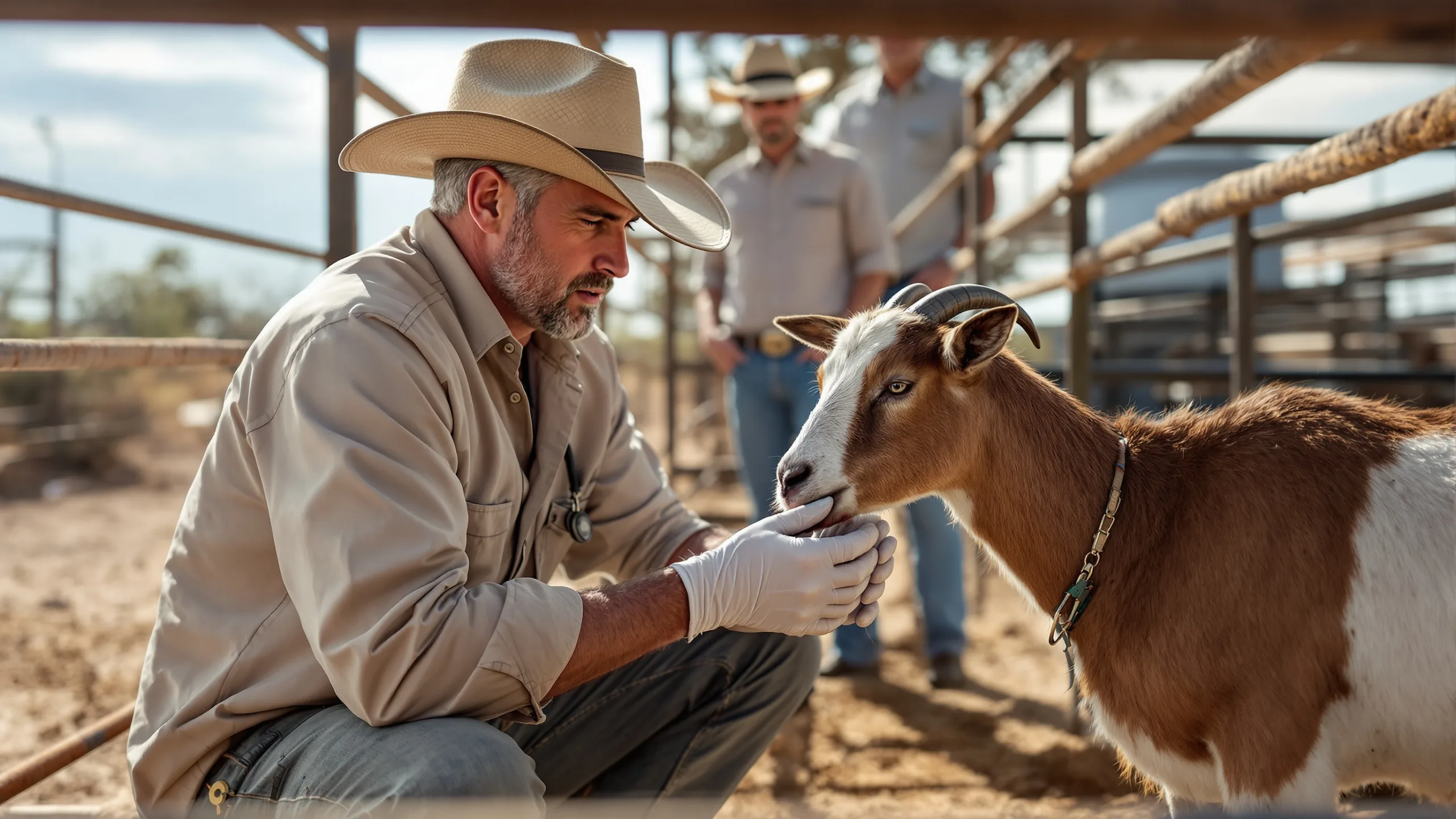
The New World screwworm outbreak has reached 42 confirmed animal cases in the United States — 41 of them in Texas, plus the single New Mexico dog case in Lea County. The newest infestation, listed on USDA's public case dashboard, is in goats in Sutton County, confirmed July 21 and still carried as active.
Our live Texas screwworm case tracker keeps the running count and county map as USDA updates land.
That is one more case than the count we reported three days earlier, and it continues the pattern of July: a slow trickle of new detections in the same ranching belt, rather than the June surge that added more than 30 cases in a month.
Three More Counties Belong on the Case Map
Reviewing USDA's case-level dashboard alongside the detection timeline maintained by Successful Farming turns up three Texas counties that carry confirmed cases but had been sitting on our tracker as quarantine-only:
- Jim Hogg County — confirmed June 26. County Judge Juan Carlos Guerra announced the detection in the Guerra area, urging vigilance rather than alarm: "We have been preparing for this possibility for several months. This confirmation is not a reason to panic. It is a reminder that we must all do our part by increasing vigilance and reporting any suspected cases immediately."
- Pecos County — confirmed June 29 in a dog, the first confirmed canine case in Texas. Two more Pecos cases, both in sheep, followed on July 14.
- Uvalde County — confirmed June 29 in a cow.
The Jim Hogg detection also explains a detail from last week's Rio Grande Valley news: part of Starr County was already under an active quarantine before its own first case, because the Jim Hogg infestation sits next door. Under the USDA response playbook, each confirmed detection triggers a 20-kilometer (12.4-mile) infested zone, and those circles overlap across county lines.
Our screwworm tracker map now carries all 15 named counties with confirmed cases: Zavala, La Salle, Gillespie, Edwards, Tom Green, Sutton, Jim Hogg, Pecos, Uvalde, Medina, Terrell, Crockett, Brewster, Schleicher and Starr.
Where the Outbreak Stands
Crockett County remains the epicenter, with 11 confirmed detections — more than a quarter of the national total — in sheep, goats and cattle. Edwards County follows with about six.
Movement restrictions now cover parts of 22 Texas counties, a band that runs from the Rio Grande Valley through the Hill Country and out into West Texas. Animals moving out of those zones need inspection and permitting before they can be hauled to a sale barn.
The species mix is worth noting for anyone who assumes this is purely a cattle story. Across the 42 cases, USDA has confirmed infestations in cattle, sheep, goats — and three dogs.
Three Dogs, and Rules That Reached Every State
Those three dogs are the reason a livestock parasite has turned into a logistics problem for animal rescue.
Nearly every state has now imposed added requirements on animals traveling from Texas — either from the areas around confirmed cases or from the entire state. Most require an entry permit plus documentation that a veterinarian inspected the animal five to seven days before travel. Several states, including Minnesota, Illinois and Michigan, also require certain animals to be given a medication that kills screwworm larvae and guards against reinfestation.
Those measures replaced the outright bans some states imposed in June. They were recommended by a coalition of national rescue groups, including the ASPCA and veterinary medicine schools.
"We can kind of have our cake and eat it too, because we can be really careful," said Sandra Newbury, director of the University of Wisconsin's Shelter Medicine Program, who helped lead that effort. "We can be sure that animals are treated before they leave Texas, or before they leave an infested zone. And if they are, what we see is that we don't need to worry about it that much."
The science is straightforward — common flea and tick medications do the job. The logistics are not.
What That Means for Texas Shelters
Denisse Prater runs K9 Delivery, a Texas business that trucks dogs from overcrowded shelters to adopters across the country — typically 30 to 40 dogs every weekend. Last month, that number was cut roughly in half as the new state rules landed.
"It's been overwhelming to keep up with the (state) orders," she said. She checks them twice a week.
Rescues used to have a 30-day window between a vet visit and transport; the new five-to-seven-day inspection window has compressed everything. "At the beginning, people were panicking," Prater said. "There were no appointments, and what some vets did is they extended their hours to make this happen."
The tighter constraint is access to a veterinarian at all. Ellen Jefferson, president and CEO of Austin Pets Alive and a veterinarian herself, said more than 200 Texas shelters have no veterinarian on staff or on call, which makes even administering a preventive dose difficult. Her organization has been signing on as the "vet on record" for as many small shelters as it can, and has pushed the state to allow remote veterinary supervision or let trained volunteers administer treatments.
Many rural Texas shelters were already euthanizing animals for space, Jefferson said, operating on budgets of roughly $100 per animal — barely food and basic care, let alone veterinary work.
What Texas Ranchers and Pet Owners Should Watch For
The reporting advice has not changed since the first Zavala County calf in June, and it still carries the most weight of anything on this list:
- Inspect animals daily for wounds — including small ones. A scratch, a tick bite, a fresh brand, a surgical site or an umbilicus on a newborn is enough for a female fly to lay eggs.
- Watch for wounds that worsen instead of healing, foul-smelling or bloody drainage, swelling around an injury, visible larvae, or an animal that is restless, off its feed or in obvious pain.
- Check pets, not just livestock. Three of the 42 cases are dogs. Signs include licking or scratching at a small sore, swelling or discharge, or lethargy paired with a swollen area.
- Do not haul an animal with a suspicious wound until a veterinarian has examined it.
- Hunters: inspect harvested game for unusual wounds and report anything suspect to wildlife officials.
Suspected infestations should go to a veterinarian, a state animal health official, or USDA APHIS directly.
Texas Animal Health Commission: 1-800-550-8242.
Sources
- USDA APHIS — Confirmed Detections of New World Screwworm (case dashboard)
- Texas Public Radio — 42 confirmed New World screwworm infestations: Texas tracker
- Successful Farming — Timeline of New World Screwworm Cases and Response in the U.S.
- KIII 3NEWS — Jim Hogg County confirms first New World screwworm case
- KCUR / Harvest Public Media — Screwworm restrictions are slowing transports of dogs and cats from crowded shelters
- Texas Animal Health Commission — New World Screwworm response
Texas Bug Slayers Editorial Team
Editorial Board
The Texas Bug Slayers editorial team brings together licensed pest control professionals, entomologists, and writers dedicated to helping Texans protect their homes and families from pests.
Related Articles
USDA Unveils Quarterly Review Roadmap for Screwworm Response Playbook
USDA APHIS shares comprehensive roadmap for quarterly reviews of New World Screwworm Response Playbook as parasite cases reach 45 infestations across Texas and New Mexico.
Screwworm Count Reaches 44 as Brewster County Adds Two More Cases and the Infested Zone Extends Into Presidio
USDA's dashboard now lists 44 confirmed New World screwworm cases — 43 in Texas — after two cattle cases in Brewster County and a sheep in Pecos County closed out July. TAHC has extended the infested zone into Presidio County, bringing movement restrictions to parts of 23 counties.
Screwworm Cases Reach 42 as New Sutton County Detection Highlights Persistent Southwest Texas Cluster
USDA confirms 42nd New World screwworm case in Texas, with new detection in Sutton County revealing a concentrated outbreak pattern across the Edwards Plateau and Trans-Pecos regions.