
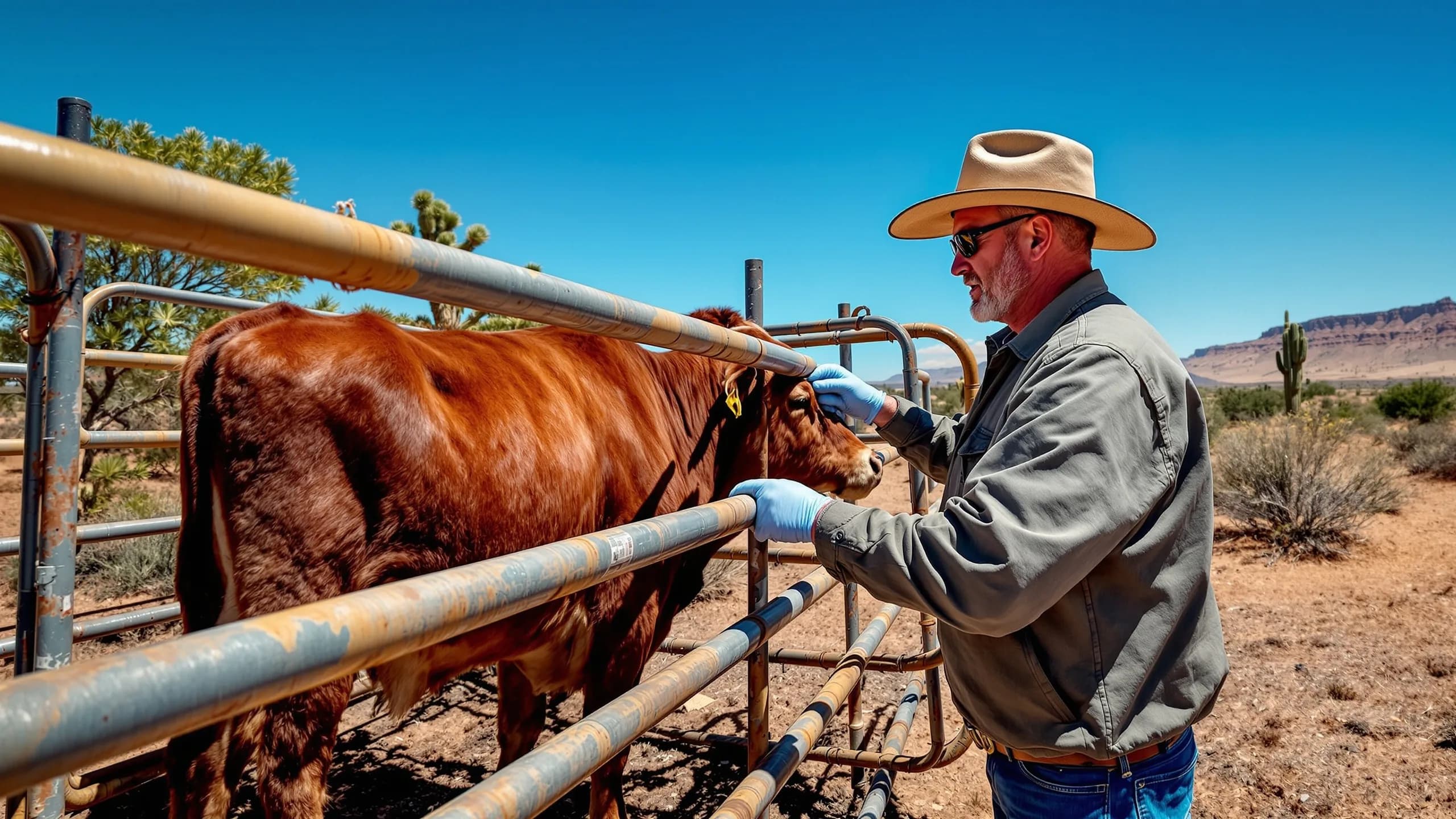
Screwworm Count Reaches 44 as Brewster County Adds Two More Cases and the Infested Zone Extends Into Presidio
The New World screwworm outbreak closed July at 44 confirmed animal cases in the United States — 43 of them in Texas, plus the single New Mexico dog case in Lea County. USDA's case dashboard carried three new detections in the final week of the month, all in the same West Texas ranching belt:
Track every confirmed case on our live Texas screwworm tracker and county map. For local help, see pest control companies in Brewster County.
- Brewster County — a cattle case confirmed July 29 and a second on July 30. Both remain active, and they make Brewster a four-case county barely three weeks after its first detection on July 9.
- Pecos County — a sheep case confirmed July 31, the county's fourth, following the June 29 dog case and two sheep in mid-July.
No new counties joined the case map: the 15 named Texas counties with confirmed infestations are unchanged. Twelve of the 44 cases are still listed as active, with 32 inactive.
The July Trickle, in Context
The outbreak added roughly 14 cases in July, compared with about 30 in June — a slower pace, but a steady one, and the new detections keep landing inside or adjacent to the existing quarantine band rather than jumping beyond it.
The species mix across the 44 cases is now 22 cattle, 14 sheep, five goats and three dogs. Crockett County remains the epicenter with 11 detections, about a quarter of the national total.
Quarantine Zone Reaches Presidio County
While the case count crept up, the regulatory map grew faster. A Texas Animal Health Commission Executive Director Order issued July 30 extended the NWS infested zone into Presidio County and adjusted the Brewster County zone, and a modified order followed August 1 for Crockett, Pecos and Terrell counties.
Movement restrictions now cover parts of 23 Texas counties: Bandera, Brewster, Coke, Crockett, Edwards, Gillespie, Jim Hogg, Kerr, Kimble, La Salle, Medina, Pecos, Presidio, Schleicher, Starr, Sutton, Terrell, Tom Green, Uvalde, Val Verde, Webb, Zapata and Zavala. Warm-blooded animals cannot leave an infested zone without an inspection and a movement certificate from TAHC or a certified NWS inspector.
Presidio's inclusion is notable: the county has no confirmed case of its own, but it sits between the Brewster detections in the Big Bend region and the Mexico border — a corridor USDA and TAHC clearly want sealed before the pest moves through it.
What Ranchers Should Do Now
The guidance is unchanged, and August heat keeps wound pressure high:
- Inspect animals daily — including small wounds, tick bites, fresh brands and navels on newborns.
- Treat wounds promptly with an approved product, and keep a veterinary-client relationship in place before you need it.
- Do not move animals out of the infested zone without an inspection and movement certificate.
- Report immediately — maggots that burrow into a wound, foul odor, or a wound that enlarges instead of healing.
Texas Animal Health Commission: 1-800-550-8242.
Sources
Texas Bug Slayers Editorial Team
Editorial Board
The Texas Bug Slayers editorial team brings together licensed pest control professionals, entomologists, and writers dedicated to helping Texans protect their homes and families from pests.
Related Articles

USDA Unveils Quarterly Review Roadmap for Screwworm Response Playbook
USDA APHIS shares comprehensive roadmap for quarterly reviews of New World Screwworm Response Playbook as parasite cases reach 45 infestations across Texas and New Mexico.
Screwworm Count Reaches 42 as Three More Texas Counties Join the Case Map and Pet Transport Rules Tighten
USDA's dashboard now lists 42 confirmed New World screwworm cases — 41 in Texas — after goats tested positive in Sutton County on July 21. Jim Hogg, Pecos and Uvalde counties also carry confirmed cases, and interstate pet transport rules are squeezing Texas shelters.

Screwworm Cases Reach 42 as New Sutton County Detection Highlights Persistent Southwest Texas Cluster
USDA confirms 42nd New World screwworm case in Texas, with new detection in Sutton County revealing a concentrated outbreak pattern across the Edwards Plateau and Trans-Pecos regions.