
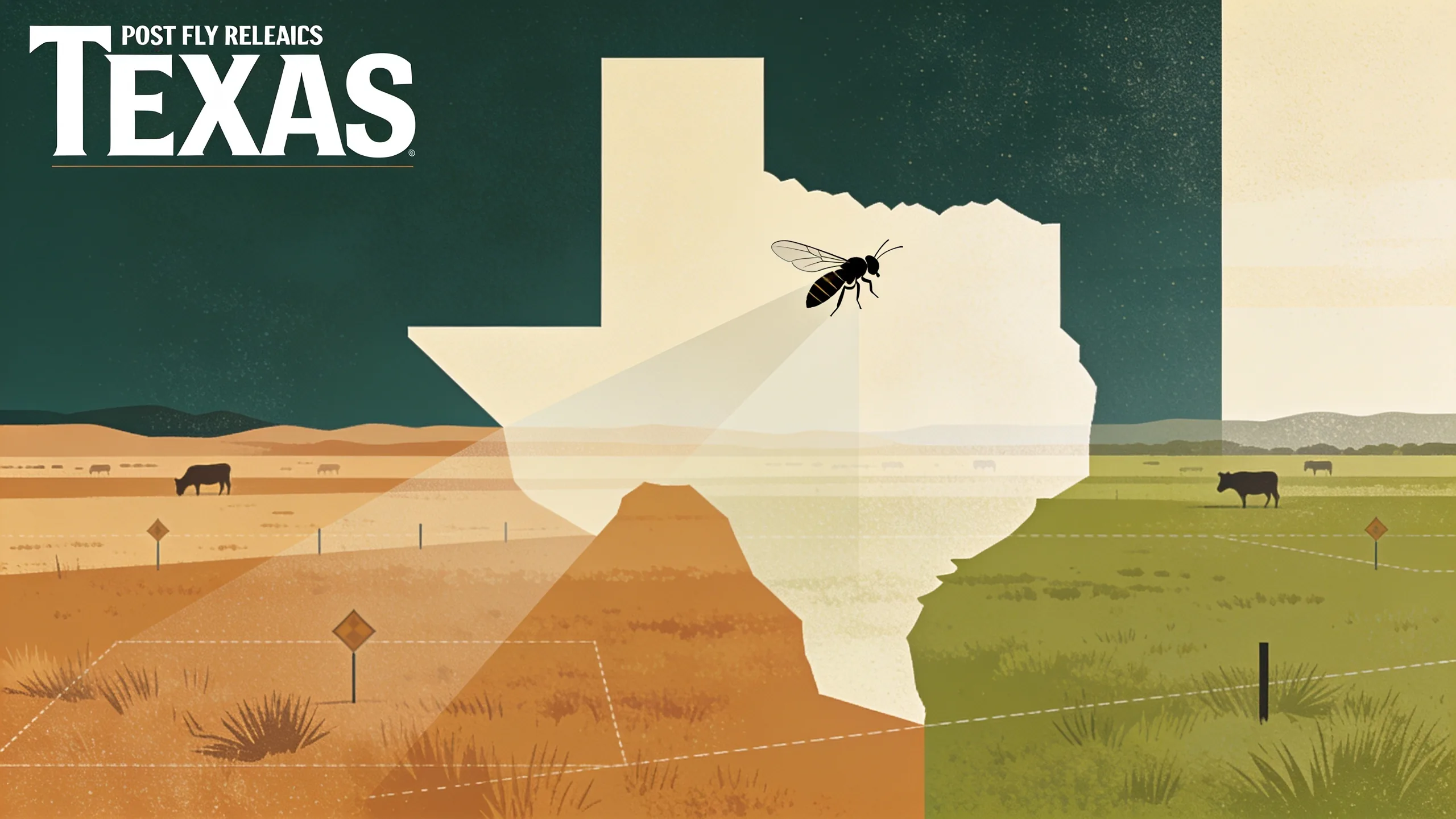
New World Screwworm Cases Climb to 32 as Parasite Spreads Across 12 Texas Counties
The New World screwworm outbreak in Texas has intensified significantly, with the U.S. Department of Agriculture confirming 32 domestic infestations as of early July 2026. Thirty-one cases have emerged across Texas, with one additional case involving a dog in New Mexico, marking the most serious parasitic livestock threat to the state in nearly six decades.
Track every confirmed case on our live Texas screwworm tracker and county map.
The geographic scope has expanded dramatically since the first case was detected June 3 in Zavala County — the first U.S. occurrence since 1966. The parasite now affects 12 Texas counties across 23 separate premises, forcing state and federal agriculture officials to continuously redraw quarantine boundaries and intensify response efforts.
From Border Threat to Statewide Crisis
What began as a concerning development at the Texas-Mexico border has evolved into a multi-county agricultural emergency. The rapid spread pattern suggests the parasite gained footholds earlier than initially detected, with cases now scattered across South and Central Texas rather than remaining clustered near the international boundary.
The Texas Animal Health Commission and USDA's Animal and Plant Health Inspection Service have responded by expanding sterile fly dispersal zones, deploying additional inspectors, and establishing strict movement controls for livestock within quarantined areas. These measures, while necessary for containment, create significant logistical challenges for ranchers and livestock producers.
Understanding the Parasite
New World screwworm flies (Cochliomyia hominivorax) represent one of the most destructive livestock parasites in the Western Hemisphere. Adult females lay eggs in open wounds, mucous membranes, or body orifices of warm-blooded animals. Within 24 hours, eggs hatch into larvae that feed on living tissue, creating festering wounds that expand rapidly and can prove fatal within days if untreated.
Unlike maggots of common blow flies that feed only on dead tissue, screwworm larvae consume healthy flesh, making infestations particularly devastating. A single wound can attract multiple egg-laying females, leading to massive larval loads that overwhelm the host animal.
The parasite's life cycle compounds control difficulties. Adult flies can travel up to 180 miles, meaning localized treatment efforts provide limited protection without regional coordination. This biological reality drove the historic success of sterile insect technique programs — the primary weapon currently deployed against the Texas outbreak.
Economic and Agricultural Stakes
Texas leads the nation in cattle production, with a beef industry valued at approximately $15.5 billion annually. The screwworm threat extends beyond immediate livestock losses to encompass trade restrictions, increased production costs, and potential market disruptions.
Quarantine zones prevent unrestricted livestock movement, requiring veterinary inspection and certification for animals leaving affected areas. These protocols, essential for preventing parasite spread, add time and expense to normal agricultural operations.
Federal and state agencies have moved to mitigate economic impacts. The USDA recently announced $105 million in research funding through the New World Screwworm Grand Challenge, with Texas A&M AgriLife receiving significant support for prevention and response research. Additionally, federal funding has enabled deployment of 15 additional livestock inspectors to border areas.
Response Efforts and Sterile Fly Operations
The cornerstone of containment efforts remains sterile insect technique — a biological control method where laboratory-raised male flies are sterilized with radiation and released in massive numbers. When these sterile males mate with wild females, the eggs produced are non-viable, gradually collapsing the wild population.
USDA APHIS has dramatically expanded sterile fly dispersal zones in response to case spread. The agency now releases millions of sterile flies weekly across South Texas and into Mexico, creating a biological barrier designed to prevent further northward movement of the parasite.
A newly constructed sterile fly facility in Chiapas, Mexico — opened in late June through U.S.-Mexico cooperation — augments production capacity. This cross-border facility represents a critical investment in regional screwworm defense, producing sterile flies for release across southern Mexico and Central America.
Protection Measures for Livestock Owners
Texas ranchers and livestock producers face heightened vigilance requirements. The Texas Animal Health Commission recommends several protective measures:
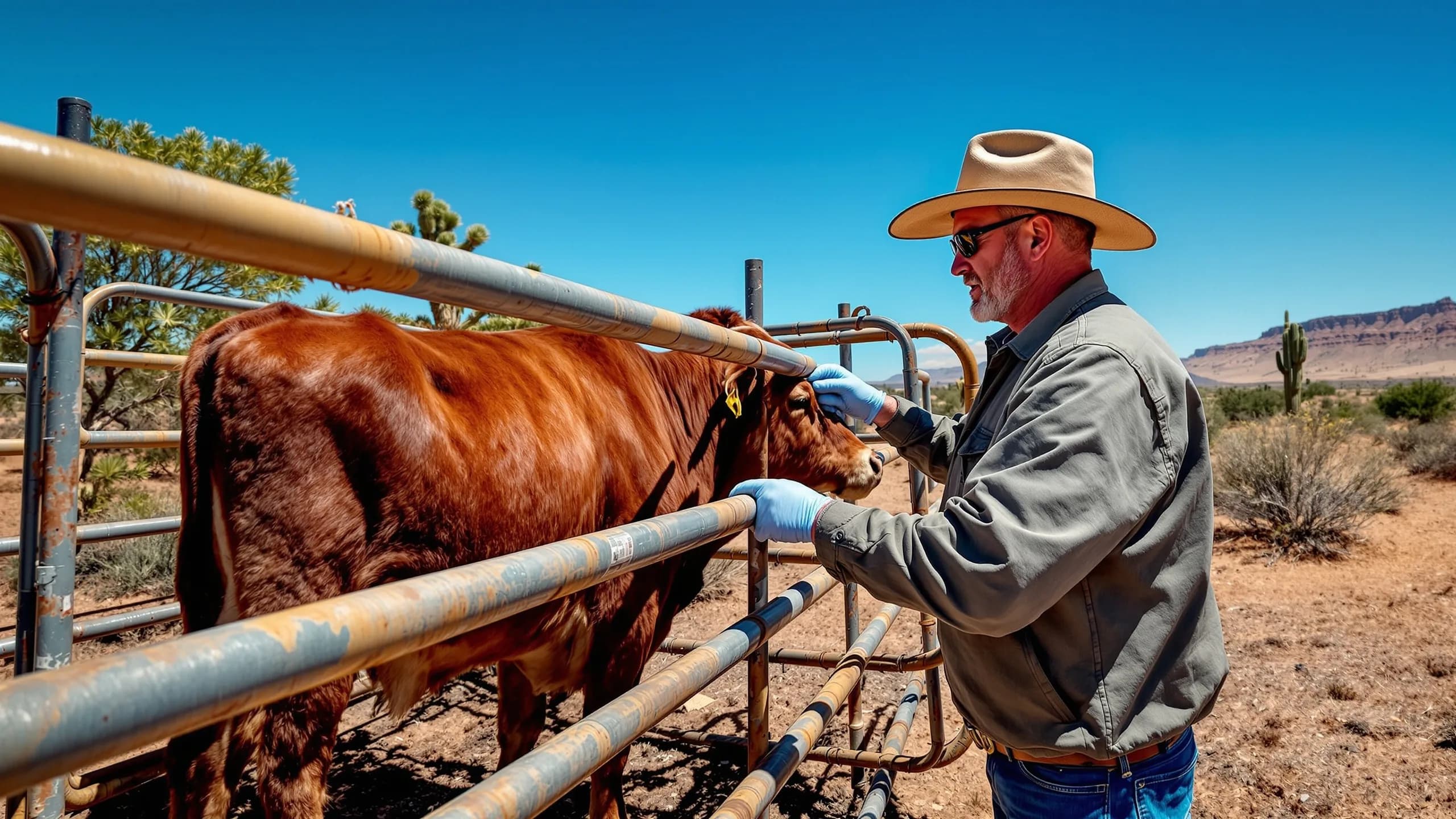
Daily Inspection: Check all animals for wounds, particularly around the head, navel, and genital areas where flies commonly target. Early detection enables prompt treatment before larvae establish significant tissue damage.
Wound Management: Immediately treat any wounds, no matter how minor, with approved larvicidal dressings. Even small scratches can attract egg-laying females.
Breeding Season Precautions: Newborn animals face elevated risk due to navels and afterbirth attracting flies. Increased monitoring during calving and kidding seasons provides essential protection.
Quarantine Compliance: Livestock owners within quarantine zones must obtain veterinary inspection and permits before moving animals. These restrictions, while burdensome, prevent parasite spread to currently unaffected areas.
Report Suspicious Cases: Any animal showing signs of wound infestation — including visible larvae, foul-smelling discharge, or agitated behavior around wounds — should be reported immediately to the Texas Animal Health Commission at 1-800-550-8242.
Pet Owners Also at Risk
While livestock dominate case reports, the New Mexico dog case demonstrates that companion animals face risk as well. Pets with outdoor access, particularly those with wounds or skin conditions, require similar vigilance. The Texas A&M Veterinary Medical Diagnostic Laboratory can examine suspicious specimens from any animal species.
Looking Forward
The 2026 screwworm outbreak represents the most significant test of U.S. parasitic disease response infrastructure in generations. Success depends on coordinated efforts between federal agencies, state authorities, livestock producers, and the veterinary community.
With sterile fly operations scaling up and research investments flowing into improved detection and prevention technologies, officials remain cautiously optimistic that containment is achievable. However, the expanding case count serves as a sobering reminder that biological threats respect no borders — and that vigilance remains the price of agricultural security.
Sources
Texas Bug Slayers Editorial Team
Editorial Board
The Texas Bug Slayers editorial team brings together licensed pest control professionals, entomologists, and writers dedicated to helping Texans protect their homes and families from pests.
Related Articles

Texas Screwworm 2026: How the Season Unfolded — 50 Cases, a Billion Sterile Flies, and What Winter Brings
From one calf in Zavala County to 50 U.S. cases and a billion sterile flies: the full 2026 Texas screwworm season recap, and why winter is the response's best ally.

USDA Unveils Quarterly Review Roadmap for Screwworm Response Playbook
USDA APHIS shares comprehensive roadmap for quarterly reviews of New World Screwworm Response Playbook as parasite cases reach 45 infestations across Texas and New Mexico.
Screwworm Count Reaches 44 as Brewster County Adds Two More Cases and the Infested Zone Extends Into Presidio
USDA's dashboard now lists 44 confirmed New World screwworm cases — 43 in Texas — after two cattle cases in Brewster County and a sheep in Pecos County closed out July. TAHC has extended the infested zone into Presidio County, bringing movement restrictions to parts of 23 counties.