
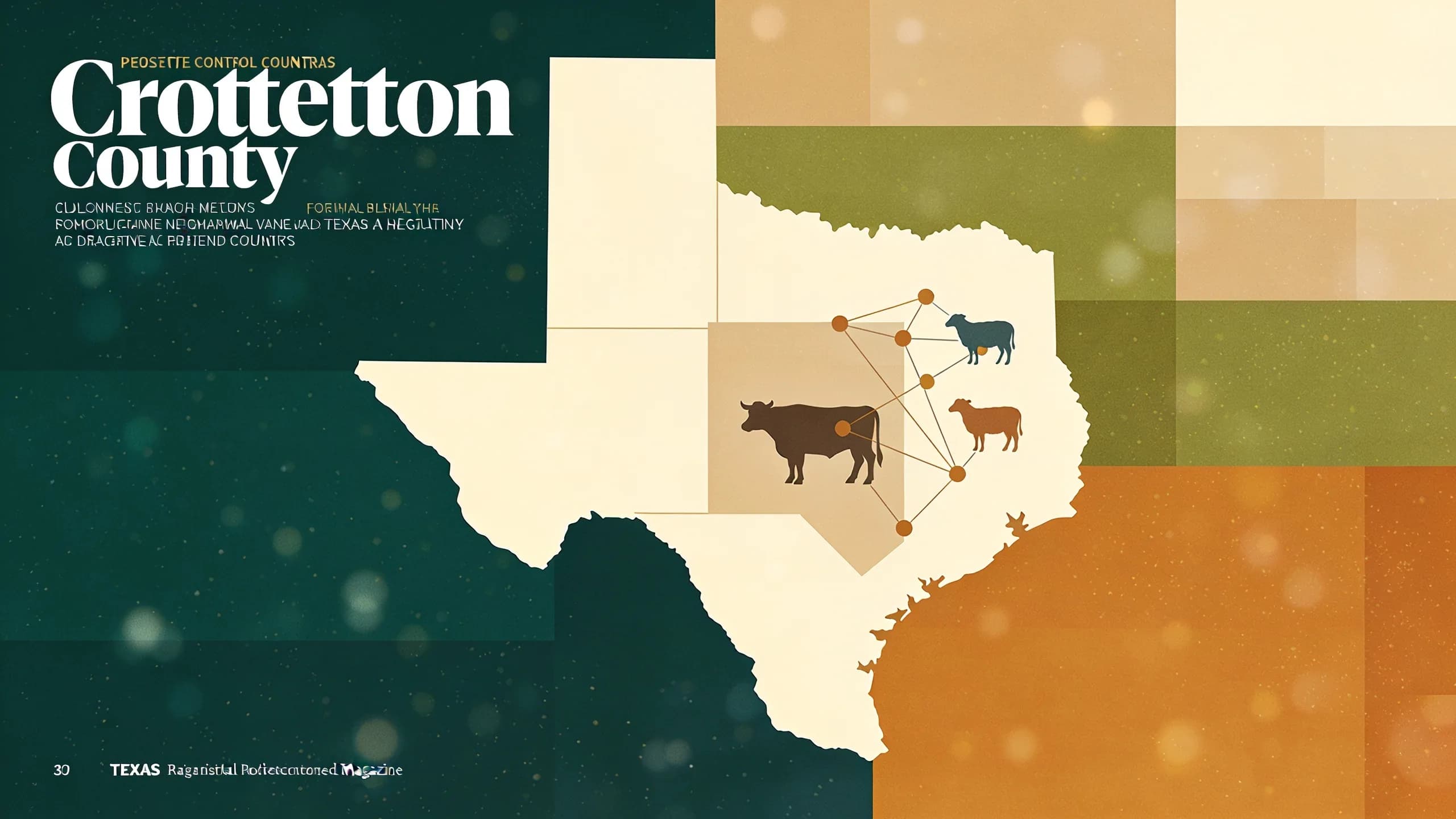
Crockett County Emerges as Epicenter of New World Screwworm Outbreak in Texas
The geographic center of America's first New World screwworm outbreak in six decades has shifted. Crockett County, a sparsely populated ranching region in West Texas, now holds the unfortunate distinction of leading the state in confirmed cases with eight domestic animal detections as of early July.
For the running case count and the affected-county map, follow our Texas screwworm tracker.
This concentration of infections in a single county represents a significant development in the ongoing battle against the flesh-eating parasite. While the outbreak began June 3 in Zavala County near the Mexico border, the pattern of spread has defied early expectations. Rather than remaining concentrated along the southern frontier, the screwworm has established a secondary hotspot hundreds of miles north in Crockett County's ranchlands.
The numbers tell a sobering story. According to the USDA's Animal and Plant Health Inspection Service, the nationwide case count has reached 31 confirmed infestations spread across Texas and New Mexico. Crockett County's eight cases place it ahead of Edwards County with six cases and Terrell County with four. The remaining detections are scattered across nine additional Texas counties plus a single case in Lea County, New Mexico involving a domestic dog.
What's particularly concerning to agricultural officials is the composition of these cases. Unlike the initial outbreak pattern that focused primarily on cattle, Crockett County's infections have affected multiple species including sheep, goats, and cattle. The most recent detection in the county was reported June 30, indicating active transmission continues despite aggressive containment efforts.
The Texas Animal Health Commission has responded by maintaining an active quarantine zone covering more than 20 counties. Within this zone, livestock movement requires inspection and certification. The USDA continues daily sterile fly releases across the affected region, deploying millions of irradiated male flies weekly to interrupt the parasite's reproductive cycle.
For ranchers in Crockett County and surrounding areas, vigilance has become a daily necessity. The screwworm's lifecycle makes early detection critical. Female flies lay eggs in open wounds, body openings, or even minor skin abrasions on warm-blooded animals. Within 24 hours, larvae hatch and begin consuming living tissue, creating wounds that attract additional flies. An untreated animal can die within a week.
The economic implications extend beyond individual ranch losses. Texas ranks first nationally in cattle production, with millions of head moving through the state annually. Any restriction on livestock transport creates ripple effects through the entire agricultural supply chain. While officials emphasize that no wildlife cases or fly trap detections have occurred, the concentration of cases in Crockett County suggests the parasite has established a foothold in local livestock populations.
USDA updates its case tracking daily at 6 p.m. Eastern Time, with data available through the agency's online dashboard. The federal response includes expanded surveillance, additional veterinary inspectors, and coordination with Mexican authorities to address the source of the outbreak south of the border.
For now, Crockett County remains under intensive monitoring as officials work to prevent further spread. The county's emergence as the outbreak's epicenter serves as a reminder that invasive species rarely follow predictable patterns, and that vigilance must extend far beyond initial detection zones.
Sources
Texas Bug Slayers Editorial Team
Editorial Board
The Texas Bug Slayers editorial team brings together licensed pest control professionals, entomologists, and writers dedicated to helping Texans protect their homes and families from pests.
Related Articles

USDA Unveils Quarterly Review Roadmap for Screwworm Response Playbook
USDA APHIS shares comprehensive roadmap for quarterly reviews of New World Screwworm Response Playbook as parasite cases reach 45 infestations across Texas and New Mexico.
Screwworm Count Reaches 44 as Brewster County Adds Two More Cases and the Infested Zone Extends Into Presidio
USDA's dashboard now lists 44 confirmed New World screwworm cases — 43 in Texas — after two cattle cases in Brewster County and a sheep in Pecos County closed out July. TAHC has extended the infested zone into Presidio County, bringing movement restrictions to parts of 23 counties.
Screwworm Count Reaches 42 as Three More Texas Counties Join the Case Map and Pet Transport Rules Tighten
USDA's dashboard now lists 42 confirmed New World screwworm cases — 41 in Texas — after goats tested positive in Sutton County on July 21. Jim Hogg, Pecos and Uvalde counties also carry confirmed cases, and interstate pet transport rules are squeezing Texas shelters.