
New World Screwworm Cases Climb to 32 as Parasite Spreads to Crockett County
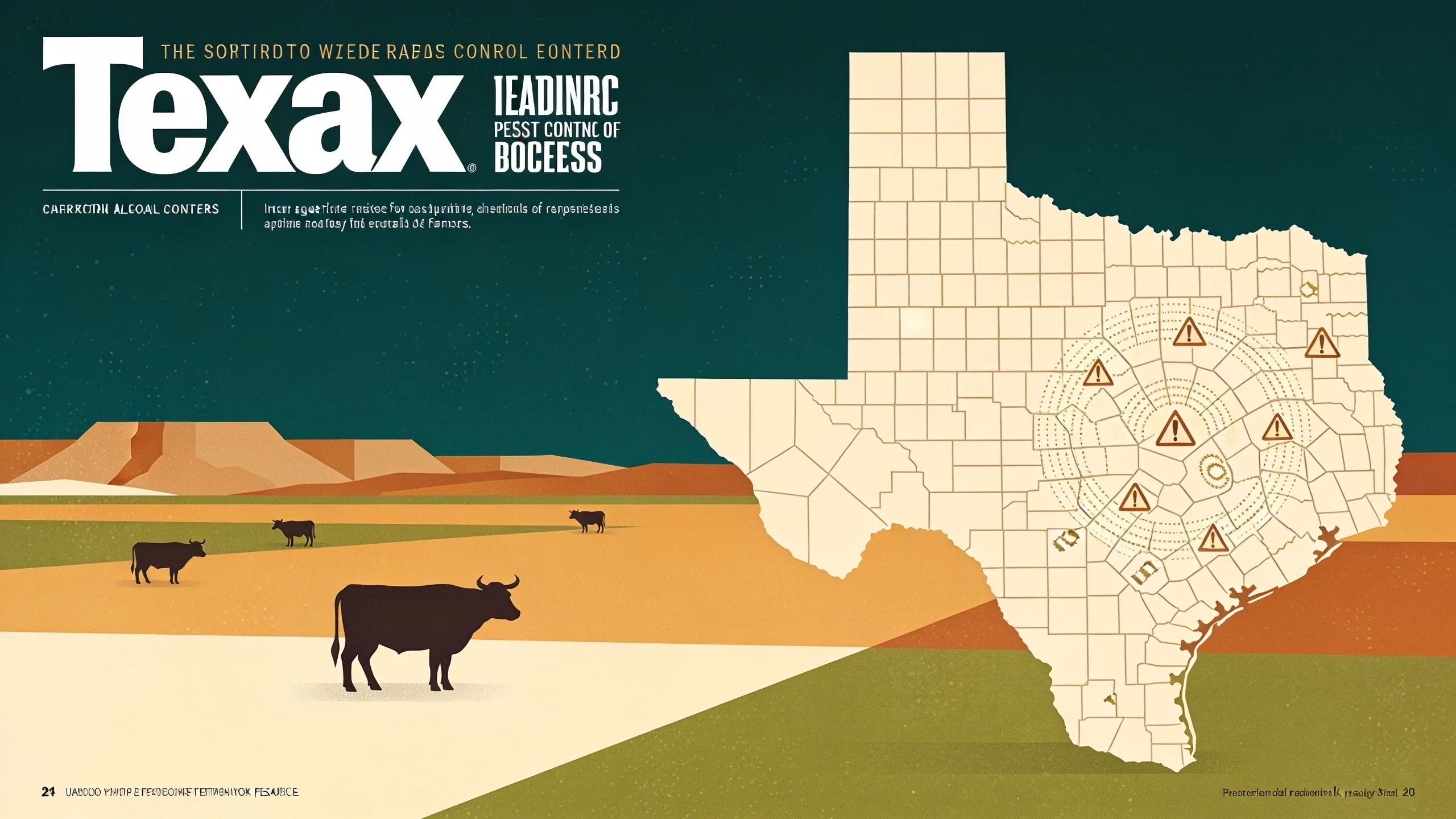
The New World screwworm outbreak in Texas has reached a new milestone, with federal officials confirming the 32nd case of the flesh-eating parasite. The latest detection, announced July 3, marks the first confirmed infestation in Crockett County—expanding the geographic footprint of an outbreak that has now touched 13 counties across the state.
Track every confirmed case on our live Texas screwworm tracker and county map.
According to the U.S. Department of Agriculture's Animal and Plant Health Inspection Service, the newest case involved a sheep in Crockett County, located in West Texas roughly 75 miles southeast of Midland. This brings the total to 31 confirmed cases in Texas and one in New Mexico, making it the largest screwworm outbreak on U.S. soil in over six decades.
How the Outbreak Has Evolved
Since the first U.S. case was confirmed on June 3 in Zavala County, the parasite has demonstrated alarming mobility. What began as a localized cluster in South Texas has gradually pushed northward and eastward, with recent detections in Sutton County, Tom Green County, and now Crockett County suggesting the screwworm fly is actively expanding its range.
The parasite's spread pattern follows a troubling logic. Female screwworm flies can travel up to 100 miles in search of hosts, and the warm summer conditions across Texas have created ideal breeding conditions. Each confirmed case represents not just an infected animal, but a potential launch point for further dispersion.
What Livestock Owners Should Watch For
Texas A&M AgriLife livestock entomologist Sonja Swiger emphasizes that early detection remains the most powerful tool against this parasite. Unlike common maggots that feed on dead tissue, screwworm larvae attack living flesh—creating wounds that worsen rather than heal.
Key warning signs include draining wounds that enlarge over time, thick or bloody discharge with a foul odor, and visible larvae moving within injuries. Animals may show restlessness, signs of pain, or unusual behavior. Any wound that fails to improve after 24 hours warrants immediate veterinary attention.
The Texas Animal Health Commission has expanded surveillance efforts across the affected region, deploying additional inspectors and increasing trapping operations. Federal and state teams are also releasing sterile male flies—the same technique that eradicated screwworm from the United States in 1966—to suppress wild populations.
Economic and Ecological Stakes
Texas faces unique vulnerability to this outbreak. The state maintains one of the nation's largest livestock industries, with millions of cattle, sheep, and goats spread across vast ranchlands. Beyond agriculture, Texas supports robust white-tailed deer populations that could serve as reservoir hosts, complicating containment efforts.
A prolonged outbreak threatens multiple economic fronts: increased veterinary costs for ranchers, potential trade restrictions on Texas livestock, and expanded demands on state and federal animal health resources. While the USDA maintains that the food supply remains safe—screwworm does not infest meat products—the agricultural sector faces significant operational challenges.
Response Measures Intensify
USDA and state partners have activated the State Emergency Operations Center at Level II, indicating a sustained, multi-agency commitment to containment. All southern ports of entry remain closed to livestock trade, a precautionary measure designed to prevent cross-border spread while allowing response teams to focus on the existing outbreak zone.
For animal owners in and around affected counties, the message remains consistent: inspect animals regularly, report suspicious wounds immediately, and avoid transporting animals with unexplained injuries until they receive veterinary clearance. Hunters harvesting game in the region should similarly examine carcasses for unusual wounds or larval activity.
The 32nd case serves as a reminder that despite decades of absence, the New World screwworm remains a persistent threat at Texas's southern border—one that demands continued vigilance from ranchers, veterinarians, and wildlife managers across the state.
For the latest case tracking and official guidance, visit USDA's Screwworm.gov or the Texas Animal Health Commission emergency page. Suspected cases should be reported immediately to your veterinarian or state animal health official.
Sources
Texas Bug Slayers Editorial Team
Editorial Board
The Texas Bug Slayers editorial team brings together licensed pest control professionals, entomologists, and writers dedicated to helping Texans protect their homes and families from pests.
Related Articles
A Wild Elk in Pecos County Is the First American Wildlife Case of Screwworm
TPWD confirmed New World screwworm in a hunter-harvested elk in Pecos County on Oct. 21, the first U.S. wildlife detection, as the national total reached 59.
Screwworm Count Reaches 50 as New Mexico Confirms a Second Horse Case
USDA confirms the 50th U.S. New World screwworm case — a horse in Grant County, New Mexico, the outbreak's second equine case in two weeks — while the Texas count holds at 48 and a border port prepares to reopen to Mexican livestock.
Texas Screwworm 2026: How the Season Unfolded — 50 Cases, a Billion Sterile Flies, and What Winter Brings
From one calf in Zavala County to 50 U.S. cases and a billion sterile flies: the full 2026 Texas screwworm season recap, and why winter is the response's best ally.