
New World Screwworm Confirmed in Texas: First U.S. Case in 60 Years
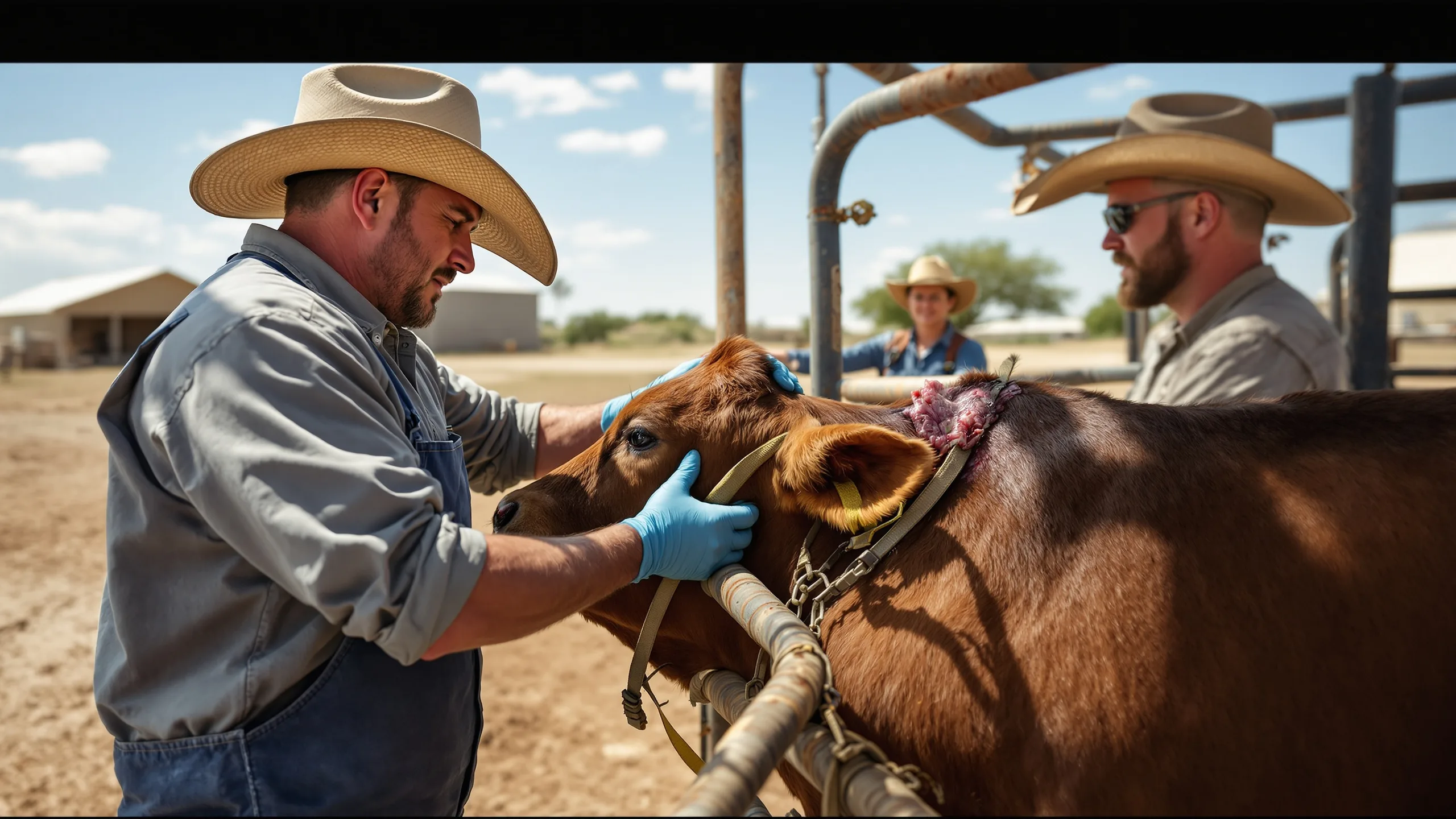
The United States is facing a pest threat it hasn't encountered in over six decades. On June 3, 2026, the USDA's Animal and Plant Health Inspection Service (APHIS) confirmed the detection of New World screwworm (NWS) in a three-week-old calf in Zavala County, Texas — marking the first confirmed case within U.S. borders since the parasite was eradicated in the 1960s.
Track every confirmed case on our live Texas screwworm tracker and county map. Local residents can browse licensed pest control companies in Zavala County in our directory.
The sample, collected from a calf with an umbilical lesion near La Pryor, was identified and confirmed by the National Veterinary Services Laboratory in Ames, Iowa. This detection represents a significant milestone in the northward progression of NWS, which has been advancing from Central America through Mexico since 2023.
A Coordinated Response
State and federal agencies moved swiftly following the confirmation. The Texas Animal Health Commission (TAHC) has established an infested zone in the affected area, with animal movement restrictions now in effect to prevent further spread. The Texas Parks and Wildlife Department (TPWD) is working alongside USDA and TAHC in a joint incident response.
"NWS can have devastating impacts on free-ranging wildlife populations and rural communities," said Dr. David Yoskowitz, Executive Director of TPWD. "TPWD, in partnership with our state and federal partners, will work diligently to respond to suspected cases of NWS, and to urge the public to monitor and report signs of an infestation in warm-blooded animals."
Dr. Bud Dinges, TAHC state veterinarian and executive director, emphasized the state's preparedness: "TAHC has been actively preparing for a resurgence of NWS for over two years. We are putting these preparations into action, and we encourage all animal owners and caretakers to continue to remain vigilant for the presence of larvae in animal wounds and immediately report any suspicions."
Understanding the Threat
New World screwworm is not a disease in the traditional sense — it's an infestation caused by the larvae of the NWS fly (Cochliomyia hominivorax). Adult female flies lay eggs in open wounds or orifices of live tissue. Within 12 to 24 hours, these eggs hatch into parasitic larvae that burrow into flesh using sharp mouth hooks, feeding on living tissue.
While NWS primarily affects livestock, it can also infest pets, wildlife, and — in rare cases — humans. The name "screwworm" derives from the screw-like motion larvae make as they burrow into tissue. Untreated infestations can cause severe injury or death within days.
Importantly, USDA officials stress that NWS does not pose a food safety risk. The parasite does not infest meat, fruits, vegetables, or grains. "The screwworm is not contagious. It does not spread directly from animals to people or from person to person," noted Dudley Hoskins, U.S. under secretary of agriculture for marketing and regulatory programs.
The Sterile Insect Technique
The cornerstone of NWS eradication efforts is the sterile insect technique (SIT). This method involves releasing millions of sterile male flies to mate with wild females. Since female NWS flies mate only once in their lifetime, mating with sterile males results in non-viable eggs, gradually collapsing the population.
Targeted releases of sterile NWS flies are being expedited in the Zavala County area. The U.S. has already helped establish sterile fly production facilities in Metapa, Mexico, and is constructing a $750 million facility in Edinburg, Texas, slated to open in fall 2027.
What Producers Should Do
Livestock producers in South Texas and beyond should implement enhanced monitoring practices immediately:
- Inspect animals frequently for open wounds or unusual discharge
- Keep wounds clean and covered when possible
- Avoid procedures that leave wounds (castration, dehorning, branding) during high-risk periods
- Remove sharp objects from livestock pens
- Contact TAHC immediately if NWS is suspected — do not move animals
Early detection and rapid reporting remain the most effective tools for controlling NWS. The parasite is treatable when caught early, and prompt action can prevent a single case from becoming a widespread outbreak.
Looking Ahead
The detection comes after months of heightened surveillance along the Texas-Mexico border. Since early 2025, USDA has deployed more than 8,000 traps capable of detecting screwworm, resulting in 58,000 samples and 19,000 wildlife tested — all negative until this confirmation.
For Texas's $15 billion cattle industry, the stakes are significant. However, officials emphasize that with coordinated response, proven eradication methods, and producer vigilance, NWS can be contained and eliminated.
Resources for livestock producers, wildlife managers, and pet owners are available through Texas A&M AgriLife Extension and the USDA's screwworm information portal.
Sources
Texas Bug Slayers Editorial Team
Editorial Board
The Texas Bug Slayers editorial team brings together licensed pest control professionals, entomologists, and writers dedicated to helping Texans protect their homes and families from pests.
Related Articles
USDA Unveils Quarterly Review Roadmap for Screwworm Response Playbook
USDA APHIS shares comprehensive roadmap for quarterly reviews of New World Screwworm Response Playbook as parasite cases reach 45 infestations across Texas and New Mexico.
Screwworm Count Reaches 44 as Brewster County Adds Two More Cases and the Infested Zone Extends Into Presidio
USDA's dashboard now lists 44 confirmed New World screwworm cases — 43 in Texas — after two cattle cases in Brewster County and a sheep in Pecos County closed out July. TAHC has extended the infested zone into Presidio County, bringing movement restrictions to parts of 23 counties.
Screwworm Count Reaches 42 as Three More Texas Counties Join the Case Map and Pet Transport Rules Tighten
USDA's dashboard now lists 42 confirmed New World screwworm cases — 41 in Texas — after goats tested positive in Sutton County on July 21. Jim Hogg, Pecos and Uvalde counties also carry confirmed cases, and interstate pet transport rules are squeezing Texas shelters.