
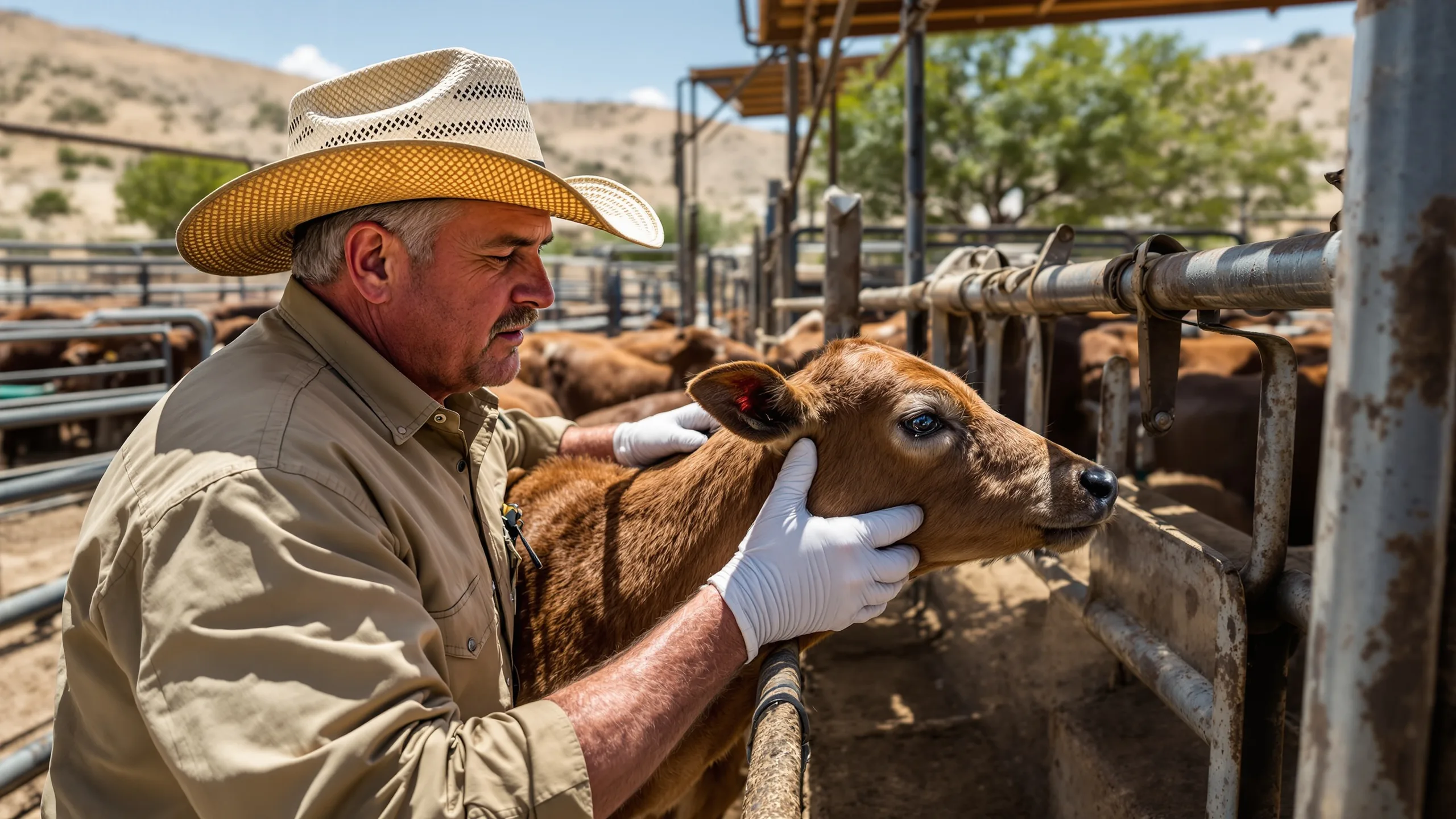
Screwworm Cases Reach 41 as Starr County Declares Disaster and Schleicher County Confirms First Detection
The New World screwworm outbreak has climbed to 41 confirmed animal cases in the United States, according to USDA's Animal and Plant Health Inspection Service dashboard — six more than the count published a week earlier, and a run of new detections that pushed the parasite into two more Texas counties and prompted a disaster declaration in the Rio Grande Valley.
Track every confirmed case on our live Texas screwworm tracker and county map. Local residents can browse licensed pest control companies in Starr County in our directory.
Of the 41 confirmed cases, 12 remain active, meaning the animals are still under treatment and wound management. The other 29 have been designated inactive after recovery or after steps such as proper carcass disposal removed the risk of further spread. All but one of the cases are in Texas; the single New Mexico case is a dog in Lea County, first reported through a Texas veterinarian.
APHIS is blunt about what "inactive" does not mean: an inactive case is not a declaration that an area is clear. Infested zones stay in place until state animal health officials meet additional surveillance and release criteria.
Starr County Signs a Disaster Declaration
Starr County confirmed its first case over the weekend — larvae found in a calf on the northwestern side of the county, north of Roma. On Monday, County Judge Eloy Vera signed a disaster declaration.
"The State Animal Health Commission is working real closely with us, trying to designate the infected zone so that we can go ahead and start monitoring and checking animals that are going to be moving through that area," Vera said.
The declaration is largely a logistics tool: it speeds the county's access to medicine, equipment, and materials ranchers need to keep the parasite from spreading, and the county is working to contract a veterinarian who can respond directly to producer calls. Ranchers can still move animals to sale yards, Vera said, but must allow three to four days for inspection by the Texas Animal Health Commission or other authorized inspectors first.
"The best way to avoid this is for our people to report it," Vera said.
Schleicher County and a Gillespie County Goat
Schleicher County confirmed its first detection on July 19, extending the outbreak's footprint in the ranching country west of the Hill Country. Both Schleicher and Starr were already inside the TAHC infested zone under movement restrictions before their first confirmed cases — the quarantine map has consistently run ahead of the case map.
Separately, USDA's National Veterinary Services Laboratories confirmed a case in a goat in Gillespie County, well east of the border counties that have dominated coverage since June. Gillespie was among the earliest counties named in the outbreak, in early June.
Crockett County remains the epicenter, with 11 confirmed detections — more than a quarter of the national total. Edwards County follows with six.
Traps, Sterile Flies, and a 20-Kilometer Rule
Each confirmed detection triggers a 20-kilometer infested zone around it, inside which livestock movement is subject to inspection and permitting requirements designed to keep an infested animal from seeding a new area.
Surveillance is expanding on both sides of the border. USDA's New World Screwworm Rapid Response team reported this week that 591 screwworm traps are now deployed across Mexico, with added coverage along the border and new traps in southern Chihuahua and Sonora.
The sterile insect technique — the method that eliminated screwworm from the United States in 1966 — remains the backbone of the response. Sterile males are released to mate with wild females, whose eggs then fail to hatch, collapsing the population over successive generations. Construction continues on the sterile fly production facility at Moore Air Base in Edinburg, which is expected to produce up to 300 million sterile flies a week once finished; a dispersal facility opened in Tampico, Mexico, in late 2025.
The FDA also issued an emergency use authorization last week allowing liquid ivermectin for horses to be used for short-term prevention of screwworm infestation. The authorization covers prevention only — it does not approve the product for treating an active infestation.
What Pet Owners in Affected Counties Should Watch For
The livestock story has a household edge to it, which is why the dog and goat cases drew attention. The screwworm fly does not need a dramatic injury to start an infestation.
"The screwworm fly will lay eggs on open wounds, cuts, irritations on skin — could even be a small scratch like in an ear or around an eye," said Dr. Shalsee Vigeant, DVM and medical director at a Sugar Land emergency veterinary hospital. "When those eggs hatch, the worms burrow (make holes) into the skin that they're on."
Warning signs, she said, include licking or scratching at a small sore, swelling or discharge near a site, and — when the wound is not visible — decreased appetite or general malaise alongside a swollen area. Any of those warrant a prompt vet visit. Human infection is possible but very rare, and she urged awareness rather than alarm: keep pets inside where practical, check them daily for wounds, and be extra vigilant in higher-risk areas.
USDA's guidance for producers runs parallel: inspect animals daily for draining or enlarging wounds, maggots or egg masses, signs of irritability, and lesions around the ears, nose, genital area, or umbilicus.
Reporting a Suspected Case
Early detection is still the single most effective control measure available to Texas producers and pet owners. Suspected infestations should be reported to a veterinarian, a state animal health official, or USDA APHIS directly.
Texas Animal Health Commission: 1-800-550-8242.
Sources
- AGDAILY — New World screwworm cases climb to 41 in Texas, N.M.
- KTSM / ValleyCentral — Judge signs disaster declaration after first screwworm case reported in Starr County
- Dallas Express — Texas-New Mexico border on alert after screwworm found in dog and goat
- USDA APHIS — Confirmed U.S. cases of New World screwworm
Texas Bug Slayers Editorial Team
Editorial Board
The Texas Bug Slayers editorial team brings together licensed pest control professionals, entomologists, and writers dedicated to helping Texans protect their homes and families from pests.
Related Articles

USDA Unveils Quarterly Review Roadmap for Screwworm Response Playbook
USDA APHIS shares comprehensive roadmap for quarterly reviews of New World Screwworm Response Playbook as parasite cases reach 45 infestations across Texas and New Mexico.
Screwworm Count Reaches 44 as Brewster County Adds Two More Cases and the Infested Zone Extends Into Presidio
USDA's dashboard now lists 44 confirmed New World screwworm cases — 43 in Texas — after two cattle cases in Brewster County and a sheep in Pecos County closed out July. TAHC has extended the infested zone into Presidio County, bringing movement restrictions to parts of 23 counties.
Screwworm Count Reaches 42 as Three More Texas Counties Join the Case Map and Pet Transport Rules Tighten
USDA's dashboard now lists 42 confirmed New World screwworm cases — 41 in Texas — after goats tested positive in Sutton County on July 21. Jim Hogg, Pecos and Uvalde counties also carry confirmed cases, and interstate pet transport rules are squeezing Texas shelters.