
New World Screwworm Cases Climb to 32 in Texas as Parasite Continues Spread
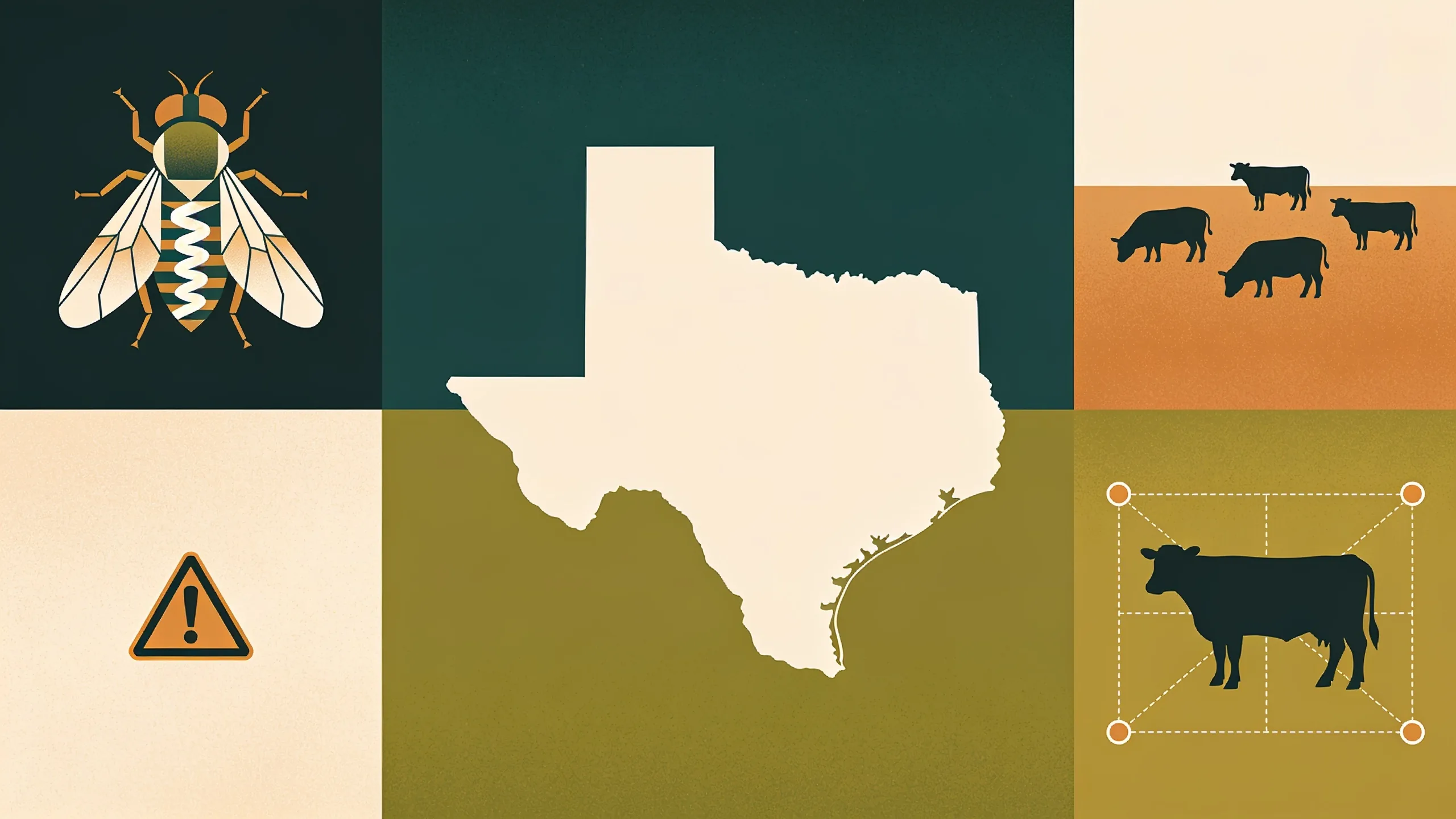
The New World screwworm outbreak in Texas has reached a new milestone as federal officials confirm the 32nd case of the flesh-eating parasite, with the vast majority concentrated in the Lone Star State.
For the running case count and the affected-county map, follow our Texas screwworm tracker.
According to the USDA's online dashboard for confirmed screwworm detections, 31 cases have been identified in Texas alongside a single case in New Mexico. The parasite, which can devastate livestock populations and threaten wildlife, has now established active infestations across six Texas counties as of early July 2026.
What the Latest Numbers Reveal
The escalating case count represents a significant challenge for agricultural officials who have been working since early June to contain the outbreak. The New World screwworm was first confirmed in Texas on June 3, 2026, when a three-week-old calf in Zavala County tested positive—the first U.S. case in over six decades.
Since that initial detection, the parasite has demonstrated its ability to spread rapidly across county lines, prompting an unprecedented response from state and federal agencies. The Texas Animal Health Commission, USDA APHIS, and Texas A&M AgriLife Extension have coordinated massive surveillance, treatment, and public education efforts.
Beyond Livestock: Pets at Risk
While the agricultural impact dominates headlines, veterinary experts are increasingly concerned about companion animals. Dogs, cats, and other pets that spend time outdoors in affected areas face genuine risk of infestation.
The screwworm fly lays eggs in open wounds, no matter how small. What begins as a minor cut or scratch can quickly become a life-threatening infestation as the larvae burrow into tissue and feed on living flesh. Pet owners in affected counties should inspect their animals daily for any wounds and seek immediate veterinary care if they notice maggots or unusual wound behavior.
Economic Stakes Continue to Rise
Texas leads the nation in cattle production, with the industry contributing approximately $15.5 billion annually to the state economy. Agricultural economists warn that unchecked spread of the screwworm could trigger catastrophic losses, potentially affecting beef prices nationwide.
The USDA has responded with substantial resources, including the recently announced $105 million New World Screwworm Grand Challenge funding initiative. This program supports 40 research projects exploring everything from improved sterile insect technique to novel detection methods and treatment protocols.
What Officials Are Doing
Federal and state agencies have deployed multiple containment strategies simultaneously:
Sterile Fly Release: The USDA continues releasing millions of sterile screwworm flies along the Texas-Mexico border and in affected areas. These sterilized males mate with wild females, producing no offspring and gradually reducing the population.
Quarantine Zones: Active infested zones remain under strict quarantine protocols, limiting livestock movement and requiring inspection certification for animals leaving affected areas.
Enhanced Surveillance: Thousands of fly traps have been deployed across South and Central Texas to detect wild screwworm populations before they can establish new breeding grounds.
Inspector Training: Free certification programs for livestock inspectors continue statewide, with Texas A&M AgriLife Extension coordinating educational workshops for producers and veterinarians.
What Livestock Owners Should Watch For
Early detection remains the most effective tool for individual producers. Key warning signs include:
- Worm-like larvae in wounds: Unlike typical fly maggots that feed on dead tissue, screwworm larvae feed on living flesh and have a distinctive appearance.
- Restless behavior: Infested animals often become agitated, isolate themselves, or exhibit reduced appetite.
- Worsening wounds: Small injuries that should heal instead grow larger and more irritated.
- Discharge: A distinctive, foul-smelling liquid may emanate from infested wounds.
Any suspected case must be reported immediately to the Texas Animal Health Commission at (800) 550-8242 or USDA APHIS at (866) 536-7593.
Looking Ahead
With 32 confirmed cases and active infestations persisting across multiple counties, the screwworm threat shows no signs of immediate resolution. However, the coordinated response—combining traditional sterile insect technique with cutting-edge research and robust public education—provides reason for cautious optimism.
Livestock producers, pet owners, and wildlife managers should remain vigilant. The parasite's spread can be stopped, but success depends on rapid detection, immediate reporting, and strict adherence to quarantine protocols.
For the latest updates on confirmed cases, quarantine zones, and response efforts, visit the USDA APHIS screwworm dashboard or the Texas Animal Health Commission's dedicated New World Screwworm page.
Sources
Texas Bug Slayers Editorial Team
Editorial Board
The Texas Bug Slayers editorial team brings together licensed pest control professionals, entomologists, and writers dedicated to helping Texans protect their homes and families from pests.
Related Articles

USDA Unveils Quarterly Review Roadmap for Screwworm Response Playbook
USDA APHIS shares comprehensive roadmap for quarterly reviews of New World Screwworm Response Playbook as parasite cases reach 45 infestations across Texas and New Mexico.
Screwworm Count Reaches 44 as Brewster County Adds Two More Cases and the Infested Zone Extends Into Presidio
USDA's dashboard now lists 44 confirmed New World screwworm cases — 43 in Texas — after two cattle cases in Brewster County and a sheep in Pecos County closed out July. TAHC has extended the infested zone into Presidio County, bringing movement restrictions to parts of 23 counties.
Screwworm Count Reaches 42 as Three More Texas Counties Join the Case Map and Pet Transport Rules Tighten
USDA's dashboard now lists 42 confirmed New World screwworm cases — 41 in Texas — after goats tested positive in Sutton County on July 21. Jim Hogg, Pecos and Uvalde counties also carry confirmed cases, and interstate pet transport rules are squeezing Texas shelters.