
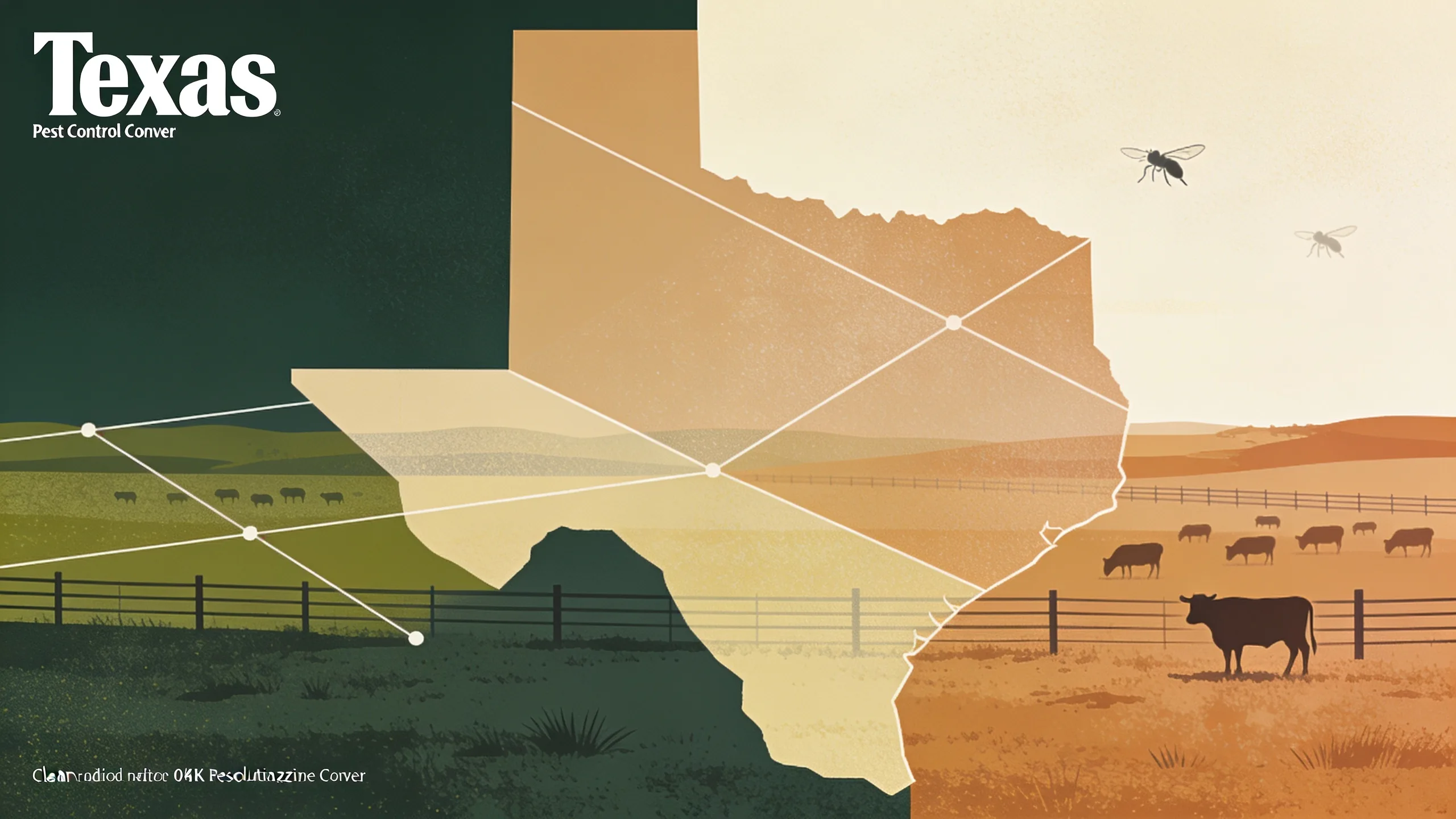
New World Screwworm Cases Reach 35 in Texas as Outbreak Shows Signs of Slowing
The New World screwworm outbreak in Texas has reached 35 confirmed cases across the United States, with state and federal agriculture officials cautiously noting that the pace of new infections appears to be slowing as July progresses.
Track every confirmed case on our live Texas screwworm tracker and county map. For local help, see pest control companies in Brewster County.
According to data released July 12 by the USDA's Animal and Plant Health Inspection Service, 19 cases remain active while 16 have been classified as inactive following successful treatment and resolution of the parasitic infestations. The tally represents a significant milestone in the ongoing battle against the flesh-eating parasite that has threatened Texas livestock since its first U.S. detection in 60 years on June 3.
Crockett County Emerges as Epicenter
While the outbreak has spread across multiple Texas counties, one region has borne a disproportionate share of the burden. Crockett County alone accounts for 11 confirmed cases—nearly double that of any other county and representing roughly one-third of all U.S. infections.
The USDA confirmed a new detection in Crockett County on July 12, adding to two additional cases reported earlier in the month within the same jurisdiction. A fourth July case was identified in Brewster County, bringing the month's total to four new infections compared to 31 cases recorded throughout June.
The geographic concentration has prompted intensified surveillance and response efforts in West Texas, where the combination of ranching activity and proximity to wildlife corridors has created conditions favorable to parasite transmission.
Quarantine Zone Expands to 22 Counties
The Texas Animal Health Commission has established movement restrictions across 22 counties designated as part of the New World Screwworm Infested Zone. The affected counties now include: Bandera, Brewster, Coke, Crockett, Edwards, Gillespie, Jim Hogg, Kerr, Kimble, La Salle, Medina, Pecos, Schleicher, Starr, Sutton, Terrell, Tom Green, Uvalde, Val Verde, Webb, Zapata, and Zavala.
Under current executive orders, all warm-blooded animals within the infested zone cannot be moved without prior authorization from TAHC and inspection by a New World Screwworm Certified Inspector. The certification program, developed in partnership with Texas A&M AgriLife Extension, has trained hundreds of inspectors to conduct examinations and issue required movement certificates.
What the Slowdown Could Mean
The reduction in new case reports during early July offers a tentative sign that the multi-agency response may be gaining traction. Since the index case was confirmed in a Zavala County calf on June 3, federal and state partners have deployed an arsenal of control measures including:
- Sterile insect technique releases across affected areas, with millions of irradiated male flies released weekly to disrupt reproduction
- Ground and aerial dispersal operations targeting high-risk zones
- Enhanced surveillance through trapping networks and producer education
- Movement controls to prevent infected animals from spreading the parasite
The sterile insect technique, which successfully eradicated screwworm from the United States in 1966, remains the cornerstone of the eradication strategy. When sterile males mate with wild females, the resulting eggs are nonviable, causing population collapse over successive generations.
Risk to Pets and Humans
While livestock have borne the brunt of the outbreak, the Texas Animal Health Commission emphasizes that pet owners should remain vigilant. Two dog-related cases have been confirmed nationally—one in Texas and another in New Mexico.
The CDC maintains that human infection risk "remains very low," with only one confirmed case in a U.S. traveler returning from El Salvador since the parasite's re-emergence in Central America. However, anyone living or working around livestock in affected areas faces elevated exposure risk.
Looking Ahead
Agriculture officials caution against interpreting the July slowdown as evidence that the threat has passed. The coming weeks will prove critical in determining whether the sterile insect technique and containment measures have successfully suppressed the outbreak or merely paused its expansion.
Livestock producers in and near the infested zone should continue daily animal inspections, promptly treat any wounds, and contact TAHC immediately at 1-800-550-8242 if screwworm infestation is suspected. Early detection remains the most effective tool for preventing further spread of this devastating parasite.
Sources
Texas Bug Slayers Editorial Team
Editorial Board
The Texas Bug Slayers editorial team brings together licensed pest control professionals, entomologists, and writers dedicated to helping Texans protect their homes and families from pests.
Related Articles

USDA Unveils Quarterly Review Roadmap for Screwworm Response Playbook
USDA APHIS shares comprehensive roadmap for quarterly reviews of New World Screwworm Response Playbook as parasite cases reach 45 infestations across Texas and New Mexico.
Screwworm Count Reaches 44 as Brewster County Adds Two More Cases and the Infested Zone Extends Into Presidio
USDA's dashboard now lists 44 confirmed New World screwworm cases — 43 in Texas — after two cattle cases in Brewster County and a sheep in Pecos County closed out July. TAHC has extended the infested zone into Presidio County, bringing movement restrictions to parts of 23 counties.
Screwworm Count Reaches 42 as Three More Texas Counties Join the Case Map and Pet Transport Rules Tighten
USDA's dashboard now lists 42 confirmed New World screwworm cases — 41 in Texas — after goats tested positive in Sutton County on July 21. Jim Hogg, Pecos and Uvalde counties also carry confirmed cases, and interstate pet transport rules are squeezing Texas shelters.