
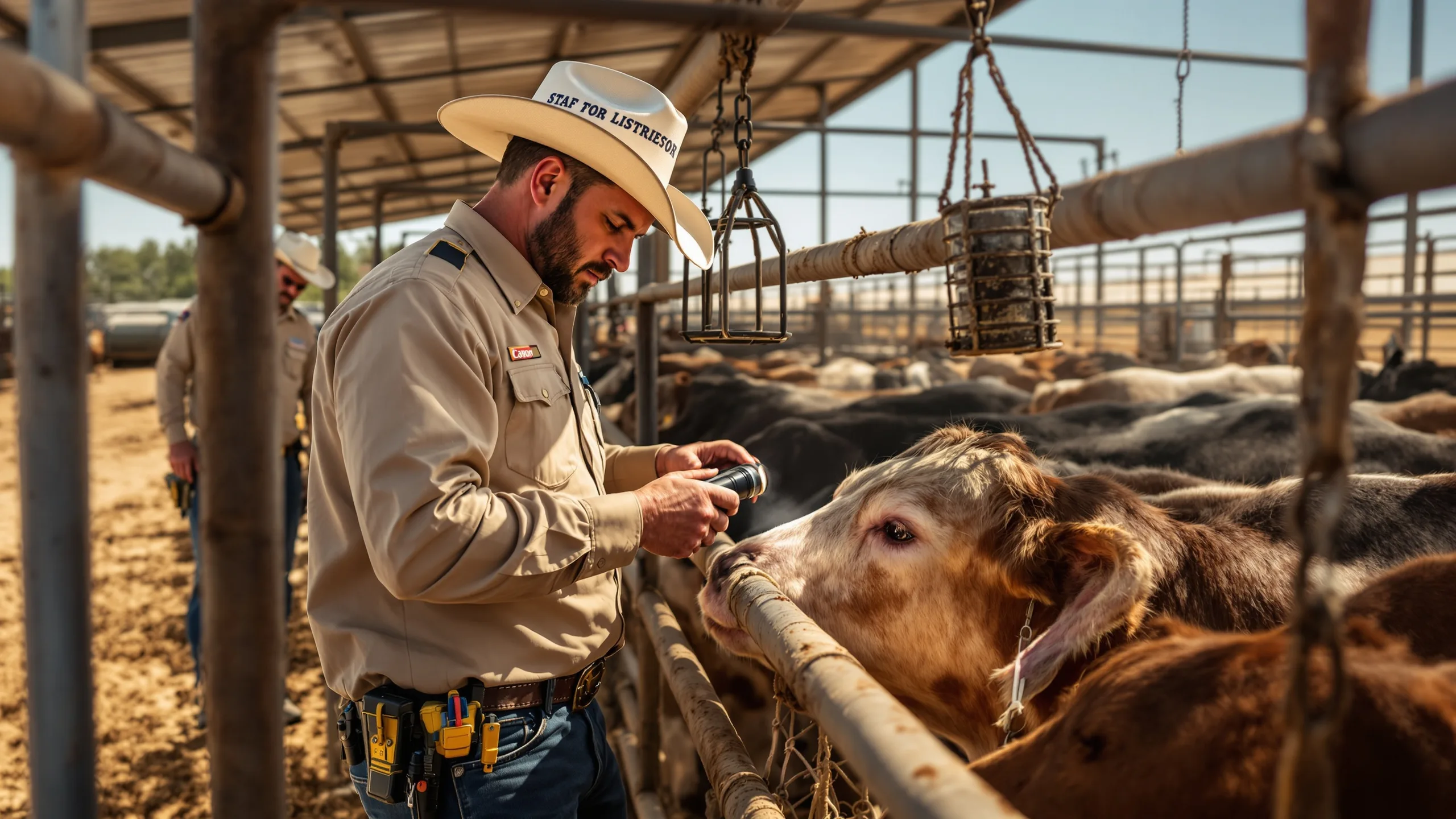
Texas Animal Health Commission Deploys Additional Inspectors to Block Screwworm Threat
The Texas Animal Health Commission is mobilizing additional resources to prevent the New World screwworm from crossing into the state, deploying extra inspectors to monitor livestock and expanding fly trap surveillance along the Texas-Mexico border.
For the running case count and the affected-county map, follow our Texas screwworm tracker.
The enhanced measures come after the USDA confirmed the flesh-eating parasite was detected just 31 miles south of the Texas border in Coahuila, Mexico — the closest the pest has come to U.S. soil since the 1980s outbreak that cost the livestock industry over $1 billion in today's dollars.
Stepping Up Border Defenses
Commission officials announced the inspector surge this week, focusing on high-risk entry points where cattle, horses, and other livestock cross from Mexico. The additional personnel will conduct visual examinations of animals and coordinate with U.S. Customs and Border Protection to identify potential cases before they can establish a breeding population.
"The commission is adding inspectors to check livestock and fly traps along the border," a TAHC spokesperson confirmed. The expanded surveillance network includes specialized screwworm fly traps that use attractants to capture and identify adult flies that might hitch rides on animals or vehicles entering Texas.
What's at Stake
The New World screwworm (Cochliomyia hominivorax) poses an existential threat to Texas's $15 billion livestock industry. Unlike common maggots that feed on dead tissue, screwworm larvae burrow into living flesh, creating deep wounds that can kill animals within days if untreated.
USDA estimates suggest a full-blown outbreak could inflict $1.8 billion in economic damage to Texas alone. The United States has maintained a biological barrier against the pest for decades through the Sterile Insect Technique — releasing millions of radiation-sterilized male flies weekly to crash wild populations.
That barrier held until 2016, when screwworm reappeared in Florida's Key Deer population, requiring a $40 million eradication campaign. Now, with nearly 2,000 active cases reported in Mexico as of late May and dozens within 100 miles of Texas, officials are treating the threat with renewed urgency.
Federal and State Coordination
The TAHC inspector surge complements broader federal efforts already underway. The USDA recently opened the $750 million Knipling-Bushland U.S. Livestock Insects Research Laboratory in Kerrville, Texas — a state-of-the-art facility designed to produce billions of sterile flies annually.
Additionally, the USDA has expanded sterile fly dispersal zones to cover Eagle Pass and other border communities, creating a living buffer zone that extends deep into Mexican territory. The agency also released a comprehensive response playbook in April outlining containment protocols should the pest breach the border.
What Livestock Producers Should Know
Ranchers and livestock owners across South Texas should remain vigilant for signs of screwworm infestation:
- Wound inspection: Any open wound on livestock that appears to have larvae should be examined immediately
- Behavioral changes: Animals may isolate themselves, show signs of irritation, or refuse to eat
- Wound characteristics: Screwworm-infested wounds typically have a distinctive odor and may show larvae at the wound edge
The TAHC has established a 24-hour hotline for suspected cases. Anyone observing potential screwworm activity should contact authorities immediately rather than attempting treatment themselves.
Looking Ahead
With summer temperatures rising and parasite activity typically increasing during hot months, the next 90 days represent a critical window for preventing screwworm establishment in Texas. The TAHC inspector deployment signals state officials are treating the threat as a clear and present danger to agricultural interests.
For now, the sterile fly barrier continues its invisible work — billions of lab-reared males competing with wild suitors, slowly pushing the biological front line southward. Whether that barrier holds may depend, in part, on the watchful eyes of inspectors now stationed along the border.
The Texas Animal Health Commission maintains updated guidance for livestock producers at tahc.texas.gov. Producers in border counties should review emergency protocols and ensure proper animal identification documentation is current.
Sources
Texas Bug Slayers Editorial Team
Editorial Board
The Texas Bug Slayers editorial team brings together licensed pest control professionals, entomologists, and writers dedicated to helping Texans protect their homes and families from pests.
Related Articles
USDA Unveils Quarterly Review Roadmap for Screwworm Response Playbook
USDA APHIS shares comprehensive roadmap for quarterly reviews of New World Screwworm Response Playbook as parasite cases reach 45 infestations across Texas and New Mexico.
Screwworm Count Reaches 44 as Brewster County Adds Two More Cases and the Infested Zone Extends Into Presidio
USDA's dashboard now lists 44 confirmed New World screwworm cases — 43 in Texas — after two cattle cases in Brewster County and a sheep in Pecos County closed out July. TAHC has extended the infested zone into Presidio County, bringing movement restrictions to parts of 23 counties.
Screwworm Count Reaches 42 as Three More Texas Counties Join the Case Map and Pet Transport Rules Tighten
USDA's dashboard now lists 42 confirmed New World screwworm cases — 41 in Texas — after goats tested positive in Sutton County on July 21. Jim Hogg, Pecos and Uvalde counties also carry confirmed cases, and interstate pet transport rules are squeezing Texas shelters.