
Screwworm Detected Just 31 Miles from Texas Border as CBP Launches Border Awareness Campaign
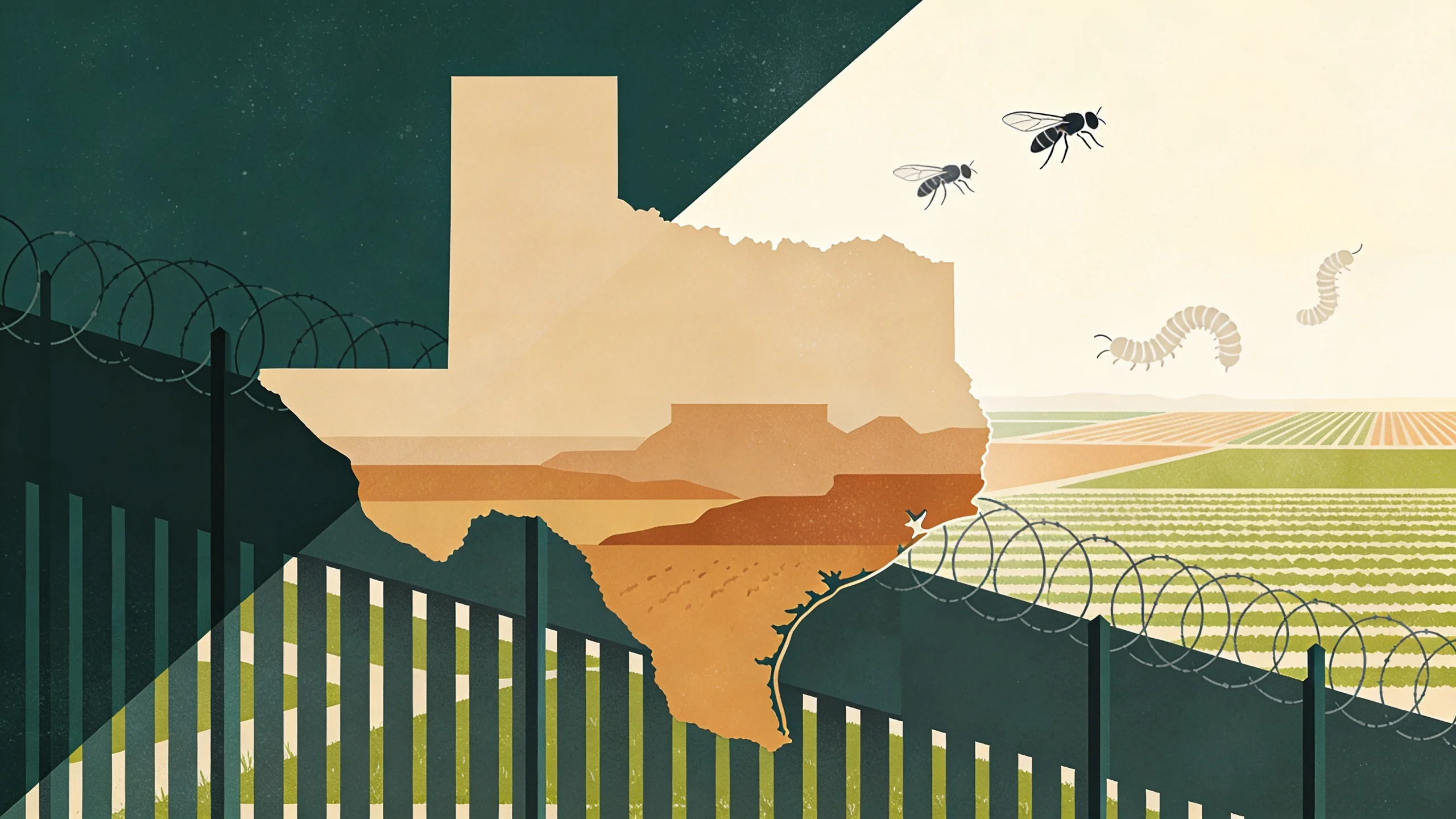
The distance between the New World screwworm and the Texas border has shrunk to just 31 miles, according to USDA confirmation late this week. The parasite's northward march from Central America has accelerated dramatically, triggering an unprecedented response from federal agencies now scrambling to prevent what could become the most devastating livestock emergency in modern American history.
Track every confirmed case on our live Texas screwworm tracker and county map.
U.S. Customs and Border Protection responded within hours by launching a comprehensive public awareness campaign across all eight ports of entry under its Laredo Field Office jurisdiction, stretching from Brownsville to Del Rio. Travelers crossing into Texas are now receiving bilingual informational materials detailing the threat and prevention measures.
"We are working to increase public awareness regarding New World Screwworm so that the public can help prevent this invasive pest from reaching the U.S.," said Donald R. Kusser, Director of Field Operations for CBP's Laredo Field Office. "By distributing these tearsheets and amplifying via social media, we are hoping to bring this message to the widest audience possible."
A Parasite That Devours From Within
The New World screwworm is not merely a pest—it is a predator. The adult fly lays eggs in open wounds of warm-blooded animals. Within hours, larvae hatch and begin consuming living tissue, creating festering wounds that attract more flies. Untreated infestations typically prove fatal within two weeks.
The economic stakes dwarf anything the Texas cattle industry has faced in generations. Texas hosts the largest cattle herd of any U.S. state, and national beef prices have already reached historic highs due to drought-reduced herd sizes. A screwworm establishment could trigger catastrophic losses, export bans, and price spikes that would ripple through grocery stores nationwide.
The $850 Million Defense
Federal officials have committed $850 million to combat the threat, with the bulk funding construction of a sterile male fly production facility near the Texas-Mexico border. The facility will produce 300 million sterile male flies weekly for aerial dispersal over affected zones. These sterilized males mate with wild females, producing no offspring and gradually collapsing the population.
This technique—pioneered by USDA researchers Edward F. Knipling and Raymond C. Bushland in the 1950s—eradicated screwworms from the United States, Mexico, and Central America decades ago. The current outbreak represents the first serious threat of re-establishment since that historic success.
What Travelers Need to Know
CBP's border campaign emphasizes practical prevention steps for anyone crossing from Mexico:
- Inspect vehicles, trailers, and luggage for flies or unusual insect activity
- Report any animals showing signs of infestation—excessive licking of wounds, visible larvae, or unusual behavior
- Avoid transporting animals across the border without proper veterinary documentation
- Stay informed through official USDA and CBP channels
The agency has also expanded social media outreach to reach border communities and ranchers who may encounter suspicious animal conditions.
A Race Against Biology
The 31-mile proximity represents a critical threshold. Screwworm flies can travel 50 miles or more in a single day under favorable wind conditions. The parasite has already been detected in domestic animals within the border zone, including a confirmed case in a domestic cat just 57 miles from Texas last week.
USDA's expanded sterile fly dispersal zone now covers the entire threatened region, with weekly releases designed to create a biological barrier. Whether this defense holds depends on detection speed, public cooperation, and the relentless mathematics of insect reproduction.
For Texas ranchers, the next 90 days will determine whether the screwworm remains a border threat or becomes a backyard nightmare.
Sources
Texas Bug Slayers Editorial Team
Editorial Board
The Texas Bug Slayers editorial team brings together licensed pest control professionals, entomologists, and writers dedicated to helping Texans protect their homes and families from pests.
Related Articles

USDA Unveils Quarterly Review Roadmap for Screwworm Response Playbook
USDA APHIS shares comprehensive roadmap for quarterly reviews of New World Screwworm Response Playbook as parasite cases reach 45 infestations across Texas and New Mexico.
Screwworm Count Reaches 44 as Brewster County Adds Two More Cases and the Infested Zone Extends Into Presidio
USDA's dashboard now lists 44 confirmed New World screwworm cases — 43 in Texas — after two cattle cases in Brewster County and a sheep in Pecos County closed out July. TAHC has extended the infested zone into Presidio County, bringing movement restrictions to parts of 23 counties.
Screwworm Count Reaches 42 as Three More Texas Counties Join the Case Map and Pet Transport Rules Tighten
USDA's dashboard now lists 42 confirmed New World screwworm cases — 41 in Texas — after goats tested positive in Sutton County on July 21. Jim Hogg, Pecos and Uvalde counties also carry confirmed cases, and interstate pet transport rules are squeezing Texas shelters.