
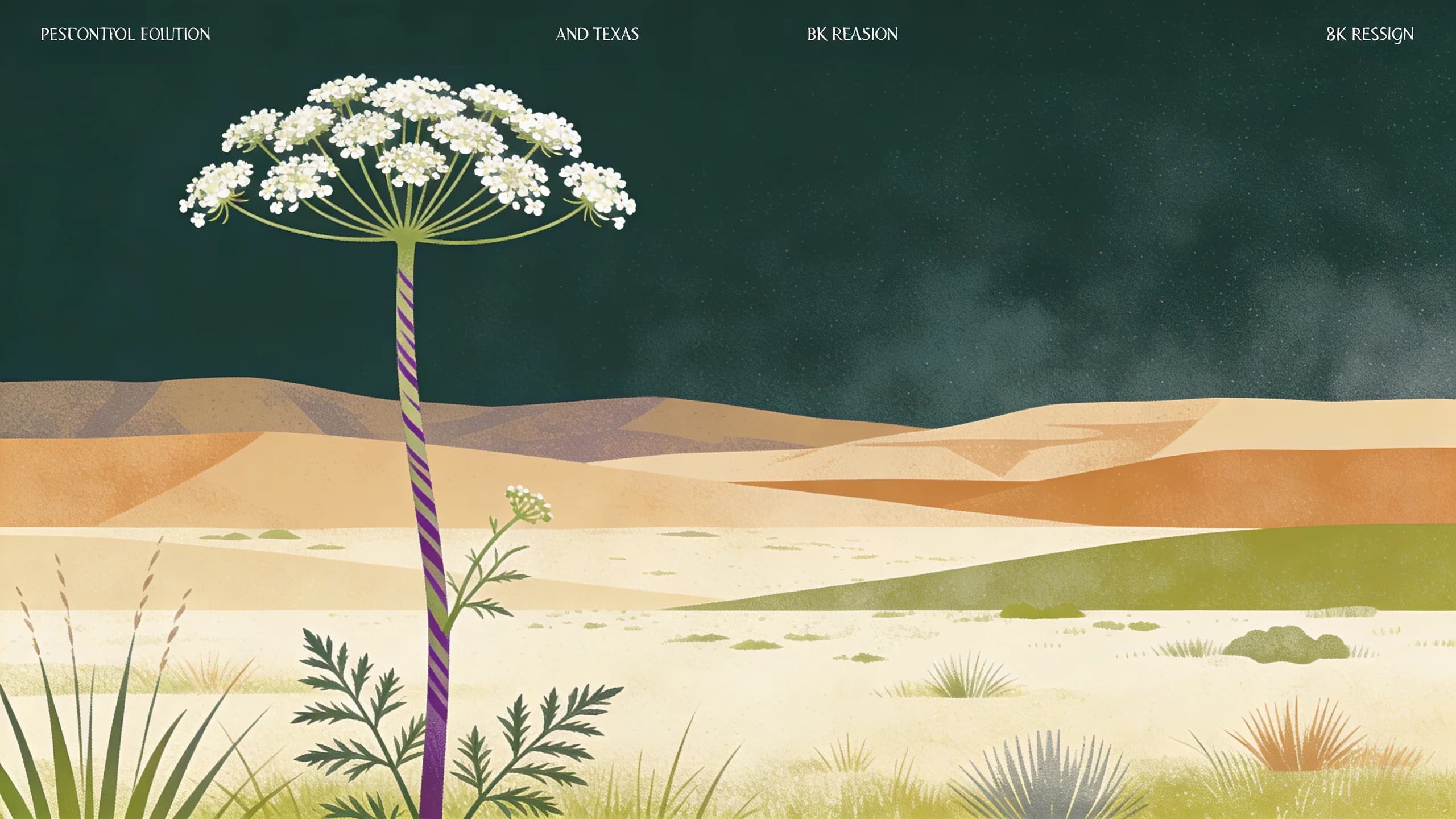
Poison Hemlock Spreads Across Texas: The Invasive Plant That Can Kill
Poison Hemlock Spreads Across Texas: The Invasive Plant That Can Kill
Don't let the delicate white blooms fool you. Poison hemlock, one of the most toxic plants in North America, is spreading across Texas fields, roadsides, and even suburban backyards — and Texas A&M AgriLife Extension experts are urging landowners to learn how to spot it before it's too late.
A Deadly Beauty
Native to Eurasia, poison hemlock (Conium maculatum) has established itself throughout the United States, thriving in the varied environments Texas offers. From roadside ditches in the Hill Country to rural pastures in the Panhandle, this invasive species is as adaptable as it is dangerous.
"All parts of the plant are highly toxic to humans and livestock, and can be fatal if ingested," warns Megan Clayton, Ph.D., Texas A&M AgriLife Extension range specialist and professor in the Department of Rangeland, Wildlife and Fisheries Management.
The danger isn't limited to ingestion. Skin contact can cause severe inflammation, and inhaling fumes from burning or mowing the plant can introduce toxins directly into the bloodstream through the respiratory system.
How to Identify Poison Hemlock
Accurate identification matters because poison hemlock resembles several harmless plants, including wild carrot and Queen Anne's lace. During its first year, the plant appears as a flat rosette of leaves close to the ground. By its second summer, it sends up the distinctive stalk that makes it easier to spot.
Key identifying features include:
- A smooth, upright stalk typically 3–4 feet tall, though it can reach 10 feet
- Distinct purple streaks or splotches along the stem — the most reliable field marker
- Umbrella-shaped clusters of small white flowers blooming May through August
- Large, triangular leaves with a fern-like appearance
Because misidentification carries serious consequences, Clayton recommends consulting an AgriLife Extension county agent if you suspect poison hemlock on your property.
Symptoms and Emergency Response
Human exposure symptoms develop rapidly: skin irritation, sweating, vomiting, dilated pupils, trembling, dizziness, and slowed heartbeat. Anyone suspecting exposure should seek emergency medical care immediately.
Livestock face similar risks, with additional complications. Muscle tremors, nervousness, salivation, loss of coordination, and paralysis signal poisoning. Pregnant animals that consume even small amounts may give birth to offspring with skeletal deformities or cleft palate.
The hidden danger for ranchers comes not from grazing — livestock typically avoid fresh poison hemlock — but from hay. Once cut and dried, the plant becomes nearly impossible to distinguish from safe forage, yet retains its full toxicity.
"It becomes pretty nondescript once it is dried and baled in with hay," Clayton notes. "That's a real threat, because the animal isn't going to notice it at that point."
Safe Removal and Control
Manual removal requires pulling the entire plant including its taproot, while wearing protective clothing, gloves, mask, and eye protection. Herbicide application offers an alternative, but introduces its own complication: treated plants may actually become more palatable to livestock while remaining just as toxic.
Clayton strongly advises against burning or mowing, which releases toxic compounds into the air. Fencing off affected areas and removing livestock during treatment provides the safest approach.
Ongoing monitoring remains essential once poison hemlock appears. The plant spreads aggressively, and areas used for hay production require particular vigilance.
The Bigger Picture
Poison hemlock represents a growing category of invasive threats facing Texas agriculture and public health. As climate patterns shift and human activity continues to transport species across borders, plants and pests once considered regional concerns now challenge ecosystems statewide.
For now, Clayton encourages awareness without alarm. "The vast majority of plants in our state won't hurt you from a simple encounter. Improving your plant identification skills and having a working knowledge of those plants you may want to steer clear of can help alleviate anxiety and grow your appreciation for our state's diverse flora."
The key is knowing which plants deserve a wide berth — and poison hemlock, with its purple-streaked stalk and innocent-looking white flowers, tops that list.
Sources
Texas Bug Slayers Editorial Team
Editorial Board
The Texas Bug Slayers editorial team brings together licensed pest control professionals, entomologists, and writers dedicated to helping Texans protect their homes and families from pests.
Related Articles
Lovebugs Swarm Houston in Late Summer Surge, Testing Patience and Paint
Houston drivers and homeowners face an unwelcome seasonal visitor as lovebugs swarm the region in higher-than-usual numbers this August.
The Cotton Jassid Vanished This Season. Experts Say That's No Reason to Relax
After 2025's invasive cotton jassid surge, winter freezes have kept 2026 populations low across the Southeast. UGA's Phillip Roberts warns growers — including in Texas — to keep scouting.
Pasture Mealybug Spreads Across 70 Texas Counties, Threatening Hay Production
A newly invasive pasture mealybug is devastating Texas hay fields and pastures, with confirmed infestations in 70 counties. Learn identification tips and prevention strategies.