
Texas Senate Panel Hears Update on $750M Screwworm Facility as Parasite Nears Border
The Texas Senate Committee on Water, Agriculture and Rural Affairs convened an urgent panel this week to assess the state's readiness for a biological threat that hasn't reached American soil in nearly 60 years: the New World Screwworm. What emerged from the testimony was both reassurance and a stark timeline—relief is coming, but not until late 2027.
Our live Texas screwworm case tracker keeps the running count and county map as USDA updates land.
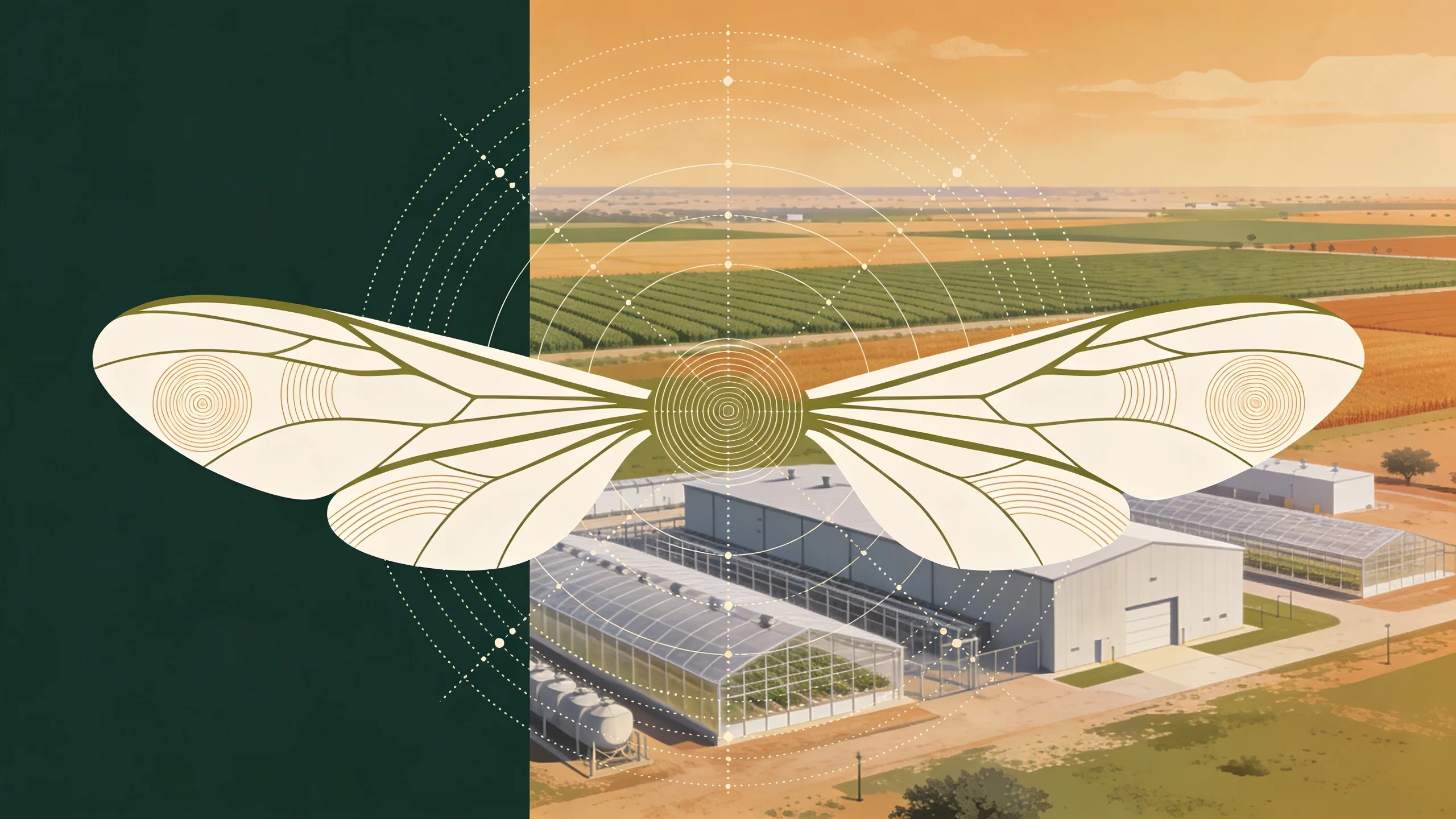
Dudley Hoskins, Deputy Secretary for Marketing and Regulatory Programs at the U.S. Department of Agriculture, delivered the central update: construction is accelerating on a $750 million sterile fly production facility at Moore Air Base in Edinburg, Texas. When fully operational in November 2027, the facility will produce 100 million sterile male flies weekly, scaling to 300 million by the end of 2028.
"The bottom line is we need more flies," Hoskins told the committee. "That's why on March 9th, Secretary Rollins, in partnership with the Army Corps, announced a new contract with Mortensen Construction to build a new sterile fly production facility here at Moore Air Base in Texas."
The Math of Eradication
The sterile insect technique—releasing radiation-sterilized male flies to mate with wild females, producing no offspring—has been the cornerstone of screwworm eradication since the 1950s. The method succeeded in eliminating the parasite from the United States in 1966 and from all of Central America by 2006. But the biological barrier holding the pest at bay requires massive, sustained production of sterile flies.
Hoskins noted that the combined output from the new Texas facility and a retrofitted production center in Metapa, Mexico, will eventually reach 500 million sterile flies per week. That figure carries historical significance: it matches the production level that achieved the original U.S. eradication nearly six decades ago.
"We've expedited the permitting of that project," Hoskins said. "We've cut about four or five years off of what would normally be a government project at that facility."
Human Movement, Not Natural Migration
Dr. Phillip Kaufman, head of the Texas A&M University Entomology Department, offered a critical clarification about how the screwworm advances. Unlike monarch butterflies or migratory birds, the screwworm fly does not naturally travel long distances. Its northward progress is driven by human activity—specifically, the transportation of infected animals.
"It's important to understand that this fly, it's not a monarch butterfly that is on a migration every year trying to get further and further north," Kaufman testified. "This fly moves because humans load animals onto trailers or vehicles and drive them many hundreds of miles."
This pattern explains historical outbreaks in the Midwest and Great Plains: livestock moved north during summer months, carrying the tropical parasite into temperate regions where it would not otherwise survive winter. The current threat follows the same mechanism—detected cases in Mexican states south of Texas suggest the parasite is active and mobile, even if it hasn't yet crossed into the United States.
The Panel's Expertise
The Senate hearing assembled a cross-section of expertise reflecting the multi-agency response required for biological threats that span agriculture, wildlife, and public health. Panelists included:
- Dudley Hoskins, USDA Deputy Secretary, providing federal coordination and funding updates
- David Yoskowitz, Executive Director of Texas Parks and Wildlife, representing wildlife and ecosystem concerns
- Dr. Phillip Kaufman, Texas A&M Entomology Department Head, offering scientific assessment
- Dr. TR Lansford and Dr. Brad Dinges, Texas Animal Health Commission veterinarians, addressing livestock protection protocols
The presence of both agricultural and wildlife officials underscores the screwworm's ecological breadth. While cattle ranchers face the most immediate economic threat—the parasite's larvae feed on living tissue, creating wounds that can kill untreated animals within days—wildlife populations, including endangered species, are equally vulnerable.
The Waiting Game
For Texas livestock producers, the hearing delivered mixed news. The sterile fly facility represents a long-term solution, but construction completion expected "later this summer" still leaves a gap of more than a year before full production begins. In the interim, surveillance and quarantine protocols remain the primary defenses.
The Texas Animal Health Commission continues to coordinate with USDA APHIS on monitoring efforts, including the expanded sterile fly dispersal zones announced earlier this month. These precautionary releases create a biological barrier designed to intercept any screwworm flies that cross the border before they can establish breeding populations.
A Parasite's Return
The New World Screwworm's potential return to Texas carries weight beyond the immediate agricultural threat. Its eradication from North America stands as one of the most successful international pest control programs in history—a decades-long collaboration between the United States, Mexico, and Central American nations that eliminated a parasite costing the livestock industry billions annually.
That success created a vulnerability: with the parasite gone, generations of ranchers and veterinarians have no experience recognizing or treating screwworm infestations. The knowledge base that existed in 1966 has eroded, making early detection and rapid response even more critical.
The Texas Senate hearing made clear that state and federal agencies are treating the threat with appropriate seriousness. Whether the sterile fly production timeline matches the parasite's northward progress remains the unanswered question hanging over South Texas ranchlands.
Sources
Texas Bug Slayers Editorial Team
Editorial Board
The Texas Bug Slayers editorial team brings together licensed pest control professionals, entomologists, and writers dedicated to helping Texans protect their homes and families from pests.
Related Articles

USDA Unveils Quarterly Review Roadmap for Screwworm Response Playbook
USDA APHIS shares comprehensive roadmap for quarterly reviews of New World Screwworm Response Playbook as parasite cases reach 45 infestations across Texas and New Mexico.
Screwworm Count Reaches 44 as Brewster County Adds Two More Cases and the Infested Zone Extends Into Presidio
USDA's dashboard now lists 44 confirmed New World screwworm cases — 43 in Texas — after two cattle cases in Brewster County and a sheep in Pecos County closed out July. TAHC has extended the infested zone into Presidio County, bringing movement restrictions to parts of 23 counties.
Screwworm Count Reaches 42 as Three More Texas Counties Join the Case Map and Pet Transport Rules Tighten
USDA's dashboard now lists 42 confirmed New World screwworm cases — 41 in Texas — after goats tested positive in Sutton County on July 21. Jim Hogg, Pecos and Uvalde counties also carry confirmed cases, and interstate pet transport rules are squeezing Texas shelters.