
USDA Expands Screwworm Defense to Eagle Pass as Parasite Creeps North
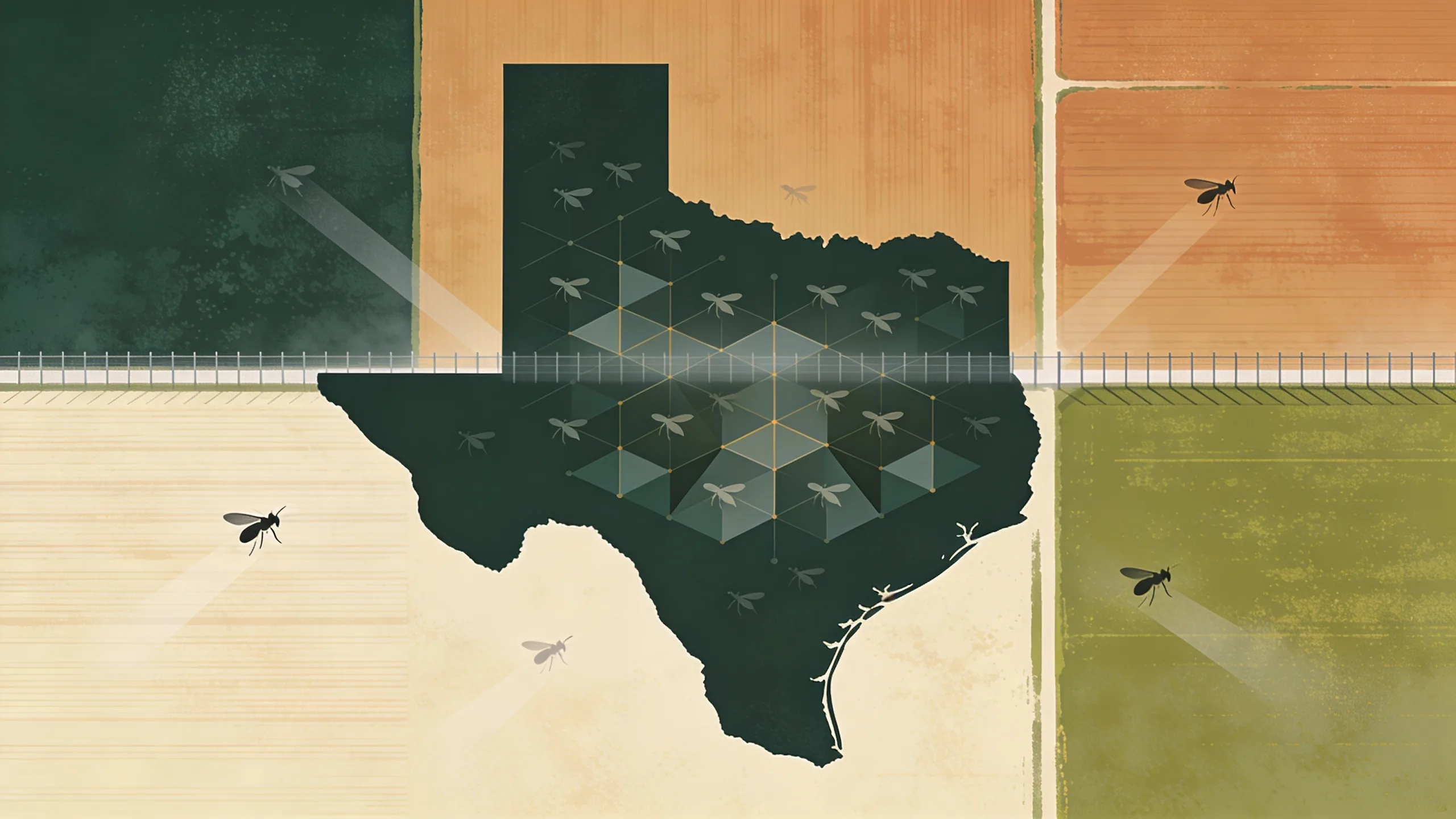
The U.S. Department of Agriculture is pushing its defensive perimeter farther north along the Texas-Mexico border in an aggressive bid to stop the New World screwworm before it reaches American soil. The expanded sterile fly dispersal zone now stretches into Maverick County near Eagle Pass, a significant escalation in the biological warfare against one of agriculture's most terrifying parasites.
For the running case count and the affected-county map, follow our Texas screwworm tracker. Local residents can browse licensed pest control companies in Maverick County in our directory.
Texas Agriculture Commissioner Sid Miller, who has been sounding alarms about the screwworm threat for months, praised the USDA's Animal and Plant Health Inspection Service for the move. "USDA is making the right call by pushing sterile fly operations north," Miller said in a statement. "The New World screwworm threat is moving in that direction, and Texas isn't waiting around."
The parasite, which is actually the larval stage of a fly species, attacks living animals through open wounds. Unlike typical maggots that feed on dead tissue, screwworm larvae burrow into living flesh, creating progressively larger wounds that can kill livestock, wildlife, and pets within days if left untreated. Miller didn't mince words about the danger: "Let me be clear, this parasite is a nightmare. It attacks living animals, endangers wildlife, threatens pets, and could devastate our livestock industry if it gains a foothold in the United States."
The economic stakes are enormous. Texas's livestock industry generates approximately $30 billion annually, making it one of the largest agricultural sectors in the nation. A screwworm outbreak would trigger immediate quarantines, halt cattle movement, and potentially require the destruction of infected herds—scenarios that could ripple through the entire agricultural economy.
Recent detections in Mexico have shown the parasite creeping steadily closer to the border. While previous cases were confined to more southern regions, recent confirmations have placed infected animals within striking distance of Texas. The expansion of sterile fly operations to Eagle Pass represents a strategic shift from reactive containment to proactive barrier defense.
The sterile insect technique works by flooding an area with millions of radiation-sterilized male flies. When these males mate with wild females, the resulting eggs don't develop, gradually collapsing the population. It's the same approach that successfully eradicated screwworm from the United States in 1966 after decades of devastating livestock losses.
Miller emphasized that early detection remains critical. Ranchers, veterinarians, hunters, and pet owners throughout South Texas should watch for unusual wounds, visible maggots, or abnormal fly activity around animals. The Texas Department of Agriculture and USDA have established reporting protocols for suspected cases, and Miller stressed that rapid response could mean the difference between containment and catastrophe.
"We eliminated it once, and we're not letting it come back," Miller declared. "Texas agriculture feeds and clothes this country—and we're going to fight this threat with everything we've got."
For ranchers and livestock producers in the Eagle Pass area and throughout South Texas, the expanded operations mean increased aerial activity as USDA planes release sterile flies across the expanded zone. While the approach has proven effective historically, the coming months will test whether this biological barrier can hold against one of nature's most relentless parasites.
Sources
Texas Bug Slayers Editorial Team
Editorial Board
The Texas Bug Slayers editorial team brings together licensed pest control professionals, entomologists, and writers dedicated to helping Texans protect their homes and families from pests.
Related Articles
Texas Screwworm 2026: How the Season Unfolded — 50 Cases, a Billion Sterile Flies, and What Winter Brings
From one calf in Zavala County to 50 U.S. cases and a billion sterile flies: the full 2026 Texas screwworm season recap, and why winter is the response's best ally.

USDA Unveils Quarterly Review Roadmap for Screwworm Response Playbook
USDA APHIS shares comprehensive roadmap for quarterly reviews of New World Screwworm Response Playbook as parasite cases reach 45 infestations across Texas and New Mexico.
Screwworm Count Reaches 44 as Brewster County Adds Two More Cases and the Infested Zone Extends Into Presidio
USDA's dashboard now lists 44 confirmed New World screwworm cases — 43 in Texas — after two cattle cases in Brewster County and a sheep in Pecos County closed out July. TAHC has extended the infested zone into Presidio County, bringing movement restrictions to parts of 23 counties.