
Screwworm Detected 119 Miles from Texas Border in Coahuila: Agriculture Commissioner Issues Urgent Alert
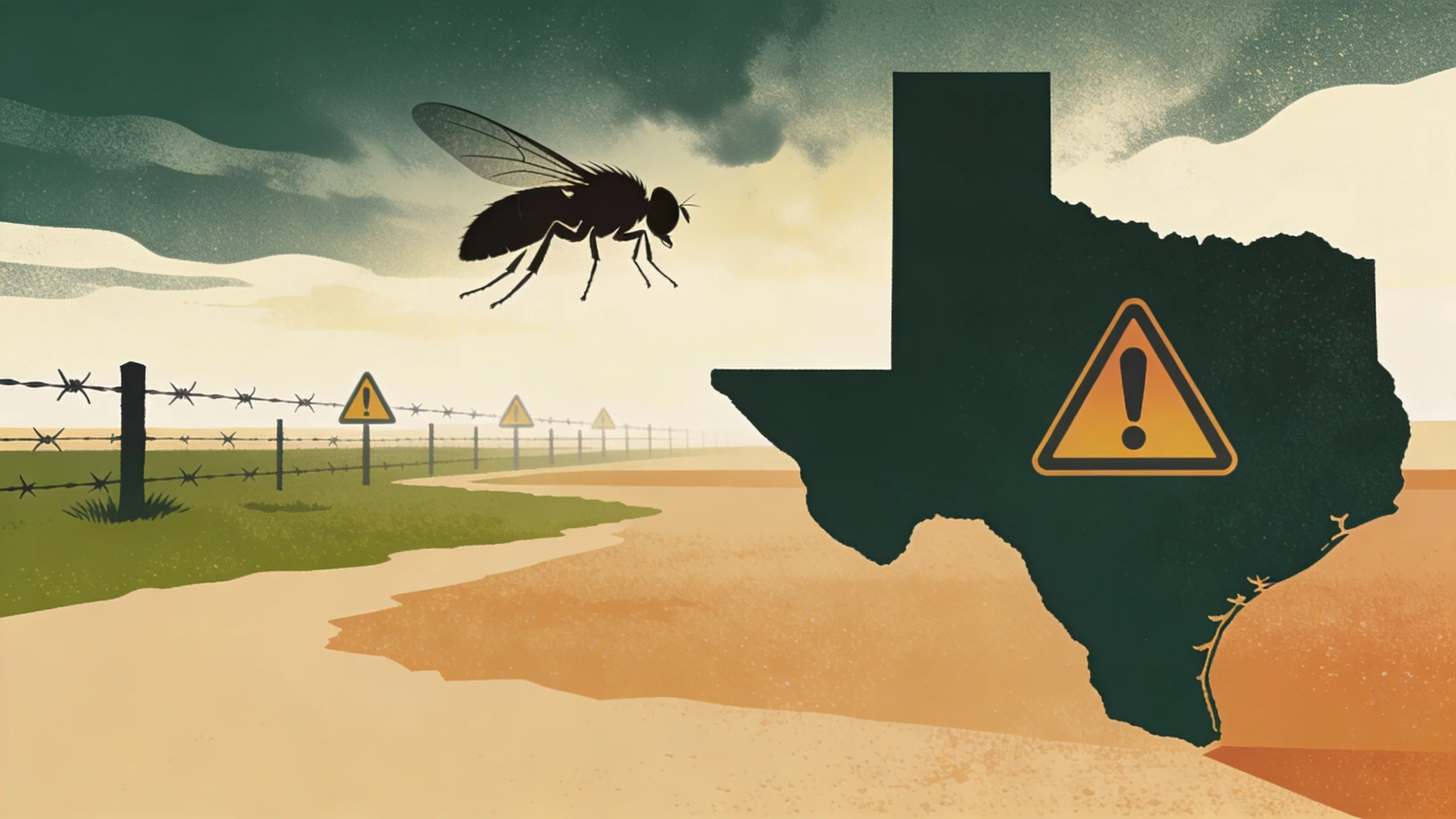
The New World screwworm has advanced to within 119 miles of the Texas border, prompting Agriculture Commissioner Sid Miller to issue his strongest warning yet about the parasitic threat that could devastate livestock, wildlife, and pets across the state.
Our live Texas screwworm case tracker keeps the running count and county map as USDA updates land.
The confirmed detection in the Mexican state of Coahuila, announced May 1, places the dangerous pest at roughly the same latitude as Zapata, Texas—north and west of the Rio Grande Valley. This represents a significant northward advance from previous detections and puts the parasite closer to Texas than at any point since the current outbreak began spreading through Central America.
"This screwworm detection in Coahuila is a serious wake-up call," Miller stated. "Texas is on the front lines, facing this rapidly advancing, destructive, and highly dangerous invader."
The New World screwworm (Cochliomyia hominivorax) is not merely another agricultural nuisance. Adult flies lay eggs in open wounds or mucous membranes of warm-blooded animals. Once hatched, the maggots use razor-sharp mouth hooks to burrow deeper into living tissue, creating festering wounds that can kill untreated livestock within days. The pest attacks cattle, horses, sheep, goats, wildlife, domestic pets, and has been documented in human cases as well.
Texas has not faced an active screwworm infestation since the 1960s, when the United States partnered with Central American nations to develop and deploy the sterile insect technique—a biological control method that successfully eradicated the pest from North America. The current outbreak, which originated in South America, has been marching northward for months, with previous detections reported 60 miles from the Texas border in late April.
The Texas Department of Agriculture has responded with what Miller describes as an "aggressive biosecurity response." Expanded trapping operations using the department's proprietary TDA Swormlure are now active in high-risk border zones, export pens, and port areas. Weekly surveillance flights monitor for fly activity, and rapid response teams stand ready to deploy if the pest crosses into Texas.
Federal coordination has intensified as well. The USDA's Animal and Plant Health Inspection Service continues releasing millions of sterile male flies along the border to disrupt breeding cycles—a proven technique that prevents females from producing viable offspring. Construction is also underway on a $750 million sterile fly production facility at Moore Air Base near Edinburg, designed to dramatically expand capacity for the ongoing eradication campaign.
For Texas ranchers, the approaching threat carries economic and operational implications. Any animal showing signs of screwworm infestation—persistent wounds with visible maggots, unusual behavior, or unexplained deterioration—requires immediate veterinary attention. The TDA has established a hotline at 1-800-TELL-TDA for suspected cases.
The Coahuila detection also raises questions about cross-border coordination. While U.S. and Mexican agricultural agencies have historically collaborated effectively on screwworm eradication, the current outbreak's pace and geographic scope present unprecedented challenges. Mexico's own sterile fly release programs are active, but the parasite's continued northward movement suggests gaps in the defensive perimeter.
Weather patterns may be contributing to the threat. Warmer temperatures and favorable wind conditions can accelerate fly dispersal, potentially carrying screwworm adults across the border even before ground-based detection confirms their presence.
Texas producers should review biosecurity protocols now, before the pest arrives. Basic measures include daily inspection of livestock for wounds, prompt treatment of any injuries that could attract egg-laying females, and strict quarantine procedures for animals moving from high-risk areas.
The last time screwworm threatened Texas agriculture, coordinated action eliminated it. Whether history repeats itself depends on vigilance at the border—and preparation throughout the state.
Sources
Texas Bug Slayers Editorial Team
Editorial Board
The Texas Bug Slayers editorial team brings together licensed pest control professionals, entomologists, and writers dedicated to helping Texans protect their homes and families from pests.
Related Articles
Texas Screwworm 2026: How the Season Unfolded — 50 Cases, a Billion Sterile Flies, and What Winter Brings
From one calf in Zavala County to 50 U.S. cases and a billion sterile flies: the full 2026 Texas screwworm season recap, and why winter is the response's best ally.

USDA Unveils Quarterly Review Roadmap for Screwworm Response Playbook
USDA APHIS shares comprehensive roadmap for quarterly reviews of New World Screwworm Response Playbook as parasite cases reach 45 infestations across Texas and New Mexico.
Screwworm Count Reaches 44 as Brewster County Adds Two More Cases and the Infested Zone Extends Into Presidio
USDA's dashboard now lists 44 confirmed New World screwworm cases — 43 in Texas — after two cattle cases in Brewster County and a sheep in Pecos County closed out July. TAHC has extended the infested zone into Presidio County, bringing movement restrictions to parts of 23 counties.