
FDA Authorizes Emergency Screwworm Treatment as Parasite Nears Texas Border
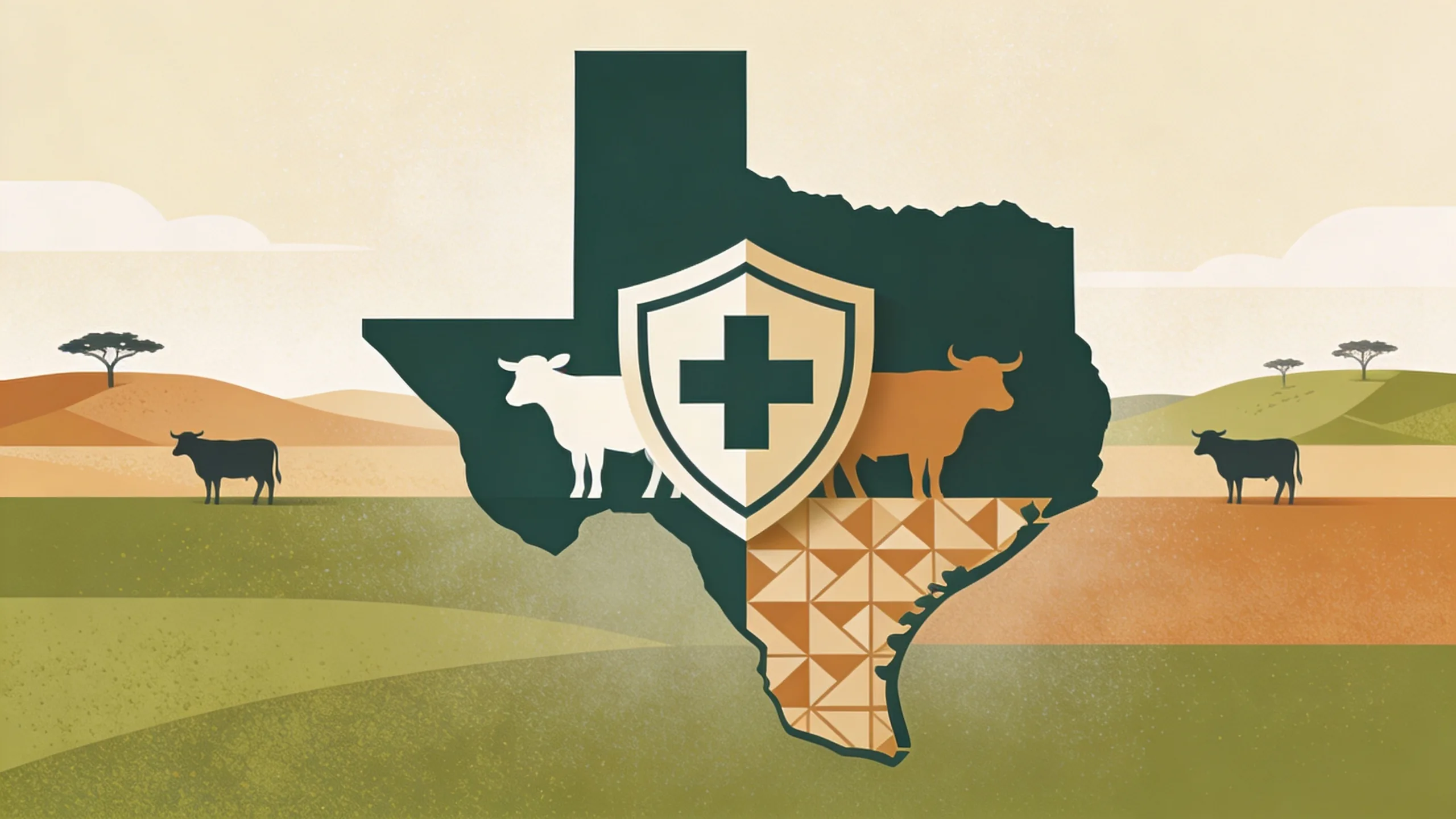
The U.S. Food and Drug Administration has cleared a powerful new weapon in the fight against New World screwworm, authorizing emergency use of a topical powder treatment as the destructive parasite advances toward the Texas border.
For the running case count and the affected-county map, follow our Texas screwworm tracker.
On April 27, 2026, the FDA issued an Emergency Use Authorization (EUA) for Negasunt Powder—a combination of coumaphos, propoxur, and sulfanilamide—for preventing and treating screwworm infestations across multiple livestock species. The authorization arrives as agriculture officials in Texas and neighboring states intensify preparedness efforts with screwworm detections now occurring approximately 60 miles south of the U.S.-Mexico boundary.
The Threat at the Doorstep
New World screwworm (Cochliomyia hominivorax) represents one of the most devastating parasitic threats to livestock in the Americas. Unlike common blowflies that feed on dead tissue, screwworm larvae are obligate parasites of living animals, burrowing into wounds, natural body openings, and even unbroken skin to consume flesh from the inside out. Untreated infestations typically prove fatal within days to weeks.
The parasite was eradicated from the United States in 1966 through an innovative sterile insect technique program that continues today. However, screwworm persists in South and Central America, and periodic incursions into North America remain an ever-present risk. The current outbreak in northern Mexico—now within striking distance of Texas—has triggered the most significant screwworm emergency response in decades.
Texas Agriculture Commissioner Sid Miller declared a state of emergency on April 24 as surveillance confirmed the parasite's continued northward progression. The FDA's EUA for Negasunt Powder provides veterinarians and livestock producers with a critical new tool should the parasite breach the border.
How Negasunt Powder Works
The authorized formulation combines three active ingredients targeting different aspects of screwworm infestation:
Coumaphos and propoxur, both organophosphate compounds, deliver the primary insecticidal punch. These neurotoxic agents disrupt the nervous systems of screwworm larvae upon contact, rapidly killing existing infestations. Their topical application allows direct treatment of wounds and affected areas without systemic drug administration.
Sulfanilamide, a sulfa antibiotic, addresses secondary bacterial infections commonly associated with screwworm myiasis. The parasitic larvae create open wounds susceptible to bacterial colonization; the antibiotic component helps prevent or treat these complicating infections while the insecticides eliminate the primary parasite burden.
The powder formulation enables easy application to wounds, body orifices, and external surfaces where screwworm eggs and larvae may be present. This delivery method proves particularly valuable for field treatment of cattle, horses, sheep, goats, swine, and other susceptible species when veterinary facilities may be inaccessible or overwhelmed during an outbreak.
Authorization Limitations and Safety Protocols
The FDA has structured the EUA with strict distribution and usage controls reflecting both the urgency of the screwworm threat and the toxicity profile of the active ingredients.
Elanco US Inc., the drug sponsor, will distribute Negasunt Powder exclusively through the U.S. Department of Agriculture for further allocation to authorized users. During the pre-incursion phase—meaning while screwworm remains outside the United States—access is restricted to federal, state, local, and tribal agency personnel plus individuals working under their direct authority.
Should screwworm establish itself within U.S. territory, the authorization expands to allow licensed veterinarians to prescribe and administer the treatment within officially designated infested zones and adjacent surveillance areas as defined by USDA's New World Screwworm Response Playbook.
The EUA carries significant safety caveats. Coumaphos and propoxur can cause neurotoxicity in humans and animals if mishandled. The authorization mandates specific protective measures, detailed handling instructions, and proper disposal protocols. A boxed warning accompanies the product highlighting these risks.
Food safety restrictions apply as well. Treated animals cannot be slaughtered for human consumption within 28 days of the last treatment. The product is prohibited in lactating dairy animals producing milk for human consumption, and calves born to treated cows cannot be processed for veal due to unestablished withdrawal periods.
The Emergency Use Context
Emergency Use Authorizations represent an extraordinary regulatory pathway, allowing unapproved medical products—or approved products for unapproved uses—to enter deployment during declared public health emergencies. The FDA's authority to issue EUAs for veterinary drugs specifically addressing animal diseases affecting livestock stems from a 2025 declaration by the Department of Health and Human Services recognizing New World screwworm as a potential public health emergency threat.
This EUA marks the second screwworm treatment authorization issued by FDA in recent weeks. On April 24, the agency cleared F10 Antiseptic Barrier Ointment with Insecticide, providing an alternative topical option with a different active ingredient profile. Together, these authorizations create a diversified pharmaceutical arsenal for responding to a potential U.S. screwworm incursion.
Preparedness Across Texas
The Texas animal health infrastructure has been mobilizing for months as screwworm surveillance in Mexico documented the parasite's steady advance. The Texas Animal Health Commission, Texas A&M AgriLife Extension, and USDA APHIS have conducted educational workshops for ranchers, veterinarians, and extension agents covering screwworm identification, reporting protocols, and biosecurity measures.
Key preparedness elements now in place include:
- Enhanced veterinary surveillance along the Texas-Mexico border
- Pre-positioned treatment supplies and protective equipment
- Trained response teams capable of rapid deployment
- Public awareness campaigns targeting livestock producers
- Coordination with Mexican counterparts on binational containment efforts
The USDA is simultaneously advancing construction of a $750 million sterile fly production facility at Moore Air Base near Edinburg, Texas. When operational, this facility will dramatically expand the nation's capacity to produce sterile screwworm flies for release programs—should an incursion occur, the sterile insect technique would be deployed to eliminate the invading population.
What Livestock Producers Should Know
Texas ranchers and livestock owners should familiarize themselves with screwworm signs and immediately report any suspected cases to the Texas Animal Health Commission or USDA APHIS. Key warning signs include:
- Larvae visible in wounds, nostrils, ears, or other body openings
- Animals exhibiting restlessness, isolation from herd, or reduced feeding
- Wounds that fail to heal or appear to worsen despite treatment
- Characteristic odor associated with screwworm infestation
During the current pre-incursion phase, Negasunt Powder remains unavailable for general veterinary use. However, livestock producers should establish relationships with veterinarians now and discuss contingency plans should the authorization expand to general veterinary practice.
The FDA's EUA for Negasunt Powder represents a significant milestone in U.S. screwworm preparedness. As the parasite lingers just miles from Texas soil, federal and state agencies now possess additional pharmaceutical tools to protect American livestock from one of agriculture's most feared invasive threats.
Sources
Texas Bug Slayers Editorial Team
Editorial Board
The Texas Bug Slayers editorial team brings together licensed pest control professionals, entomologists, and writers dedicated to helping Texans protect their homes and families from pests.
Related Articles

USDA Unveils Quarterly Review Roadmap for Screwworm Response Playbook
USDA APHIS shares comprehensive roadmap for quarterly reviews of New World Screwworm Response Playbook as parasite cases reach 45 infestations across Texas and New Mexico.
Screwworm Count Reaches 44 as Brewster County Adds Two More Cases and the Infested Zone Extends Into Presidio
USDA's dashboard now lists 44 confirmed New World screwworm cases — 43 in Texas — after two cattle cases in Brewster County and a sheep in Pecos County closed out July. TAHC has extended the infested zone into Presidio County, bringing movement restrictions to parts of 23 counties.
Screwworm Count Reaches 42 as Three More Texas Counties Join the Case Map and Pet Transport Rules Tighten
USDA's dashboard now lists 42 confirmed New World screwworm cases — 41 in Texas — after goats tested positive in Sutton County on July 21. Jim Hogg, Pecos and Uvalde counties also carry confirmed cases, and interstate pet transport rules are squeezing Texas shelters.